
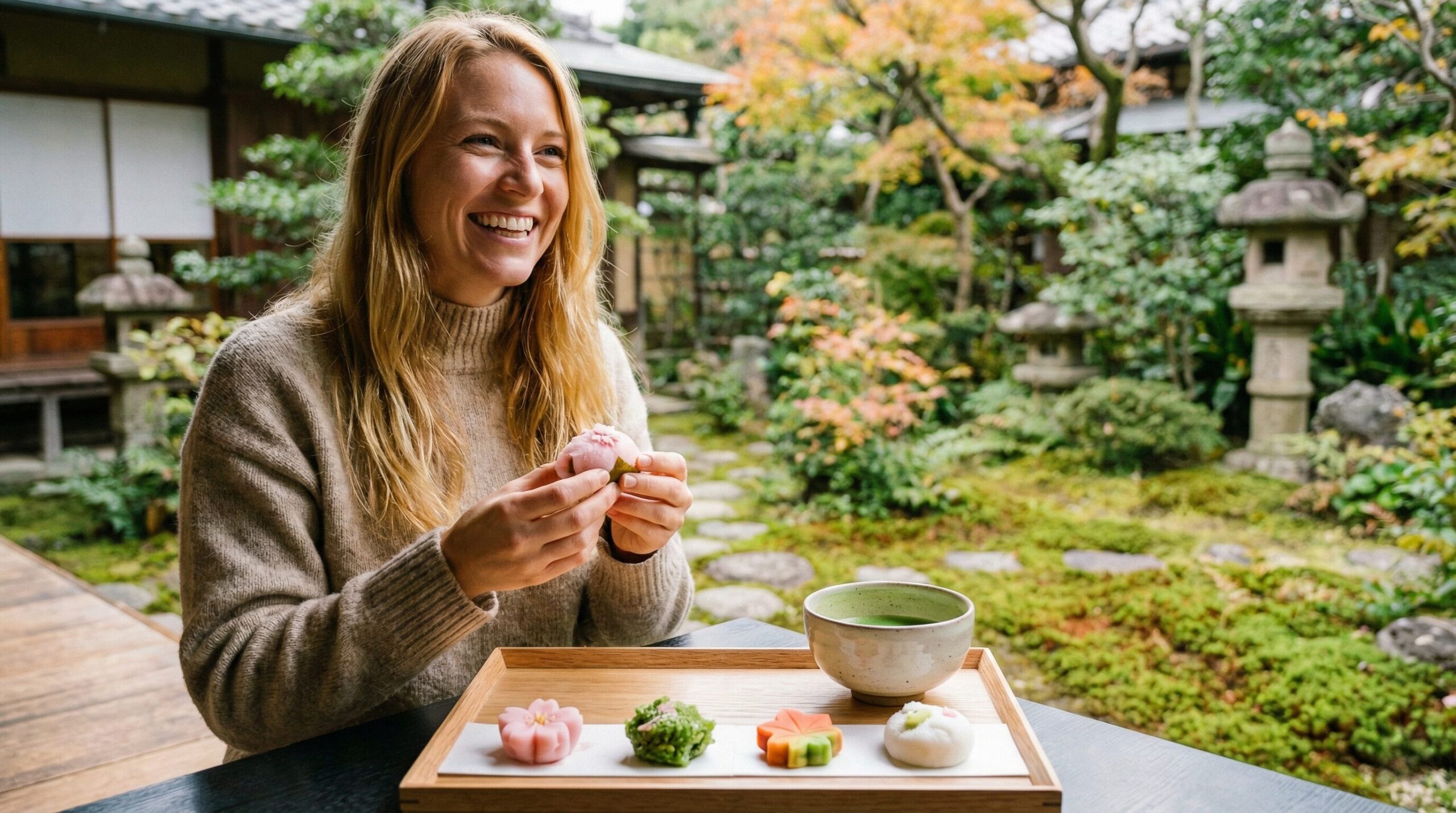
In the quiet corner of a teahouse in Kanazawa, a single sweet sits on a small ceramic plate. It is shaped like a hydrangea, with translucent purple jelly capturing the light like rain on a petal. It is almost too beautiful to eat.
This is wagashi—traditional Japanese confectionery.
To the uninitiated traveler, wagashi can be enigmatic. Unlike Western desserts, which often prioritize the immediate gratification of butter, cream, and sugar, wagashi is a study in subtlety and symbolism. It is not merely a treat; it is a reflection of nature itself, designed to capture a fleeting moment in time. A sweet shaped like a cherry blossom is only served for a few weeks in spring; a chestnut treat appears only when the leaves turn.
For the traveler seeking to “Travel Deeper,” understanding wagashi is a gateway to understanding the Japanese soul. It connects you to the country’s agrarian history, its tea ceremony culture, and its obsession with the changing seasons. This Traditional Wagashi Guide will take you beyond the souvenir shop boxes and into the delicate, delicious world of authentic Japanese sweets.
Understanding Wagashi: More Than Just Sugar
The word wagashi (和菓子) combines “Wa” (Japan) and “Gashi” (sweets/snacks), coined during the Meiji era to distinguish local confections from the influx of Western cakes and cookies (yogashi). But the roots go back centuries, deeply intertwined with the introduction of tea from China and the refinement of sugar production in Japan.
The Core Ingredients
While a French patisserie relies on dairy and fats, a traditional wagashi artisan relies on plant-based ingredients. The flavors are earthy, floral, and distinctively Japanese.
- Anko (Bean Paste): The heart of wagashi. While most commonly made from azuki beans (Red Bean Paste) boiled with sugar, there is also Shiro-an (White Bean Paste) made from white kidney beans or white azuki, which is essential for coloring and sculpting. It comes in two main textures: koshian (smooth paste) and tsubuan (chunky paste).
- Mochi (Rice Cake): Made from glutinous rice pounded into a sticky, chewy dough. It provides the signature texture—soft, elastic, and comforting.
- Kanten (Agar): A gelatin-like substance derived from seaweed. It creates firm, refreshing jellies that don’t melt in the summer heat.
- Wasanbon: A rare, fine-grained sugar made in Shikoku. It has a delicate, melt-in-the-mouth quality and a flavor profile closer to honey than refined white sugar.
The Three Categories
When you step into a wagashi shop, you will typically see sweets divided by moisture content, which dictates their shelf life and purpose.
- Namagashi (Fresh Sweets): High moisture content. These are the “haute couture” of sweets—exquisitely shaped nerikiri (bean paste dough) served at tea ceremonies. They represent the current season and must be eaten the same day.
- Han-namagashi (Semi-dry Sweets): Intermediate moisture. Examples include monaka (crisp wafers filled with bean paste) and neri-yokan (firm bean jelly blocks). Unlike the fragile namagashi, these are designed to have a slightly longer shelf life while retaining a moist texture.
- Higashi (Dry Sweets): Low moisture. These include rakugan—colorful, hard sugar candies pressed into intricate molds. They are often served with thin tea (usucha) and last for weeks, making them excellent gifts.
The Seasonal Calendar: Edible Art
The most critical element of this Traditional Wagashi Guide is the concept of shun (seasonality). A master wagashi craftsman doesn’t just make a sweet; he interprets the calendar.
- Spring (Haru): Expect pinks and greens. Sakura-mochi (rice cake wrapped in a pickled cherry leaf) is the icon of April. The salty leaf contrasts beautifully with the sweet bean paste.
- Summer (Natsu): The focus shifts to cooling visuals. You will see mizu-yokan (watery bean jelly) and sweets made with transparent kuzu starch to resemble water, ice, or fish swimming in a stream.
- Autumn (Aki): The palette turns to burnt oranges and browns. Chestnuts (kuri) and sweet potatoes take center stage. Ohagi (rice balls coated in bean paste) are traditional offerings during the autumn equinox.
- Winter (Fuyu): Snow and warmth. You might see a joyo manju (yam-dough bun) steamed purely white to represent snow, or sweets depicting camellias—the flower that blooms amidst the cold.
Practical Examples and Recommendations
To truly experience wagashi, you must step away from the convenience store shelf and visit specialized venues. Here are the types of sweets you should seek out to deepen your travel experience.
The Tea Ceremony Star: Nerikiri
If you visit a teahouse in Kyoto or Kanazawa, order the matcha set. You will likely be served a nerikiri.
- What it is: A sculpted dough made of white bean paste and sticky rice flour.
- The Experience: Before you eat, look at it. Is it a chrysanthemum? A maple leaf? A gourd? The design tells you exactly what time of year it is. The texture is smooth and soft, dissolving effortlessly on the tongue to counteract the bitterness of the matcha.
The Street Food Classic: Taiyaki & Imagawayaki
Not all wagashi is high-brow.
- What it is: A fish-shaped (taiyaki) or round (imagawayaki) pancake filled with hot azuki paste or custard.
- The Experience: Best eaten fresh off the grill while walking through a festival or a shopping street like Nakamise-dori in Asakusa. The contrast between the crispy shell and the steaming hot filling is nostalgic comfort food for Japanese locals.
The Souvenir Staple: Castella
Wait, isn’t this sponge cake? Yes, but it has been in Japan since Portuguese traders brought it to Nagasaki in the 16th century. It is now considered wagashi.
- What it is: A golden, moist sponge cake made with syrup or honey.
- The Experience: Look for Fukusaya or Bunmeido brands. Notice the coarse sugar crystals on the bottom—that crunch is the hallmark of a high-quality Castella.
The Summer Cooler: Anmitsu
- What it is: A bowl of agar jelly cubes, sweet azuki paste, fruits, and mochi, usually drizzled with kuromitsu (black sugar syrup).
- The Experience: Seek out an old-school Kanmi-dokoro (sweet parlor) in Tokyo’s Ueno or Yanesen districts. It is a refreshing break from the humidity.
Tips for Travelers: How to Enjoy Wagashi
Eating wagashi comes with its own set of unspoken rules and tips that can elevate your experience from “eating a snack” to “cultural appreciation.”
- Sweet First, Tea Second: In a tea ceremony context, you are supposed to finish the sweet before you drink the matcha. The sugar coats your palate, preparing it to receive the grassy, bitter impact of the tea.
- Use the Kuromoji: High-end fresh sweets are served with a single, wooden pick called a kuromoji. Use it like a knife to cut the sweet into bite-sized pieces. Do not stab the whole sweet and bite into it like an apple.
- The “Too Sweet” Misconception: Travelers often find red bean paste cloyingly sweet. This is intentional. Wagashi is rarely meant to be eaten alone; it is designed to be paired with bitter green tea (matcha or sencha). Without the tea, the balance is lost.
- Shelf Life Warning: If you buy namagashi (fresh sweets) from a department store basement (depachika), they often have a shelf life of only 24 hours. Do not buy them as gifts to take home to your country. For souvenirs, stick to higashi (dry sweets) or baked goods like manju.
- Regional Specialties: Japan is hyper-regional.
- Kyoto: Known for Yatsuhashi (cinnamon-flavored dough).
- Miyagi (Sendai): Known for Zunda (sweet edamame paste).
- Shizuoka: Known for anything tea-flavored.
- Okayama: Known for Kibi-dango (millet dumplings).
- Always ask, “What is the meibutsu (local specialty) here?”
Conclusion
In a world that rushes toward the next big thing, wagashi asks you to slow down. It asks you to notice that the iris is blooming, that the summer heat is fading, or that the tea in your cup is the perfect temperature.
This Traditional Wagashi Guide is just a starting point. The real joy lies in the discovery—finding a small shop in a back alley where an artisan has been making the same chestnut bun for fifty years, or sitting on a temple veranda realizing that the sweet on your plate perfectly matches the garden view in front of you.
So, when you are in Japan, do not just look at the temples and shrines. Taste the seasons. Order the wagashi. And for a moment, let the sweetness linger.