For the dedicated fan of Rumiko Takahashi’s masterpiece Inuyasha, the geography of the series is iconic. We know the story is set largely in the Warring States period (Sengoku Jidai) of the Kanto region, near Mount Fuji and Tokyo. So why travel to Kyushu?
Because while Tokyo has paved over its history with concrete, Kyushu has preserved the atmosphere. If you want to see the Japan that Kagome travels back to—a land of deep, spirit-filled forests, ancient shrines hidden in the mist, and legends of gods and demons—you will not find it in the modern capital. You will find it here, in the volcanic heart of the south.
This guide is not a list of canonical scenes (for that, you must go to Tokyo or the Kanto region). Instead, this is a Thematic Pilgrimage. We have curated the locations in Kyushu that so perfectly capture the aesthetic of Inuyasha—the “Forest of Spirits” vibe—that you will expect to see a red-robed half-demon leaping through the trees.
Kamishikimi Kumanoimasu Shrine (Kumamoto)
The Real-Life “Forest of Inuyasha”
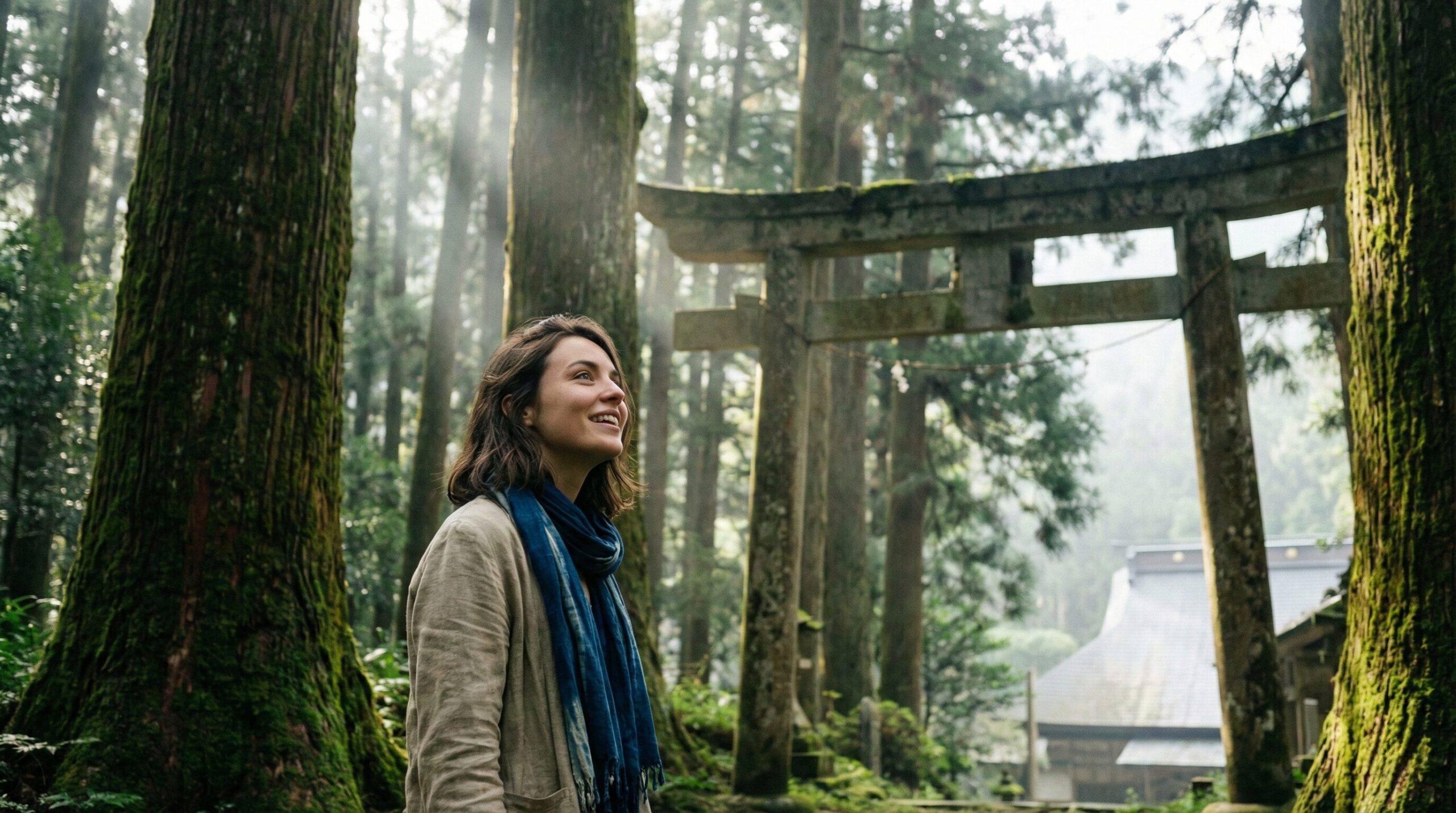
If there is one place in Japan that captures the eerie, beautiful isolation of the anime’s forest scenes, it is this shrine in the Aso region. While famously associated with the anime Hotarubi no Mori e (Into the Forest of Fireflies’ Light), this location has become a pilgrimage site for Inuyasha cosplayers and fans because it physically embodies the barrier between the human and spirit worlds.
- The Atmosphere: You enter through a wooden torii gate into a dense cedar forest. The path is lined with nearly 100 moss-covered stone lanterns that glow green in the filtered sunlight. It feels ancient, untouched, and undeniably magical.
- The “Wind Hole”: Hike past the main hall to the Ugeto-Iwa (穿戸岩), a massive rock with a 10-meter hole blown through it. Legend says a demon servant of the Aso deity kicked this hole to escape. It is a perfect real-world parallel to the “Kazaana” (Wind Tunnel) mythos or the strength of a yokai.
- Photo Tip: The best shot is looking up the endless staircase of lanterns. It looks exactly like the paths Kikyo or Kagome would walk while sensing a Shikon Jewel shard.
Takachiho Gorge (Miyazaki)
The Realm of the Gods
Inuyasha is heavily rooted in Shinto mythology (the Sacred Tree, the priestess roles). To understand the source of these myths, you must visit Takachiho, the “Land of Myths” where the gods supposedly descended to Earth.
- Amanoyasukawara: This is a shrine located inside a massive riverside cave. Countless travelers have stacked thousands of stone piles here to make wishes, creating a landscape that looks otherworldly. It feels like the entrance to the underworld—or perhaps the path to the grave of Inuyasha’s father.
- The Boat Ride: Renting a rowboat to drift down the Takachiho Gorge, flanked by sheer volcanic cliffs and the Manai Waterfall, evokes the journeys the group often takes. It is easy to imagine the shikon no tama glowing nearby.
Hitoyoshi (Kumamoto)
The Town of Yokai
Hitoyoshi is famous as the setting for Natsume Yuujinchou (Natsume’s Book of Friends), another series about spirits. However, for Inuyasha fans, this town offers the closest experience to a living “Feudal Era Village.”
- The Yokai aesthetic: The town embraces its spiritual connection. You will find “Yokai” statues and traditional architecture that hasn’t changed in centuries.
- Aoi Aso Shrine: This thatched-roof shrine is a National Treasure. Its steep, dark roofs and intricate wooden carvings are distinct from the bright vermilion shrines of Kyoto. It looks exactly like the village shrines Kagome and Kaede protect.
The Volcanic Forges (Aso & Unzen)
The Birthplace of Tessaiga’s Energy
In the series, swords like Tessaiga are forged with immense power. While the traditional “Tatara” iron-making style is famous in the Chugoku region, Kyushu is the “Land of Fire.”
The volcanic geography of Kyushu (Mt. Aso, Mt. Unzen) provides the true “Fire Rat Robe” energy. The landscape itself—steaming vents, sulfur smells, and red earth—is the closest you will get to the dangerous lands where Totosai would live.
Practical Examples: A 2-Day “Feudal Spirit” Itinerary
Kyushu is rural. To hunt demons (or at least, their locations), you cannot rely on trains. You need a car.
Day 1: The Forest of Spirits
- 09:00: Pick up a rental car at Kumamoto Station / Airport.
- 10:30: Arrive at Kamishikimi Kumanoimasu Shrine. Spend 2 hours hiking to the wind hole. The silence here is heavy; respect it.
- 13:00: Lunch in the Minami-Aso area. Try Aka-ushi (Red Beef) bowls—fuel for a demon slayer.
- 15:00: Drive across the Aso Caldera. The grassy plains of Kusasenri look remarkably like the fields where Inuyasha battles Sesshomaru.
Day 2: The Mythology of Miyazaki
- 08:00: Early drive to Takachiho (approx. 1.5 hours from Aso).
- 09:30: Row a boat in the Gorge before the crowds arrive.
- 12:00: Visit Amanoyasukawara Cave Shrine. Add your own stone to the piles.
- 15:00: End at Kunimigaoka Viewing Platform. If you are lucky and the weather is right, you can see the “Sea of Clouds” (Unkai), making the mountains look like floating islands—a view straight out of the anime’s opening credits.
Tips for Travelers
- Rental Car is Mandatory: Kamishikimi Kumanoimasu is technically accessible by bus, but it is infrequent and inconvenient. To chase the vibe, you need the freedom of a vehicle.
- Respect the “Power Spots”: In Japan, places like Kamishikimi are considered “Power Spots” (places of high spiritual energy). While cosplay is popular, always ask permission before setting up tripods or blocking paths. These are active religious sites, not just sets.
- The “Yashahime” Connection: If you are a fan of the sequel, Yashahime: Princess Half-Demon, remember that the protagonists travel widely. The volcanic, untamed nature of Kyushu fits the chaotic era of the sequel perfectly.
- Weather Watch: The “Sea of Clouds” in Takachiho usually happens in autumn mornings. Plan accordingly if you want that mystical view.
Conclusion
You can go to Tokyo and buy an Inuyasha keychain. You can go to the animation studio and see a drawing. But if you want to feel the world that Rumiko Takahashi created—the damp smell of ancient cedar, the moss that covers stone guardians, and the sense that something is watching you from the forest shadows—you must come to Kyushu.
It is here, away from the neon lights, that the Feudal Era still breathes. Standing at the top of the stone steps in Kamishikimi, you don’t need a Bone Eater’s Well to travel back in time. You are already there.