To the outside world, Kyoto is a museum city. It is a stillness of Zen gardens, the rustle of silk kimono in Gion, and the smell of incense drifting from 1,000-year-old temples. It is the Japan of the past, preserved in amber.
But there is a glitch in this perfect image. Kyoto is also a college town. With over 30 universities and a massive population of students, artists, and artisans, the city possesses a rebellious streak that runs as deep as the Kamo River. This is the city that birthed Japan’s noise music scene. It is the city where student radicals barricaded universities in the 1960s. And today, it is home to a thriving, gritty, and fiercely independent counter-culture that remains almost entirely invisible to the average tourist.
If you are tired of the polished perfection of the Golden Pavilion, this guide is for you. We are going deep into Kyoto’s Underground Cultural Scene, exploring the live houses, the experimental galleries, and the hidden bars where the city’s creative pulse beats the loudest.
The Geography of the Underground
Unlike Tokyo, where subcultures are segregated by district (Harajuku for fashion, Akihabara for anime), Kyoto’s underground is a fluid ecosystem. However, two key gravitational centers define the scene.
Sakyo-ku: The Bohemian North
If Kyoto has a Brooklyn or a Berlin, it is Sakyo Ward. Located in the northeast, home to Kyoto University and Kyoto Seika University (famous for its manga and art programs), this area is the spiritual home of the city’s misfits.
- The Vibe: It is looser, cheaper, and slower. You will find bookstores that sell revolutionary pamphlets, cafes that haven’t changed prices since 1980, and students riding bicycles with canvases strapped to their backs.
- The Philosophy: Sakyo-ku operates on a “do-it-yourself” ethos. Many of the venues here are renovated machiya (townhouses) or converted garages run by collectives rather than corporations.
Kiyamachi South: The Nocturnal Swamp
While Gion is for geisha, Kiyamachi (specifically the southern end near Gojo) is for the creatures of the night.
- The Vibe: Narrow alleys, neon signs reflecting on the Takase canal, and buildings that seem to vibrate with bass. This is where the music scene lives. It is gritty, loud, and unapologetically raw.
Pillars of the Scene: Where to Go
To experience Kyoto’s Underground Cultural Scene, you must visit the institutions that have anchored it for decades. These are not tourist traps; they are community centers for the avant-garde.
Kyoto Metro (Club Metro)
Location: Jingu-Marutamachi (Inside the Keihan Station) The Legend: Japan’s oldest running club (established 1990), and arguably the coolest venue in the country.
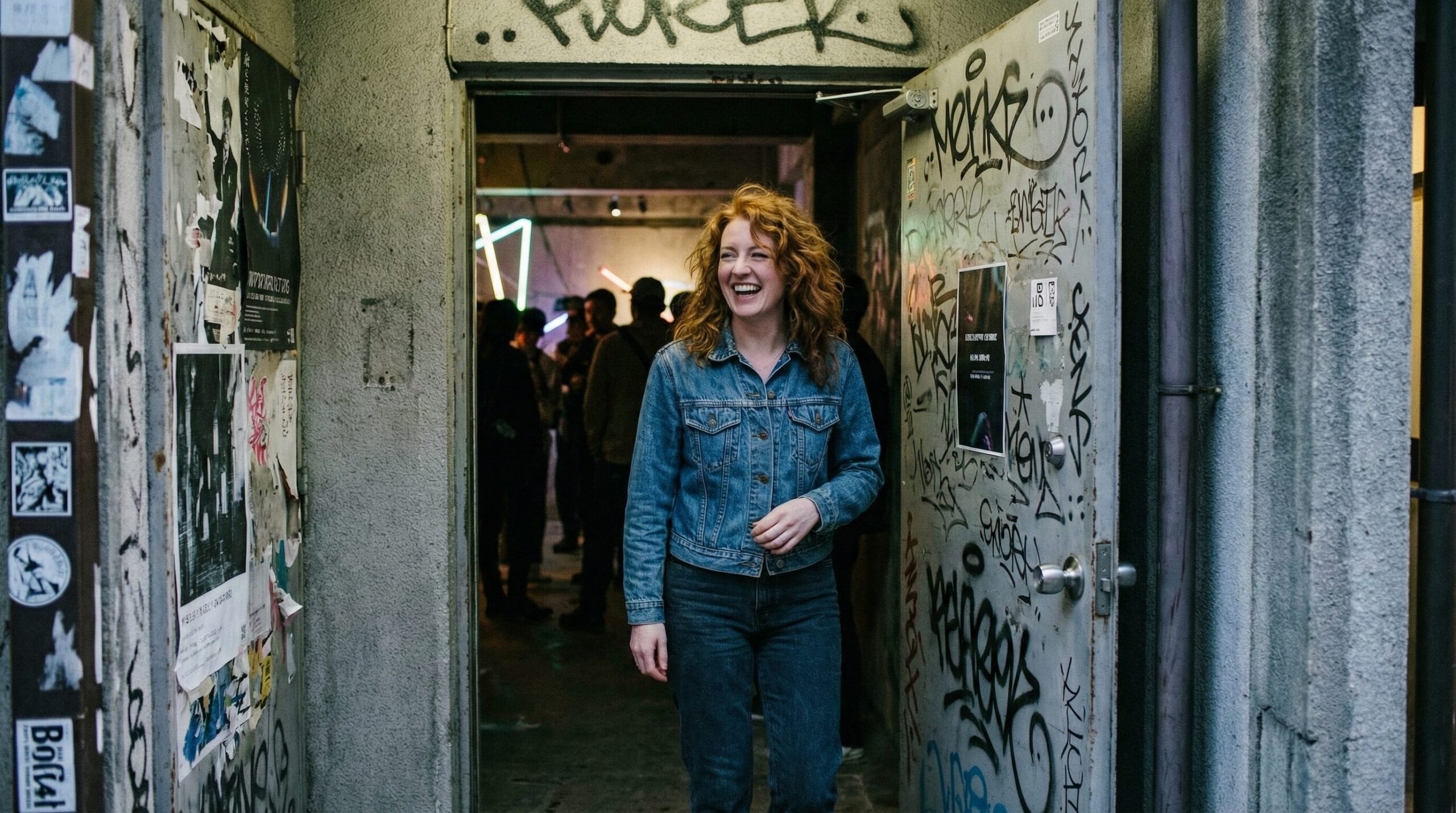
- The Setting: It is literally inside the Jingu-Marutamachi Station (Keihan Line). You walk down the station stairs, and instead of a train platform, you find a heavy metal door.
- The Programming: Metro defies categorization. One night it is a drag queen revue (“Diamonds Are Forever”), the next it is hard techno, the next an experimental art installation. It is a cultural melting pot where professors rub shoulders with punks.
- Why Visit: It is a designated “cultural heritage” site of the night. Even the city officials recognize its importance to Kyoto’s artistic identity.
Jittoku (Coffee House Jittoku)
Location: Nishijin The History: Opened in 1973 in a converted sake warehouse (kura), Jittoku is the oldest “Live House” in Japan.
- The Atmosphere: The interior is dark wood, stained with 50 years of tobacco smoke and blues music. The acoustics of the thick clay walls are legendary.
- The Music: It hosts everything from local blues bands to psychedelic rock. It feels less like a concert venue and more like a secret society meeting hall.
UrBANGUILD
Location: Kiyamachi The Experience: Located on the 3rd floor of a nondescript building, UrBANGUILD is the hub for the “weird” Kyoto.
- The Stage: The stage is framed by intricate scrap-wood carpentry, creating a warm, organic feel.
- The Acts: This is the place for avant-garde theater, contemporary dance, and experimental noise. If you want to see a performance involving contact microphones attached to vegetables, this is where you go.
The Art of the “Alternative Space”
Kyoto’s art scene is not found in the massive museums of Okazaki Park. It is found in “Alternative Spaces”—small, artist-run galleries often hidden in residential neighborhoods.
KG+ and Kyotographie
While Kyotographie is a major international photography festival, its satellite event, KG+, is where the underground thrives.
- The Concept: Emerging artists take over machiya, abandoned factories, and temples to display their work. It turns the entire city into a gallery.
- When: Usually held in spring (April/May). If you visit during this time, grab a yellow KG+ map and hunt for exhibitions in the backstreets.
Books and Zines: Hohohoza
Location: Sakyo-ku (Jodoji) The Spot: Hohohoza is more than a bookstore; it is a cultural curator.
- The Goods: The first floor is dedicated to new books, but the selection is curated with a distinct bias towards counter-culture, art, and philosophy. They also stock a massive amount of “Zines”—self-published booklets by local artists.
- The Souvenir: Buying a Zine here is the ultimate underground souvenir. It is raw, unpolished, and directly connects you to a specific artist living in the city right now.
Practical Examples: A Night Out in the Underground
You cannot plan these nights perfectly, but you can set the stage. Here is a sample itinerary for a Friday night that avoids the tourist hordes.
18:00 – The Scholarly Start
- Area: Kyoto University (Hyakumanben).
- Dinner: Eat at Shinshindo. Not the bakery chain, but the original cafe near the university where professors have debated philosophy since 1930. The long wooden tables encourage communal dining. Order the curry.
20:00 – The Deep Listening
- Venue: Lush Life or Jazz Spot Yamatoya.
- Activity: Kyoto has a massive Jazz Kissa (Jazz Cafe) culture. These are places where talking is discouraged. You sit, you drink whiskey, and you listen to vinyl records on a sound system that costs more than a house. It is intense, serious, and deeply Kyoto.
22:00 – The Live Injection
- Venue: Head to Imadegawa.
- Action: Located slightly north of the main center. Pop into Socrates, a venue known for hardcore punk and noise. It’s loud, aggressive, and cathartic.
24:00 – The Late Night Noodle
- Food: Unlike the delicate Kaiseki, late-night Kyoto food is heavy.
- Spot: Find a standing udon shop or a heavy ramen joint like Tenkaippin (the original branch is in Sakyo-ku). You will be surrounded by band members carrying guitar cases and students finishing their night.
Tips for Travelers: Navigating the scene
Entering Kyoto’s Underground Cultural Scene can be intimidating. The doors are heavy, the signs are often in Japanese, and the regulars all seem to know each other.
The “Ichigen-san” Fear
In Gion, “Ichigen-san okotowari” (first-time customers refused) is a real rule. In the underground scene, it is a myth.
- The Reality: Punks, artists, and musicians are generally welcoming to anyone who respects the art. If you pay the cover charge and order a drink, you belong.
- The Language: Don’t worry about not speaking Japanese. Music and art are the bridge. A simple “Cool show” to the band member at the bar is enough.
Finding the Events
Google is useless here. The underground relies on paper and Instagram.
- Flyers: Go to a place like Village Vanguard (the chaotic bookstore) or Jittoku and look at the flyer rack. This is the physical internet of Kyoto.
- Instagram Tags: Search tags like #KyotoLive, #KyotoUnderground, or follow the venues (@metro_kyoto, @urbanguild).
Transport Reality
The magic hour for the underground is often after the trains stop.
- The Last Train: The subway and Hankyu lines stop around midnight (0:00).
- The Gap: Clubs stay open until 5:00 AM (first train).
- The Strategy: If you commit to Metro or a late show, commit fully. Stay until morning. Watching the sun rise over the Kamo River while walking home with ringing ears is a rite of passage.
Conclusion
Kyoto is a city of duality. It is the “Sun” of the Imperial Court and the “Moon” of the hidden artist. Most travelers are content to bask in the sun—to see the gold leaf, the red torii gates, and the perfectly raked gravel.
And that is beautiful. But to ignore Kyoto’s Underground Cultural Scene is to ignore the city’s living breath. The avant-garde scene here is not a rejection of tradition; it is a reaction to it. The noise musician screaming into a microphone in a basement in Kiyamachi is channeling the same intensity of spirit as the Zen monk meditating in the mountains. They are both seeking a moment of pure, unadulterated truth.
So, for one night, leave the temple guide at the hotel. Go to the river. Find the heavy metal door. And listen to what Kyoto is actually saying.