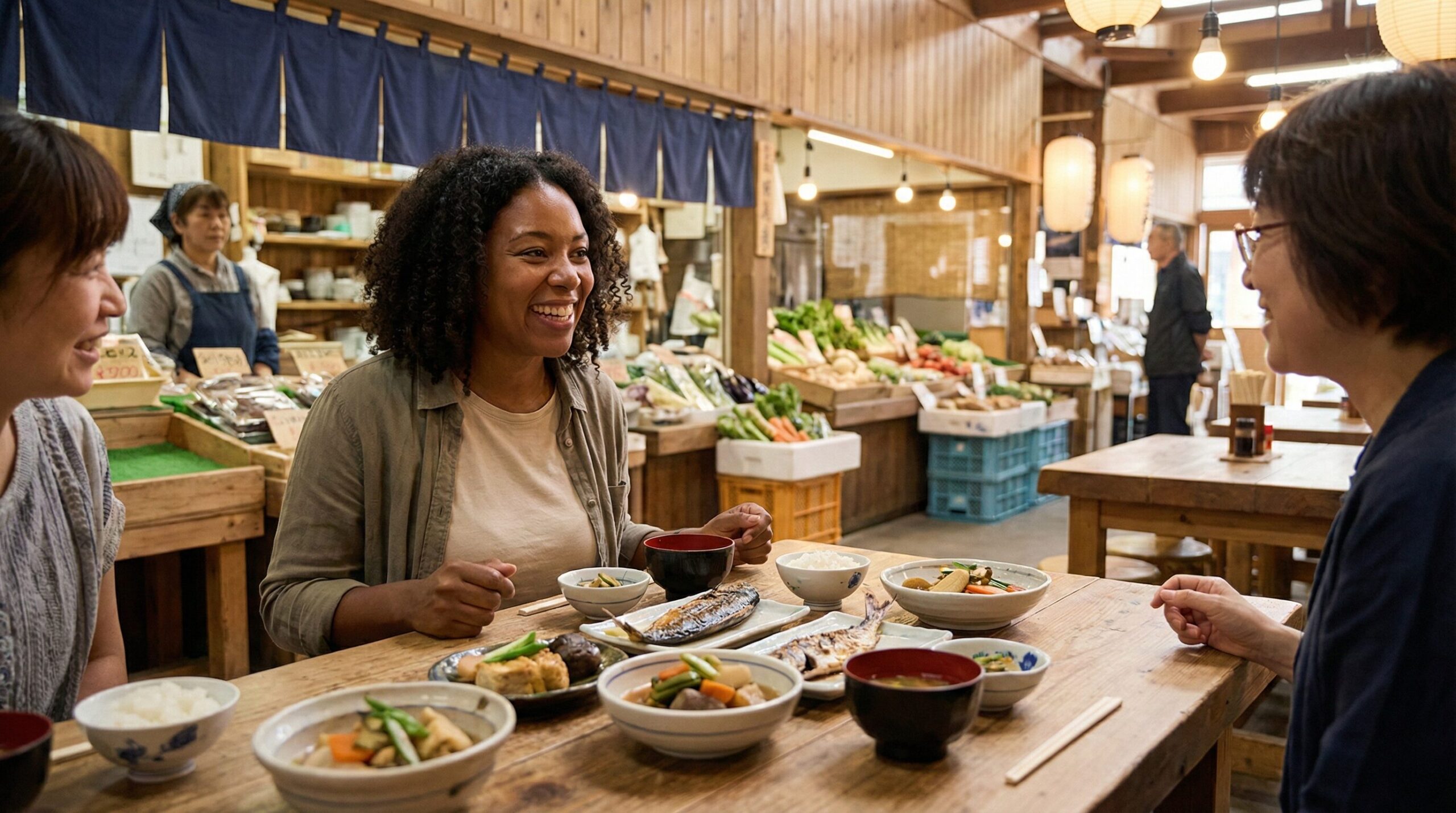
If Tokyo is the polished face of Japan, Tohoku is its beating, rustic heart. Located in the northernmost part of Japan’s main island, this region is defined by its dramatic seasons—harsh, snow-buried winters and lush, brilliant summers. It is a land where the climate dictates the menu, and survival has historically meant mastering the art of preservation.
For the culinary traveler, Tohoku offers something rare: food that hasn’t been overly sanitized for the global palate. Here, flavors are deeper, saltier, and more fermented. The cuisine tells the story of the people—resilient, warm, and deeply connected to the land and sea.
This Local Food Guide in Tohoku is not just a list of restaurants; it is an invitation to sit around an irori (sunken hearth), sip locally brewed sake, and taste the history of a region that feeds Japan’s soul. Beyond the neon lights, this is where you taste the real Japan.
- The Philosophy of Northern Flavors: Preservation and Warmth
- Aomori Prefecture: The Bounty of Two Seas
- Akita Prefecture: Rice, Smoke, and Fire
- Iwate Prefecture: The Land of Noodles
- Miyagi Prefecture: The Gourmet Capital
- Yamagata Prefecture: Beef and Community
- Fukushima Prefecture: Resilience in a Bowl
- A Note on Sake: The Water of the Gods
- Practical Tips for the Food Traveler
- Conclusion
The Philosophy of Northern Flavors: Preservation and Warmth
Before diving into specific dishes, it is essential to understand the “why” behind Tohoku’s cuisine. For centuries, the region was isolated by heavy snowfall during winter. Fresh produce was scarce, leading to a culture heavily reliant on preservation techniques. You will notice a prevalence of:
- Pickling (Tsukemono): Vegetables are salted, fermented, or smoked to last through the winter.
- Miso and Soy Sauce: The flavors here are often stronger and saltier than in the south, designed to pair with the abundant rice harvest and keep the body warm.
- Soup Culture: Nothing combats a Tohoku blizzard like a hot pot (nabe) or a steaming bowl of noodles.
When you eat in Tohoku, you are tasting the ingenuity of ancestors who turned harsh winters into culinary masterpieces.
Aomori Prefecture: The Bounty of Two Seas
Sitting at the very top of Honshu, Aomori is surrounded by the sea on three sides. It is the kingdom of apples, garlic, and incredible seafood.
Nokke-don (Aomori City)
Skip the hotel breakfast and head straight to the Aomori Gyosai Center (locally known as Furukawa Fish Market) in Aomori City. Here, the specialty is Nokke-don. You buy tickets at the entrance and are given a bowl of rice. As you wander the narrow stalls, you trade tickets for fresh slices of sashimi—scallops, tuna, sea urchin, and shrimp—building your own custom seafood bowl. It is chaotic, fresh, and deeply interactive.
Kaiyaki Miso
This is rustic comfort food at its finest. Large scallop shells are used as a pan to grill a mixture of miso, beaten eggs, and scallop meat over a flame. The salty, savory custard that forms is best eaten with a stiff drink of local sake. It’s a dish born from fishermen who needed a quick, warming meal on their boats.
Akita Prefecture: Rice, Smoke, and Fire
Akita is famous for its distinct “Akita Beauty” (Akita Bijin) and its high-quality rice, which translates into exceptional sake and food.
Kiritanpo Nabe
If Akita had a signature dish, this would be it. Freshly cooked rice is mashed and molded around cedar skewers, then toasted over an open charcoal fire until the outside is crisp and golden. These rice tubes, called Kiritanpo, are then slid off the skewers and torn into a hot pot filled with burdock root, maitake mushrooms, leeks, and—crucially—Hinai Jidori, one of Japan’s three most celebrated breeds of chicken. The broth soaks into the toasted rice, creating a texture that is both chewy and savory.
Iburigakko
You cannot talk about Akita without mentioning Iburigakko. In most of Japan, daikon radish pickles are sun-dried. But in Akita’s snowy interior, sunshine is scarce during the long winter. Instead, locals hang the radishes above the hearth to smoke them before pickling in rice bran. The result is a crunchy, smoky pickle that tastes remarkably like a savory cheese.
- Pro Tip: Try Iburigakko paired with cream cheese. It sounds modern, but it’s a beloved local bar snack that pairs perfectly with smoky scotch or sake.
Iwate Prefecture: The Land of Noodles
Morioka, the capital of Iwate, is curiously obsessed with noodles. They are known as the “Three Great Noodles of Morioka,” and trying all three is a rite of passage.
Wanko Soba
This is less of a meal and more of a sport. You sit with an empty bowl, and a server stands by your side with a tray of bite-sized soba portions. As soon as you slurp one down, they chant “Hai, jan-jan!” and toss in another. You can add toppings like tuna, mushrooms, or kimchi, but the goal is volume. The average adult eats about 40-60 bowls. Can you hit 100?
Morioka Reimen
A legacy of Korean immigrants, these are cold noodles with a distinct rubbery chewiness, served in a cold beef broth topped with kimchi, cucumber, and a slice of watermelon or pear. The spice of the kimchi cuts through the rich, cold broth, making it incredibly refreshing in summer.
Morioka Jajamen
Based on Chinese Zhajiangmian, these represent the “homestyle” entry of the trio. Flat udon-like noodles are topped with a scoop of dark, salty meat miso. You mix it all up with vinegar, chili oil, and garlic.
- The Ritual: When you are mostly finished, crack a raw egg into your bowl and hand it to the chef. They will add hot noodle water to turn the remaining sauce and egg into a soup called Chitantan.
Miyagi Prefecture: The Gourmet Capital
Sendai, the largest city in Tohoku, is a bustling hub where history and modernity collide. Its food scene is legendary.
Gyutan (Grilled Beef Tongue)
Originating in post-war Sendai as a way to use cheap cuts of meat, Gyutan has been elevated to a delicacy. Thick slices of tongue are aged to tenderize them, seasoned simply with salt, and grilled over charcoal. It is almost always served as a set with barley rice (mugi-meshi) and tail soup. The texture is snappy yet tender, with a deep umami flavor that differs entirely from steak.
- Where to eat: Look for restaurants with lines of locals in the alleys near Sendai Station. Kisuke and Rikyu are famous chains, but small independent shops often have their own secret marinades.
Zunda
You will see a vivid green paste everywhere in Miyagi. This is Zunda—sweetened, crushed edamame. Traditionally eaten on mochi rice cakes, it is now found in shakes, parfaits, and pastries. It has a rustic, grassy sweetness that is far less cloying than red bean paste.
Yamagata Prefecture: Beef and Community
Yamagata is a basin surrounded by mountains, known for sweltering summers and heavy winters.
Imoni (Potato Soup)
Imoni is more than a soup; it is a social event. Every autumn, riverbanks across Yamagata are filled with groups of friends and colleagues building stone ovens to cook giant pots of this soup.
- Inland Style: Beef and soy sauce base (sweet and savory).
- Coastal Style: Pork and miso base (rich and hearty).
The main ingredient is taro root (satoimo), which gives the soup a thick, comforting texture.
Yonezawa Beef
While Kobe and Matsusaka get the international fame, Japanese connoisseurs often rank Yonezawa beef as equal or superior. The cattle are raised in the harsh temperature extremes of the Yamagata basin, which is said to create finer marbling with a lower melting point. Whether eaten as steak, shabu-shabu, or sushi, it literally melts in your mouth.
Fukushima Prefecture: Resilience in a Bowl
Fukushima is the gateway to Tohoku, boasting a diverse landscape from the Pacific coast to the mountainous Aizu region.
Kitakata Ramen
The small town of Kitakata has the highest number of ramen shops per capita in Japan. The defining feature is the noodles: thick, flat, and curly (hirauchi-chijire-men) with a high water content, giving them a unique, slippery texture. The broth is usually a clear, golden soy sauce base made from pork bones and niboshi (dried sardines). It is traditionally eaten for breakfast—a custom known as Asa-Ra (Morning Ramen).
Kozuyu
A traditional celebratory dish from the Aizu region, Kozuyu is a clear soup made with dried scallops, carrots, mushrooms, and bite-sized balls of wheat gluten. It is served in shallow, red lacquerware cups. It speaks to the history of the samurai culture in Aizu—elegant, simple, and deeply respectful of ingredients.
A Note on Sake: The Water of the Gods
No Local Food Guide in Tohoku is complete without mentioning sake. The formula is simple: Cold Winter + Pure Snowmelt Water + High-Quality Rice = Perfect Sake.
Tohoku sake tends to be Tanrei Karakuchi (crisp and dry) on the coast, and slightly richer and sweeter in the interior.
- Fukushima: Famous for holding a historic record of consecutive wins for the most gold medals at the National New Sake Appraising & Conducting Awards.
- Yamagata: The first prefecture to have its own Geographical Indication (GI) for sake, much like Champagne in France.
Recommendation: When dining out, simply ask for “Jizake” (local sake). The staff will bring you something that pairs perfectly with the local ingredients.
Practical Tips for the Food Traveler
- Cash is King: While Tokyo has gone digital, many authentic spots in rural Tohoku still only accept cash. Always carry 10,000–20,000 yen in notes.
- The Izakaya Rule: When you sit down, you will be given a small appetizer called Otoshi. This acts as a table charge (usually 300–500 yen). Accept it graciously; it’s part of the culture.
- Language: English menus are rare outside of Sendai. Google Translate is helpful, but learning phrases like “Osusume wa nan desu ka?” (What do you recommend?) opens doors to the best meals.
- Best Season:
- Winter: For seafood (oysters, crab, fatty fish) and hot pots.
- Autumn: For new rice, fruits, and Imoni parties.
- Summer: For cold noodles, sea urchin, and festivals.
Conclusion
To travel through Tohoku is to travel through a landscape defined by resilience. The food here does not try to be trendy. It is grounded in the necessity of the seasons and the warmth of community. From the smoky aroma of an Akita pickle to the communal joy of a Yamagata potato soup party, every bite tells a story of people who have learned to live in harmony with nature’s extremes. So, when you plan your next trip to Japan, look beyond the Shinkansen stops of Tokyo and Kyoto. Head North. Sit at a counter, order the local sake, and dig into a bowl of something hot. You might just find that the “Real Japan” you were looking for was waiting for you in a snowy village in Tohoku all along.
Travel Deeper. Explore the Real Japan.