
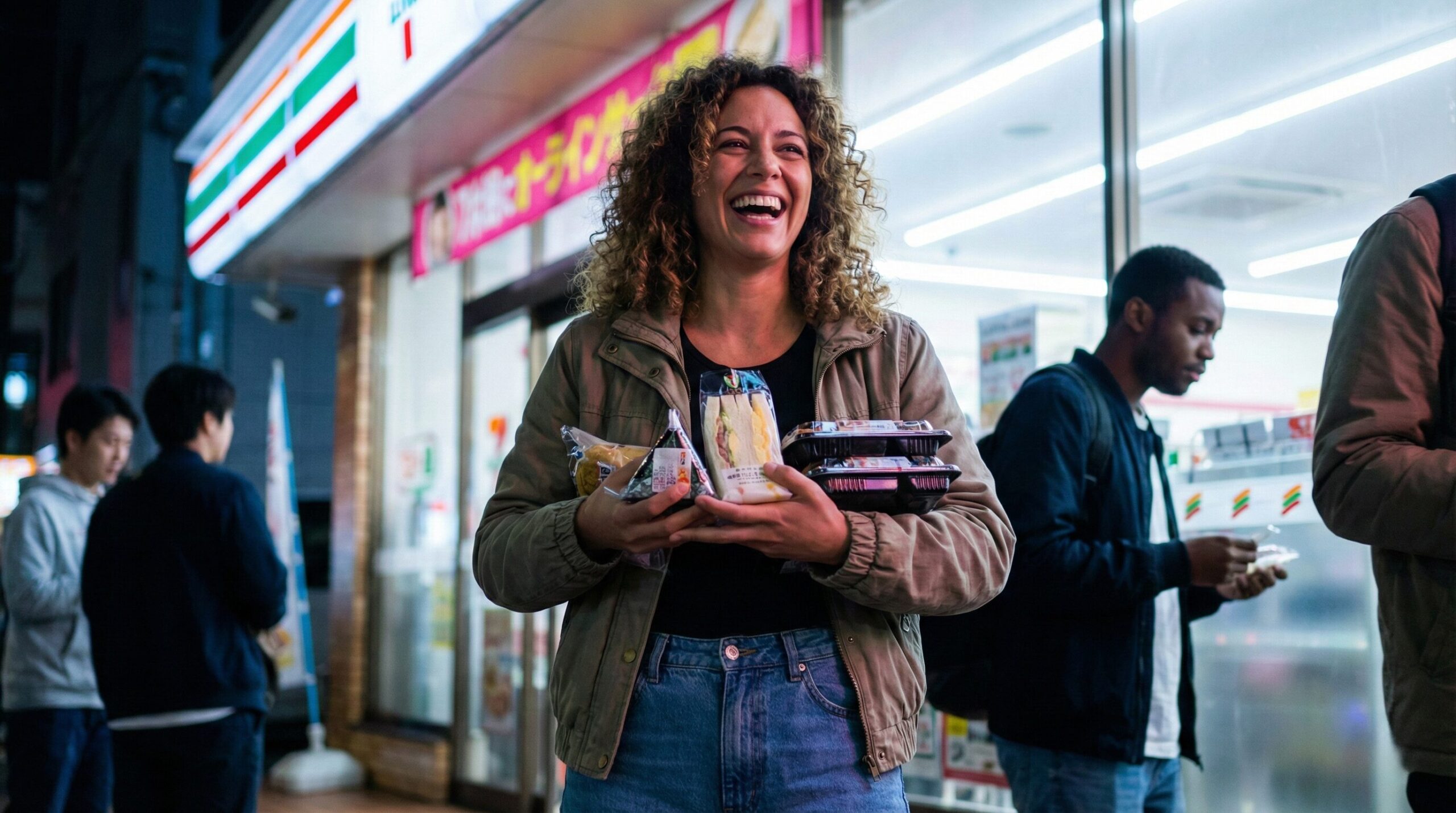
In most countries, the “convenience store” is a place of last resort. It is where you buy a withered hot dog at 2:00 AM, a bag of stale chips, or an overpriced bottle of water. It is a transaction born of desperation, not desire.
In Japan, however, the convenience store—or Konbini—is a cultural institution. It is a pantry, a bank, a post office, and, surprisingly, a legitimate culinary destination. For the traveler looking to Beyond Nippon, understanding the Konbini is essential.
It is the lifeblood of the modern Japanese city. It is where the salaryman grabs a nutrient-balanced breakfast, where the student buys a hot snack after club activities, and where the elderly neighbor picks up a fresh dinner. More importantly, for those traveling on a shoestring, Eating at Convenience Stores on a Budget is the secret weapon to surviving Japan without sacrificing flavor.
You can eat fresh, healthy, and seasonal meals for a fraction of the cost of a restaurant. This guide is not just about saving money; it is about navigating the aisles like a local, decoding the labels, and discovering why Anthony Bourdain once famously declared the Japanese egg salad sandwich a “pillows of love.”
The Trinity: Knowing Your Store
Japan has over 55,000 convenience stores. While they may look similar, locals know that the “Big Three” chains each have their own distinct culinary strengths. Knowing who does what best is the first step to superior budget dining.
7-Eleven: The King of Bento
7-Eleven in Japan is owned by a Japanese parent company (Seven & i Holdings) and is vastly superior to its American counterpart.
- The Strength: Fresh food logistics. Their supply chain is legendary.
- Best For: Onigiri (rice balls), Bento boxes, and the cold noodle selection. Their private label, “Seven Premium,” offers restaurant-quality instant noodles and freeze-dried soups.
- Must Buy: The Egg Salad Sandwich. It uses a special bread recipe and rich, yolk-heavy mayonnaise. It is iconic.
Lawson: The Bakery and Dessert Specialist
Lawson positions itself slightly more upscale with its “Uchi Café” sweets brand.
- The Strength: Desserts and Hot Snacks.
- Best For: Premium roll cakes, basque cheesecake, and the legendary Karaage-kun (chicken nuggets).
- Must Buy: The Premium Roll Cake. A swirl of fresh cream inside a sponge cake that is so soft you need a spoon to eat it.
FamilyMart: The Fried Food Champion
“Famima” is beloved by the younger generation for its aggressive hot food counter.
- The Strength: The extensive hot snack display case usually branded as “Famima Kitchen” next to the register.
- Best For: Fried chicken.
- Must Buy: Famichiki. This is a boneless, juicy, spiced fried chicken breast sold in a yellow paper bag. It is arguably Japan’s favorite comfort food.
Breakfast: The Start to the Day
Skip the expensive hotel buffet. A Konbini breakfast is faster, cheaper, and often more authentic to the daily life of a Tokyoite.
The Onigiri (Rice Ball) Revolution
The cornerstone of Eating at Convenience Stores on a Budget is the onigiri. These triangular rice balls are wrapped in seaweed (nori) and typically cost between ¥130 and ¥250 ($0.85–$1.65), depending on the filling.
- The Packaging Genius: You will notice the plastic wrapper separates the seaweed from the rice until the moment you open it. This keeps the nori crispy.
- Tip: Follow the numbers (1, 2, 3) on the wrapper to pull it open correctly.
- Flavor Guide:
- Tuna Mayo: The gateway flavor. Safe and creamy.
- Sha-ke (Salmon): Grilled salmon flakes. A classic.
- Umeboshi (Pickled Plum): Sour and salty. Great for digestion or hangovers.
- Konbu (Kelp): Savory and vegetarian-friendly.
The Coffee Culture
Japanese Konbini coffee is surprisingly excellent. You buy a cup (filled with ice for iced coffee) at the register for ¥120–¥180 ($0.80–$1.20) and take it to the self-service machine. The beans are freshly ground for every cup. It beats nearly any canned coffee and rivals Starbucks at a quarter of the price.
Budget Breakfast Combo:
- 1 Salmon Onigiri (¥160)
- 1 Boiled Egg (¥90 – salted perfectly)
- 1 Hot Coffee (¥120)
- Total: ¥370 (approx. $2.50)
Lunch: The Bento Box and Noodle Aisle
When noon hits, the Konbini shelves are fully stocked. This is the prime time to grab a substantial meal.
The Bento Box
Japanese convenience store bentos are not frozen TV dinners. They are prepared daily in regional factories and delivered multiple times a day.
- Makunouchi Bento: A variety box with rice, grilled fish, pickles, egg, and vegetables. Balanced and traditional.
- Katsudon: A pork cutlet simmered in egg and onions over rice. Hearty and filling.
- Pasta: Do not sleep on the pasta. The “Napolitan” (ketchup-based spaghetti) or “Mentaiko” (spicy cod roe) pasta dishes are heated up by the staff and are incredibly satisfying.
The Cold Noodle Selection
In summer, the shelves are lined with Zaru Soba (buckwheat noodles), Udon, and Hiyashi Chuka (cold ramen salad).
- How to Eat: They come with a packet of sauce/soup and often a small bag of wasabi or seaweed. You pour the sauce over the noodles (or into the dipping cup) right in the plastic bowl. It’s a refreshing, light lunch for under ¥550.
The “Cup Noodle” Option
If you are on an extreme budget, look for the instant noodle aisle.
- Recommendation: Look for the Nissin Cup Noodle “Pro” (high protein) or the premium bowls that include a retort pouch of real meat.
- Hot Water: Every Konbini has a hot water dispenser (potto) near the entrance. You can cook your noodles right there and eat immediately if there is a seating area.
Budget Lunch Combo:
- Zaru Soba Noodles (¥480)
- Famichiki (Fried Chicken) side (¥220)
- Green Tea (¥100 – private label)
- Total: ¥800 (approx. $5.30)
Dinner: Hot Snacks and Oden
Dinner at a Konbini can be a warm, comforting affair, especially if you explore the counter foods.
Oden: The Soul of Winter
From October to April, you might see a square metal vat of steaming broth near the register. This is Oden. It is a traditional soy-flavored dashi broth filled with various stewed ingredients.
- Note: Due to hygiene trends and staffing shortages, many stores now sell pre-packaged Oden ingredients in the refrigerated aisles instead of serving them hot at the counter. However, if you find a store with a hot pot, it is the ultimate comfort food.
- How to Order (Hot Pot style): It is usually self-serve (with tongs) or you point and the staff serves you. You put the items in a bowl, add broth, and take a packet of karashi (hot yellow mustard).
- What to Get:
- Daikon: Thick radish disc, soaked in broth. The star of the show.
- Tamago: Hard-boiled egg, stained brown by the soup.
- Mochi-kinchaku: A fried tofu pouch filled with gooey rice cake.
- Konnyaku: A triangular block of yam cake. Zero calories, rubbery texture (acquired taste).
- Price: Each item is usually ¥100–¥130. Five items make a full meal.
The “Hot Bar”
Glass display cases next to the register hold fried goods.
- Nikuman: Steamed buns filled with pork, pizza sauce, or curry. Perfect for a hand-warmer on a cold night.
- Yakitori: Grilled chicken skewers.
- Hash Browns: Surprisingly popular in Japan.
Budget Dinner Combo:
- Oden (Daikon, Egg, Beef tendon, Fish cake, Tofu) (¥650)
- Steamed Pork Bun (¥160)
- Strong Zero (Alcohol) (¥160)
- Total: ¥970 (approx. $6.50)
The “Healthy Konbini”: It’s Not Just Junk Food
One of the biggest differences between Western and Japanese convenience stores is the availability of genuine health food. If you have eaten too much tempura and ramen, the Konbini is your detox center.
Salad Chicken
This started a fitness revolution in Japan. Vacuum-sealed, pre-steamed chicken breasts available in flavors like Herb, Lemon, or Smoked.
- Why: It’s high protein, low calorie, moist, and ready to eat. You can eat it like a bar or shred it into a salad. Cost: ~¥260.
Tofu Bars
Firm tofu seasoned and pressed into a bar format. Flavors include Dashi or Yuzu Pepper. A vegan-friendly protein hit.
Vegetable Sticks with Miso Mayo
Cups of crisp carrot, daikon, and cucumber sticks served with a savory miso-mayonnaise dip. Fresh and crunchy.
Smoothies
Look for the colorful smoothies in the refrigerated section. Some 7-Eleven stores now have machines where you buy a cup of frozen fruit and blend it fresh on the spot.
Alcohol: The Cheapest Bar in Town
Japan has very relaxed open-container laws. Drinking in public is generally legal (though walking while drinking is sometimes frowned upon; sitting in a park is better). The alcohol selection in a Konbini rivals a liquor store.
- Chu-Hi (Canned Highball): Shochu mixed with soda and fruit juice.
- Strong Zero: The infamous 9% alcohol lemon drink. It costs around ¥160 ($1.10) and packs a punch. Drink with caution.
- Beer: All major brands (Asahi, Kirin, Sapporo) plus seasonal limited editions.
- Sake and Whisky: You can buy single-serving glass cups of sake (One Cup Ozeki) or mini bottles of Japanese whisky.
Practical Tips for Travelers
Microwave Etiquette
When you buy a bento, the clerk will ask: “Atatamemasu ka?” (Shall I warm this up?).
- Answer: “Hai, onegaishimasu” (Yes, please).
- DIY: If you are staying at a hotel, there is usually a microwave in the lobby or common area. Look at the bento label. It will say: 500W 2:00 / 1500W 0:40. This tells you exactly how long to microwave it based on the wattage.
Getting Utensils
They are free, but you might need to ask or gesture.
- Ohashi (Chopsticks)
- Supoon (Spoon)
- Fooku (Fork)
- Oshibori (Wet wipe) – essential for cleaning your hands before eating.
The “Eat-In” Space
Many Konbini (especially in larger stores or outside central Tokyo) have small counters with stools called “Eat-In Spaces.”
- Tax Note: Japan has a dual tax rate. Take-out is 8% tax. Eat-in is 10%. Technically, you should tell the clerk “Eat-in” so they charge you the extra 2%, but enforcement is lax.
Trash Disposal
Finding public trash cans in Japan is hard. The Konbini is the exception. They have bins outside or just inside the entrance.
- Sorting: You must separate your trash. Combustibles (paper, wrappers), Plastics, and Bottles/Cans. Do not throw your household/hotel trash here; only what you bought at the store.
Conclusion
Eating at Convenience Stores on a Budget in Japan is not a compromise. It is a cultural immersion.
It is standing under the fluorescent lights at midnight, deciphering the kanji on a seasonal melon bread. It is the satisfaction of peeling the wrapper off a crisp onigiri on a Shinkansen platform. It is the warmth of a hot pork bun on a snowy night in Hokkaido.
The Konbini is a microcosm of Japan itself: efficient, high-quality, seasonal, and incredibly considerate of the customer’s needs. So, do not feel guilty about skipping the restaurant reservation for a night. Go to 7-Eleven. Grab a basket. Build your own tasting menu of salad chicken, sushi rolls, and premium roll cakes.
You might just find it’s one of the best meals of your trip.
Travel Deeper. Explore the Real Japan.