When most travelers plan their journey through Japan, the conversation almost always begins—and ends—with the Shinkansen. The bullet train is a marvel of engineering: efficient, punctual, and fast. It slices through the country, blurring the landscape into a streak of green and grey.
But there is another way to move through this archipelago, one that follows a much older rhythm. Japan is a nation born of the sea. For centuries, its culture, food, and people have moved along the coastlines. Today, a vast network of long-distance ferries connects the northern drifts of Hokkaido to the subtropical ports of Kyushu and Okinawa.
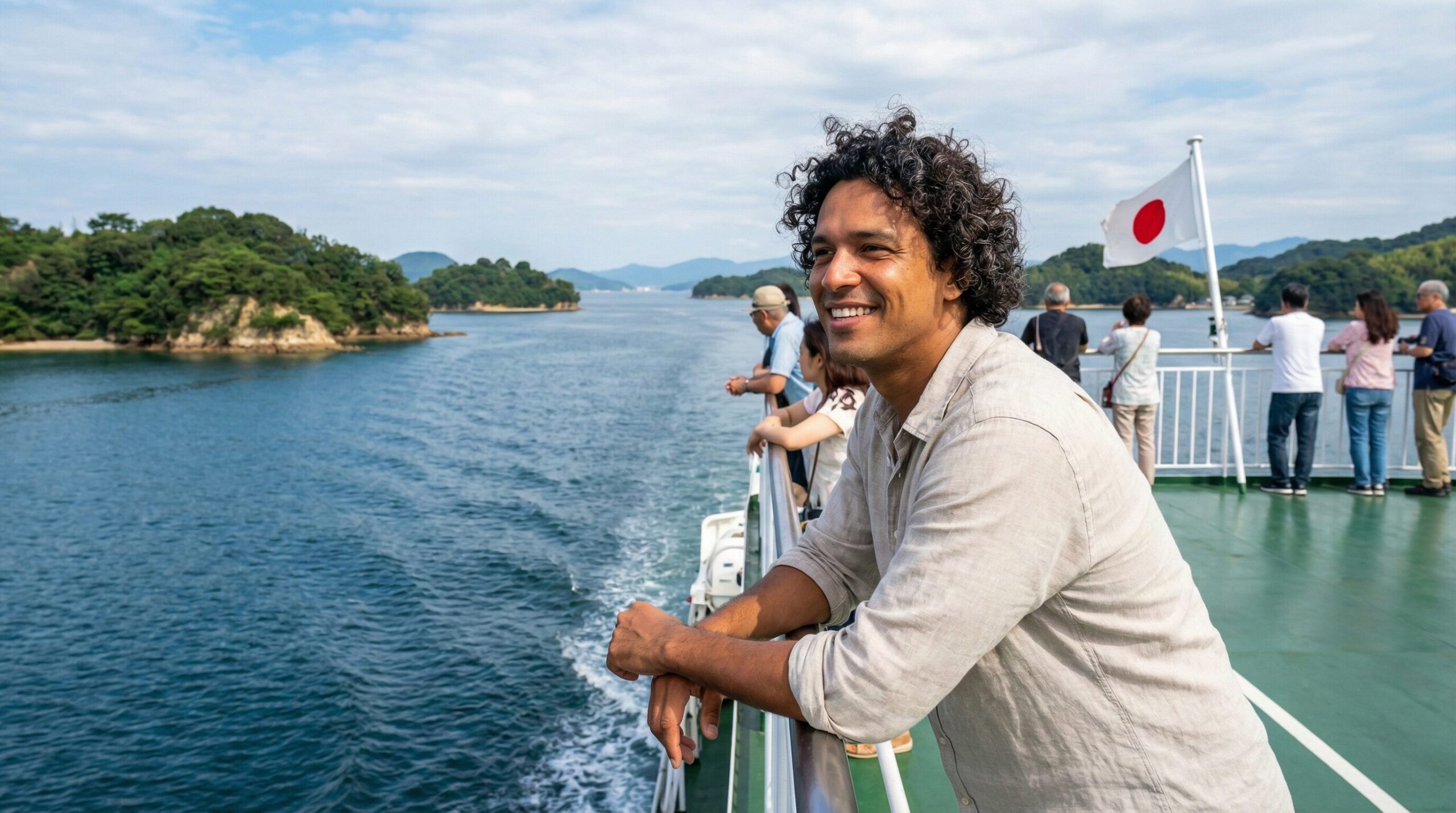
These ships are not merely transportation; they are “moving hotels,” floating slices of Japanese daily life where the rush of tourism fades into the slow, steady hum of the engine. Taking a ferry in Japan is an exercise in patience and observation. It is about waking up to a sunrise over the Pacific Ocean, soaking in a communal bath while watching the waves, and sleeping on a tatami mat next to a local truck driver or a college student on a budget trip.
It is less about getting somewhere fast, and more about understanding the scale of the country. For the traveler seeking to go deeper, this is your Guide to Using Japan’s Ferries.
Why Choose the Sea?
The Appeal of Slow Travel
Before diving into the logistics, it is worth understanding why a traveler would choose a 12-hour boat ride over a 2-hour train ride. The answer lies in the atmosphere.
The “Moving Ryokan”
Modern Japanese long-distance ferries are often described as “casual cruise ships,” but a more accurate description might be a “utilitarian ryokan.” They offer a unique blend of hospitality and practicality. You are not trapped in a seat; you have the freedom to walk the deck, eat a hot meal in a restaurant, and, crucially, stretch your legs in a grand bath (sento) with an ocean view.
A Window into Local Life
The Shinkansen is for business and speed. The ferry is for life. Onboard, the social barriers are slightly lower. You might find families playing cards in the lounge, retirees sketching the coastline, or truck drivers winding down with a beer after a long haul. It is a rare space where the frantic pace of modern Japan slows down, allowing for a communal, shared silence that is deeply culturally specific.
Cost-Effective Travel
For the savvy traveler, the ferry is a financial hack. By combining your transportation and accommodation costs into one ticket, you save on a night’s hotel. This is particularly effective for long legs, such as traveling from Tokyo to Hokkaido or Osaka to Kyushu.
Understanding the Routes: The Maritime Map
Japan’s ferry network is extensive. While there are hundreds of short island-hopping routes (like the ferry to Miyajima or Naoshima), this guide focuses on the long-distance car ferries that act as overnight bridges between major islands.
The Gateway to the North: Ibaraki (Oarai) to Hokkaido (Tomakomai)
- Operator: MOL Sunflower
- Duration: Approx. 18–19 hours
- The Experience: This is the classic route for those wanting to explore the wild nature of Hokkaido. Departing from Oarai (accessible from Tokyo by train or bus in about 90 minutes) in the evening and arriving in Tomakomai the next afternoon, this route hugs the Pacific coast. The sunrise over the ocean is legendary.
The Kansai Connector: Osaka to Kyushu (Beppu/Shibushi)
- Operator: MOL Sunflower
- Duration: Approx. 12 hours (Overnight)
- The Experience: This is arguably the most popular route for travelers. You leave the neon lights of Osaka Bay at night, sleep while the ship traverses the calm Seto Inland Sea or the Pacific, and wake up in Beppu—Japan’s hot spring capital—refreshed and ready to soak.
The Sea of Japan Route: Niigata to Hokkaido (Otaru)
- Operator: Shin Nihonkai Ferry
- Duration: Approx. 16 hours
- The Experience: Sailing the Sea of Japan (the west side) offers a different mood. The water is often rougher, the coastline more rugged. This route lands you near Otaru, a historic port town famous for its canal and glassworks.
The Night View Express: Kobe to Shikoku (Takamatsu)
- Operator: Jumbo Ferry
- Duration: Approx. 4.5 hours
- The Experience: A shorter hop that connects the main island to Shikoku. The night view of the Akashi Kaikyo Bridge—the world’s longest suspension bridge—from the deck is a photographer’s dream.
Life Onboard: What to Expect
The onboard experience is where the “culture shock” truly happens. Japanese ferries operate on a unique system of etiquette and facilities.
Accommodation Classes: From Carpets to Suites
One of the most confusing aspects for first-timers is the ticket class system.
- 2nd Class (The “Zakone” Experience): This is the cheapest and most “authentic” option. It is essentially a large, open room with carpeted floors or tatami mats. You are given a designated space, a thin mattress, a blanket, and a hard pillow. You sleep side-by-side with strangers. Observation: While it sounds daunting to Westerners valuing privacy, it is respectful and quiet. It is a communal experience reminiscent of old Japan. However, for a good night’s sleep, earplugs are mandatory.
- Tourist Bed / Dormitory: A step up. You get a bunk bed in a shared room, often with a curtain for privacy. This is the sweet spot for solo travelers—privacy without the price tag of a suite.
- 1st Class / Deluxe: Private western-style hotel rooms with twin beds, sometimes even a private balcony and toilet. If you crave solitude, this is worth the upgrade.
The Grand Bath (Sento)
Almost every long-distance ferry in Japan has a large communal bath. Taking a hot bath while feeling the gentle sway of the ocean and looking out a porthole at the passing fishing boats is a quintessential Japanese travel memory. Note: The rules are the same as any onsen on land. Wash thoroughly before entering, and no swimsuits allowed.
Food: Buffets and Vending Machines
Most ships have a restaurant serving buffet-style dinner and breakfast. The food is decent, hearty comfort food—curry, fried items, salad bars. However, the true heart of the ferry is the Vending Machine Corner. You will find machines dispensing hot cup noodles, frozen meals (fried rice, yakisoba) that you microwave, beer, sake, and ice cream. Eating a cup noodle in the lounge at midnight while looking at the dark ocean is a rite of passage.
How to Book: Navigating the Language Barrier
Historically, booking a ferry was a challenge requiring a phone call in Japanese. Fortunately, this is changing.
- Direct Booking (Official Websites): Major operators like MOL Sunflower and Taiheiyo Ferry now have English websites. You can pay by credit card and receive an e-ticket (QR code).
- Comparison Sites: Sites like Direct Ferries or AFerry are starting to cover Japanese routes, acting as aggregators similar to Skyscanner.
- Travel Agencies: If you are already in Japan, major travel agencies (JTB, HIS) can book tickets for you.
Important Recommendation: Book at least a month in advance if you plan to travel during Golden Week (early May), Obon (mid-August), or New Year’s. These ships fill up with locals returning home.
Practical Tips for the Ferry Traveler
To ensure your voyage is smooth sailing, keep these “Beyond Nippon” tips in mind.
Wi-Fi Connectivity: A Changing Tide
Historically, ferry Wi-Fi was notoriously spotty, offering a forced “digital detox.” However, recent introduction of satellite services like Starlink on major lines (such as MOL Sunflower) has drastically improved connectivity, allowing passengers to stay online even in the middle of the ocean. Still, for older vessels or simply to embrace the atmosphere, bringing a physical book or journal is highly recommended.
The “Seasickness” Reality
While modern ferries are equipped with stabilizers (fins that reduce rolling), the Pacific Ocean can still be restless. Tip: If you are prone to motion sickness, book a cabin in the center of the ship on a lower deck, where movement is minimized. Buy seasickness medication (yoi-dome) at a Japanese pharmacy before boarding.
Port Access is Tricky
Unlike train stations which are city-center hubs, ferry terminals are often located in industrial port areas, far from downtown. Tip: Always research the “port liner” or shuttle bus schedule. For example, the Osaka Nanko Port is a subway ride plus a walk away from central Osaka. Do not assume you can walk there from the main train station.
Boarding Procedure
Arrive 60 minutes before departure. If you are a foot passenger (no car), the process is simple. If you are bringing a bicycle, you must declare it when booking, as bike slots are limited.
Conclusion: The Journey is the Destination
In a world obsessed with speed, taking a ferry feels like an act of rebellion. It forces you to surrender to the pace of the environment. The beauty of the Guide to Using Japan’s Ferries lies not just in the logistics, but in the perspective shift it offers.
When you arrive in Hokkaido or Kyushu by boat, you haven’t just “arrived”; you have transitioned. You have watched the coastline change, felt the air temperature drop or rise, and shared a transient community with the people of this country.
This is the “Real Japan” that Beyond Nippon strives to uncover. It isn’t found in the brochure-perfect snapshots of Kyoto’s temples, but in the quiet, salty breeze on the deck of a ship at midnight, moving steadily through the dark water.
So, next time you plan a route across Japan, consider skipping the tunnel-vision of the train. Take the sea road. It may take longer, but the memories will anchor deeper.