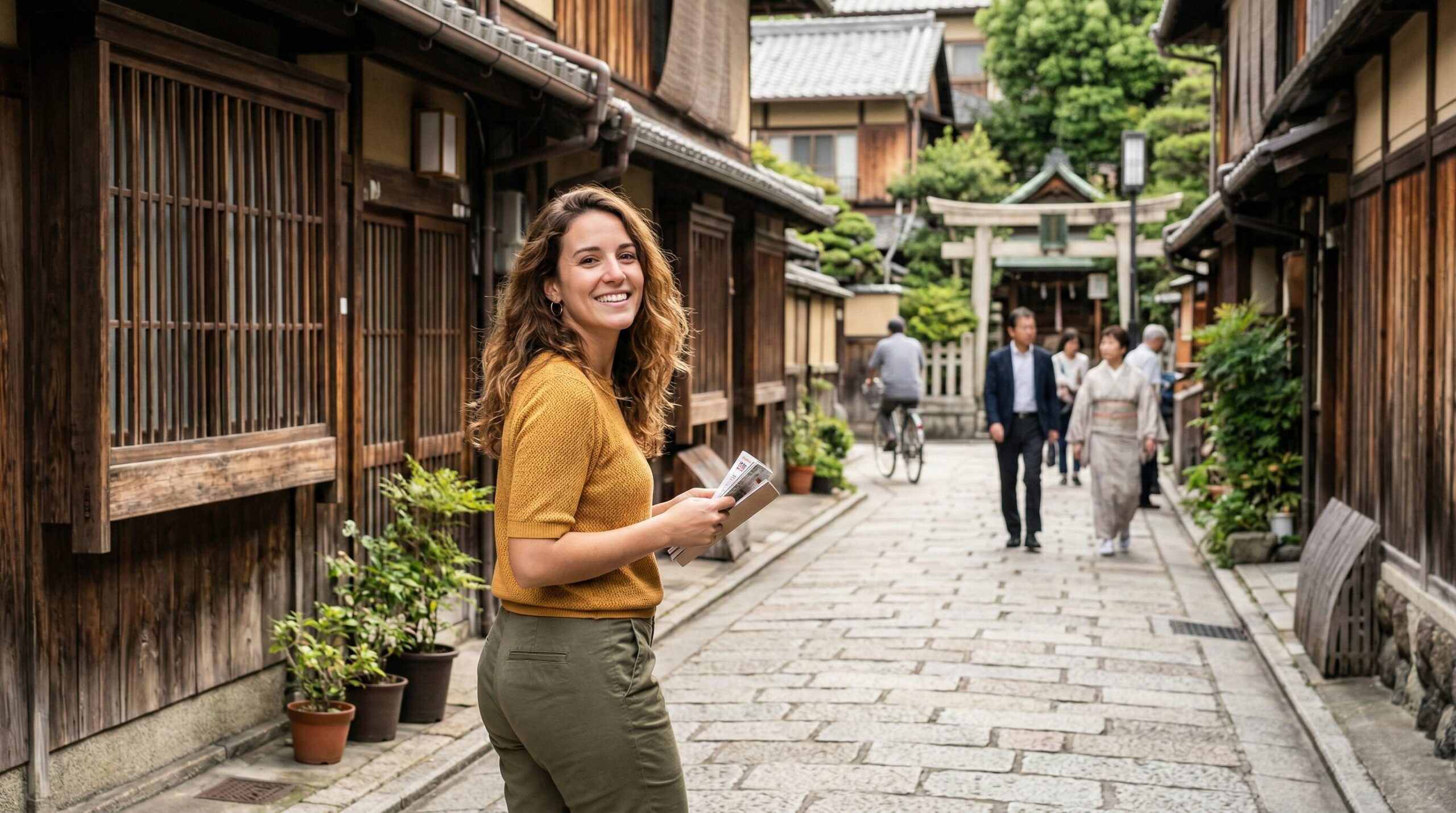
Japan is a country of profound visual beauty. It is the neon glow of a Tokyo crosswalk in the rain. It is the stark, meditative rake lines of a Zen rock garden. It is the steaming, mineral-rich waters of a hidden mountain hot spring.
But beneath this highly visible aesthetic lies an invisible, intricate web of social harmony. When you cross the Pacific and step out of the airport, you are not just entering a new time zone. You are entering a society built on the concept of wa (harmony) and the active avoidance of meiwaku (causing an inconvenience to others).
For the traveler seeking to go beyond superficial sightseeing, understanding this social fabric is essential.
It is very easy to unintentionally disrupt this harmony. A loud conversation on a train, a misstep in a traditional inn, or a misunderstanding of dining etiquette can quickly build a wall between you and the local culture.
This guide is not a list of rigid demands meant to induce travel anxiety. Rather, it is a key to unlocking a deeper, more friction-free journey.
Knowing how to avoid common tourist mistakes in Japan allows you to shed the heavy footprint of the typical tourist.
It allows you to move quietly, observe closely, and interact with the country on its own terms. Let us explore the unspoken rules, the common pitfalls, and the graceful adjustments that will elevate your journey from a simple vacation to an authentic cultural immersion.
Key Details and Breakdown: The Unspoken Rules of Space
To understand how to avoid common tourist mistakes in Japan, you must first understand how space is managed. Japan is a densely populated island nation. To live peacefully in close quarters, the culture has developed strict physical and acoustic boundaries.
The Acoustic Boundary: The Silence of Transit
In many Western countries, a train ride is a social event. People take phone calls, listen to music, and engage in loud conversations. In Japan, public transit is treated more like a moving library.
- The Mistake: Taking a phone call on a local train or the Shinkansen, or talking loudly with your travel companions.
- The Reality: When you board a train in Japan, you will notice an immediate, profound silence. Commuters are sleeping, reading, or quietly looking at their phones.
- The Adjustment: Put your phone on silent mode (known in Japan as “manner mode”). If you must converse, do so in a hushed whisper. If your phone rings, decline the call or step into the vestibule area between Shinkansen cars to answer it briefly.
The Physical Boundary: The Sacred Genkan
The distinction between the “outside” (dirty) and the “inside” (clean) is absolute in Japanese architecture. This boundary is enforced by the genkan, the sunken entryway found in every home, traditional ryokan, and many historic restaurants.
- The Mistake: Stepping onto the elevated wooden floor or tatami mats while wearing your outdoor shoes, or letting your bare feet touch the sunken genkan floor.
- The Reality: Bringing the dirt of the street into a living space is considered a major violation of cleanliness.
- The Adjustment: When you enter, remove your shoes in the sunken area. Step up directly onto the elevated floor in your socks. Turn around and neatly align your shoes pointing toward the door. Never wear slippers on tatami mats, and always use the designated “toilet slippers” only inside the restroom.
The Social Boundary: The Concept of Pointing
Body language carries immense weight. The way you direct attention can be interpreted as either helpful or highly aggressive.
- The Mistake: Pointing at a person, a menu item, or a landmark with a single index finger.
- The Reality: In Japan, pointing with an index finger is considered accusatory and rude.
- The Adjustment: When indicating a direction, asking about an item on a menu, or gesturing toward a person, always use an open hand with your palm facing slightly upward. It is a soft, welcoming gesture that instantly signals politeness.
Practical Examples and Recommendations: Dining and Bathing
Food and bathing are two of the most deeply cherished pillars of Japanese culture. They are also the areas where travelers stumble most frequently.
The Financial Faux Pas: Tipping
The instinct to reward good service is deeply ingrained in Western travelers. In Japan, however, the financial transaction is viewed differently.
- The Mistake: Leaving cash on the table after a meal, or trying to press a folded bill into the hand of your bartender or ryokan host.
- The Reality: Japan has absolutely no tipping culture. Exceptional service is not an optional add-on to be incentivized; it is the baseline expectation of doing business.
- The Adjustment: Pay the exact amount listed on the bill. If you leave money on the table, the waiter will likely sprint down the street to return your “forgotten” change. The highest compliment you can pay a chef is a sincere “Gochisosama deshita” (Thank you for the meal) and a slight bow as you leave.
The Chopstick Taboos
Chopsticks (hashi) are not just utensils; they hold spiritual significance, particularly in Buddhist funeral rites.
- The Mistake: Sticking your chopsticks vertically into a bowl of rice, or passing food directly from your chopsticks to someone else’s chopsticks.
- The Reality: Both of these actions mimic rituals performed at Japanese funerals (offering rice to the dead and passing cremated bones). Doing this at a dining table will cause immediate, visceral discomfort to the locals around you.
- The Adjustment: When you are not using your chopsticks, always rest them on the provided ceramic chopstick rest (hashioki). Never lay them flat across your bowl, as this is considered a breach of etiquette. If a rest is not provided, you can rest the tips on the edge of your tray or fold the paper wrapper to create a small rest. If you want to share food, place it directly onto a small plate and hand the plate to your companion.
The Intimacy of the Onsen
If you venture down to the geothermal valleys of Oita Prefecture for a deep, authentic hot spring experience, the rules are rigidly enforced. The onsen is a place of communal purity.
- The Mistake: Wearing a swimsuit into the water, wrapping yourself in a large towel, or entering the bath without washing first.
- The Reality: The bathwater is for soaking, not for cleaning. It is shared by everyone, and maintaining its absolute purity is paramount. Furthermore, tattoos are still heavily associated with organized crime in Japan, and many traditional onsen prohibit them.
- The Adjustment: You must bathe entirely naked. Before stepping into the hot spring, sit on a small stool at the washing station and scrub your body thoroughly with soap and water. Rinse off completely. Never let your small modesty towel touch the bathwater; fold it and place it on top of your head or on a rock nearby. If you have small tattoos, cover them with skin-toned waterproof bandages before entering the changing room.
Tips for Travelers: The Logistics of the Street
Beyond the traditional environments, modern Japanese cities operate on a highly specific set of daily logistics. Navigating the streets smoothly is a crucial part of how to avoid common tourist mistakes in Japan.
The Disappearing Trash Cans
One of the first things travelers notice in Tokyo or Kyoto is the immaculate cleanliness of the streets, paired with a complete absence of public trash cans.
- The Strategy: Do not leave your empty coffee cup on a ledge or cram it into a vending machine recycling slot. The cultural expectation is that you are responsible for your own waste. Carry a small plastic bag in your daypack. Put your trash in it, carry it with you all day, and dispose of it properly at your hotel or a convenience store in the evening.
The Rule of the Walk-and-Eat
In many global cities, grabbing a pastry and eating it while walking down the street is perfectly normal. In Japan, it is considered poor manners.
- The Strategy: Eating while walking (arukigui) is viewed as sloppy and carries the risk of spilling food on others. If you buy a snack from a street vendor or a convenience store, stand off to the side, finish eating it near the point of purchase, and then resume walking. The only exception to this rule is during a localized street festival (matsuri), where wandering with a skewer of grilled meat is expected.
The Prepared Wallet
While the pandemic accelerated the adoption of digital payments in Japan, cash remains king outside of the major commercial centers.
- The Strategy: Never assume a small, family-run business will accept Apple Pay or a foreign Visa card. If you are exploring the backstreet izakayas of Shinjuku or visiting a rural shrine, you must have Yen. Use the ATMs located inside 7-Eleven or FamilyMart convenience stores; they offer excellent exchange rates and instructions in English. Always keep a reserve of 10,000 Yen in your wallet.
The Escalator Divide
The unwritten rules of transit extend to the escalators. Standing on the wrong side disrupts the flow of thousands of commuters.
- The Strategy: While historically people stood on the left in Tokyo and the right in Osaka to let others walk past, modern safety rules across Japan now strongly dictate otherwise. The official rule is to stand still on both sides of the escalator. Do not walk up or down moving escalators, as it is considered a safety hazard.
The Shinkansen Luggage Rule
Bringing massive, oversized suitcases onto the bullet train without preparation is a major modern faux pas.
- The Strategy: If your suitcase exceeds a total dimension (length + width + height) of 160cm, you cannot simply bring it on board. You must reserve a specific “seat with an oversized baggage area” at the back of the train car in advance. If you fail to do so, the conductor will charge you a hefty fee. A better option? Use a luggage forwarding service (takuhaibin) from your hotel or the airport. They will ship your heavy bags to your next destination overnight for a small fee, allowing you to travel gracefully with just a daypack.
Conclusion: The Reward of Observation
Understanding how to avoid common tourist mistakes in Japan is not about achieving flawless perfection. You are a visitor, and locals understand that you are navigating an entirely different cultural framework. Grace is often extended when genuine effort is shown.
The goal of learning these nuances is to shift your mindset. It is about moving away from the entitlement of the consumer and toward the respect of the guest. When you lower your voice on the train, when you line up your shoes neatly in the genkan, and when you bow slightly as you leave a tiny noodle shop, you are speaking a silent language of respect. And that respect is almost always returned tenfold. It opens doors to warmer smiles, deeper conversations, and a far more profound connection with the environment around you. Japan’s true beauty often hides in plain sight. It’s time to go beyond the ordinary—and see the Japan locals know best.