When you board the train heading south from Tokyo, the transition is startlingly fast. The dense, gray concrete of the metropolis holds on for a little while, but soon, it surrenders.
The buildings shrink. The sky widens. And then, suddenly, the horizon breaks open. You have reached the coastline of Shizuoka Prefecture.
Shizuoka is a region defined by dramatic contrasts. It is the home of Mount Fuji, Japan’s most iconic peak, but it is also defined by the deep, plunging trenches of the Pacific Ocean.
The Izu Peninsula, extending like a jagged finger into the sea, creates a landscape of sheer cliffs, hidden coves, and sweeping bays. It is here, clinging to the edge of the continent, that you will find some of the most profound hospitality in the country.
Searching for the best ryokan with ocean views in Shizuoka is not just about finding a pretty window. It is about seeking an elemental experience. It is about the physical sensation of sitting in steaming geothermal water while cold ocean spray mists the air.
It is about falling asleep to the rhythmic, heavy crash of the tide against the rocks below your tatami room.
A coastal ryokan operates on a completely different frequency than an inland mountain inn.
It is brighter, bolder, and deeply tied to the daily rhythms of the fishermen working the local ports.
For the traveler looking to travel deeper, leaving the congested tourist routes behind for the quiet, salt-tinged air of the Shizuoka coast is a revelation.
Let us explore the architecture, the deeply local cuisine, and the undeniable magic of Japan’s premier coastal retreats.
Key Details and Breakdown: The Anatomy of a Coastal Ryokan
To truly understand what elevates the best ryokan with ocean views in Shizuoka above a standard luxury hotel, you must understand the specific geography and natural resources of the region. The ocean here is not just a backdrop; it is the core ingredient of the entire experience.
The Geography of the Views
Shizuoka’s coastline is vast, and the specific location of your ryokan completely dictates the atmosphere of your stay.
- The East Coast (Sagami Bay): Facing the open Pacific. The coastline here is rugged and steep. Ryokans are often built directly into the cliffside, offering sweeping, unobstructed views of the sunrise. The water is deep, dark blue, and restless.
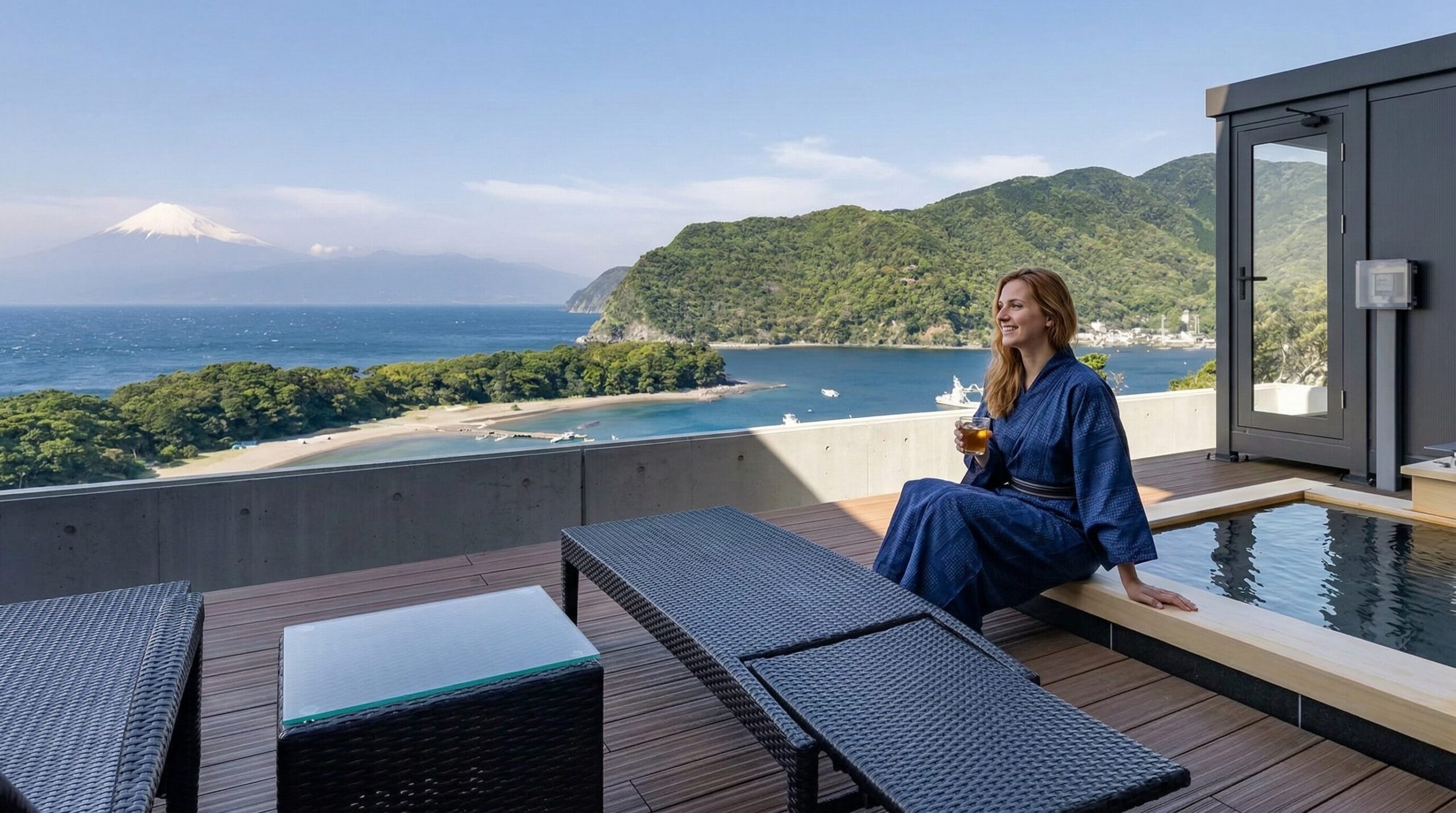
- The West Coast (Suruga Bay): Facing inward toward the rest of Shizuoka. Suruga Bay is the deepest bay in Japan. The waters here are calmer. The defining feature of a West Izu ryokan is the sunset over the ocean, often casting a warm, fading glow on the distant, unmistakable peak of Mount Fuji across the water.
The Coastal Hot Springs (Umi no Onsen)
Not all hot springs are created equal. While inland mountain onsen are often rich in sulfur (yielding that distinct, egg-like scent), coastal hot springs offer a entirely different mineral profile.
- The Mineral Makeup: The geothermal water along the Shizuoka coast is heavily infused with sodium and calcium chloride. It is, essentially, ancient heated seawater.
- The Sensation: You can actually taste the salt on your lips. This specific mineral profile acts as an incredible insulator. The salt coats your skin, preventing your body heat from escaping long after you have stepped out of the bath. It is profoundly warming, making it the perfect remedy for a brisk coastal evening.
The Culinary Profile: Deep Sea and Coastal Riches
A stay at a traditional ryokan always includes a kaiseki (multi-course) dinner, but in Shizuoka, the menu is an unapologetic celebration of the sea.
- Kinmedai (Splendid Alfonsino): This is the undisputed king of the Izu Peninsula. It is a deep-sea fish with massive eyes and brilliant red scales. In a high-end Shizuoka ryokan, it is almost always served whole, gently simmered in a sweet and savory soy-based broth (nitsuke). The meat is incredibly fatty, tender, and rich.
- Sakura Ebi and Shirasu: Suruga Bay is famous for these tiny delicacies. Sakura ebi (cherry shrimp) are often served as crispy tempura, while shirasu (whitebait) might be served raw with a dash of soy sauce and grated ginger over your morning rice.
- Ise Ebi (Spiny Lobster): Caught in the rocky shallows, these are frequently served as the centerpiece of the sashimi platter, their translucent meat offering a deep, natural sweetness.
Practical Examples and Recommendations: Finding Your Coastal Sanctuary
When looking for the best ryokan with ocean views in Shizuoka, it helps to categorize them by the specific atmosphere they cultivate. Here are the types of coastal sanctuaries that offer the most authentic, memorable experiences.
The Cliffside Balcony: The East Izu Experience
For those who want to feel the raw power of the Pacific Ocean, the towns along the eastern edge of the Izu Peninsula, such as Higashi-Izu, offer unparalleled verticality.
- The Architecture: These ryokans are engineering marvels, terraced into the steep volcanic rock. The lobbies are often on the top floor, with the guest rooms and baths cascading downward toward the sea.
- The Visual: The defining feature here is the private open-air bath (rotenburo) on your room’s balcony. You slide open the glass doors of your tatami room, step out into the brisk coastal air, and sink into a cypress tub. You look out over the vast expanse of the Pacific, with the distant silhouettes of the Izu Islands dotting the endless horizon. At night, the only light comes from the moon reflecting off the black water and the distant, bobbing lamps of the squid fishing boats.
- The Vibe: Invigorating, expansive, and deeply dramatic. It is the perfect place to wake up early, brew a pot of green tea, and watch the sun pull itself out of the ocean.
The Fuji-View Retreat: The West Izu (Dogashima) Experience
If you prefer spectacular sunsets and iconic Japanese imagery, the western coast of the peninsula, particularly around Dogashima, is your destination.
- The Architecture: The coastline here features bizarre, beautiful rock formations carved by the tide. Ryokans are often situated slightly lower, right on the edge of Suruga Bay, designed to maximize the western-facing panorama.
- The Visual: As the afternoon turns to evening, the sky over Suruga Bay transitions through violent shades of orange, pink, and deep purple. On a clear day, the snow-capped peak of Mount Fuji seems to float above the water on the opposite side of the bay.
- The Vibe: Romantic, serene, and intensely picturesque. The baths here are often massive, communal infinity pools that visually blend seamlessly with the calm waters of the bay.
The Hidden Fishing Village Inn: The Minami-Izu Experience
For the traveler seeking absolute quiet and the most hyper-local seafood possible, you must travel to the very southern tip of the peninsula, near Shimoda or Yumigahama.
- The Architecture: These are often smaller, family-run establishments. They do not tower over the landscape; they blend into it. They are surrounded by twisting pine trees and white sand beaches.
- The Visual: The views here are intimate. You might look out over a quiet, sheltered cove where local fishermen are repairing their nets. The water here is famous for its striking, tropical clarity—a brilliant emerald green.
- The Vibe: Slow, nostalgic, and deeply authentic. You are far away from the bullet train lines. The luxury here is not in grand chandeliers, but in the silence, the pristine nature, and the sheer freshness of a lobster pulled from the ocean just hours before it arrives at your table.
Tips for Travelers: Maximizing the Coastal Stay
A coastal ryokan stay involves different logistics than an urban hotel or an inland mountain retreat. To truly enjoy the best ryokan with ocean views in Shizuoka, you must sync your schedule with the environment.
The East/West Timing Rule
Your location dictates your sleep schedule.
- The Strategy: If you book a ryokan on the East Coast (Sagami Bay), you absolutely must wake up before dawn. Experiencing a Pacific sunrise from a private hot spring is non-negotiable. If you book on the West Coast (Suruga Bay), ensure you have checked in and are in the bath by 4:30 PM to catch the sunset and the twilight silhouette of Mount Fuji.
Navigating the Odoriko
Getting to these ryokans is part of the magic, provided you take the right train.
- The Strategy: Do not take the Shinkansen. Instead, book the Saphir Odoriko or the standard Odoriko limited express train from Tokyo. These trains are specifically designed for coastal sightseeing. They feature massive, panoramic windows and travel down the eastern coastline of the Izu Peninsula. It is one of the most beautiful railway journeys in Japan and sets the perfect tone for your stay.
The Saltwater Rinse Protocol
The mineral content of a coastal hot spring is fantastic for your body, but it requires a slight adjustment in bathing etiquette.
- The Strategy: In most inland sulfur springs, you are advised not to rinse off with tap water after bathing, allowing the minerals to soak into your skin. However, coastal hot springs are incredibly high in salt. If you have sensitive skin, letting the concentrated saltwater dry on you might cause itching. It is perfectly acceptable to give yourself a quick, warm shower rinse before stepping out of the bathing area.
Respecting the Kaiseki Clock
Coastal ryokans take their seafood incredibly seriously. The timing of the meal is precise to ensure the fish is served at the absolute perfect temperature.
- The Strategy: Never arrive late for check-in. You should aim to arrive by 3:00 PM. This gives you time to settle in, take your first bath, and be fully relaxed in your yukata (cotton robe) when dinner is served. If you arrive past 6:00 PM, the kitchen will be rushed, and the intricate pacing of your kaiseki meal will be ruined.
Embracing the Elements
The ocean is unpredictable. You may book a cliffside ryokan expecting a brilliant sunrise, only to be met with a howling coastal rainstorm.
- The Strategy: Embrace it. There is a profound, primal beauty in sitting in a hot, sheltered outdoor bath while a storm whips the Pacific Ocean into a frenzy just a few hundred feet below you. The rhythm of the crashing waves in the dark is one of the most deeply relaxing sounds on earth. Let the weather dictate the mood, rather than fighting it.
Conclusion: The Edge of the Island
Japan is an island nation, yet so many travelers spend their entire journey trapped in the concrete corridors of its massive cities. To truly understand the soul of the country, you must eventually make your way to the water’s edge. Finding the best ryokan with ocean views in Shizuoka is about finding perspective. It is about sitting on a tatami mat, listening to the relentless rhythm of the tide, and realizing how vast the world truly is. It is the taste of rich, simmered deep-sea fish, the bracing chill of the coastal wind, and the enveloping, heavy warmth of a saltwater hot spring. When you slide open the glass door, let the ocean breeze fill the room, and watch the sun sink beneath the horizon of Suruga Bay, you are experiencing a version of Japan that has remained unchanged for centuries. It’s time to go beyond the ordinary, leave the crowded tourist traps behind, and let the Pacific Ocean set the pace. Travel deeper. Explore the real Japan.