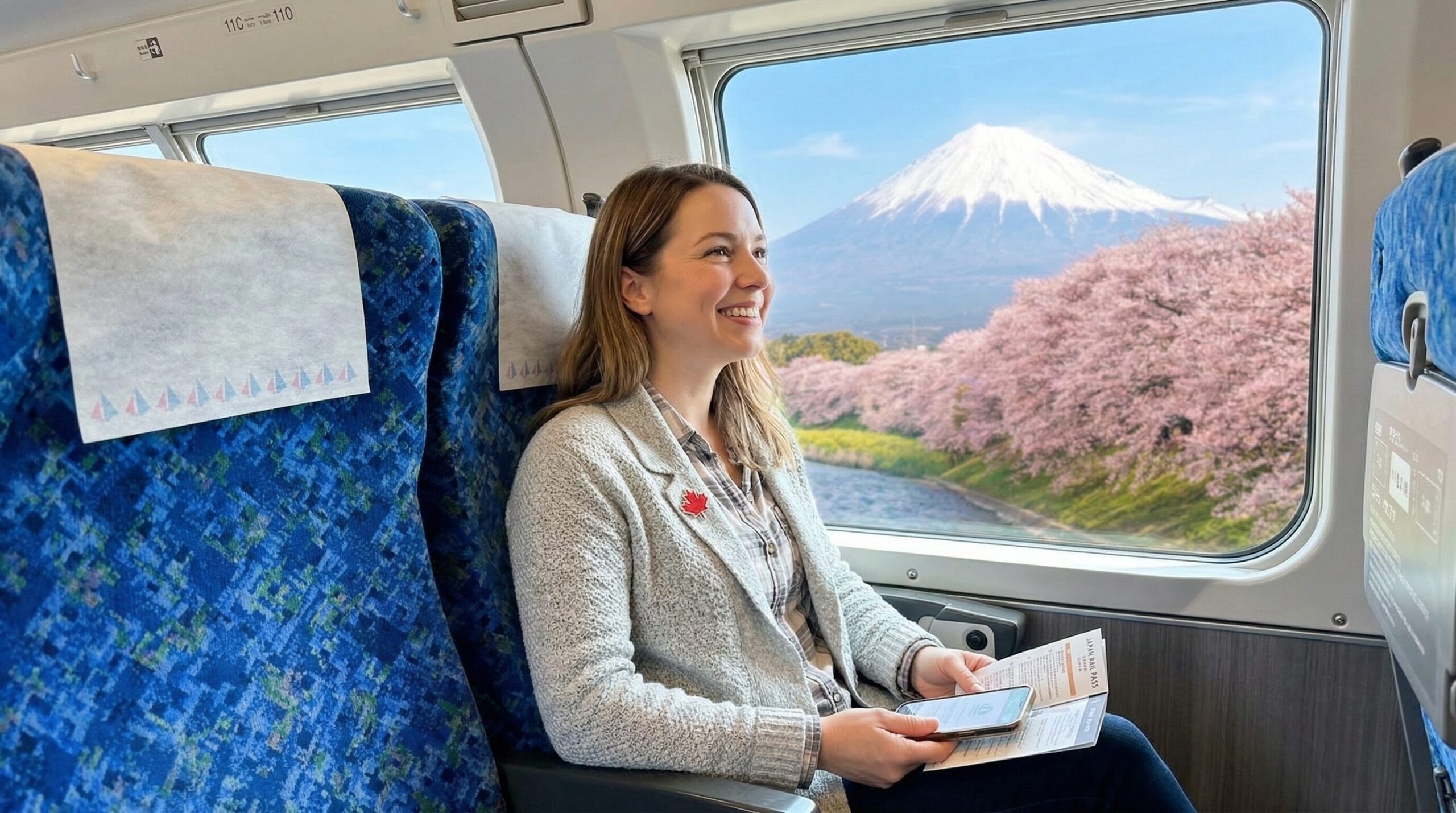
For decades, the National JR Pass was the undisputed golden ticket of Japanese tourism. It was a seemingly magical piece of cardboard that unlocked the entire archipelago. You could buy a 7-day pass, take a single round-trip bullet train from Tokyo to Kyoto, and the pass would essentially pay for itself. Everything after that—every local train, every side trip—was free travel.
That era is over. With the significant price adjustments introduced in recent years, the math has fundamentally changed. The national pass is no longer an automatic purchase for every tourist landing at Narita Airport. For the traveler sticking to the standard “Golden Route” of Tokyo, Kyoto, and Osaka, buying a national pass is now a guaranteed way to lose money.
But this is not a bad thing. In fact, for the seasoned traveler looking to go beyond superficial sightseeing, it is an invitation. The new pricing structure forces a different kind of journey. Traveling Japan with a JR Pass on a budget now requires intention. It requires you to look at the map and realize that the true value of the pass lies in distance. It rewards those who are willing to travel deeper, bypass the congested tourist corridors, and explore the rugged coastlines, the northern snow countries, and the southern volcanic islands. If you want to understand how to make this pass work for your wallet, you must change your itinerary. You must trade the crowded temples of Kyoto for the silent cedar forests of Tohoku or the steaming valleys of Kyushu.
Let us break down the new economics of the railway, and discover how traveling Japan with a JR Pass on a budget is still the ultimate gateway to the real Japan.
Key Details and Breakdown: The New Math of the Railways
To master traveling Japan with a JR Pass on a budget, you must treat the pass as a tool for long-haul exploration, not a convenience pass for city hopping. Understanding how the system operates under the surface is your first step.
The Reality of the ROI (Return on Investment)
The price of a 7-day National JR Pass now demands serious mileage.
- The Old Math: Previously, a Tokyo-Kyoto round trip (roughly 500 kilometers each way) covered the cost.
- The New Math: Today, to break even on a 7-day pass, you need to travel the equivalent of Tokyo to Hiroshima, and back, while also utilizing local JR lines.
- The Implication: If your itinerary is relaxed and confined to the central cities, buy individual tickets. If your itinerary is ambitious and takes you to the far corners of the country, the JR Pass remains an incredibly powerful, budget-saving asset.
National vs. Regional Passes
This is the secret weapon of the budget-conscious traveler. If you are not traversing the entire country, a National Pass is overkill. The Japan Railways Group is actually divided into six regional companies (JR East, JR West, JR Kyushu, etc.), and they each offer their own deeply discounted regional passes.
- JR East Pass (Tohoku Area): Offers incredible value if you want to explore the deep north, covering bullet trains from Tokyo all the way up to Aomori.
- JR Kyushu Rail Pass: If you fly into Fukuoka, this pass is astonishingly cheap. It allows you to weave through the mountains and hot spring towns of the southern island without paying national-level prices.
- The Strategy: Before buying a National Pass, isolate the specific region you want to explore. A regional pass often provides the exact same access for less than half the price.
The Nozomi and Mizuho Surcharge
Historically, the JR Pass strictly prohibited riding the Nozomi (the fastest bullet train on the Tokaido line) and the Mizuho (the fastest on the Sanyo/Kyushu lines).
- The Update: You can now ride these ultra-fast trains with a JR Pass, but there is a catch: you must pay an additional supplement fee.
- The Budget Move: To stick to a budget, ignore the Nozomi. Ride the Hikari or Sakura trains instead. They run on the exact same tracks, are just as comfortable, and simply make a few extra stops. The time difference between Tokyo and Kyoto is merely 20 minutes. Keep your money and enjoy the slightly slower ride.
Practical Examples and Recommendations: Routes That Maximize Value
Traveling Japan with a JR Pass on a budget means leaning into the extremes of the map. The further you go, the cheaper your per-kilometer travel becomes. Here are the itineraries that make the pass an undeniable bargain.
The Deep North Expedition: Tokyo to Tohoku
Tohoku is the rugged, isolated, and breathtakingly beautiful northern region of Japan’s main island. It is practically empty of foreign tourists, making it the perfect destination for authentic travel.
- The Route: Tokyo -> Sendai (Miyagi) -> Morioka (Iwate) -> Akita -> Aomori -> Tokyo.
- The Value: Buying individual Shinkansen tickets for this massive loop would be astronomically expensive. A 7-day JR Pass or a regional JR East Pass slashes the cost entirely.
- The Experience: You ride the sleek, crimson Komachi bullet train as it carves through the heavy snowdrifts of Akita. You stop in Kakunodate to see samurai architecture untouched by modern crowds. You eat fresh scallops in the morning markets of Aomori. The pass pays for itself while delivering you to the quietest, most traditional corners of the country.
The Kyushu Descent: Osaka to Oita and Beyond
If you want to experience the raw, geothermal power of Japan, pointing your compass south toward Kyushu is the ultimate JR Pass strategy.
- The Route: Osaka -> Fukuoka (Hakata) -> Beppu/Yufuin (Oita Prefecture) -> Kumamoto -> Kagoshima.
- The Value: The Sanyo Shinkansen connects Osaka to Fukuoka in just two and a half hours. From there, the JR network spiders out across the island. The sheer distance covered from Osaka down to the volcanic ash of Kagoshima makes the pass incredibly lucrative.
- The Experience: You leave the concrete of Osaka and arrive in Oita Prefecture, a land defined by steam. You use your pass to board the Yufuin no Mori, a beautiful, vintage-style resort train with polished wooden interiors, gliding through emerald-green valleys. You soak in hidden hot springs, eat chicken tempura (toriten), and travel the entire island without reaching for your wallet once.
The San’in Coast: The Forgotten Japan
Running along the Sea of Japan, opposite the busy Tokyo-Kyoto corridor, is the San’in region. It is rural, mythological, and heavily reliant on the JR train network.
- The Route: Kyoto -> Kinosaki Onsen -> Tottori -> Matsue -> Izumo.
- The Value: There are no bullet trains here. Instead, you rely on Limited Express trains like the Super Hakuto. However, be aware that this specific train runs partially on a private railway (Chizu Express), so you will need to pay an additional supplemental fee on board, even with a JR Pass.
- The Experience: This is travel at its most atmospheric. You visit the massive sand dunes of Tottori, the ancient, hauntingly beautiful Izumo Taisha shrine, and the willow-lined canals of Kinosaki Onsen. The pass gives you the financial freedom to make a dozen small stops along a coastline that most travelers never see.
Tips for Travelers: Mastering the Mechanics of the Pass
Once you have the right itinerary, traveling Japan with a JR Pass on a budget requires mastering the daily logistics. The pass is powerful, but you must know how to wield it.
Activate with Precision
The clock on your JR Pass does not start when you purchase it; it does not necessarily start the moment you exchange your voucher at a JR office; you can select any starting date within 30 days of the exchange.
- The Mistake: Activating a 7-day pass on Day 1 of your trip when you plan to spend the first three days walking around Tokyo.
- The Strategy: Tokyo is cheap to navigate using local subway cards (Suica/Pasmo). Do not activate your JR Pass until the exact morning you are taking your first long-distance bullet train out of the city. Guard those 7, 14, or 21 days fiercely.
The Power of Free Seat Reservations
Unlike many European rail passes that require expensive surcharges for seat reservations, your JR Pass entitles you to free reserved seating on almost all Shinkansen and Limited Express trains.
- The Mistake: Sprinting to the “Non-Reserved” cars and fighting for a middle seat next to the bathrooms.
- The Strategy: A few days before your journey, walk into any JR ticket office (Midori-no-Madoguchi), show your pass, and ask for a reserved seat. You can request a window seat, a seat on the right side of the train to see Mount Fuji (ask for “Mount Fuji side”), or a seat near the luggage racks. It costs you nothing, but it elevates the journey from a commute to a luxury experience.
Ekiben: The Ultimate Budget Dining
When traveling long distances, do not buy expensive, mediocre food at the station cafes, and do not rely on the limited snacks sold on the train carts.
- The Culture: Embrace the Ekiben (station bento). These are beautifully crafted, regional lunch boxes sold at kiosks inside the train stations.
- The Value: For roughly 1,000 to 1,500 Yen, you get a high-quality meal featuring local specialties—like Kobe beef over rice, or fresh Kanazawa crab. You bring it onto the bullet train, lower your tray table, and enjoy a deeply authentic, budget-friendly meal while watching the countryside fly by at 300 kilometers per hour.
Know Your Non-JR Lines
The JR Pass is incredibly comprehensive, but it does not cover everything. Japan’s railway network is a mix of public and private companies.
- The Boundary: The pass does not work on city subways (like the Tokyo Metro), private commuter lines (like the Odakyu line to Hakone), or the non-JR lines that run deep into the mountains of Koyasan.
- The Strategy: Always check Google Maps or the Navitime app before boarding. If the route says “JR,” flash your pass and walk through the manned gate. If it lists another company, you will need to tap your IC card and pay the local fare.
Utilize Local JR Transport
While the bullet trains provide the massive financial ROI, do not forget that your pass covers local JR transit as well.
- The Hidden Savings: The JR Yamanote Line, the JR Osaka Loop Line, and the fare for the JR ferry to Miyajima Island near Hiroshima are covered (though for Miyajima, you must pay a 100-Yen visitor tax out of pocket).
- Every time you use the pass for a 200-Yen local ride, you are stretching your budget just a little bit further.
Conclusion: The Ticket to the Periphery
The era of using the JR Pass for a quick, superficial trip to Kyoto and back is dead. And for the traveler seeking the authentic, profound soul of Japan, that is a cause for celebration. Traveling Japan with a JR Pass on a budget is now a commitment to exploration. It is a financial incentive to push past the familiar and venture into the periphery. It rewards those who are willing to watch the concrete of the megalopolis fade into the deep greens of the rural valleys. It is the key to hidden hot spring towns, isolated fishing villages, and the quiet, enduring rhythm of local life. When you settle into your window seat, open a regional bento box, and watch the rugged northern coastline or the steaming southern mountains roll by, you realize the true value of the ticket in your pocket. It is not just about saving Yen. It’s time to go beyond the ordinary, embrace the distance, and see the Japan locals know best. Travel deeper. Explore the real Japan.