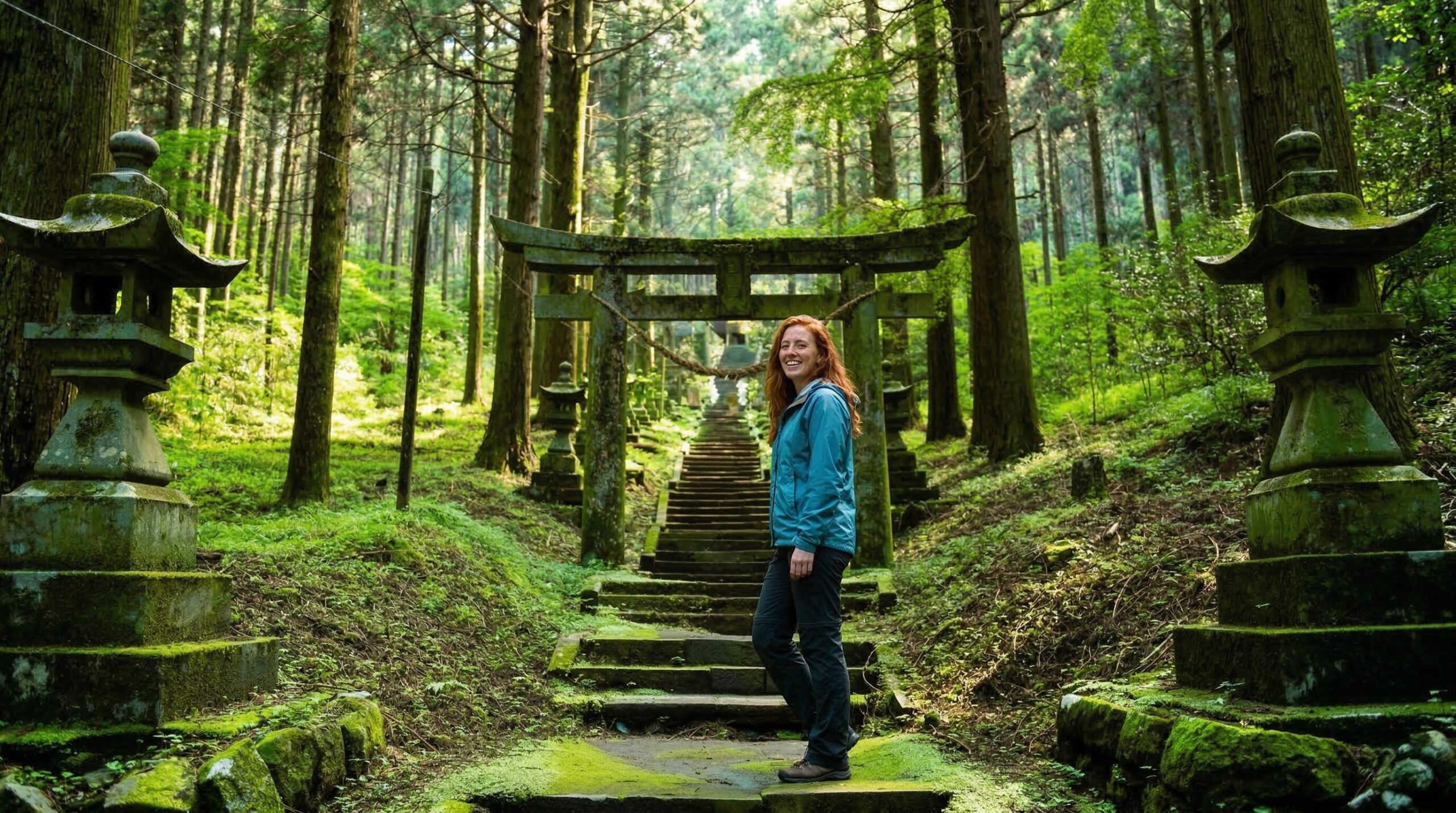
When preparing for a journey to Japan, the mind is naturally occupied with the beautiful details: securing a reservation at a hidden ryokan, mapping out quiet neighborhood walks in Kyoto, or anticipating the deep restorative heat of a secluded mountain hot spring. Japan is globally celebrated as one of the safest countries in the world. Crime rates are remarkably low, public transport is impeccably reliable, and a lost wallet is often returned fully intact. Because of this well-deserved reputation for safety, many mindful travelers make a critical oversight: they assume this blanket of security extends to their physical health and travel logistics.
However, stepping away from superficial sightseeing and venturing into the authentic, rural heart of Japan comes with its own set of realities. A twisted ankle on a moss-covered temple step in rural Oita, a sudden bout of illness in a small fishing village, or a delayed train due to late-summer typhoons can quickly turn a dream trip into a logistical and financial challenge. For those who wish to truly travel deeper, understanding how to protect yourself is not an act of pessimism; it is the foundation of confident exploration.
This comprehensive Travel Insurance Guide for Japan is designed for the experienced traveler. It moves beyond the basic brochures to explore exactly why comprehensive coverage is the silent partner that allows you to confidently seek out the Japan that locals know best.
The Reality of Rural Exploration: Key Details and Breakdown
To understand why a specialized approach to insurance is necessary, one must understand how the Japanese medical and infrastructural systems operate, particularly when you leave the major English-speaking hubs of Tokyo or Osaka. The Japanese healthcare system is exceptionally high-quality, but it is built for residents under Japan’s universal healthcare system, such as the National Health Insurance (NHI) and Employees’ Health Insurance schemes. As a temporary visitor, you fall outside this system. When evaluating a Travel Insurance Guide for Japan, it is crucial to break down the unique local factors that will dictate your coverage needs.
- The 100% Upfront Reality: In many Western countries, hospitals will bill your insurance directly. In Japan, especially at smaller neighborhood clinics (iin) or rural hospitals, you are often expected to pay 100% of your medical costs upfront, in cash, before receiving treatment. Without insurance to reimburse these potentially astronomical out-of-pocket costs, a simple emergency can drain your travel funds instantly.
- The Language Barrier in Medicine: While you might navigate a restaurant menu with a translation app, explaining medical symptoms requires precision. High-quality travel insurance for Japan doesn’t just pay the bills; it provides a 24/7 medical concierge service. These operators can translate your symptoms to a local doctor over the phone, ensuring you receive accurate care in villages where no English is spoken.
- Geographical and Weather Vulnerabilities: Japan is an archipelago situated on the Pacific Ring of Fire. It experiences regular seismic activity and a distinct typhoon season (late summer to autumn). When trains halt and flights are grounded, trip interruption and delay coverage become the difference between a minor inconvenience and a major financial loss.
Coverage That Matters: Practical Examples and Recommendations
What does this look like in practice? When you are planning an itinerary that prioritizes authentic experiences over curated tourist tracks, your insurance needs shift. Here are practical examples of how the right coverage supports a deeper travel style.
Scenario 1: The Hidden Ryokan and the Unexpected Illness
Imagine you have traveled to a secluded hot spring town deep in the mountains of Kyushu. You are staying in a beautifully preserved, multi-generational ryokan. On your second night, you develop a severe fever and stomach distress. There is no major hospital nearby, only a small, local clinic run by an elderly physician.
- Without adequate insurance: You must ask the ryokan staff to help you navigate the clinic. You pay tens of thousands of yen in cash for the consultation and medication, keeping meticulous track of Japanese receipts to hopefully fight for reimbursement with your home health provider later.
- With Japan-optimized insurance: You call your provider’s emergency hotline. They locate the nearest clinic, call ahead to explain your arrival, provide over-the-phone translation during your examination, and—if your policy includes a “Cashless Medical Service” network—they settle the bill directly with the clinic. You return to your tatami room to rest, financially and emotionally unburdened.
Scenario 2: The Temple Trail Injury
You are enjoying a quiet neighborhood walk, perhaps exploring the unpaved, stone-lined paths connecting smaller, unmarked shrines in the Kansai region. A momentary slip on a damp, mossy stone results in a badly sprained or fractured ankle.
- The Recommendation: When reviewing a Travel Insurance Guide for Japan, pay strict attention to Medical Evacuation coverage. If you are immobilized in a rural prefecture, you may need specialized transport to a major city hospital equipped for orthopedic surgery, and eventually, a medical flight home. Standard credit card insurance often caps this coverage at a fraction of what a trans-Pacific medical evacuation actually costs. Always recommend a policy with a minimum of $100,000 to $250,000 in emergency medical evacuation coverage.
Scenario 3: The Typhoon Transit Halt
You are scheduled to travel via the Shinkansen (bullet train) from Hiroshima to Tokyo for your flight home, but a severe typhoon makes landfall. The train networks are preemptively shut down for safety, and you are stranded for two extra nights.
- The Recommendation: Look for robust “Trip Delay” and “Trip Interruption” clauses. A good policy will cover the unexpected cost of a last-minute hotel in Hiroshima, meals during the delay, and the fee to rebook your international flight. It allows you to wait out the storm safely from a hotel lobby, rather than sleeping on the floor of a crowded train station.
Navigating the Unexpected: Tips for Travelers
Equipping yourself with the right policy is only the first step. Knowing how to utilize it within the framework of Japanese society is equally important. Keep these highly practical tips in mind as you prepare for your journey:
- Paper is Still Paramount: While Japan is a high-tech nation, its administrative systems still heavily rely on physical paper. Do not simply keep a PDF of your insurance policy on your smartphone. Print a physical copy of your insurance certificate, your policy number, and the international contact phone numbers. Keep one copy in your luggage and carry another in your daypack. If your phone dies or is damaged in an accident, this paper is your lifeline.
- Carry a Cash Reserve: Even if your insurance provider advertises “cashless network” clinics, the reality is that deeply rural areas operate on cash. Always keep an emergency reserve of 30,000 to 50,000 Japanese Yen in your wallet specifically for unexpected medical consultations or taxis to a hospital. Your insurance will reimburse you upon your return, but you need the liquidity to secure the treatment first.
- Understand the Pharmacy Divide: In Japan, clinics and pharmacies (yakkyoku) are almost always separate entities. A doctor will diagnose you and print a prescription, but you must walk to a nearby, independent pharmacy to receive the medication. Ensure you get an itemized receipt (ryoshusho) from both the clinic and the pharmacy for your insurance claim.
- Pre-Existing Conditions and Medication: Japan has incredibly strict laws regarding the importation of medication, including common over-the-counter drugs from the West (like certain sinus medications or strong painkillers). If you have a pre-existing condition, ensure your travel insurance covers acute flare-ups. More importantly, research whether your required daily medication is legal in Japan, or if you need to apply for a Yunyu Kakunin-sho (import certificate) at least a few weeks in advance.
Conclusion
Japan’s true beauty reveals itself to those who take the time to look closely. It is found in the meticulous sweep of a Zen garden, the rich, earthy scent of a centuries-old soy sauce brewery, and the profound silence of a winter forest in the north. Choosing to travel deeper means embracing the unknown. It means leaving the highly sanitized, heavily managed tourist bubbles and engaging with the real, unscripted Japan. A thorough understanding of this Travel Insurance Guide for Japan is not about anticipating disaster; it is about guaranteeing your own freedom. When you know that you are protected against the logistical and physical uncertainties of travel, you can fully surrender to the experience. You stop worrying about the “what ifs,” and begin to truly immerse yourself in the journey. It is time to go beyond the ordinary, secure your peace of mind, and step confidently into the authentic Japan that locals know best.