
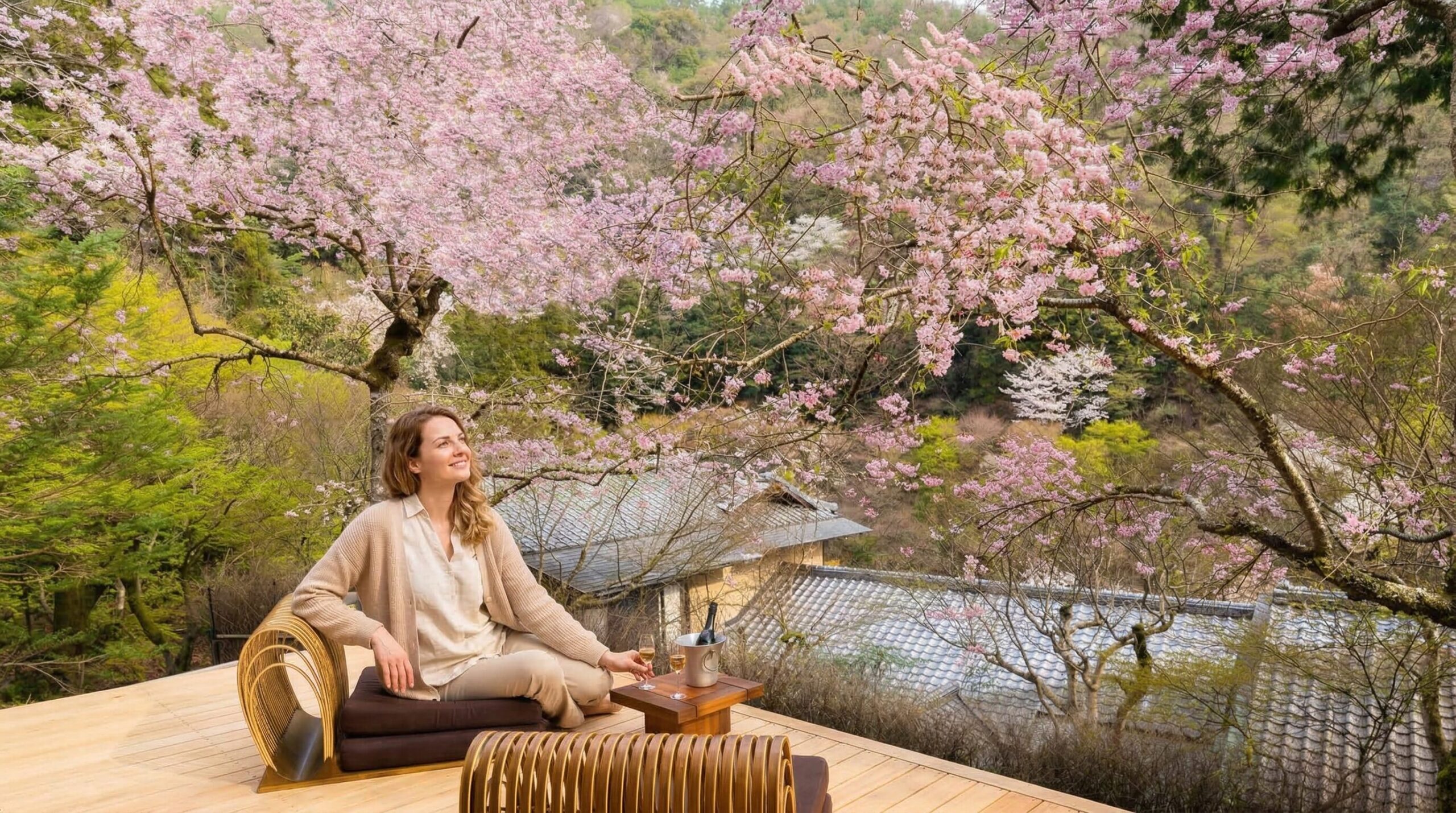
When the freezing temperatures of winter finally begin to retreat, a profound sense of anticipation sweeps across the Japanese archipelago. The arrival of the cherry blossoms (sakura) is not merely a botanical event; it is a cultural touchstone, deeply woven into the nation’s literature, art, and collective psyche. For travelers, witnessing this fleeting explosion of pale pink is often the ultimate dream.
However, the reality of modern hanami (flower viewing) in major cities often stands in stark contrast to the poetic imagery. Famous spots like Tokyo’s Ueno Park or Kyoto’s Maruyama Park become seas of blue plastic tarps, loud music, and elbow-to-elbow crowds. While this festive atmosphere has its own chaotic charm, it can completely obscure the quiet, ephemeral beauty that the blossoms are meant to represent.
For the mindful traveler seeking an authentic connection to the season, the solution lies in retreating from the public squares and stepping into the curated sanctuary of a traditional inn. Finding the best ryokan for cherry blossom season is an exercise in intentional travel. It is about trading the noise of the crowd for the quiet rustle of a silk kimono, and exchanging a plastic cup of beer for a carefully whisked bowl of matcha overlooking a private, petal-strewn garden.
This guide explores how staying in a premium ryokan transforms the cherry blossom experience from a superficial sightseeing checklist into a deeply resonant, immersive encounter with Japan’s most celebrated season.
The Anatomy of a Spring Sanctuary: Key Details and Breakdown
What exactly makes a traditional inn the best ryokan for cherry blossom season? It goes far beyond simply having a tree planted in the front yard. A high-tier ryokan operates on a philosophy of total seasonal immersion. From the moment you cross the threshold, every architectural detail, culinary choice, and subtle aesthetic touch is calibrated to reflect the exact micro-season unfolding outside. Here is a breakdown of the elements that define a true luxury spring retreat:
- The Architecture of ‘Shakkei’ (Borrowed Scenery): The finest ryokans are meticulously positioned to capture the landscape. Traditional shoji (paper sliding doors) and expansive engawa (wooden verandas) act as picture frames. When you slide open your room’s doors, the distant mountain slopes covered in wild cherry trees or a single, ancient weeping sakura in the inner courtyard becomes a private, living painting.
- The Sakura Kaiseki Experience: The multi-course kaiseki dinner reaches its visual and flavorful peak in spring. Chefs incorporate the season into every dish. You might be served sakura-dai (cherry blossom sea bream, named for its pinkish hue in spring), clear broths featuring salt-pickled cherry blossoms that bloom inside the bowl, and dessert courses highlighting sakura mochi wrapped in edible, salted leaves. The meal is a reflection of the landscape you are viewing.
- Petals on the Water (The Spring Onsen): Perhaps the most sought-after experience is the private rotenburo (open-air hot spring bath) positioned beneath a canopy of cherry blossoms. Soaking in steaming geothermal water while a gentle spring breeze scatters pale petals onto the water’s surface is the absolute zenith of Japanese relaxation.
Where to Find the Blooms: Practical Examples and Recommendations
Because the “sakura front” moves progressively northward from late March through early May, your choice of location will dictate when you can experience peak bloom. To travel deeper and avoid the heaviest international crowds, look to these distinct regions that offer exceptional ryokan experiences.
Route 1: The Mountain Tapestry of Mount Yoshino (Nara)
If there is a spiritual home for cherry blossoms in Japan, it is Mount Yoshino in Nara Prefecture. Unlike city parks planted with a single, uniform variety, Yoshino is a rugged mountain covered in over 30,000 wild Yamazakura trees. Because the trees grow at different elevations, the mountain blooms in spectacular, shifting waves of pink, white, and green over several weeks in early to mid-April.
Highlights of a Yoshino Ryokan Stay:
- Beating the Day-Trippers: Yoshino draws massive domestic crowds during the day. Staying in a ryokan perched on the mountain ridges allows you to wake up at dawn. You can observe the mist rolling through the valleys and the morning sun hitting the blossoms in absolute, uninterrupted silence before the first train arrives from Osaka.
- Pilgrimage Heritage: Many inns here have operated for centuries, originally serving ascetic monks and pilgrims journeying into the Kii Mountains. The hospitality retains a deep, respectful gravity.
- Wild Mountain Cuisine: The food here is less about the refined elegance of Kyoto and more about the rich bounty of the mountains. Expect incredible wild mountain vegetables (sansai), locally foraged mushrooms, and perhaps warming boar hot pot (inoshishi nabe) to counter the crisp spring mountain air.
Route 2: Geothermal Spring and Pink Petals in Oita (Kyushu)
For an earlier bloom (typically late March) and some of the highest-quality hot springs in the country, journey to the southern island of Kyushu, specifically to the hidden valleys of Oita Prefecture. Areas like Yufuin and the quieter enclaves surrounding Beppu offer a striking visual contrast: violent, billowing white geothermal steam rising through delicate, pale pink cherry blossom canopies. Finding the best ryokan for cherry blossom season in Oita is about combining the raw power of the earth with the fragility of the flowers.
Highlights of an Oita Ryokan Stay:
- Riverbank Strolls in Yufuin: Many premium ryokans in Yufuin are situated near the Oita River. The banks are lined with vibrant yellow mustard flowers (nanohana) and blooming cherry trees, creating a breathtaking two-toned landscape against the backdrop of the twin-peaked Mount Yufu.
- The Ultimate Spring Bathing: Oita is the undisputed hot spring capital of Japan. The open-air baths here are often massive, built from rugged river stones. Soaking here in the crisp morning air while viewing a solitary, blooming sakura tree is a deeply restorative experience.
- Bungo Beef and Citrus: The spring kaiseki in this region often features the spectacularly marbled Bungo Wagyu beef, cut by the refreshing acidity of local kabosu citrus, providing a robust culinary anchor to the delicate season.
Route 3: The Samurai Alleys of Kakunodate (Akita)
If your travel plans land in late April or early May, you must look to the northern Tohoku region. Kakunodate, a beautifully preserved former castle town in Akita Prefecture, is famous for its wide streets lined with dark, wooden samurai manors and hundreds of shidarezakura (weeping cherry trees).
Highlights of a Kakunodate Ryokan Stay:
- Architectural Contrast: The visual impact of Kakunodate lies in its stark contrasts. The heavy, black wooden fences of the samurai houses provide the perfect, dramatic backdrop for the cascading, bright pink waterfalls of the weeping cherry blossoms.
- Historic Immersion: Ryokans in this region often reflect the local samurai heritage, featuring robust wooden beams, irori (sunken hearths) in the lobby, and an atmosphere of dignified, stoic hospitality.
- The Hinokinai River Tunnel: Just steps from the samurai district, the Hinokinai River features a two-kilometer tunnel of Somei Yoshino cherry trees. A late evening walk here, with the trees illuminated against the night sky, is profoundly moving.
Navigating the Fleeting Season: Tips for Travelers
Securing a room at the best ryokan for cherry blossom season requires strategic planning and a flexible mindset. The ephemeral nature of the blossoms means that nature, not your itinerary, is ultimately in control.
- Book with Extreme Lead Time: The finest ryokans with renowned cherry blossom views are often booked out by domestic travelers a full year in advance. If you plan to travel in spring, you must secure your accommodation 6 to 12 months ahead of time. Do not expect to find last-minute luxury availability.
- Embrace the ‘Hanafubuki’: Do not despair if you miss “peak bloom” (mankai) by a few days. The Japanese arguably revere the end of the season even more. The hanafubuki (blizzard of falling petals) and the resulting hanaikada (rafts of pink petals floating down rivers and resting on the surface of hot springs) offer a more poignant, melancholic beauty that perfectly captures the spirit of mono no aware (the pathos of things).
- Pack for Shifting Temperatures: Spring in Japan is notoriously fickle. While daytime temperatures under the sun can be quite warm, the evenings—especially in mountainous regions like Yoshino or northern towns like Kakunodate—drop sharply. The cotton yukata provided by the ryokan may not be enough; ensure you wear the thick haori (jacket) over it when walking to the dining room or out to the baths.
- Surrender the Checklist: When you arrive at your ryokan, let go of the need to “see it all.” The purpose of booking a luxury inn during this season is to stay still. Spend your afternoon sitting on your veranda with a cup of tea, simply watching the light change on the blossoms in your private garden.
Conclusion
Japan’s true beauty often hides in the quiet margins, far removed from the loud, crowded festival grounds and the glare of camera flashes. It reveals itself in the meticulous presentation of a spring-themed appetizer, in the warmth of a cedar bath on a crisp evening, and in the profound, heavy silence of a garden where the only movement is a single petal falling to the moss below. By choosing to experience this fleeting season from the sanctuary of a traditional inn, you elevate your journey beyond a mere photo opportunity. You engage with the ancient, poetic rhythms of the Japanese spring. It’s time to go beyond the ordinary, slow your pace to match the unfolding of a flower, and discover the deep, resonant beauty that the locals know best.