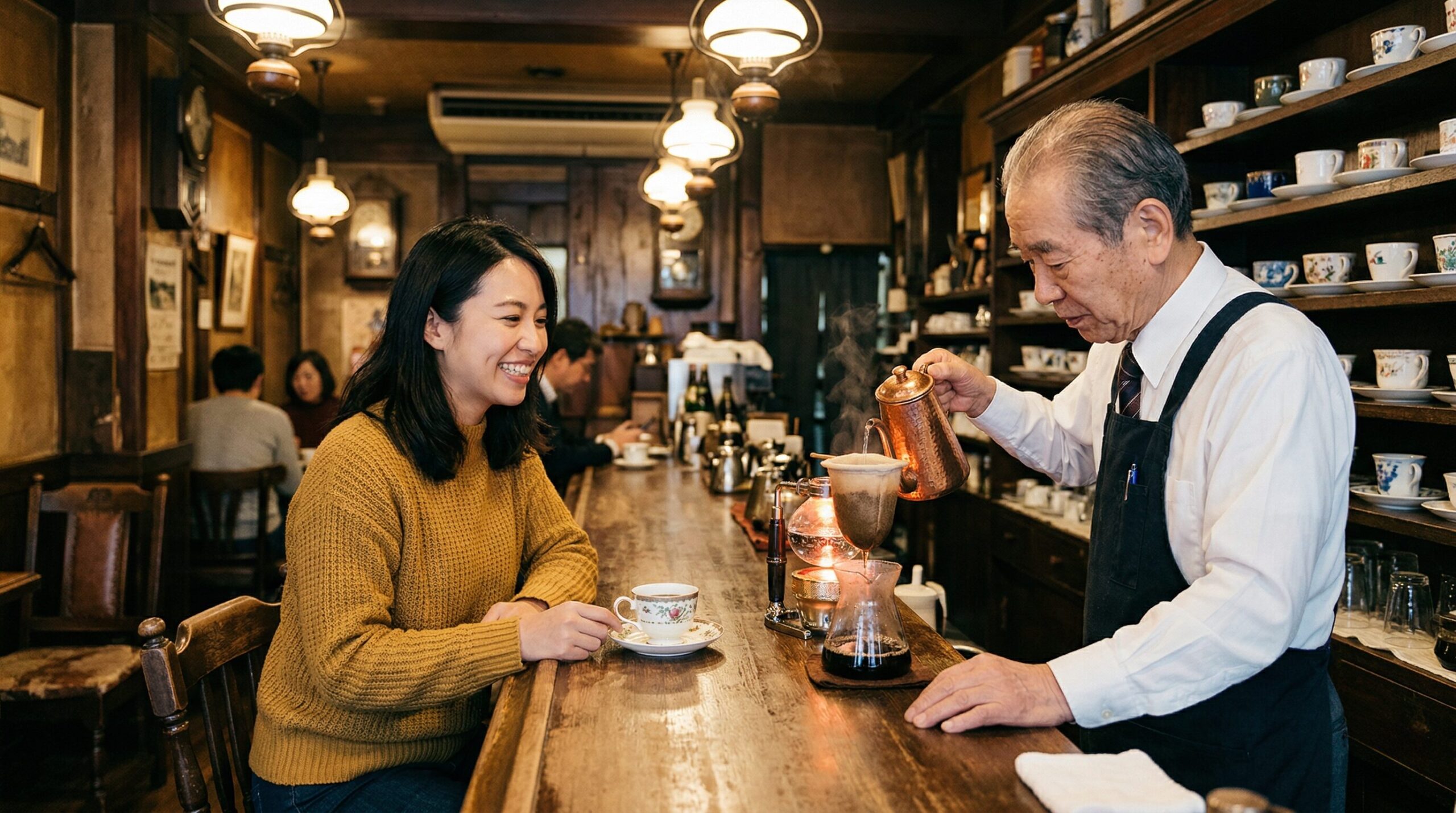
Tokyo is a city globally celebrated for its unrelenting speed. It is a metropolis defined by the blur of the bullet train, the rapid-fire transaction at a convenience store counter, and the hyper-efficient, sterile third-wave coffee stands where commuters grab a paper cup and immediately return to the kinetic flow of the sidewalk. For many travelers, this high-octane energy is exactly what they came to experience. However, beneath the digital billboards and the glass skyscrapers lies a parallel universe that operates on an entirely different measurement of time. To find it, you must step off the main avenues, look for a weathered wooden sign or a softly glowing amber lamp, and push open a heavy, often windowless door. Instantly, the modern city vanishes. The air is thick with the scent of dark-roasted beans, old paper, and perhaps a faint, nostalgic trace of tobacco smoke. The lighting is dim, casting long shadows over plush velvet booths and dark, lacquered wood. The only sounds are the quiet scratching of a fountain pen, the hiss of a siphon brewer, or the crackle of a vinyl record. This is the world of Tokyo’s retro kissaten coffee shops.
The word kissaten translates literally to “tea-drinking shop,” but it is so much more than a café. Born in the early 20th century and reaching their golden age during the post-war Showa era (1926–1989), these establishments were the original communal living rooms of the Japanese urbanite. Today, they remain fiercely independent sanctuaries of analog culture. For the mindful traveler looking to escape superficial sightseeing, spending an afternoon in one of these timeless spaces is not just about drinking coffee; it is a profound lesson in Japanese dedication, observation, and the art of slowing down.
The Anatomy of a Time Capsule: Key Details and Breakdown
To the uninitiated, a kissaten might just look like an outdated diner. But for those willing to look closer, every element of Tokyo’s retro kissaten coffee shops is a masterclass in intentionality and shokunin (artisan) culture. Understanding the anatomy of these spaces transforms a simple coffee break into a deep cultural immersion.
- The Master (The Shokunin of the Brew): A kissaten is usually fiercely independent, owned and operated by a single person known simply as “The Master” (Masutaa). The Master is not a barista churning out hundreds of lattes an hour; they are a craftsman. You will often see them standing behind a long wooden counter, dressed in a crisp white shirt and a tailored vest, brewing each cup with a level of focus that borders on meditation.
- The ‘Nel Drip’ Method: While modern cafes rely on high-pressure espresso machines, the heart of the kissaten is the nel drip (flannel drip). The Master uses a reusable cotton flannel filter, pouring hot water over the grounds in agonizingly slow, precise concentric circles. The flannel allows the coffee’s natural oils to pass through, resulting in a cup that is incredibly rich, heavy-bodied, and syrupy, with a deeply complex flavor profile.
- The Showa-Era Aesthetic: The interior design is a living museum. You will not find stark white subway tiles or exposed concrete here. The aesthetic is defined by amber-tinted pendant lighting, stained glass, ornate porcelain cups displayed like jewels behind the counter, and dark, heavy mahogany furniture. It is an atmosphere designed specifically to insulate you from the outside world.
- The ‘Morning Service’ and Nostalgic Menus: The food in a kissaten is famously comforting and uniquely Japanese. The menu often features yoshoku (Western-influenced Japanese food) from the 1960s. Expect to find towering, neon-green melon sodas topped with vanilla ice cream, thick-cut brick toast spread with salted butter, and the iconic tamago sando (a perfectly folded omelet sandwich).
The Art of the Pause: Practical Examples and Recommendations
Tokyo is vast, and finding an authentic kissaten requires knowing exactly which quiet alleyway to turn down. While some historic shops have sadly closed as their aging owners retire, many legendary establishments remain strictly committed to their craft. Here are three distinct variations of Tokyo’s retro kissaten coffee shops that reward the observant traveler.
The Sonic Sanctuary of Meikyoku Kissa Lion (Shibuya)
It seems impossible that one of the quietest spaces in Japan is located just a five-minute walk from the chaotic scramble crossing of Shibuya, but Meikyoku Kissa Lion has defied the modern world since 1926 (rebuilt in the 1950s after the war). “Meikyoku Kissa” translates to “Masterpiece Music Cafe.” This is a highly specialized type of kissaten built entirely around the appreciation of classical music.
Highlights of a Lion Visit:
- The Rule of Absolute Silence: You do not come here to chat. Talking is strictly prohibited. The seating is not arranged in conversational circles; instead, all the velvet chairs face forward, pointing toward a massive, custom-built wooden speaker system that dominates the front wall.
- The Concert Hall Atmosphere: The shop feels like the inside of an old European theater. The Master curates a daily playlist of classical symphonies, played exclusively on vinyl or high-fidelity CDs. The acoustics of the heavy wooden room are astonishing.
- Mindful Observation: Sitting in the dim light, sipping a dark coffee, and watching the diverse clientele—ranging from university students reading poetry to elderly businessmen closing their eyes to listen to Beethoven—is an incredibly moving, voyeuristic experience.
The Obsessive Craft at Café de L’Ambre (Ginza)
Hidden in the glitzy, high-end shopping district of Ginza is Café de L’Ambre, a shop that famously proclaims on its sign: “Coffee Only.” Founded in 1948 by the legendary Ichiro Sekiguchi (who roasted beans well into his 100s before his passing), this shop is a pilgrimage site for global coffee purveyors.
Highlights of a L’Ambre Visit:
- Aged Coffee Beans: L’Ambre is famous worldwide for serving aged coffee. While modern coffee culture prizes freshly harvested beans, the Masters here have carefully aged certain batches for 10, 20, or even 40 years. The resulting brew is intensely concentrated, lacking acidity, and possessing a deep, almost wine-like complexity.
- The Choreography of the Counter: Try to secure a seat at the curved wooden counter. Watching the staff work is mesmerizing. They heat water in a small copper pot, measure beans on an old analog scale, and pour water through the nel drip with a surgical precision that has not changed in over seven decades.
- The Blanc et Noir: If the aged coffee is too intense, order their signature Blanc et Noir (also known as the “Queen Amber”). It is a chilled, sweetened coffee served in a champagne glass, carefully topped with a layer of evaporated milk that floats perfectly on the surface.
The Neighborhood Warmth of Kayaba Coffee (Yanaka)
To experience the kissaten as a true community hub, you must travel to Yanaka, one of Tokyo’s few surviving shitamachi (traditional downtown) neighborhoods that escaped wartime bombing. Kayaba Coffee is housed in a beautifully preserved Taisho-era (1912–1926) wooden building right on a quiet street corner.
Highlights of a Kayaba Coffee Visit:
- Tatami Mat Lounging: Unlike the dark, windowless caverns of Ginza, Kayaba is airy and flooded with natural light. While the first floor has mid-century modern seating, the second floor requires you to remove your shoes and sit on traditional tatami mats, offering a brilliant architectural fusion.
- The Iconic Egg Sandwich: Kayaba is universally loved for its tamago sando. Unlike the cold, mayonnaise-heavy convenience store versions, the egg here is served warm—a thick, incredibly fluffy, savory folded omelet perfectly balanced between two slices of chewy, slightly tangy sourdough bread.
- The Local Intersection: Because of its large glass windows and neighborhood location, Kayaba is the perfect place to sit and watch the slow, daily rhythm of Yanaka. You will see local artisans, young families, and elderly residents walking past, a stark contrast to the suited masses of the financial districts.
The Rules of the Room: Tips for Travelers
Entering Tokyo’s retro kissaten coffee shops is akin to visiting a private home. The atmosphere is fragile and carefully maintained by the Master. To ensure you navigate these spaces with respect, keep these highly practical tips in mind:
- Cash is the Only Currency: Do not expect to tap your smartphone or hand over a credit card. These establishments are deeply analog. You must carry physical yen to pay your bill.
- Understand the Smoking Culture: Because the kissaten is a relic of the Showa era, many of these shops historically allowed indoor smoking, and a select few still do. If the smell of tobacco smoke bothers you, always check if the shop is kin-en (non-smoking) before entering. Even in non-smoking shops, the walls often hold the faint, historic scent of decades of tobacco.
- Keep Your Digital Life Hidden: This is not a co-working space. Pulling out a laptop to answer emails or holding a loud Zoom call is considered incredibly rude and ruins the atmosphere for everyone else. These spaces are designed for reading a physical book, writing in a journal, or simply sitting in quiet contemplation.
- Photograph with Extreme Discretion: The Japanese value privacy immensely. While taking a quick photo of your coffee cup and the beautiful tabletop is generally acceptable, do not stand up and walk around the room to take wide-angle photos, and absolutely never photograph the faces of other customers or the Master without explicit permission.
Conclusion
Japan’s true beauty rarely reveals itself to those in a rush. It is not found by checking off a list of top ten monuments or racing through a crowded subway terminal. It is found in the meticulous, unhurried pour of hot water over dark coffee grounds, in the heavy, comforting silence of a wood-paneled room, and in the quiet dedication of a Master who has spent a lifetime perfecting a single craft. By taking the time to seek out Tokyo’s retro kissaten coffee shops, you step away from the transient, disposable culture of the modern world. You stop simply consuming caffeine and begin to engage with the city’s profound historical memory. It is time to go beyond the ordinary travel itineraries, surrender your need for speed, and discover the deep, rich, and beautifully analog Japan that the locals know best.