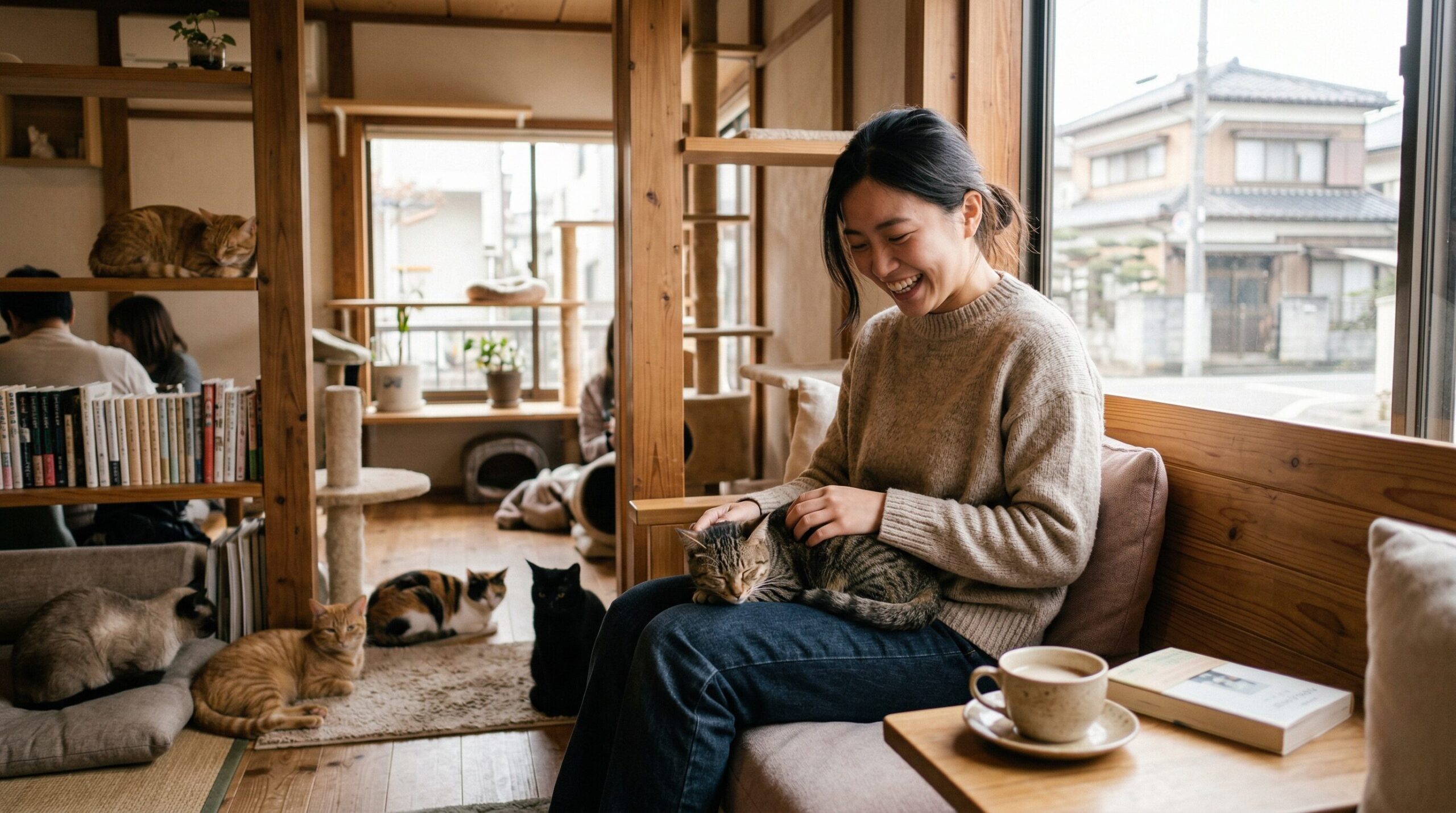
When exploring the vibrant, hyper-kinetic streets of Japan’s capital, travelers are constantly bombarded with sensory stimulation. The towering digital billboards of Shibuya, the endless retail mazes of Shinjuku, and the energetic shouts of street vendors in Harajuku create an undeniably thrilling atmosphere. In the midst of this urban sprawl, Tokyo famously birthed a unique phenomenon designed to offer its busy residents a moment of comfort: the animal cafe. However, as the concept exploded in global popularity, the original intent was often lost. Today, the most heavily advertised cat cafes in the major tourist districts are frequently overcrowded, highly commercialized spaces. Visitors are herded in and out, the environments are loud, and the animals—often exclusively expensive purebreds—can appear overwhelmed by the endless stream of camera flashes and grabbing hands. For the ethical, mindful traveler, this performative version of animal interaction often feels uncomfortable and superficial. But if you are willing to step away from the major thoroughfares and navigate the quieter residential wards, a different world awaits. Hidden cat cafes in Tokyo offer a profound antidote to the city’s noise. These clandestine sanctuaries prioritize the welfare of the animals above all else. They are quiet, deeply relaxing spaces where the aroma of freshly brewed coffee mingles with the soft, ambient sound of purring. By seeking out these obscure, ethically run establishments, you do more than just enjoy a warm beverage; you support local rescue efforts and experience a profound, restorative stillness. This guide explores how to travel deeper into Tokyo’s feline subculture, finding the authentic sanctuaries that the locals fiercely protect.
The Anatomy of a Sanctuary: Key Details and Breakdown
To truly appreciate hidden cat cafes in Tokyo, one must understand how they differ from the brightly lit tourist traps of Akihabara. Over the last decade, a significant cultural shift has occurred within the Japanese animal cafe industry, driven by locals who demand higher ethical standards and deeper community impact. When you seek out these hidden establishments, you are engaging with a unique set of operational philosophies:
- The ‘Hogo Neko’ (Protection Cat) Movement: The most significant hallmark of a premium, hidden cafe is its status as a hogo neko cafe—a rescue cat cafe. Instead of purchasing purebred kittens from breeders, these cafes partner with local animal shelters. The cats roaming the tatami mats are rescues, strays, and abandoned pets. Most importantly, they are looking for forever homes. While travelers cannot adopt, their entrance fees directly fund the rescue operations.
- The Feline-First Architecture: In a commercial tourist cafe, the space is designed for maximum human capacity. In a hidden sanctuary, the architecture is designed for the cats. You will find elevated walkways near the ceiling, hidden cubbies where cats can escape if they feel overstimulated, and strict rules preventing humans from chasing or cornering the animals.
- The Atmosphere of a Library: The auditory experience in an authentic local cat cafe is starkly different from the street outside. These spaces function more like reading rooms or neighborhood living rooms. The lighting is often kept low and warm, soft jazz or classical music plays in the background, and patrons speak in hushed, library-appropriate whispers.
- The Unpredictable Cast: Because these are rescue environments, the “cast” of cats is wonderfully diverse. You will not find a room full of identical Scottish Folds. Instead, you will find beautiful, uniquely marked Japanese bobtails, charmingly scarred tomcats, and shy, gentle tortoiseshells, each with their own story and personality.
Feline Hideaways: Practical Examples and Recommendations
Finding these quiet sanctuaries requires venturing into Tokyo’s shitamachi (traditional low city) or its more bohemian, artistic neighborhoods. Because they do not rely on massive street-level billboards, you must often look for small signs pointing up narrow stairwells. Here are four exceptional hidden cat cafes in Tokyo that reward the observant traveler.
The Authentic Rescue at Asakusa Nekoen
While millions of tourists flock to the Senso-ji Temple in Asakusa, very few wander a few streets over to find Asakusa Nekoen. Located on the 3rd floor of an aging, unassuming multi-tenant building, this is one of Tokyo’s most genuine, unpretentious rescue cafes.
Highlights of an Asakusa Nekoen Visit:
- The Living Room Vibe: Stepping off the tiny elevator, you do not enter a slick, heavily decorated commercial space. Nekoen feels exactly like stepping into the cluttered, cozy living room of a deeply dedicated cat lover. The furniture is mismatched, the walls are covered in Polaroid photos of adopted cats, and the focus is entirely on the animals.
- The Owner’s Dedication: The cafe is run by a fiercely passionate owner who works tirelessly to rescue street cats from the surrounding neighborhoods. Her dedication is palpable, and she knows the intricate personality quirks of every single cat in the room.
- The Balcony View: Despite its humble interior, the cafe features a small outdoor enclosure (safely netted) where the cats can watch the birds, and visitors can catch a unique, elevated glimpse of the Tokyo Skytree in the distance while petting a sleeping tabby.
The Silent Retreat at Neko no Iru Kyukeijo 299 (Ikebukuro)
Ikebukuro is a massive, hyper-commercial transit hub, but hidden just a short walk from the station is “Neko no Iru Kyukeijo 299” (The Resting Place with Cats 299). This establishment radically redefines the concept of a cat cafe, blending it seamlessly with a traditional Japanese manga kissa (comic book cafe).
Highlights of a 299 Visit:
- Unprecedented Space: In a city where square footage is a luxury, 299 is massive. The room is vast, featuring rows of comfortable reading sofas, traditional tatami mat areas, and individual desks equipped with desk lamps and power outlets.
- The Rule of Absolute Quiet: This is not a place for loud conversation. It is an explicitly designated “resting place.” The atmosphere is library-silent. You will see locals deeply engrossed in manga, working quietly on laptops, or simply taking a mid-afternoon nap.
- Passive Interaction: The cats here are completely unimpressed by humans, which is their greatest charm. They roam freely across the desks, sleep on the backs of the reading chairs, and occasionally curl up next to a visitor’s laptop. The interaction is passive, respectful, and incredibly calming.
The Ethical Passport at Neko Republic (Ochanomizu)
Neko Republic is a trailblazing organization in Japan’s animal welfare scene, operating with the explicit goal of reducing the country’s feline euthanasia rate to zero. Their Ochanomizu branch, located in the historic student and university district, offers a deeply traditional and highly ethical experience.
Highlights of a Neko Republic Visit:
- The Traditional Aesthetics: The Ochanomizu branch features a deeply traditional Japanese atmosphere with classic tatami rooms. You take your shoes off at a wooden genkan (entryway) and sit on woven straw mats, creating a deeply nostalgic, Showa-era atmosphere.
- The Passport System: Upon your first visit, you are issued a “Neko Republic Passport.” Every time you visit any of their branches across Japan, you receive a stamp. As your “visa” levels up, you earn small perks. It is a brilliant way to gamify ethical tourism and encourage repeat support for the rescue cats.
- The Pre-Entry Ritual: Because of their strict ethical guidelines, the staff will guide you through a rigorous hand-washing and sanitization ritual before you are allowed to enter the main cat room, emphasizing that the health of the rescues is their absolute highest priority.
The Indie Vibe at Cateriam (Shimokitazawa)
Shimokitazawa is globally recognized as Tokyo’s bohemian epicenter—a neighborhood of vintage clothing stores, underground live music venues, and independent roasteries. Tucked away on the second floor of a building in this maze of narrow streets is Cateriam, a cat cafe that perfectly matches the neighborhood’s laid-back, indie spirit.
Highlights of a Cateriam Visit:
- The Neighborhood Integration: Cateriam does not feel like a tourist destination; it feels like a neighborhood hangout. The large windows overlook the bustling, fashionable streets of Shimokitazawa below, allowing you to people-watch while a cat dozes on your lap.
- The Interaction Level: While some rescue cafes have very shy cats, the felines at Cateriam are known for being particularly gregarious and playful. The staff frequently brings out specialized toys and initiates play sessions, making it a wonderful spot for travelers who want a bit more active engagement with the animals.
- The Post-Cafe Culture: Because it is located in the heart of “Shimokita,” a visit to Cateriam seamlessly integrates into a day of vintage shopping and exploring hidden izakayas. It offers the perfect, quiet mid-afternoon pause before diving back into the creative energy of the neighborhood.
Mindful Interaction: Tips for Travelers
Visiting hidden cat cafes in Tokyo requires strict adherence to a specific set of cultural and hygienic rules. These establishments are pristine, tightly regulated environments. To ensure your visit is respectful and seamless, you must master the etiquette of the Japanese cat cafe.
- The Absolute Rule of Socks: This is the most critical piece of advice for any traveler: You must wear socks. Because you are entering a space where animals sleep on the floor and furniture, bare feet are considered highly unsanitary and are strictly forbidden. If you arrive in sandals during the summer, you will be forced to purchase a pair of cheap socks at the front desk before entering. Always pack a clean pair of socks in your day bag.
- Sanitization Protocols: Upon entry, you will be asked to remove your shoes and place them in a designated locker. You will then be directed to a sink to wash your hands with antibacterial soap, followed by a thorough spray of alcohol sanitizer. Do not rush this process; it is vital for protecting the cats from outside pathogens.
- Understanding the Time System: Almost all cat cafes in Japan operate on a strict time-based fee structure. You typically pay for a base time (e.g., 30 or 60 minutes), and then an automatic extension fee applies for every 10 or 15 minutes you stay beyond that. You will be given a lanyard with a timestamp when you enter. The staff will not warn you when your time is up. It is your responsibility to watch the clock to avoid unexpected charges.
- The “One Drink” Policy: In addition to the time fee, most cafes enforce a wan-oodaa (one order) system, meaning you must purchase at least one beverage. In many places, this is simplified through a mandatory “drink bar” fee, granting you unlimited access to a vending machine dispensing hot coffee, matcha lattes, and soft drinks.
- The Law of the Sleeping Cat: The golden rule of any ethical cafe is that you may never wake a sleeping cat, nor may you pick a cat up and hold it against its will. If a cat is asleep in a basket, you may gently stroke its back, but you cannot disturb its rest. Let the cats come to you. Sit quietly on the tatami mat, read a book, and wait for them to choose your lap.
Conclusion
Japan’s true beauty is often found in its profound capacity for quietness. In a metropolis that rarely sleeps, the ability to carve out a space of absolute stillness is an art form. The commercialized, neon-lit tourist districts offer an exhilarating rush, but they do not provide the restorative peace that a mindful traveler eventually seeks. By venturing out to discover the hidden cat cafes in Tokyo, you actively reject the superficial, performative layer of animal tourism. You choose to support ethical rescue operations, engage with dedicated local residents, and experience the city at a profoundly slower pace. The memory you carry home will not be of a crowded, flashing room, but of the soft afternoon light filtering through a window, the smell of roasted green tea, and the gentle, rhythmic breathing of a rescued cat sleeping soundly beside you. It is time to travel deeper, step off the main avenues, and discover the quiet sanctuaries that the real Tokyo fiercely protects.