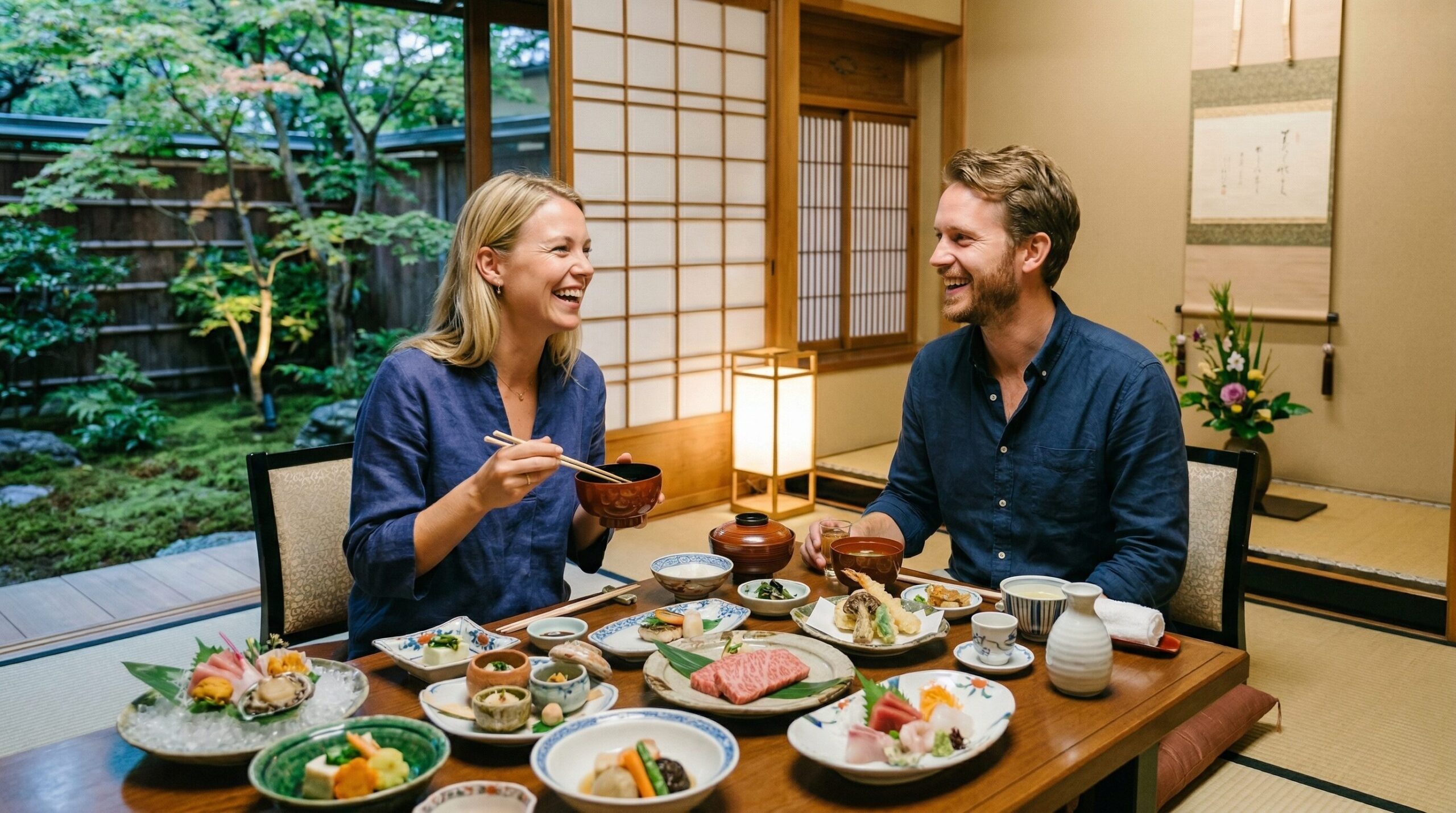
When mapping out a journey through Japan, travelers are often drawn to the visual splendors of the country: the vermilion torii gates stretching up a mountainside, the neon-lit pedestrian scrambles of the capital, or the snow-capped peak of Mount Fuji. However, to truly understand the soul of Japanese culture, one must look beyond the visual and embrace the culinary. In Japan, food is not merely sustenance; it is a profound reflection of geography, history, and the fleeting passage of time. Nowhere is this philosophy more perfectly realized than within the walls of a traditional luxury inn. For the mindful traveler, booking a stay at one of the top ryokan for exclusive kaiseki meals represents the absolute pinnacle of Japanese hospitality. Kaiseki-ryori is a traditional, multi-course Japanese dinner that balances the taste, texture, appearance, and colors of food to absolute perfection. In a luxury ryokan, this meal is not just a dinner—it is an immersive, multi-hour theatrical event. It is a deeply personal experience where the boundaries between the chef’s kitchen, the local landscape, and your private tatami room dissolve. For those seeking to travel deeper and invest their travel funds in unforgettable sensory memories, navigating the elite world of ryokan gastronomy is essential. This guide will dismantle the complexities of this ancient culinary tradition and direct you to the most exquisite, hidden sanctuaries where Japan’s finest seasonal bounties are served.
The Anatomy of a Masterpiece: Key Details and Breakdown
To truly appreciate the value of the top ryokan for exclusive kaiseki meals, it is vital to understand the rigid framework and philosophical depth that govern this style of dining. A kaiseki meal is a living, edible calendar.
When you sit down on your tatami mat to receive your meal, you are engaging with these foundational concepts:
- Shun (The Peak of Seasonality): The defining characteristic of kaiseki is its obsessive dedication to shun—the exact moment an ingredient is at its absolute peak flavor. A master chef does not simply cook for the season; they cook for the specific micro-season (often divided into 72 distinct micro-seasons in the traditional Japanese calendar). A dish served in early April will differ subtly but deliberately from a dish served in late April.
- The Progression of Courses: A traditional kaiseki meal follows a meticulous, orchestrated flow, usually consisting of 9 to 14 courses. It begins with the Sakizuke (a small appetizer), moves through the Mukozuke (seasonal sashimi), the highly anticipated Hassun (a visually spectacular seasonal platter), the Yakimono (grilled dish), the Takiawase (simmered vegetables with meat or fish), and concludes with rice, miso soup, and seasonal fruit.
- The Harmony of the Vessel: In kaiseki, the dishware is as important as the food itself. The chef selects specific antique ceramics, cut glass, or hand-carved lacquerware to contrast or complement the colors and textures of the food. A cold summer soup might be served in an icy glass bowl, while an autumn simmered dish arrives in a rustic, heavy clay pot adorned with maple leaf motifs.
- Heyashoku (In-Room Dining): The ultimate luxury of the ryokan experience is heyashoku. Your meal is served entirely within the absolute privacy of your own suite. A dedicated nakai (room attendant) brings the courses one by one, explaining the provenance of each ingredient, allowing you to dine in your cotton yukata (robe) without the noise or distraction of a public restaurant.
Edible Landscapes: Practical Examples and Recommendations
Because kaiseki is inherently tied to the local landscape, the best meals are found in regions boasting exceptional, hyper-local ingredients. To find the top ryokan for exclusive kaiseki meals, you must look to the prefectures famous for their pristine water, fertile soil, and rich coastal waters. Here are three distinct regional examples that represent the absolute pinnacle of ryokan gastronomy.
The Geothermal Bounty of Yufuin (Kamenoi Bessou)
Located in the forested mountains of Oita Prefecture, the town of Yufuin is globally recognized as one of Japan’s most elite hot spring destinations. Because the region is blessed with fertile volcanic soil and the nutrient-rich waters of the nearby Bungo Channel, the culinary landscape here is staggering. Kamenoi Bessou, a historic ryokan hidden within a sprawling, 30,000-square-meter private forest, offers a masterclass in Kyushu terroir.
Highlights of the Kamenoi Bessou Experience:
- Bungo Beef: The cornerstone of the region’s high-end dining is Oita’s premium Bungo beef. Known for its incredibly fine marbling, melt-in-your-mouth texture, and high oleic acid content, it is often served here lightly grilled over binchotan charcoal or gently simmered in a savory local hot pot.
- Seki Aji and Seki Saba: Oita is famous for specific strains of mackerel (Saba) and horse mackerel (Aji) caught in the treacherous currents of the Hoyo Strait. The kaiseki sashimi courses here feature this fish, prized for its exceptionally firm texture and clean, sweet flavor, miles apart from standard mackerel.
- Oita Shiitake: The ryokan masterfully incorporates massive, thick, and deeply flavorful local shiitake mushrooms, often grilled to enhance their rich, earthy umami profile, grounding the delicate seafood dishes with intense, forest-foraged flavors.
The Kyoto Benchmark (Tawaraya Ryokan)
For the culinary purist, all roads eventually lead back to Kyoto, the historic birthplace of formal kaiseki. Tawaraya is widely considered one of the finest, most exclusive ryokans in the world, having hosted royalty, artists, and global dignitaries for over 300 years. The food here does not chase modern trends; it perfectly executes centuries-old traditions.
Highlights of the Tawaraya Experience:
- Kyo-yasai (Kyoto Heirloom Vegetables): Tawaraya’s menu relies heavily on Kyo-yasai—specifically cultivated heirloom vegetables native to the Kyoto basin, such as Kujo green onions, Kamo eggplants, and Shogoin radishes. These ingredients are prized for their complex, bitter-sweet profiles.
- The Art of Dashi: The foundation of Kyoto kaiseki is the dashi (soup stock). Tawaraya’s chefs utilize the finest Rishiri kelp and premium dried tuna flakes (maguro-bushi) to create a clear broth that is deceptively simple yet profoundly deep. This dashi forms the flavor base for their legendary simmered and clear soup courses.
- Uncompromising Aesthetics: The visual presentation at Tawaraya is legendary. The Hassun course is a miniature, edible landscape that reflects the garden outside your window. The dedication to visual restraint and elegant simplicity here is unmatched anywhere in the country.
The Ocean’s Edge in Izu (Asaba Ryokan)
If your culinary preferences lean heavily toward incredibly fresh, premium seafood, you must travel to the Izu Peninsula in Shizuoka Prefecture. Situated in the quiet hot spring town of Shuzenji, Asaba Ryokan is an over 500-year-old Relais & Châteaux property built around a spectacular outdoor Noh theater stage seemingly floating on a large pond.
Highlights of the Asaba Experience:
- Suruga Bay Seafood: The Izu Peninsula is bordered by Suruga Bay, Japan’s deepest bay. The chefs at Asaba have direct access to extraordinary deep-sea catches, including the world-famous Ise-ebi (Japanese spiny lobster) and sweet, translucent Shirasu (whitebait).
- The Amagi Wasabi: Shizuoka produces the finest wasabi in Japan. At Asaba, your sashimi course is not accompanied by green paste from a tube. You are provided with a fresh, whole wasabi root from the nearby Amagi mountains and a sharkskin grater. Grating it yourself releases a complex, floral heat that completely transforms the raw fish.
- The Signature Black Sesame Tofu: Beyond the seafood, Asaba is renowned for its specific, highly guarded traditional recipes, including a deeply rich, slow-cooked black sesame tofu that is visually striking and possesses an incredibly dense, savory flavor.
Mindful Dining: Tips for Travelers
Securing a reservation at the top ryokan for exclusive kaiseki meals is a significant financial investment, often costing over $500 to $1,000 USD per night, per person. To ensure you navigate this high-end culinary world smoothly and respectfully, keep these critical tips in mind:
- Communicate Dietary Restrictions Immediately: A ryokan chef meticulously sources ingredients days in advance to build a highly specific menu. You cannot show up to dinner and casually mention you are a vegetarian or have a shellfish allergy. If you have dietary restrictions, you must explicitly detail them at the time of booking (months in advance). Note that traditional kaiseki relies heavily on fish-based dashi, so strict veganism is often very difficult for a traditional ryokan to accommodate without fundamentally altering the integrity of the cuisine.
- Respect the Timing: Timing in kaiseki is everything. If the nakai (attendant) asks what time you would like dinner, and you say 6:30 PM, you must be in your room, seated, and ready at 6:30 PM sharp. The chef times the grilling of the fish and the frying of the tempura down to the minute so it arrives in your room at the absolute perfect temperature. Being late ruins the food.
- The Pairing of Nihonshu (Sake): Do not default to wine or beer. Kaiseki is designed to be eaten alongside Nihonshu (Japanese sake). The ryokan will have an exceptional, curated list of local, premium sakes (Jizake) that perfectly complement the subtle flavors of the region. Ask the attendant for a recommendation by saying, “Osusume no nihonshu o onegaishimasu” (Please recommend a sake).
- Shed Your Perfume: When attending a high-end kaiseki meal, whether in a ryokan or a Michelin-starred restaurant in Tokyo, do not wear strong cologne or perfume. The aromas of the meal—the subtle scent of yuzu citrus, the earthy smell of a clear broth, the charcoal smoke on a grilled fish—are incredibly delicate. Strong artificial scents overwhelm the palate and ruin the experience for you and the chef’s hard work.
- The ‘Oshinagaki’ (Menu): You will be presented with a beautiful, vertically written Japanese menu (oshinagaki) at the start of the meal. Even if you cannot read kanji, keep it as a wonderful souvenir. It acts as a poetic map of the meal, often featuring beautiful calligraphy naming the micro-season or a specific classical poem that inspired the chef’s menu design.
Conclusion
Japan’s true luxury is not defined by excess; it is defined by intention. It is found in the relentless, quiet dedication of a chef who spends decades perfecting the clarity of a single bowl of soup. It is felt in the weight of an antique ceramic plate, the soft glow of a paper lantern, and the unparalleled freshness of a seasonal harvest. By investing in a stay at one of the top ryokan for exclusive kaiseki meals, you move past the role of a standard tourist. You participate in a centuries-old cultural performance that honors the landscape, the artisan, and the changing of the seasons. It is a profound, edible education. It is time to go beyond the standard restaurant reservations, change into your yukata, and prepare your palate for the deepest, most authentic culinary journey Japan has to offer.