When the international traveler envisions Japanese cuisine, a very specific, refined aesthetic usually comes to mind: the delicate precision of a masterfully sliced piece of sashimi, the clear, subtle depth of a Kyoto-style dashi broth, or the comforting, heavy steam rising from a bowl of tonkotsu ramen in Tokyo. These culinary pillars are iconic for a reason. However, for those looking to travel deeper and explore the real, multifaceted nature of the country, mainland culinary traditions only tell part of the story. To experience a radically different flavor profile—one born of tropical climates, ancient maritime trade routes, and a complex modern history—you must look far to the south. You must travel to the Ryukyu Archipelago.
Okinawa prefecture is culturally, historically, and gastronomically distinct from the rest of Japan. For centuries, it operated as the independent Ryukyu Kingdom, acting as a vibrant trading hub between Japan, China, and Southeast Asia. This cross-cultural exchange, combined with a post-WWII American presence, created a culinary landscape that is bold, deeply nourishing, and entirely unique. The food here is not just sustenance; it is heavily credited as the foundation for the region’s famous longevity. For the mindful traveler, exploring this southern cuisine offers an unparalleled window into the islands’ resilient soul. This comprehensive Okinawa Food Guide: Unique Local Dishes will dismantle the complex flavors of the tropics, guiding you through the must-try regional specialties and showing you how to eat like a true local.
The Philosophy of the Ryukyu Table: Key Details and Breakdown
Before diving into specific recommendations, it is vital to understand the foundational philosophy that governs Okinawan cooking. The diet here operates on a different set of principles than the mainland. When you sit down to a meal in Naha or Ishigaki, you are engaging with these core cultural concepts:
- Ishoku Dogen (Food is Medicine): The guiding principle of Okinawan cuisine is ishoku dogen, a concept borrowed from ancient Chinese medicine which dictates that a balanced diet is equivalent to medical treatment. Ingredients are chosen not just for their flavor, but for their specific health benefits, cooling the body in the extreme tropical heat and providing vital nutrients to combat fatigue.
- The Veneration of Pork: While mainland Japan historically avoided meat consumption for centuries due to Buddhist decrees, Okinawa embraced it. The pig is the undisputed king of the Okinawan table. There is a famous local saying that Okinawans eat every part of the pig “except its squeal.” You will find dishes utilizing pork belly, ears, trotters, and face, all prepared with incredible care to extract maximum flavor and collagen.
- The Sea and the Sun: The intense tropical sun yields robust, sometimes bitter vegetables that are packed with antioxidants, while the surrounding coral reefs provide a bounty of unique seaweeds and tropical fish that look and taste radically different from the cold-water catches of Hokkaido.
- Champuru Culture (The Mixing of Worlds): Okinawan food is inherently a fusion cuisine. You will taste the heavy use of pork from China, the presence of kelp (kombu) traded from northern Japan, spices from Southeast Asia, and canned luncheon meat introduced by the American military. It is a resilient, adaptive cuisine that embraces external influences while maintaining its unique identity.
A Taste of the Tropics: Practical Examples and Recommendations
To truly master this Okinawa Food Guide: Unique Local Dishes, you must be willing to step outside your culinary comfort zone. The textures and flavor profiles here are robust, earthy, and deeply savory. Here are five essential, authentic dishes that every traveler must seek out.
Goya Champuru (The Bitter Stir-Fry)
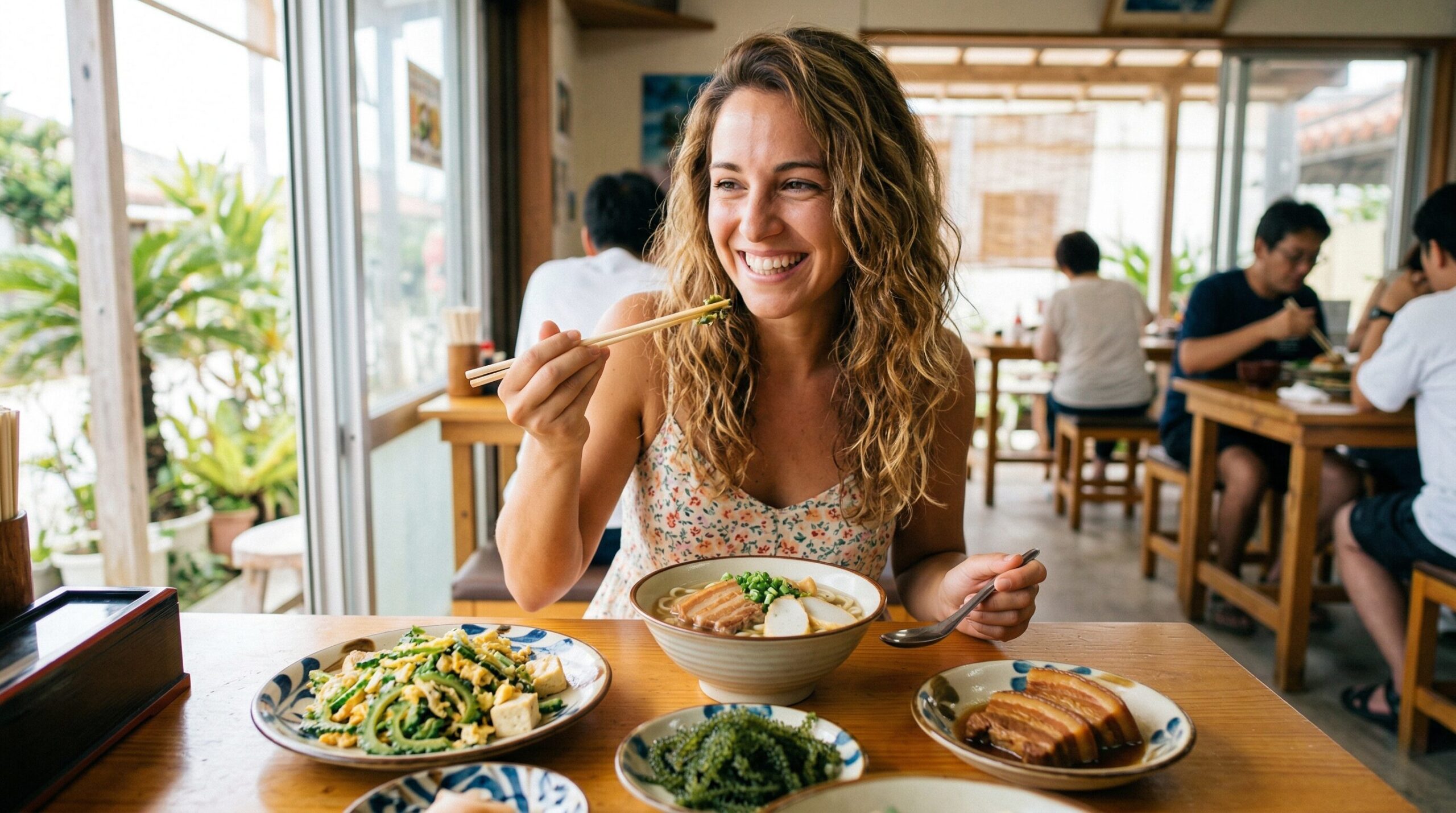
If Okinawa had a single, undisputed national dish, it would be Goya Champuru. Goya is a bumpy, bright green bitter melon that thrives in the island’s harsh summer sun. Champuru is the Okinawan word for “mix together.”
Highlights of the Dish:
- The Flavor Profile: Goya is intensely, unapologetically bitter. However, local chefs masterfully balance this bitterness by stir-frying it with rich pork belly (or SPAM), soft tofu (shima-dofu, which is firmer and saltier than mainland tofu), and a scrambled egg.
- The Health Benefits: Goya is packed with vitamin C and is locally revered as a superfood that lowers blood sugar and prevents “summer fatigue” (natsubate).
- Where to Eat It: You can find this dish at literally every local diner (shokudo) across the islands. It is the ultimate taste of Okinawan home cooking.
Okinawa Soba (The Noodles of the South)
Do not let the name confuse you. If you order “soba” in Tokyo, you will receive thin, grey noodles made from buckwheat flour. If you order Okinawa Soba, you will receive something entirely different.
Highlights of the Dish:
- The Noodle and Broth: Okinawa soba noodles are thick, chewy, and made entirely from wheat, resembling udon more than traditional soba. The broth is a masterclass in umami, typically created from a rich blend of pork bones and katsuobushi (skipjack tuna flakes).
- The Toppings: A standard bowl is topped with massive, thick slices of slow-braised pork belly (sanmai-niku), fish cake (kamaboko), and sharp green onions.
- The Condiment: To eat this like a local, you must add a few drops of Koregusu—a fiery local condiment made of small, potent island chili peppers steeped in Awamori (Okinawan rice liquor). It cuts through the rich pork fat beautifully.
Rafute (Slow-Cooked Pork Belly)
Rafute is the crown jewel of Ryukyu royal court cuisine, tracing its origins back to the days of Chinese trade envoys. Today, it is a beloved staple at local izakayas (pubs).
Highlights of the Dish:
- The Preparation: Blocks of skin-on pork belly are slow-simmered for hours, sometimes days, in a mixture of soy sauce, black sugar (kokuto), and Awamori.
- The Texture: The prolonged cooking process renders the fat down until it is gelatinous and the meat is so tender it can be cut with a single chopstick. The Awamori helps to completely eliminate any gamey odor from the pork while adding a deep, complex sweetness.
- The Pairing: Because of its intense, sweet-and-savory richness, Rafute is best enjoyed slowly, accompanied by a sharp local beer (like Orion) or a glass of Awamori on the rocks.
Umibudo (Sea Grapes)
For a truly unique, hyper-local delicacy, you must look to the shallow, sun-drenched waters surrounding the islands. Umibudo, literally translating to “sea grapes,” is a species of green algae that grows in the coral reefs.
Highlights of the Dish:
- The ‘Puchi Puchi’ Texture: Umibudo is visually striking, resembling tiny, translucent green grapes attached to a single stem. The appeal lies entirely in the texture. When you bite into them, the tiny bubbles pop in your mouth—a sensation the Japanese refer to as puchi puchi—releasing a burst of fresh, salty ocean water.
- The Serving Method: It is served raw and chilled, typically dipped lightly in a tart, citrusy ponzu sauce.
- The Ocean Caviar: Often referred to as “green caviar,” it is the perfect, light appetizer to balance out the heavy, pork-centric main courses of an Okinawan meal.
Taco Rice (The American Fusion)
No Okinawa Food Guide: Unique Local Dishes is complete without acknowledging the complex, post-war history of the islands. Following WWII, the heavy presence of US military bases profoundly impacted the local diet, leading to the creation of “Taco Rice” in the 1980s.
Highlights of the Dish:
- The Concept: It is exactly what it sounds like. It takes the standard ingredients of an American-style hard-shell taco—seasoned ground beef, shredded lettuce, chopped tomatoes, and processed cheese—and serves them piled high over a bed of warm Japanese white rice.
- The Local Adaptation: Often topped with a dollop of tangy salsa, it is a cheap, incredibly filling, and deeply comforting dish that perfectly represents the champuru (mixed) nature of modern Okinawan culture.
- The Late-Night Fix: Taco Rice is particularly beloved as late-night comfort food, widely available in casual cafes and dedicated fast-food joints across the main island.
Mindful Dining: Tips for Travelers
Experiencing the culinary landscape of the southern islands requires a slightly different approach than dining in the formal restaurants of Kyoto or Tokyo. The atmosphere here is deeply relaxed, communal, and tropical. To ensure your culinary exploration is smooth and authentic, keep these practical tips in mind:
- Embrace the ‘Shokudo’ (Local Diners): The best, most authentic Okinawan food is rarely found in expensive, multi-course restaurants. Seek out the local shokudo—humble, family-run diners that serve set meals (teishoku). Look for places with faded awnings, plastic food displays in the window, and older locals sitting inside. The food will be cheap, the portions massive, and the atmosphere incredibly welcoming.
- Navigate the Makishi Public Market: Located just off the famous Kokusai Dori (International Street) in Naha, Makishi Market is known as “the kitchen of Okinawa.” The ground floor is a chaotic, vibrant labyrinth of vendors selling colorful tropical fish, pig faces (chiraga), and fresh seaweeds. The local tip: purchase your fresh seafood from a vendor on the first floor, and for a small fee, take it up to the restaurants on the second floor, where they will cook it for you immediately.
- Experience an ‘Izakaya’ with Live Sanshin Music: Okinawan dining is deeply tied to music and celebration. When booking an izakaya for dinner, look for one that features live performances of traditional folk music using the sanshin (a three-stringed, snakeskin-covered instrument). The atmosphere usually evolves from quiet dining into a raucous, room-wide dance (kachashii) by the end of the night. It is a joyful, communal experience you will not find on the mainland.
- Understand Awamori: The local spirit, Awamori, is serious business. Distilled from long-grain Thai rice (a relic of ancient trade routes) and aged in clay pots, it is much stronger and earthier than mainland sake. Do not drink it like a shot. The local way is to drink it mixed with water and ice (mizu-wari), allowing you to enjoy the complex flavors throughout a long, hot evening without becoming overly intoxicated.
- Respect the ‘Island Time’: Okinawan culture operates on Uchina Time (Island Time). Service in local restaurants may be slightly slower and less rigid than the hyper-efficient dining experiences of Tokyo. Do not rush the staff. Embrace the slow pace, order a cold Orion beer, and enjoy the tropical breeze while you wait for your meal.
Conclusion
Japan’s true culinary brilliance is not confined to a single flavor profile or a strict set of rules. It is a vast, regional tapestry that reflects the specific geography and history of the people who live there. The food of Okinawa tells the story of a resilient, joyful culture that survived harsh climates, navigated complex international trade, and forged a unique identity at the crossroads of the Pacific. By utilizing this Okinawa Food Guide: Unique Local Dishes, you actively choose to step beyond the standard tourist menus. You trade the familiar comforts of sushi and tempura for the bold, medicinal bitterness of goya, the profound, slow-cooked depth of Rafute, and the unexpected fusion of Taco Rice. You stop simply eating and begin to understand the island’s enduring soul. It is time to travel deeper, embrace the tropical heat, and discover the vibrant, life-extending flavors that the real Okinawa has to offer.