For decades, Japan has carried a formidable reputation in the global travel community as an exclusively high-end, expensive destination. Travelers often picture a trip to the archipelago requiring a massive, multi-year savings plan, envisioning exorbitant bullet train tickets, luxury ryokan price tags, and $200 sushi dinners. While that ultra-luxurious version of the country certainly exists, the idea that Japan is universally unaffordable is a persistent myth fueled primarily by one major mistake: terrible timing.
The vast majority of international tourists attempt to visit Japan during two incredibly narrow windows: the spring cherry blossom season (late March to early April) and the autumn foliage season (November). During these peak weeks, the basic economics of supply and demand take over. Flight prices skyrocket, hotel rates double or triple, and the most famous cultural monuments become suffocated by massive, unyielding crowds. You pay a premium price for a compromised, claustrophobic experience.
For the mindful traveler looking to travel deeper and protect their budget, the secret to unlocking the country is simply to travel when others do not. Knowing the best low-cost seasons to visit Japan completely transforms the financial reality of your trip. It allows you to shift your budget from paying inflated hotel rates to experiencing high-quality regional cuisine, visiting quiet cultural attractions, and exploring the country at a slow, deliberate pace. This guide breaks down the economics of Japanese tourism, highlighting the specific shoulder and off-peak seasons that offer incredible value, unique atmospheres, and a profoundly authentic travel experience.
The Economics of Tourism: Key Details and Breakdown
To identify the best low-cost seasons to visit Japan, you must first understand the calendar of Japanese domestic travel. International tourism is only one piece of the puzzle; the massive surges in pricing are largely dictated by national Japanese holidays, when millions of locals take to the airports and bullet trains simultaneously.
When mapping out a budget-friendly itinerary, you must actively avoid these three absolute peak periods:
- Golden Week (Late April to First Week of May): A cluster of four national holidays. The entire country travels. Hotels are booked out a year in advance at maximum rates.
- Obon (Mid-August): A traditional Buddhist festival honoring the spirits of ancestors. It triggers a massive domestic migration as people return to their hometowns.
- New Year (Late December to Early January): A deeply traditional family holiday. Not only are flights expensive, but many independent businesses, restaurants, and local artisan shops completely close for several days.
By avoiding these domestic surges and the international rushes of Spring and Autumn, three distinct, highly affordable travel windows emerge. These low-cost seasons require a slight adjustment in packing and expectations, but they reward the traveler with staggering financial savings and the ultimate luxury: empty spaces.
Timing the Market: Practical Examples and Recommendations
Choosing an off-peak season alters the atmosphere of your trip. Instead of fighting for a photo opportunity under a blooming cherry tree, you learn to appreciate the crisp silence of winter or the vibrant, lush greenery of the rainy season. Here are the three best low-cost seasons to visit Japan, offering incredible value and unique cultural immersion.
The Winter Crispness (Mid-January to Late February)
Excluding the northern island of Hokkaido (which sees a massive surge in prices for the Sapporo Snow Festival in early February), the deep winter months are the absolute cheapest time to fly to the Japanese archipelago. The international crowds vanish, and hotel rates plummet to their annual lows.
Highlights of a Winter Visit:
- Clear Skies and Fuji Views: Winter in the Kanto and Kansai regions is generally cold but incredibly dry and sunny. Because the humidity drops to zero, January and February offer the highest probability of seeing a crystal-clear, snow-capped Mount Fuji from Tokyo or the Hakone region.
- Uncrowded Urban Exploration: This is the ultimate season for deep urban exploration. You can take a long, quiet walk along Tokyo’s urban river paths—like the Kanda or Sumida rivers—under crisp blue skies without the suffocating crowds of spring. The bracing air makes the city feel sharp and intensely focused.
- The Comfort of Cafe Culture: Winter naturally pushes you indoors, making it the perfect time to explore Japan’s incredibly detailed indoor experiences. You can spend an entire afternoon warming up in one of Tokyo’s meticulously designed themed cafes or exploring notable cultural attractions and independent art galleries, taking your time without feeling rushed by a line of tourists outside the door.
- The Onsen Advantage: Hot spring (onsen) culture is truly meant for winter. Soaking in an outdoor bath (rotenburo) when the air temperature is near freezing is one of the most profound, physically relaxing experiences available in the country.
The ‘Tsuyu’ Rainy Season (June to Early July)
Many travelers actively avoid Japan in June because of the Tsuyu (Plum Rain) season. However, it rarely rains all day, every day. It is often a pattern of overcast skies punctuated by heavy, passing showers. Because tourists are afraid of getting wet, airlines drop their prices dramatically, making this one of the best low-cost seasons to visit Japan.
Highlights of a Rainy Season Visit:
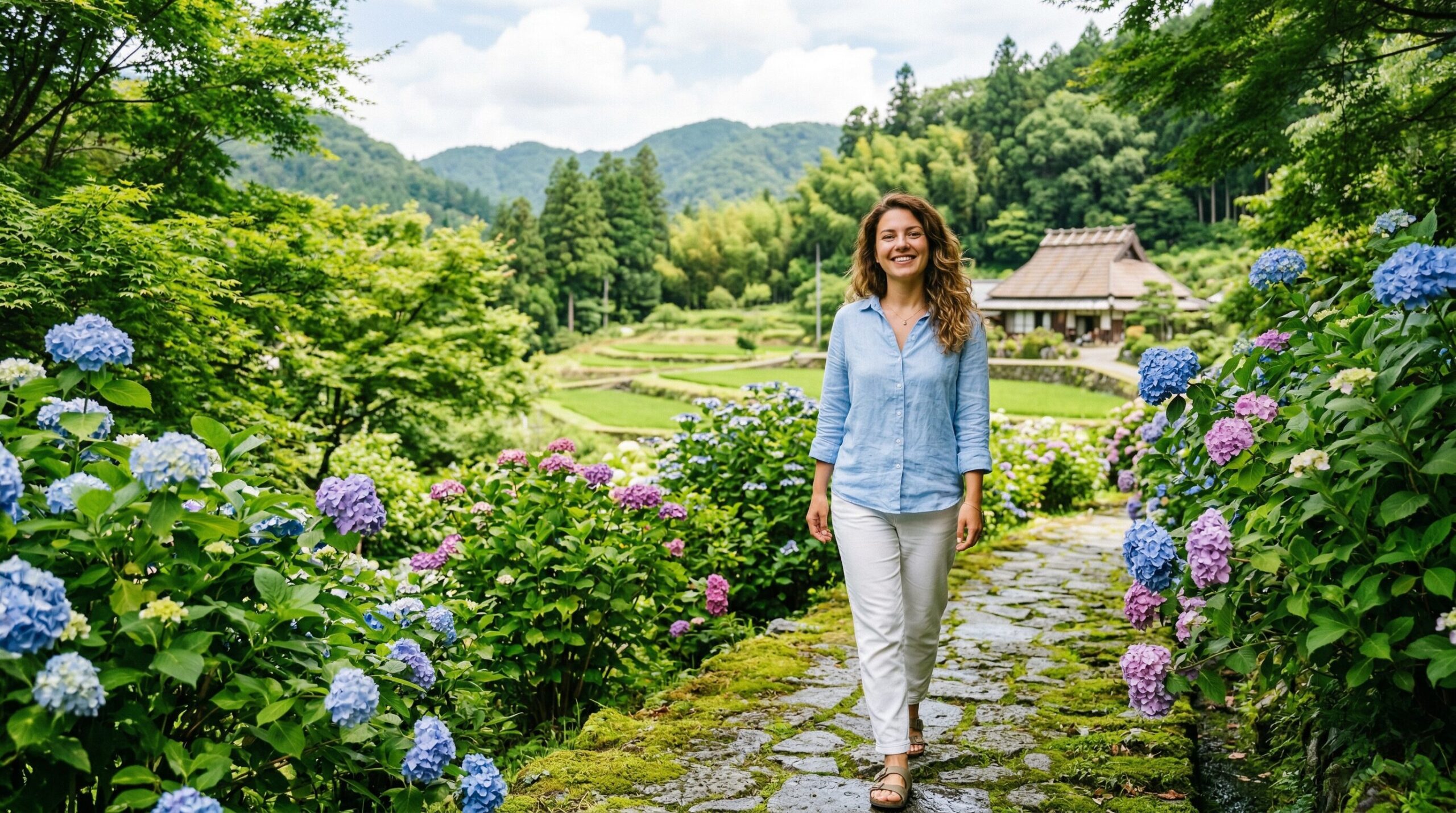
- The Hydrangea Bloom (Ajisai): June is the season of the hydrangea. Temples across the country, particularly in Kamakura and Kyoto, become exploding oceans of vibrant blue, purple, and pink blossoms that thrive in the damp weather. Viewing these flowers against the backdrop of an ancient wooden temple in the rain is a classic, deeply poetic Japanese image.
- The Moss Temples: The humidity of June brings Japan’s famous moss gardens to life. A visit to a forested sanctuary like Gio-ji in Kyoto or the Nezu Museum garden in Tokyo reveals a landscape radiating an almost neon-green intensity that simply does not exist in the drier months.
- Indoor Escapes: The occasional heavy rain forces you to slow down and alter your plans, which often leads to the best travel discoveries. A sudden downpour is the perfect excuse to dive into a massive, multi-story electronics store, explore the covered shotengai (shopping arcades) of the working-class wards, or spend hours inside a world-class museum.
The Pre-Holiday Lull (First Three Weeks of December)
Late November is peak autumn foliage season, meaning maximum prices. However, immediately after the first week of December, the leaves fall, the domestic tourists go home, and prices drop significantly before spiking again for the New Year holiday. This three-week window is a massive blind spot for international travelers and a goldmine for budget-conscious explorers.
Highlights of an Early December Visit:
- Winter Illuminations: Japanese cities take winter lighting incredibly seriously. By early December, places like Tokyo’s Roppongi Hills, the Marunouchi district, and Omotesando are transformed into breathtaking, glowing landscapes featuring millions of LED lights. It is a completely free, spectacular evening activity.
- End-of-Year Markets: This season is filled with traditional markets as locals prepare for the new year. You can visit the Hagoita-ichi (battledore market) in Asakusa, experiencing the vibrant, chaotic energy of vendors selling ornate, hand-painted wooden paddles intended to bring good luck.
- Comfort Food Season: As the temperature drops, the culinary landscape shifts to deep, savory comfort foods. This is the best time to sit at a tiny street stall and eat steaming oden (simmered winter stew), roast sweet potatoes (yaki-imo), or rich, heavy bowls of miso ramen without breaking a sweat.
Maximizing the Margins: Tips for Budget Travelers
Choosing the right season is only the first half of the equation. To truly capitalize on the best low-cost seasons to visit Japan, you must align your daily travel habits with local budget strategies. Keep these practical tips in mind:
- Fly the LCCs (Low-Cost Carriers): The rise of international budget airlines has revolutionized travel to Japan. Carriers like Zipair (operated by JAL) fly direct from the US West Coast to Tokyo for a fraction of the cost of legacy carriers. Domestically, airlines like Peach and Jetstar Japan offer flights between Tokyo, Osaka, and Sapporo for as little as $30 USD, often making flying cheaper than taking the Shinkansen.
- Leverage Business Hotels: Avoid Western hotel chains. Look for Japanese “business hotels” (brands like APA, Dormy Inn, Super Hotel, or Toyoko Inn). During the off-peak winter and rainy seasons, a private, impeccably clean room in the heart of the city can drop to between $40 and $60 USD a night. Many even offer free public baths and complimentary breakfast.
- The Lunch Special Strategy: If you want to experience high-end dining—like premium sushi, A5 Wagyu beef, or multi-course Kaiseki—never go for dinner. Almost all elite Japanese restaurants offer a lunch set (teishoku) that features the exact same ingredients as the dinner menu but at a 50% to 70% discount.
- Embrace the Konbini: The Japanese convenience store (7-Eleven, Lawson, FamilyMart) is a culinary marvel. To protect your budget, make the konbini your go-to for breakfast and on-the-go snacks. For a few dollars, you can purchase high-quality egg salad sandwiches, freshly ground hot coffee, and warm rice balls (onigiri) that rival many sit-down restaurants in quality.
- Discounted Transit Passes: The nationwide JR Pass has recently seen massive price increases, making it less viable for budget travelers. Instead, look into regional passes during off-peak seasons (like the Tokyo Wide Pass, or the Kansai Railway Pass). Even better, if you travel in winter, utilize overnight highway buses. Companies like Willer Express offer cheap, safe, and surprisingly comfortable overnight transit, saving you both a train fare and a night’s hotel cost.
Conclusion
The narrative that Japan is an untouchable, ultra-expensive luxury destination is a misconception born of rigid travel habits. The country’s profound beauty, unparalleled culinary scene, and deep historical resonance do not disappear when the cherry blossoms fall or the autumn leaves fade. In fact, for those willing to brave a crisp winter morning or carry a sturdy umbrella in June, the true character of the country often reveals itself more clearly.
By planning your journey around the best low-cost seasons to visit Japan, you make a conscious decision to travel smarter. You actively reject the claustrophobia of peak-season tourism, trading the expensive, curated postcard moments for a quiet, deeply authentic reality. You free up your budget to support independent artisans, eat better regional food, and stay longer. It is time to step away from the crowded itineraries, embrace the quiet margins of the calendar, and discover the affordable, breathtaking Japan that the locals know best.