When most travelers think of Japan, Tokyo and Kyoto immediately come to mind. But beyond the neon lights and ancient temples lies a quieter Japan. It is a Japan of narrow residential streets, silent mountain lakes, and rural train stations where time seems to stand still. For many, the first glimpse into this deeply nostalgic side of the country did not come from a guidebook, but from a screen. Makoto Shinkai’s 2016 masterpiece, Your Name (Kimi no Na wa), was more than an international cinematic phenomenon. It was a love letter to the Japanese landscape. The film beautifully juxtaposed the relentless, pulsing energy of Tokyo with the deeply rooted, traditional rhythms of rural Japan. It captured the mundane—a sliding train door, the hum of cicadas, a rainy pedestrian bridge—and made it extraordinary. For travelers seeking a deeper connection with the country, tracing the real-life ‘Your Name’ locations offers a unique pathway. This is not about superficial sightseeing. Undertaking the real-life ‘Your Name’ locations: an authentic anime pilgrimage is an opportunity to practice seichi junrei (holy land pilgrimage). It is a chance to walk through quiet neighborhoods, support local rural economies, and observe the profound beauty hidden in Japan’s everyday life.
Key Details and Breakdown: The Phenomenon of Anime Pilgrimages
Before stepping onto a train, it helps to understand the cultural context of what you are undertaking. In Japan, visiting the real-world locations that inspired anime, manga, or literature is known as seichi junrei. Originally a religious term referring to visiting sacred shrines and temples, the phrase has evolved. Today, it reflects the deep, almost spiritual connection fans feel toward the stories that move them. Shinkai’s work is uniquely suited to this because of his hyper-realistic art style. He does not invent fantasy worlds; he meticulously recreates real places, enhancing the lighting and color to capture the emotional weight of a specific moment.
The Concept of Musubi Central to Your Name is the concept of musubi. It translates roughly to “knot” or “connection.” In the film, it represents the flow of time, the threads that bind people together, and the connection between the spiritual and physical worlds. When you embark on the real-life ‘Your Name’ locations: an authentic anime pilgrimage, you are engaging in a form of musubi. You are connecting the fictional emotions of the film with the tangible reality of the Japanese landscape. You begin to notice the details that locals cherish: the changing of the seasons, the precise angle of the afternoon sun hitting a building, and the quiet dignity of a local shrine tucked away in a bustling metropolis.
Practical Examples and Recommendations: Tracing Taki and Mitsuha’s Footsteps
To truly experience this journey, you must divide your time between the sprawling urban canvas of Tokyo and the quiet, mountainous embrace of central Japan. Here are the most compelling locations to include in your itinerary.
Tokyo: The Melancholy of the Metropolis
Tokyo in Your Name is vast, isolating, yet impossibly beautiful. Shinkai focuses heavily on the Shinjuku and Yotsuya areas.
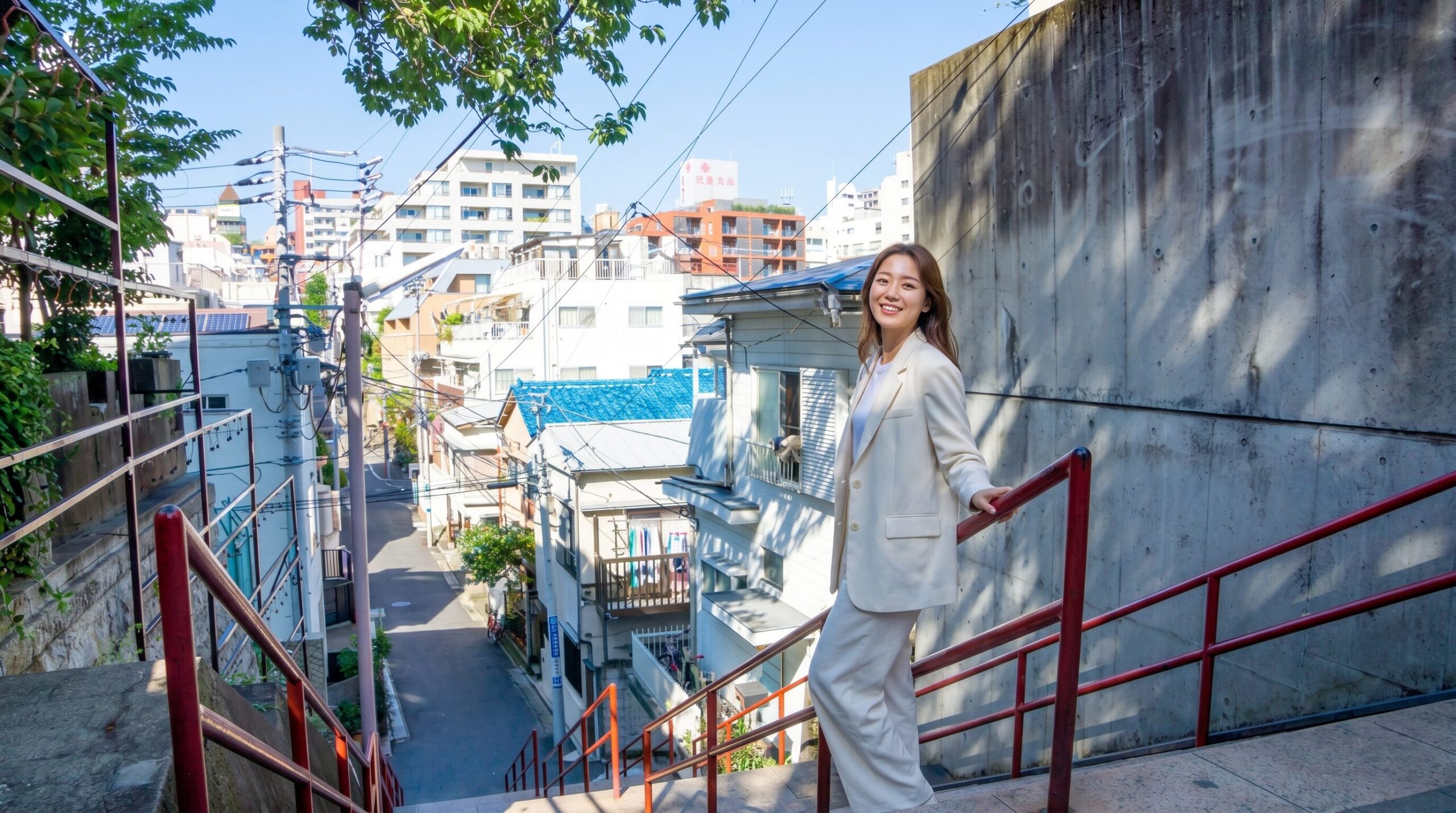
The Suga Shrine Steps (Yotsuya) This is arguably the most famous location from the film—the setting of the emotional final scene where Taki and Mitsuha finally meet.
- The Experience: Located in the quiet, residential neighborhood of Yotsuya, these unassuming stone steps are flanked by a bright red handrail. Standing at the top, you are treated to a sweeping view of the Tokyo skyline tumbling into the distance.
- The Authentic Angle: Beyond the photo opportunity, take time to explore the Suga Shrine itself. It is an ancient Shinto shrine that has watched over this district for centuries. Notice how the neighborhood remains completely silent, a stark contrast to the nearby commercial districts. This is the Tokyo where people actually live.
The National Art Center (Roppongi) Taki and his senior co-worker, Miki Okudera, go on a date to this visually stunning architectural marvel.
- The Experience: Designed by the legendary architect Kisho Kurokawa, the building features an undulating glass facade. Inside, massive inverted concrete cones serve as elevated cafes.
- The Authentic Angle: Have a cup of coffee at the exact café featured in the film (Salon de Thé Rond). Use this time to observe Tokyo’s thriving contemporary art scene. It is a brilliant example of how Japan seamlessly blends futuristic design with refined aesthetics.
The Shinjuku Police Station Intersection Featured prominently in the film’s time-lapse montages, this circular traffic light structure looks like a halo suspended over a canyon of skyscrapers.
- The Experience: Stand near the pedestrian walkways as night falls. The towering mode Gakuen Cocoon Tower looms in the background.
- The Authentic Angle: This intersection captures the relentless, kinetic energy of modern Japan. It is a place of transit, where thousands of lives intersect for a brief second before scattering into the night.
Gifu Prefecture: The Heart of Rural Japan
To understand Mitsuha’s life, you must leave the capital. The fictional town of Itomori was heavily inspired by the Hida region in Gifu Prefecture. This area is the antithesis of Tokyo. It is a place of deep winters, ancient timber architecture, and quiet agricultural rhythms.
Hida-Furukawa Station and Town When Taki embarks on his desperate search for Mitsuha, he arrives at Hida-Furukawa Station.
- The Experience: You can view the exact train tracks from the station’s overpass, a shot perfectly replicated in the film. The local library, where Taki researches the fate of Itomori, is also based on the Hida City Library.
- The Authentic Angle: Hida-Furukawa is the hidden gem of Gifu. While nearby Takayama draws massive crowds, Furukawa remains serene. Walk along the Setogawa Canal, lined with white-walled storehouses and filled with hundreds of colorful koi fish. Breathe in the scent of cedar from the local sake breweries. This is an authentic immersion into Japan’s enduring artisanal heritage.
Hida Sanno-gu Hie Shrine (Takayama) While not located in Furukawa, this shrine is widely believed to be the visual inspiration for the Miyamizu Shrine, where Mitsuha and her sister perform their traditional dances.
- The Experience: Surrounded by towering ancient cedar trees, the approach to this shrine feels profoundly sacred and isolated.
- The Authentic Angle: Visiting this shrine allows you to experience the atmosphere of indigenous Shinto animism. It is a place where the line between nature and the divine is blurred. Observe the quiet dignity of the architecture and the overwhelming stillness of the forest.
Nagano Prefecture: The Twilight Lake
Lake Suwa The stunning, catastrophic beauty of Itomori’s lake—particularly during katawaredoki (twilight, or the “magic hour”)—was inspired by Lake Suwa in Nagano Prefecture.
- The Experience: View the lake from Tateishi Park, perched high on the hills above the city. As the sun sets, the city lights begin to flicker on, surrounding the vast expanse of dark water. The resemblance to the anime is breathtaking.
- The Authentic Angle: Lake Suwa is steeped in geological and mythological history. In winter, the lake sometimes freezes over, creating a ridge of ice known as the Omiwatari (God’s Crossing), believed to be the footsteps of local deities. This region offers a profound look into how Japan’s natural geography shapes its folklore.
Tips for Travelers: How to Plan Your Journey
Undertaking the real-life ‘Your Name’ locations: an authentic anime pilgrimage requires mindful travel. As you venture into quiet neighborhoods and rural towns, it is vital to travel with respect and awareness.
- Mind Local Etiquette: Many of these locations, especially the Suga Shrine steps and the streets of Hida-Furukawa, are residential areas. Speak softly, do not block traffic, and respect private property. A true traveler observes without disrupting.
- Timing is Everything: To truly capture the atmosphere of the film, consider visiting locations during specific times. The Suga Shrine steps are most beautiful in the soft light of the late afternoon. Lake Suwa demands a visit during twilight (katawaredoki). Avoid weekends if you wish to experience these places in solitude.
- Leverage the JR Pass: If you are traveling from Tokyo to Gifu and Nagano, a regional or national Japan Rail Pass is highly recommended. The train journeys themselves—watching the urban sprawl give way to deep forested valleys—are a core part of the narrative experience.
- Support the Local Economy: When visiting Hida-Furukawa or Suwa, eat at local soba noodle shops, buy snacks from independent vendors, and consider staying in a traditional ryokan rather than a western hotel. Your visit should positively impact the communities that inspired the art.
- Photography Rules: When visiting the Hida City Library, remember that it is a functioning public space. They kindly allow photography for pilgrims, but you must ask for permission at the front desk first and avoid photographing the faces of local residents reading.
Conclusion
Japan’s true beauty often hides in plain sight. It is found in the rhythmic clatter of a local train crossing a bridge, the fading light reflecting off a glass skyscraper, and the quiet dignity of a mountain shrine. Makoto Shinkai understood this implicitly. By tracing the real-life ‘Your Name’ locations: an authentic anime pilgrimage, you are not merely chasing the backdrop of a beloved film. You are stepping into the delicate, deeply interconnected fabric of Japan itself. You move from the hyper-modern isolation of the city to the ancestral roots of the countryside, discovering the invisible threads—the musubi—that tie it all together. It is time to go beyond the ordinary, beyond the screen, and see the Japan that locals know best.