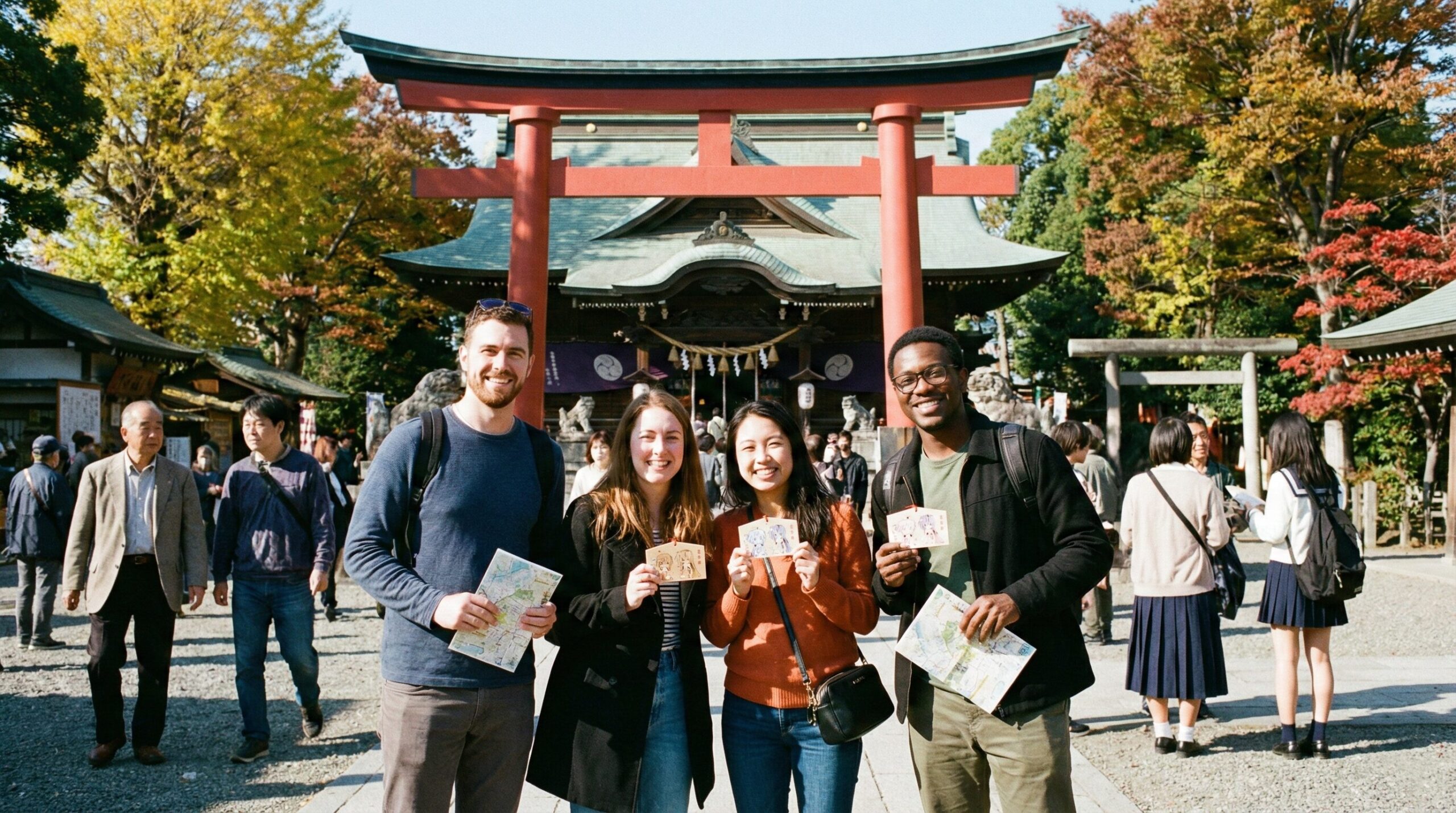
Anime pilgrimage in Japan is rarely about grand monuments. More often, it unfolds in quiet towns, ordinary streets, and places that locals have visited for generations—long before any animation studio took notice. Few locations embody this balance better than the Lucky Star Shrine in Washinomiya.
Tucked away in eastern Saitama Prefecture, Washinomiya is not a tourist hotspot. Trains pass through at a measured pace. Streets feel residential. And at the heart of town stands an ancient shrine that has quietly served its community for centuries. Everything changed in the late 2000s, when a slice-of-life anime brought this place into global fandom consciousness.
This guide explores the Lucky Star Shrine in Washinomiya not just as an anime destination, but as a real religious site with history, rituals, and a living relationship with its town. Understanding both sides is key to appreciating why this shrine remains one of Japan’s most meaningful anime pilgrimage sites.
Key Details and Breakdown: Understanding the Lucky Star Shrine in Washinomiya
What Is the “Lucky Star Shrine”?
The site commonly called the “Lucky Star Shrine” is formally known as Washinomiya Shrine. It is one of the oldest shrines in the Kanto region, with origins dating back over 1,000 years.
Its modern nickname comes from its appearance in the anime Lucky Star, where it appears as the local shrine visited by the main characters during New Year celebrations and festivals.
The anime did not create the shrine’s importance—it simply revealed it to a new audience.
Why Washinomiya Shrine Appears in Lucky Star


Washinomiya is the location of the main characters’ home and serves as the setting for important scenes, such as New Year’s shrine visits (Hatsumode). The shrine appears naturally in the story because:
- Shrines are central to everyday life in small Japanese towns
- New Year shrine visits (hatsumode) are universal experiences
- The creators had personal familiarity with the area
Rather than exaggerating or romanticizing the location, Lucky Star presents it as it is: familiar, ordinary, and quietly meaningful.
A Brief History of Washinomiya Shrine
Long before anime fans arrived, Washinomiya Shrine was known for:
- Ancient origins tied to regional mythology
- Martial associations, historically linked to warrior culture
- Seasonal festivals serving local communities
The shrine remains an active religious site. Daily prayers, annual matsuri, and New Year rituals continue regardless of anime tourism.
This continuity is what gives the Lucky Star Shrine in Washinomiya its unique atmosphere—it never stopped being itself.
Ema: Where Fandom and Faith Intersect

One of the most striking features of Washinomiya Shrine is its ema—wooden prayer plaques.
Alongside traditional wishes for:
- Health
- Exams
- Family safety
You’ll find hand-drawn illustrations of Lucky Star characters, messages from fans around the world, and drawings that blend humor with sincerity.
What makes this special is not the artwork itself, but the mutual respect:
- The shrine allows fan ema
- Fans follow shrine etiquette
- Both coexist without conflict
This balance is rare—and fragile.
Practical Examples and Recommendations
Example 1: A First-Time Anime Pilgrimage Visit
If you’re visiting the Lucky Star Shrine in Washinomiya for the first time:
Recommended approach
- Visit during a weekday morning
- Walk from the station through town
- Observe before photographing
This mirrors how locals experience the shrine and keeps your visit grounded.
Example 2: Visiting During New Year (Hatsumode)
New Year is the shrine’s busiest time.
What to expect
- Long lines
- Food stalls
- Crowds of locals and fans
- Seasonal decorations
Recommendation
If you visit during this period, focus less on photos and more on atmosphere. This is when the shrine feels most alive.
Example 3: Pairing the Shrine With Town Exploration
Washinomiya itself is part of the experience.
Simple walking ideas
- Visit small local shops
- Stop at neighborhood cafés
- Walk residential streets shown in the anime
Anime pilgrimage works best when it blends into everyday life.
Getting There: Practical Access
Washinomiya Shrine is reachable without difficulty.
From Tokyo
- Take a train toward Saitama
- Transfer to a local line
- Walk from the nearest station
The final approach is intentionally quiet—no tour buses, no signage overload.
Tips for Travelers Visiting the Lucky Star Shrine in Washinomiya
Remember: This Is a Real Shrine
The most important rule is respect.
Do
- Bow lightly at the torii gate
- Keep voices low
- Follow posted rules
Avoid
- Blocking paths for photos
- Entering restricted areas
- Treating the shrine as a set
Your behavior shapes how anime pilgrimage is perceived.
Photography: Less Is More
Photography is generally allowed, but:
- Avoid photographing people praying
- Don’t stage poses near worshippers
- Be patient—wait for quiet moments
Sometimes the best experience isn’t captured on camera.
Anime Knowledge Is Optional
You don’t need deep Lucky Star knowledge to enjoy the site.
Many visitors come for:
- History
- Architecture
- Atmosphere
Let the shrine stand on its own merits.
Support the Local Community
Anime tourism has helped Washinomiya economically.
You can contribute by:
- Buying from local shops
- Eating locally
- Respecting residential areas
Small gestures matter more than souvenirs.
Visit With Humility, Not Ownership
Anime fans sometimes feel personal attachment to pilgrimage sites. That’s natural—but remember:
- The shrine existed long before Lucky Star
- It will exist long after
Approach as a guest, not a claimant.
Why the Lucky Star Shrine Endures
Many anime pilgrimage sites fade as series lose popularity. Washinomiya Shrine has not.
Why?
- The anime respected the location
- The community welcomed fans carefully
- Visitors learned to behave respectfully
The result is a sustainable relationship—one that other pilgrimage sites often struggle to achieve.
Conclusion: More Than an Anime Location
The Lucky Star Shrine in Washinomiya is not famous because it’s flashy. It’s famous because it’s real. Real faith. Real community. Real continuity.
For anime fans, it offers a rare chance to step into a familiar world without spectacle. For non-fans, it’s a glimpse into how tradition quietly persists in modern Japan. And for the town of Washinomiya, it remains what it has always been—a place of prayer, gathering, and seasonal rhythm.
Anime may have brought the world here, but what keeps people coming back is something deeper: a shared understanding that some places deserve to be visited gently.
That, more than anything, is what makes the Lucky Star Shrine worth the journey.