
For more than 30 years, Detective Conan has been a fixture of Japanese pop culture. Known internationally as Case Closed, the series blends classic whodunit storytelling with long-running character arcs, earning fans across generations. While many anime pilgrimages revolve around fictional locations, Detective Conan Town in Tottori is different. This is not a temporary attraction or a themed corner of a city—it is a real town that has quietly embraced its cultural identity. Located in Hokuei, Tottori Prefecture, the town honors Conan’s creator Gosho Aoyama, who was born here. What makes Detective Conan Town special is its restraint. There is no amusement park, no artificial spectacle. Instead, Conan exists alongside daily life—statues on sidewalks, themed bridges, subtle references woven into a working rural community. It feels less like fan service and more like a conversation between place and creator.
- Key Details and Breakdown: What Is Detective Conan Town?
- The Main Attractions of Detective Conan Town
- Practical Examples and Recommendations
- What Makes Detective Conan Town Different From Other Anime Pilgrimages
- Tips for Travelers Visiting Detective Conan Town in Tottori
- Why Detective Conan Town Resonates With Fans
- Conclusion: A Pilgrimage Built on Respect and Restraint
Key Details and Breakdown: What Is Detective Conan Town?
Where Is Detective Conan Town?
Hokuei sits along the Sea of Japan coast, west of Tottori City. It’s a small, quiet town surrounded by farmland, beaches, and low mountains—hardly the setting one might expect for Japan’s most famous fictional detective. Yet that contrast is precisely the appeal.
The “Detective Conan Town” area centers around:
- Yura Station (nicknamed Conan Station)
- A pedestrian-friendly main street
- The Aoyama Gosho Furusato-kan museum
All attractions are within easy walking distance.
Why Tottori Embraced Conan
Rather than commercializing aggressively, Hokuei chose a long-term, low-impact approach. Key reasons:
- Gosho Aoyama’s local roots
- Desire to revitalize a rural town sustainably
- Appeal to domestic and international fans without disrupting daily life
This balance has made Detective Conan Town a model for anime-based regional tourism in Japan.
The Main Attractions of Detective Conan Town
Aoyama Gosho Furusato-kan: The Heart of the Town
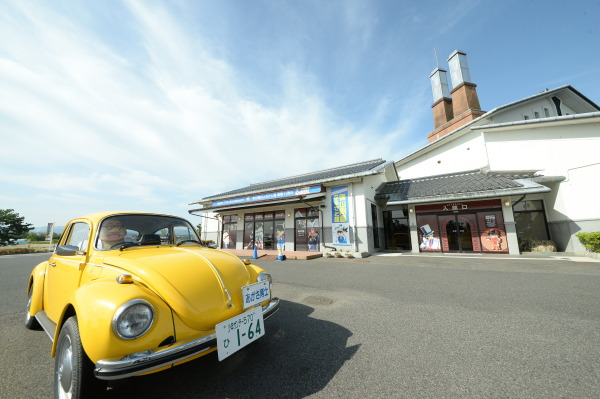
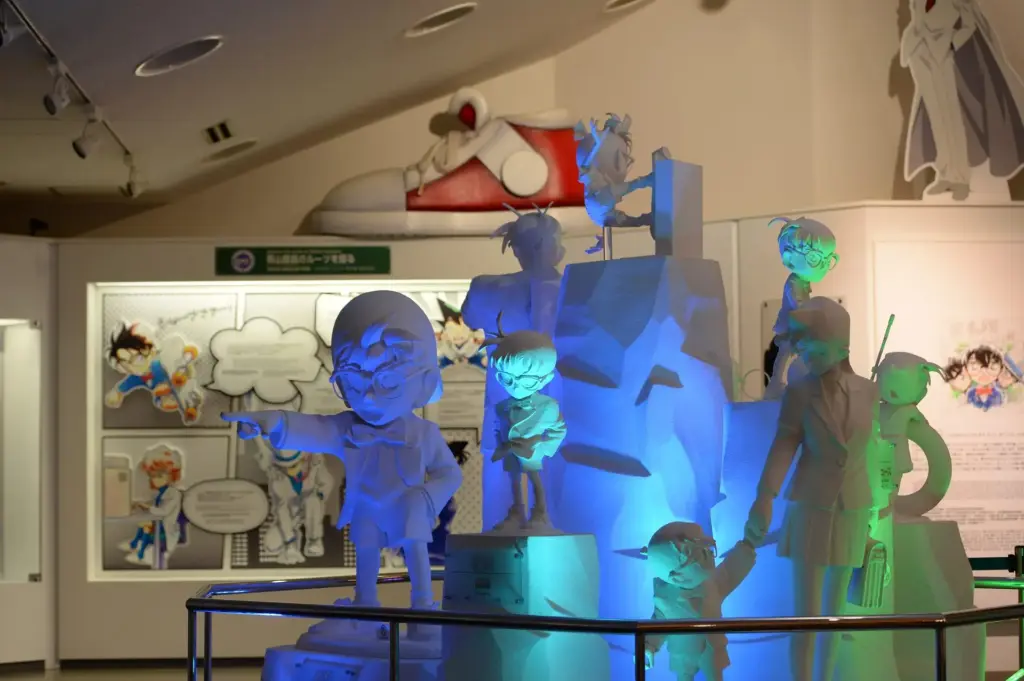
The Aoyama Gosho Furusato-kan is the centerpiece of the experience. What you’ll find inside:
- Original manga artwork and drafts
- Insight into Gosho Aoyama’s creative process
- Interactive mystery exhibits
- Displays covering Conan’s long publication history
The museum balances fan excitement with genuine respect for manga as a craft. Even visitors unfamiliar with the series can appreciate the storytelling discipline on display.
Conan Station: Arrival With Character
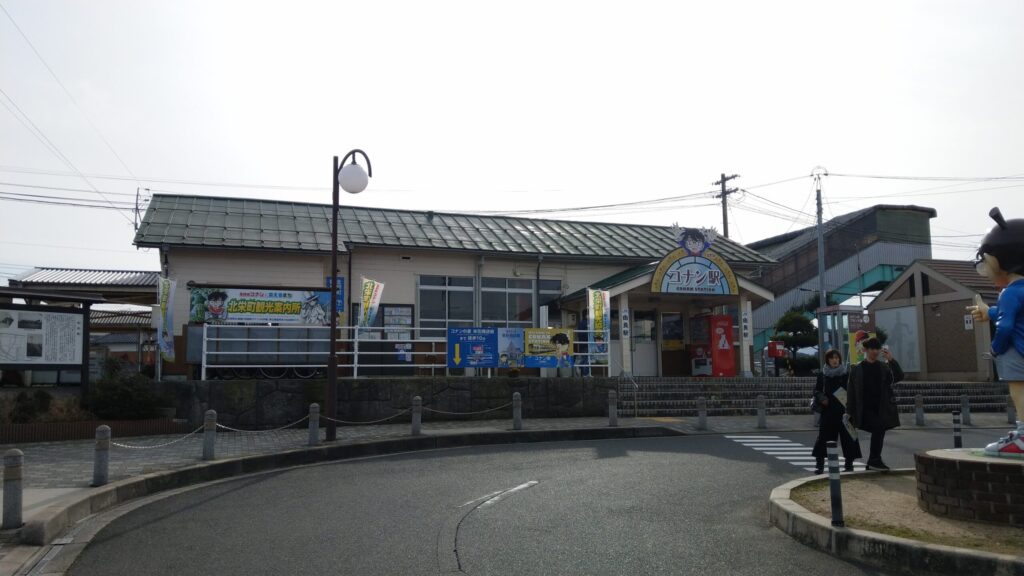
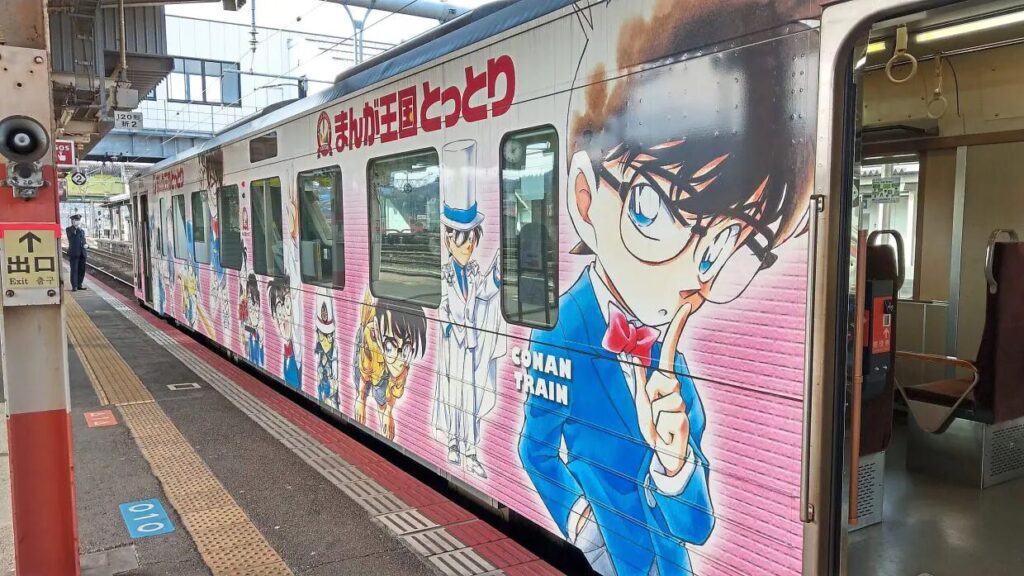
Arriving at Yura Station sets the tone immediately. Highlights:
- Conan-themed signage
- Character illustrations throughout the station
- A gentle, welcoming atmosphere
This isn’t a loud gateway—it’s a quiet nod that you’ve arrived somewhere special.
The Conan Statues and Street Walk
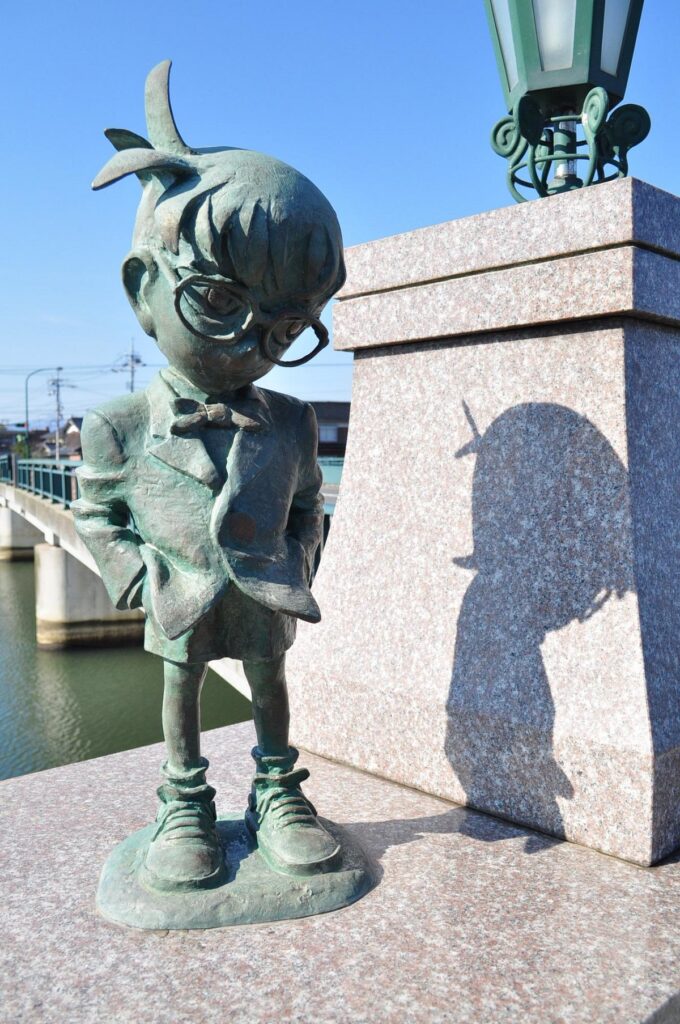
Scattered throughout town are bronze statues of Conan and key characters. What makes them unique:
- Integrated into sidewalks and bridges
- Life-sized and approachable
- Positioned along everyday routes
Walking the street feels like following a subtle trail rather than visiting an attraction. Locals pass by casually, which reinforces how naturally Conan fits here.
Conan Bridge: A Quiet Landmark
One of the most photographed spots is Conan Bridge. Why it stands out:
- Decorative railings with character motifs
- Views of the surrounding countryside
- A calm, reflective setting
It’s not dramatic—but it doesn’t need to be.
Practical Examples and Recommendations
Example 1: Half-Day Visit From Tottori City
Morning
- Train to Yura (Conan Station)
- Walk through the town center
Midday
- Visit Aoyama Gosho Furusato-kan
Afternoon
- Statue walk and souvenir browsing
This is the most common—and perfectly sufficient—way to experience Detective Conan Town.
Example 2: Pairing Conan Town With Tottori Sand Dunes
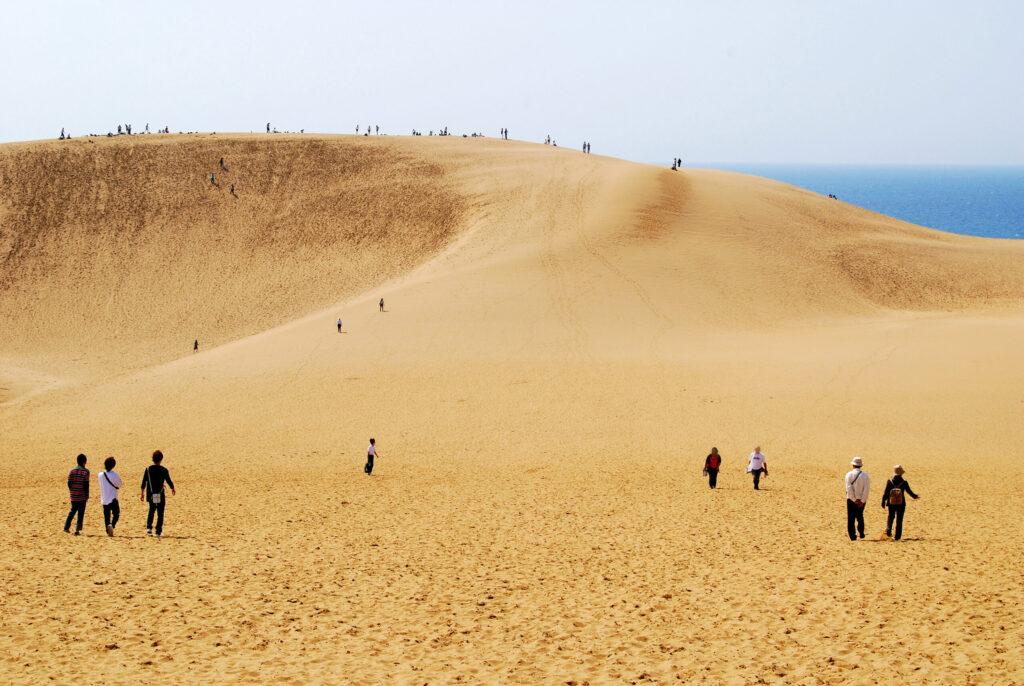
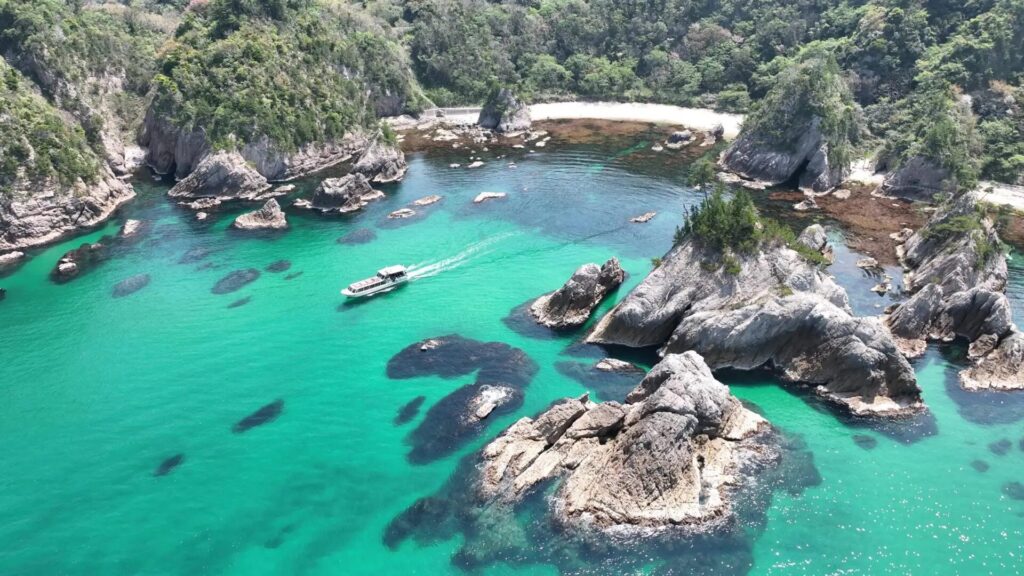
Combine pop culture with natural scenery:
- Morning: Detective Conan Town
- Afternoon: Tottori Sand Dunes
This contrast highlights Tottori’s unique character.
Example 3: Slow Travel Overnight Stay
Stay overnight in Hokuei or nearby Kurayoshi.
- Experience town after day-trippers leave
- Enjoy quiet evenings
- See how the town returns to itself
This approach fits the spirit of the place.
What Makes Detective Conan Town Different From Other Anime Pilgrimages
It’s a Living Town First
Unlike purpose-built anime parks:
- People live and work here
- Shops serve locals year-round
- Conan exists alongside daily routines
This authenticity is the town’s greatest strength.
It Honors the Creator, Not Just the Franchise
The focus is as much on Gosho Aoyama’s journey as on Detective Conan itself.
- Childhood influences
- Creative discipline
- Long-term storytelling
This elevates the visit beyond fandom.
It Avoids Overcrowding by Design
There are:
- No massive events
- No artificial queues
- No sensory overload
Visitors disperse naturally, preserving calm.
Tips for Travelers Visiting Detective Conan Town in Tottori
Plan Around Train Schedules
Trains to Yura Station:
- Run less frequently than in major cities
- Are reliable but require planning
Check return times before you arrive.
Don’t Rush the Museum
Allocate at least:
- 60–90 minutes for the museum
Even casual fans often stay longer than expected.
Respect Photography Etiquette
- Avoid blocking walkways
- Be mindful of locals
- Follow museum rules
Remember: this is not a set.
Support Local Businesses
Small shops sell:
- Conan-themed souvenirs
- Local snacks and crafts
Your spending directly supports the community.
Language Expectations
English support is limited.
- Museum visuals help
- Staff are friendly and patient
Basic travel Japanese goes a long way.
Why Detective Conan Town Resonates With Fans
Detective Conan is about observation, patience, and small details. So is this town. Nothing demands attention. Instead, the experience rewards those who:
- Walk slowly
- Look closely
- Appreciate subtle references
In that way, Detective Conan Town in Tottori mirrors the series itself—quiet on the surface, thoughtful underneath.
Conclusion: A Pilgrimage Built on Respect and Restraint
Visiting Detective Conan Town in Tottori is not about spectacle or scale. It’s about seeing how a story can be rooted in place without overwhelming it. Hokuei doesn’t try to become something else. It simply acknowledges the artist it produced—and invites visitors to share that connection. For fans, it’s deeply satisfying. For travelers, it’s refreshingly calm. For the town, it’s a sustainable future shaped by storytelling. If you approach it the way Conan would—observant, patient, and curious—you’ll find this small town leaves a surprisingly lasting impression.