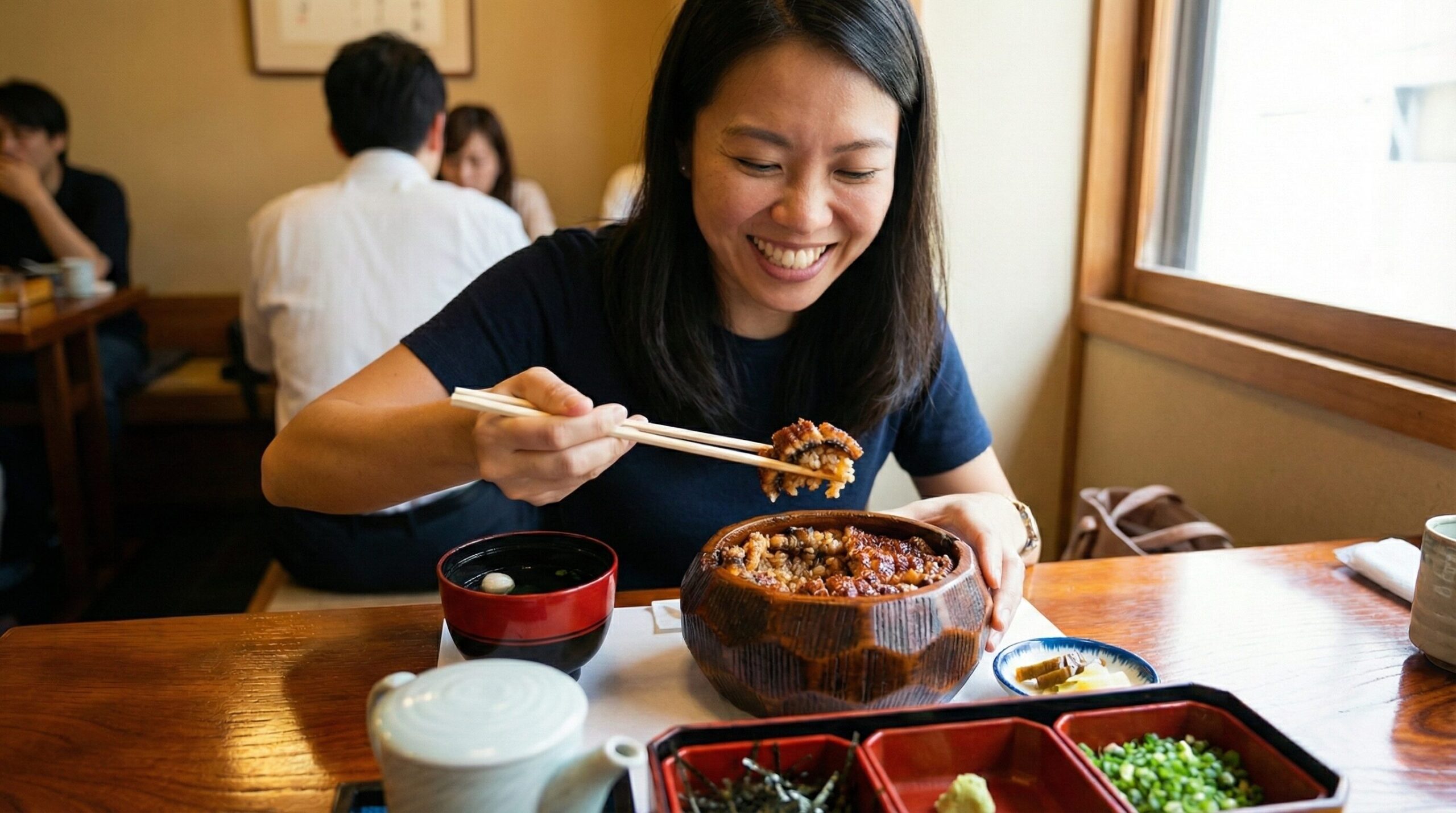
Nagoya often sits in the shadow of Tokyo, Osaka, and Kyoto on Japan travel itineraries. Many travelers pass through its massive station, glance at the skyline, and move on. But those who stay—and eat—quickly realize something important: Nagoya has one of the most distinct local food cultures in Japan.
This Nagoya Food Guide: Hitsumabushi and Tebasaki focuses on two dishes that define the city’s culinary identity. They are not refined in the Kyoto sense, nor flashy like Tokyo trends. Instead, they are bold, practical, and deeply rooted in local taste.
Nagoya cuisine favors:
- Strong seasoning
- Clear contrasts
- Comfort over elegance
Hitsumabushi (grilled eel over rice, eaten in stages) and tebasaki (peppery fried chicken wings) are perfect expressions of that philosophy. To understand Nagoya, you start with these two dishes.
- Key Details and Breakdown: What Makes Nagoya Food Unique
- Hitsumabushi: Nagoya’s Signature Eel Dish
- Tebasaki: Nagoya’s Ultimate Casual Food
- Practical Examples and Recommendations
- Common Mistakes Visitors Make
- Tips for Travelers Eating Hitsumabushi and Tebasaki
- Why These Two Dishes Define Nagoya
- Conclusion: Eat Like Nagoya, Not Like a Tourist
Key Details and Breakdown: What Makes Nagoya Food Unique
The Logic Behind Nagoya Flavors
Nagoya’s food culture developed at the crossroads of Japan. Historically, it was a castle town, an industrial center, and a major transportation hub. Local cuisine reflects that background.
Common characteristics
- Slightly sweeter or richer sauces
- Heavier seasoning compared to Kansai cuisine
- Dishes designed to be filling and satisfying
Food here is not subtle by accident—it’s built for people who work, travel, and gather.
Why Hitsumabushi and Tebasaki Matter
While Nagoya has many local dishes (miso katsu, kishimen, miso nikomi udon), hitsumabushi and tebasaki stand out because:
- They are widely loved by locals
- They are immediately recognizable
- They represent opposite ends of Nagoya dining—from formal to casual
Together, they form the backbone of this Nagoya Food Guide: Hitsumabushi and Tebasaki.
Hitsumabushi: Nagoya’s Signature Eel Dish
What Is Hitsumabushi?
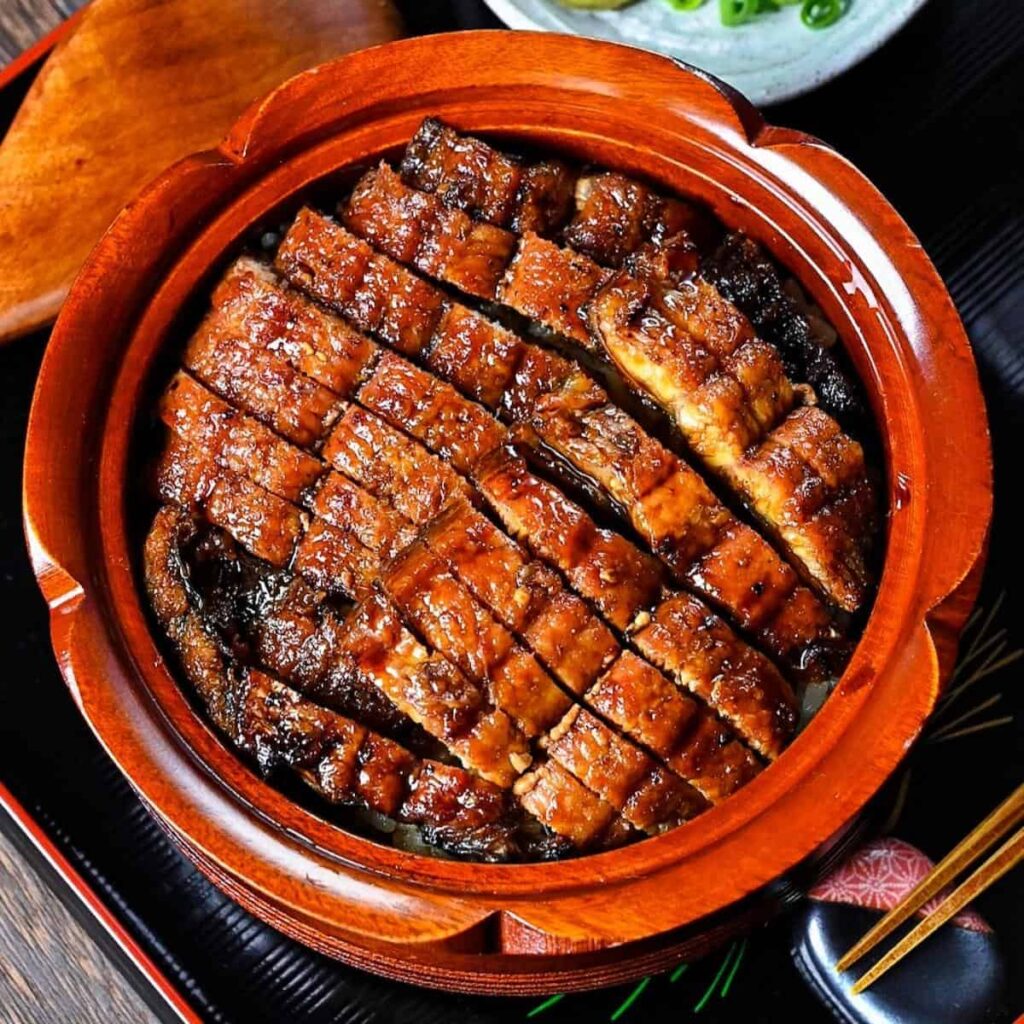
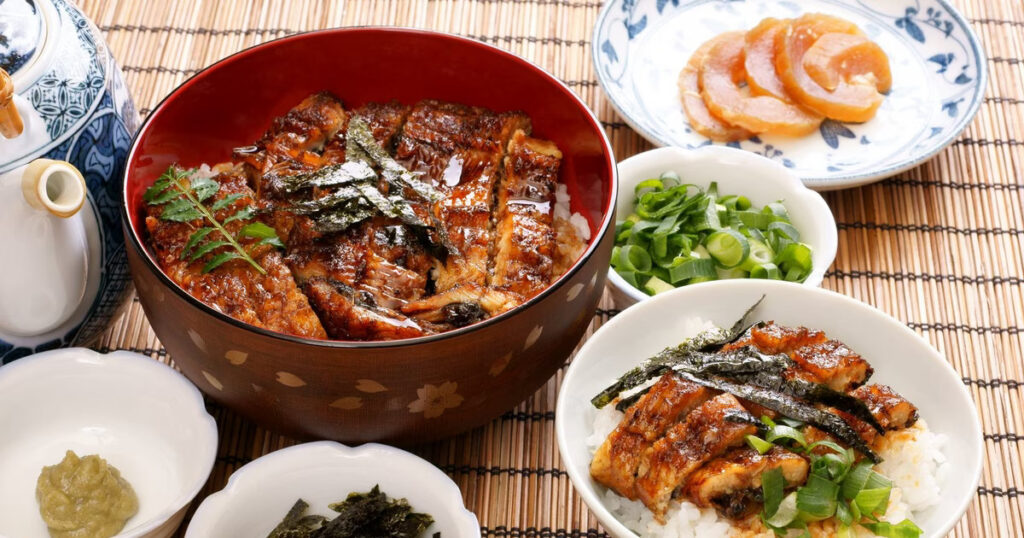
Hitsumabushi is a Nagoya-style way of eating unagi (freshwater eel) over rice. Unlike standard unagi don, hitsumabushi is traditionally divided into four portions to be enjoyed in specific stages.
Core elements
- Finely chopped grilled eel
- Rice in a wooden or lacquered bowl
- Condiments and broth served on the side
The dish invites participation. You don’t just eat it—you progress through it.
The Four Ways to Eat Hitsumabushi
Stage 1: Pure and Direct
Take the first portion and eat the eel and rice as served.
- Focus on the balance of sweet sauce and smoky eel.
- This stage establishes the baseline flavor.
Nagoya eel is typically grilled directly without steaming, unlike the soft, steamed eel found in Tokyo (Kanto). This gives it a crispier, stronger texture that stands up well to the rice.
Stage 2: With Condiments
Take the second portion and add toppings such as:
- Chopped scallions
- Wasabi
- Nori (dried seaweed)
This introduces contrast—sharpness, freshness, and heat.
Stage 3: As Ochazuke
For the third portion, pour hot broth or tea over the eel and rice.
- The richness softens.
- Smoke becomes subtle.
- The dish ends gently.
This stage is about comfort and warmth.
Stage 4: The Encore
For the final portion, repeat your favorite method from the previous three. Whether you prefer the crisp directness of Stage 1 or the savory broth of Stage 3, this allows you to finish the meal exactly how you like it best.
Why Nagoya Eel Tastes Different
Nagoya-style unagi:
- Is grilled more firmly
- Uses a slightly bolder tare (sauce)
- Emphasizes texture as much as flavor
It reflects Nagoya’s preference for food that holds its own.
Where to Eat Hitsumabushi in Nagoya
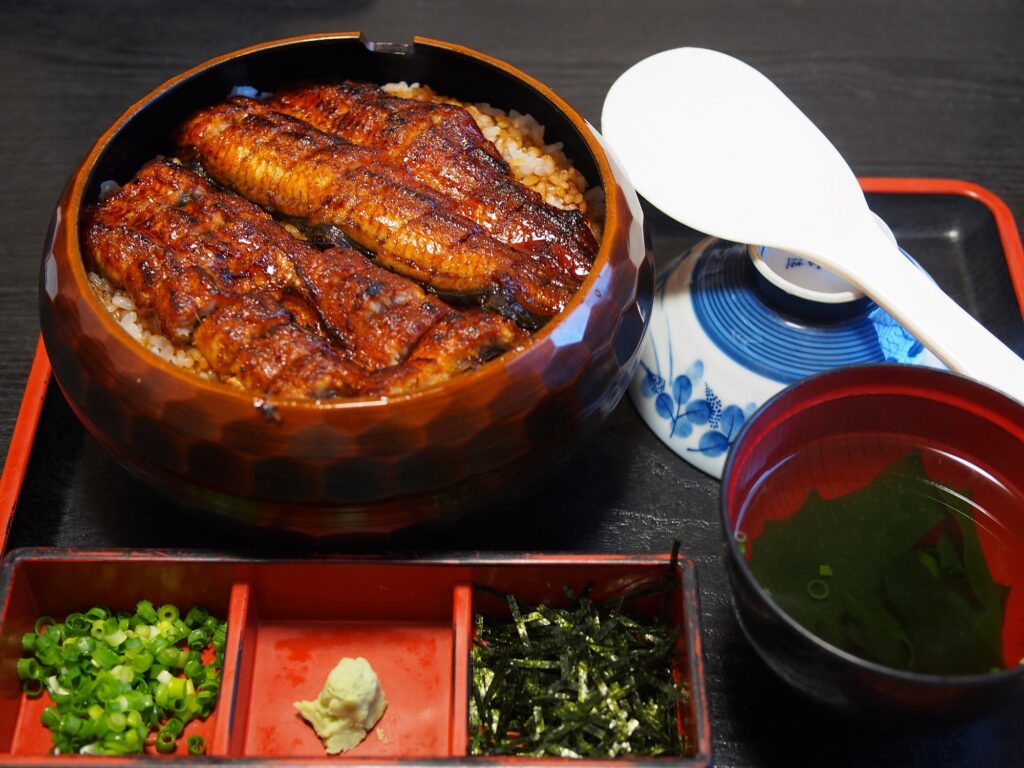
One of the most famous places is Atsuta Horaiken, often credited with popularizing hitsumabushi.
What to know
- Expect long lines
- Prices are higher than casual meals
- Quality is consistently excellent
Other unagi specialty shops across Nagoya also serve strong versions. Look for restaurants that focus exclusively on eel.
Tebasaki: Nagoya’s Ultimate Casual Food
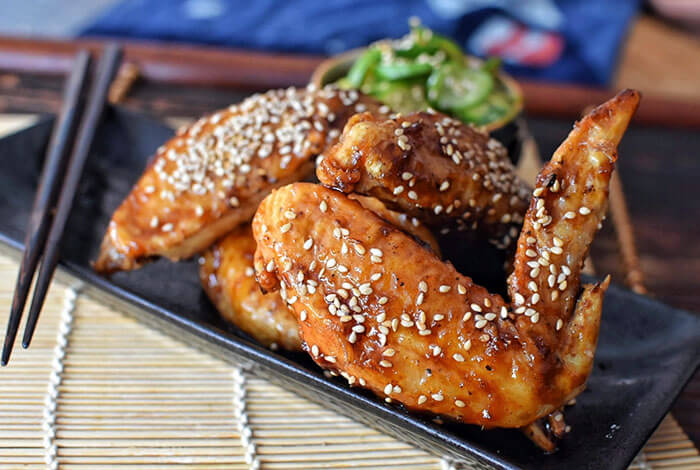
What Are Tebasaki?
Tebasaki are deep-fried chicken wings seasoned with:
- Sweet soy-based glaze
- Black pepper
- Garlic
Unlike Western wings, they are:
- Not battered heavily
- Fried to render the skin crisp
- Served dry, not saucy
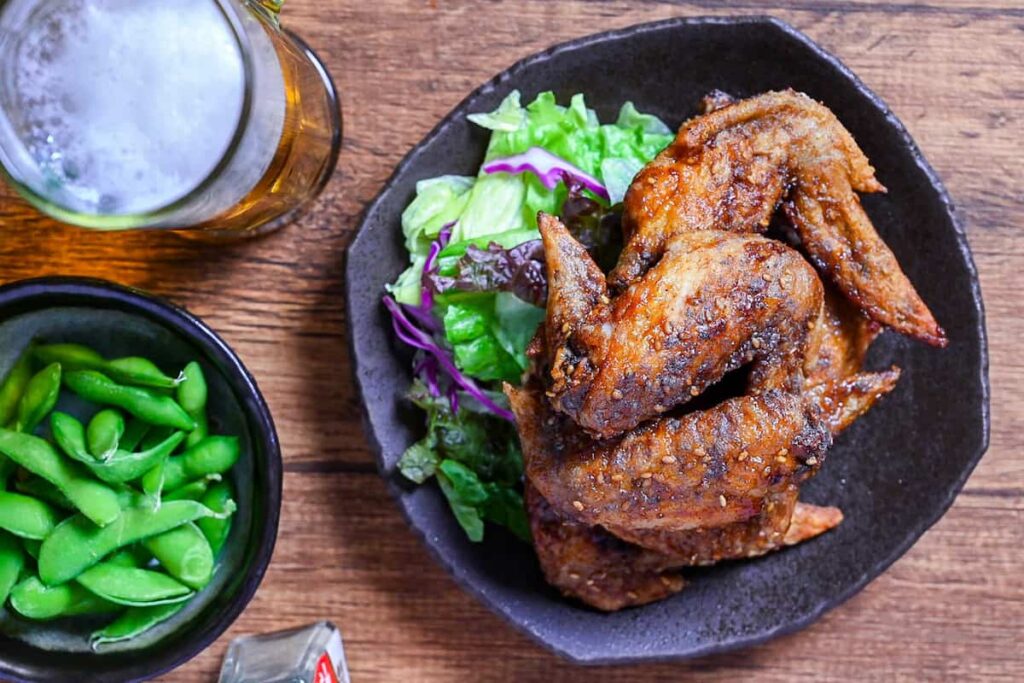
They are designed to be eaten with your hands—and usually with a drink.
Why Tebasaki Are Addictive
Tebasaki succeed because of balance:
- Sweetness from sauce
- Sharp heat from pepper
- Crisp skin and juicy meat
They’re not subtle. They’re meant to be ordered repeatedly.
Tebasaki and Izakaya Culture
Tebasaki are inseparable from Nagoya’s casual dining scene.
Typical setting
- Izakaya (Japanese pub)
- After-work crowds
- Shared plates
You’ll often see locals order:
- Tebasaki
- Beer or highball
- Simple side dishes
This is Nagoya at its most social.
Famous Tebasaki Chains (and What to Expect)
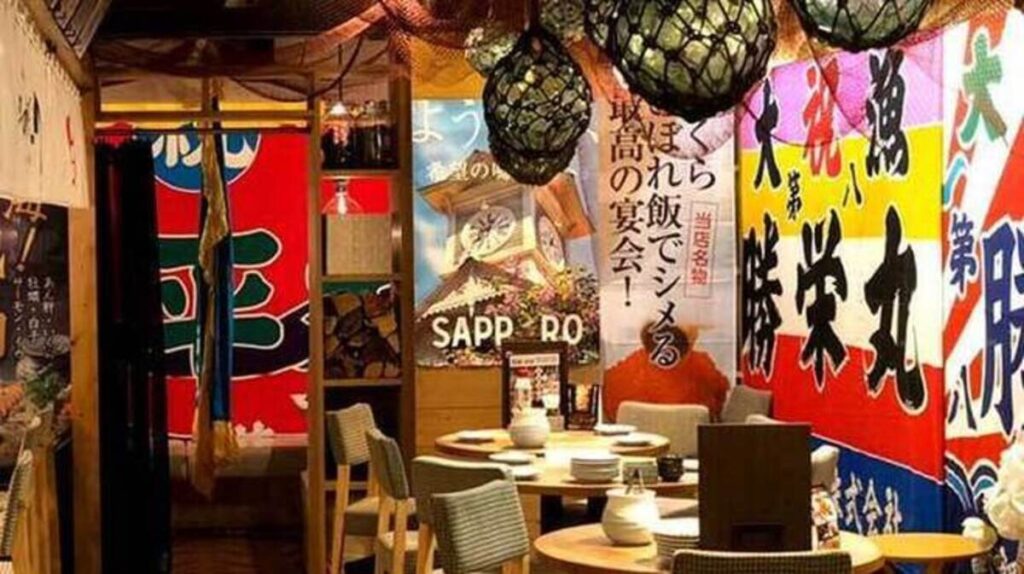
Two well-known names dominate:
- Sekai no Yamachan
- Furaibo
Differences
- Yamachan: spicier, bolder seasoning
- Furaibo: slightly sweeter, more balanced
Both are authentic. Locals have strong opinions.
Practical Examples and Recommendations
Example 1: One-Day Nagoya Food Focus
Lunch
- Hitsumabushi at an unagi restaurant
Afternoon
- Walk off the meal around Nagoya Station or Sakae
Dinner
- Tebasaki and drinks at an izakaya
This pairing captures Nagoya’s food spectrum.
Example 2: Budget-Conscious Travelers
Hitsumabushi can be expensive. To balance:
- Eat hitsumabushi once
- Rely on tebasaki and casual meals afterward
You still experience Nagoya’s identity without overspending.
Example 3: Traveling With Non-Eel Eaters
If someone doesn’t eat eel:
- Focus on tebasaki
- Explore other Nagoya dishes (miso katsu, kishimen)
Nagoya cuisine is flexible despite its reputation.
Common Mistakes Visitors Make
Expecting Kyoto-Style Refinement
Nagoya food is intentionally stronger.
- Don’t expect delicate flavors
- Appreciate boldness instead
Ordering Tebasaki Like Western Wings
These are:
- Smaller
- Bone-heavy
- Designed for nibbling
Adjust expectations and enjoy the rhythm.
Rushing Hitsumabushi
Hitsumabushi is meant to be eaten slowly.
- Follow the four stages (divide the rice accordingly)
- Don’t mix everything at once
The structure is part of the pleasure.
Tips for Travelers Eating Hitsumabushi and Tebasaki
Plan Around Peak Hours
Popular eel restaurants:
- Fill up quickly
- Often stop taking orders early
Go early or plan for a wait.
Don’t Skip the Instructions
Hitsumabushi restaurants often explain the stages.
- Read them
- Follow the progression
Even locals respect the format.
Eat Tebasaki With Your Hands
- Napkins are provided
- Mess is expected
Trying to be neat defeats the purpose.
Pair With the Right Drinks
- Hitsumabushi: green tea or light beer
- Tebasaki: beer, highball, or sake
Drinks matter as much as food in Nagoya dining culture.
Why These Two Dishes Define Nagoya
Hitsumabushi shows Nagoya’s respect for process and tradition. Tebasaki shows its love for direct pleasure and social eating.
Together, they explain the city better than any guidebook paragraph. This is why the Nagoya Food Guide: Hitsumabushi and Tebasaki isn’t just about what to eat—it’s about how Nagoya thinks about food: clearly, confidently, and without apology.
Conclusion: Eat Like Nagoya, Not Like a Tourist
Nagoya doesn’t chase trends. It doesn’t soften flavors for visitors. It serves what it believes in.
If you approach the city with curiosity rather than comparison, hitsumabushi and tebasaki become more than famous dishes. They become a lesson in regional pride—expressed through smoke, sauce, pepper, and rice.
So don’t rush through Nagoya. Sit down. Order deliberately. Use your hands. Follow the stages. And let the city tell you who it is—one bite at a time.