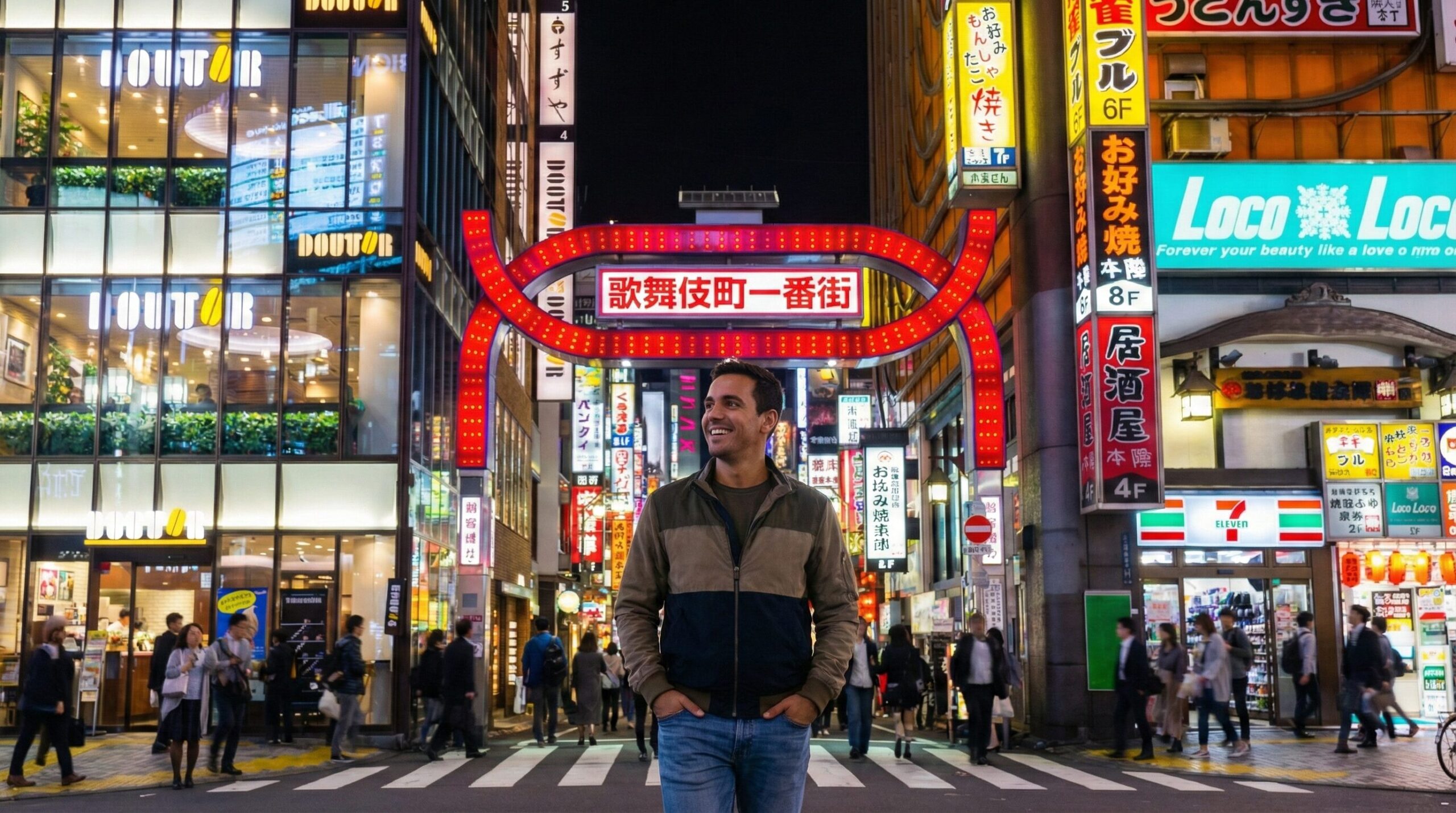
If you stand at the edge of Shinjuku and look toward the neon-drenched entrance of Kabukicho, you can almost hear it—the revving of a scooter, the crash of a wooden sword, and the lazy drawl of a silver-haired samurai complaining about his blood sugar levels.
For fans of Hideaki Sorachi’s masterpiece Gintama, Kabukicho is not just a red-light district; it is a holy land. It is the spiritual home of the Yorozuya (Odd Jobs), a place where the Edo period clashes with sci-fi alien technology in a chaotic, hilarious, and often touching symphony. However, visiting Kabukicho to find Gintama is not about visiting a museum. Unlike Akihabara, which wears its anime heart on its sleeve, Kabukicho is grittier. It is real.
To find the true “Gintama spots in Kabukicho,” you have to look beyond the surface. You have to walk the streets where the fictional Gintoki Sakata drinks, fights, and eats sweets, and experience the unique energy that inspired the manga.
This guide goes beyond the superficial sightseeing. We explore how to trace the steps of the Yorozuya, finding the authentic intersections between the anime world and the real, breathing district of Shinjuku.
The Atmosphere: Where Fiction Meets Reality
To understand why Gintama is set here, you must first understand the district itself. Kabukicho is often called the “Sleepless Town” (Nemuranai Machi). In the anime, it is portrayed as the “Kabuki District,” a melting pot of Amanto (aliens), samurai, yakuza, and cabaret workers. The reality is surprisingly close to the fiction.
The Chaos of the Kabukicho Gate
Your journey begins at the Kabukicho Ichibangai Arch. This red neon gate is arguably the most famous visual marker in the district and appears frequently in the anime as the backdrop for the Yorozuya’s shenanigans.
- The Anime View: Often depicted with Amanto ships flying overhead and the Yorozuya office visible in the background (which is usually depicted as being on the second floor above a snack bar).
- The Real View: A bustling intersection of tourists, touts, and salarymen. Standing here at dusk, as the lights flicker on, provides the perfect atmospheric connection to the series.
The “Snack Bar” Culture
One of the central hubs of Gintama is “Snack Otose,” the bar downstairs from Gintoki’s apartment run by the formidable Otose. “Snack bars” are a very real, very authentic part of Japanese nightlife culture—small, intimate bars usually run by a “Mama-san.” While Snack Otose itself is fictional, the Golden Gai district, located just on the edge of Kabukicho, captures this exact aesthetic.
- Why visit: It consists of six narrow alleys packed with over 200 tiny bars. The architecture here is post-war Showa era, retaining a dilapidated, nostalgic charm that feels exactly like the neighborhood where Gintoki would live.
- Observation: Walk through here quietly at night. You won’t find the literal Otose, but you will find the “Real Japan”—the smoky, cramped, communal atmosphere that forms the emotional backbone of the series.
Key Gintama Spots in Kabukicho & Shinjuku
While the Yorozuya office doesn’t physically exist, several locations in and around Kabukicho serve as direct inspirations or pilgrimage sites for fans.
The Shinjuku Station Labyrinth
Gintama often jokes about modern Tokyo life, and nothing is more iconic than the chaos of Shinjuku Station.
- The Spot: The East Exit area (leading toward Kabukicho).
- The Connection: In various episodes and openings, characters are seen blending into the crowds here. It represents the modern side of the “Edo” Gintama portrays.
- The Experience: Just navigating the station is an experience in organized chaos. Look for the famous 3D Cat Billboard near the east exit—while newer than the original manga run, its absurdity fits the Gintama humor perfectly.
Hanazono Shrine
Located adjacent to Golden Gai, this Shinto shrine offers a moment of peace amidst the neon madness.
- The Connection: While not the specific base for the Shinsengumi (who are historically linked to Kyoto and Hino), Hanazono Shrine is the spiritual guardian of Kabukicho. It is the kind of place where the Yorozuya would inevitably end up during a festival arc or a messy job.
- Cultural Context: It hosts the “Tori-no-Ichi” festival in November, selling decorated rakes for business prosperity. It is a spot where the traditional and the seedy underbelly of Kabukicho intersect—a core theme of Gintama.
The “Parfait” Pilgrimage
You cannot talk about Gintoki Sakata without talking about his addiction to sugar. He is rarely seen without a strawberry milk or a chocolate parfait. To truly embody the Gintama spirit, you must indulge in a high-end, retro-style parfait.
Recommended Spot: Coffee Seibu (Shinjuku)
- The Vibe: A classic Kissaten (coffee shop) originally established in the 1960s. Although the iconic original building closed in 2023, the shop relocated within Kabukicho and faithfully reproduced its interior.
- It features the original red velvet chairs, stained glass, and a distinct Showa-era atmosphere transferred from the old store.
- The Order: The Giant Parfait. It is towering, excessive, and exactly what Gintoki would order if he had the money.
- Why it fits: It captures the retro-modern aesthetic of the series. Even in its new location, it preserves the authentic “Showa” spirit that mirrors the Yorozuya’s timelessness.
Recommended Spot: Takano Fruit Parlour
- If you want the “high-class” sweets that the Shinsengumi or higher-ups might eat, this is the spot. It represents the luxury side of the district.
Practical Examples: A “Yorozuya” Day Itinerary
To help you explore these Gintama spots in Kabukicho efficiently, here is a suggested itinerary that balances anime pilgrimage with authentic cultural discovery.
Afternoon: The Sweet Tooth Start
- 14:00: Arrive at Shinjuku Station East Exit.
- 14:30: Head to Coffee Seibu or a similar retro kissaten. Order a Chocolate Parfait. Take a moment to appreciate the Showa interior—this is the era of design that influences much of the non-Edo parts of Gintama.
Late Afternoon: Otaku Hunting
- 16:00: Visit Shinjuku Marui Annex.
- This building often hosts limited-time anime pop-up shops (check Twitter/X locally for Gintama collaborations).
- Even if there is no event, the Surugaya on the upper floors is a treasure trove for second-hand Gintama goods (figures, keychains, doujinshi).
- 17:00: Animate Shinjuku. Located comfortably near the station, this is the standard stop for new merchandise.
Evening: Into the District
- 18:30: Walk through the Kabukicho Ichibangai Arch. Take your photos here.
- 19:00: Wander through the streets. Look up at the signs. Notice the mix of host clubs, mahjong parlors, and ramen shops.
- Note: Keep an eye out for “Elizabeth” memorabilia in arcades (UFO catchers often stock Gintama prizes).
- 20:00: Dinner at a lively Izakaya.
- Look for a place with wooden interiors and a rowdy atmosphere. Order Yakitori and Sukonbu (pickled kelp—Kagura’s favorite) if they have it (often found as a small appetizer or snack).
- Torikizoku is a reliable, loud chain within Kabukicho that fits the “cheap eats for broke Yorozuya” vibe.
- Note: For a deeper experience, you can try the yakitori alleys in Omoide Yokocho (Memory Lane). However, be aware that it is located on the West Exit side of Shinjuku Station, on the opposite side of the tracks from Kabukicho.
Night: The Quiet Backstreets
- 21:30: Walk the perimeter of Golden Gai.
- Respectful travel: Do not take photos of people’s faces or inside open doors without permission. Just soak in the atmosphere of the “Snack District” that Otose would rule over.
Tips for Travelers: Navigating the Real Kabukicho
While Gintama makes the district look like a slapstick playground, the real Kabukicho requires “street smarts.” Here is how to navigate it safely and respectfully.
Safety First (The Shinsengumi aren’t here to save you)
- Ignore the Touts: You will be approached by men in suits asking if you want to drink, see girls, or find a “good place.”
- The Rule: Never follow a tout. Ignore them completely. The “ripoff bars” (bottakuri) are real.
- No Photos of Workers: Do not take photos of hosts, hostesses, or Yakuza-looking individuals on the street. It is considered very rude and can lead to trouble.
Authentic vs. Themed
- There are occasional “Gintama Collaboration Cafes” (often at places like Capcom Cafe or temporary pop-ups). However, these are fleeting.
- The “Beyond Nippon” approach is to find the permanent spirit of the show. Focus on the architecture, the noise, and the food rather than just looking for a poster of Gintoki.
Language Barrier
- Kabukicho is tourist-friendly, but deeper spots like Golden Gai can be English-limited. A simple “Sumimasen” (Excuse me) and a smile go a long way.
Conclusion
Finding Gintama spots in Kabukicho is less about checking locations off a map and more about absorbing the energy of the city. Sorachi Hideaki chose this district for his story because it is a place where humanity is stripped bare—where the ridiculous, the tragic, and the heroic coexist side by side. When you walk under that red archway, or struggle to finish a giant parfait, or listen to the distant sound of trains and laughter in a smoky alley, you are stepping into the world of the Yorozuya. It isn’t always pretty, and it’s certainly loud, but that is the point. As Gintoki himself might say, life is about finding the sweetness in the mess. And there is no better place to find that mess than in Kabukicho.