

Few manga and anime series have left a cultural impact as profound as Attack on Titan. Known for its brutal world-building, moral complexity, and relentless sense of scale, the series feels vast—cities behind walls, endless battles, and civilizations on the brink.
Yet the origin of this global story is surprisingly quiet. The creator of Attack on Titan, Hajime Isayama, grew up in Hita, a small riverside city in Kyushu surrounded by mountains. Far from megacities or anime hubs, Hita is calm, traditional, and deeply local.
That contrast is exactly why the Attack on Titan Locations in Hita feel so powerful. This is not a theme park or fictional reconstruction. It’s a real city that chose to honor one of its own—subtly, respectfully, and with remarkable emotional resonance. Visiting Hita isn’t about reenacting scenes. It’s about understanding where the imagination that created Attack on Titan was shaped.
- Key Details and Breakdown: Why Hita Became an Attack on Titan Pilgrimage Site
- Core Attack on Titan Locations in Hita
- Practical Examples and Recommendations
- What Makes Hita Different From Other Anime Pilgrimages
- Tips for Travelers Visiting Attack on Titan Locations in Hita
- Conclusion: A Pilgrimage Rooted in Place
Key Details and Breakdown: Why Hita Became an Attack on Titan Pilgrimage Site
Hita and Hajime Isayama’s Origins
Hita is Isayama’s hometown, specifically the Oyama district. Growing up here meant:
- Being surrounded by towering mountains (often likened to “The Walls”)
- Living in a relatively enclosed valley basin
- Experiencing a strong desire to see “what is beyond the mountains”
Many fans and critics have noted how this geography echoes Attack on Titan’s core imagery—walls, confinement, and the tension between safety and freedom. Rather than commercializing aggressively, Hita’s approach has been creator-focused and integrated into existing city spaces, making the pilgrimage feel thoughtful rather than exploitative.
Core Attack on Titan Locations in Hita
1. Levi Ackerman Statue (JR Hita Station Plaza)
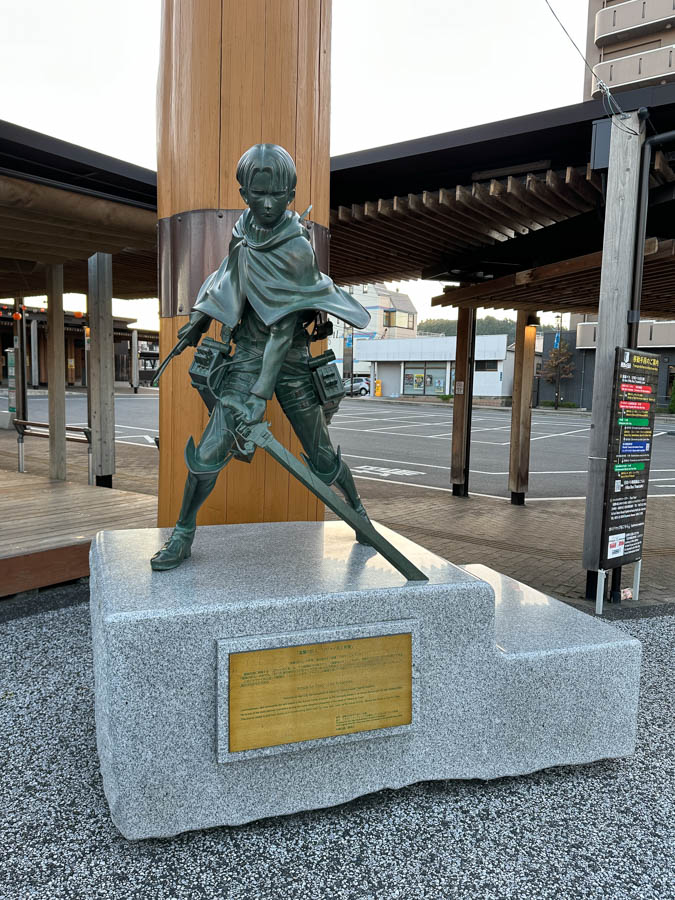
The journey typically begins at JR Hita Station. Standing guard in the plaza just outside the station is the bronze statue of humanity’s strongest soldier:
- Character: Levi Ackerman
- Pose: Clad in full Survey Corps gear, holding his blades.
- Significance: While the other statues are located in the creator’s rural hometown of Oyama, Levi is placed here to “watch over” the visitors arriving in Hita City.
Why this matters: It is the most accessible statue and serves as the gateway to the pilgrimage. It naturally blends into the daily commute of students and locals, symbolizing how the series has become part of the town’s fabric.
2. Eren, Mikasa, and Armin Statue (Oyama Dam)
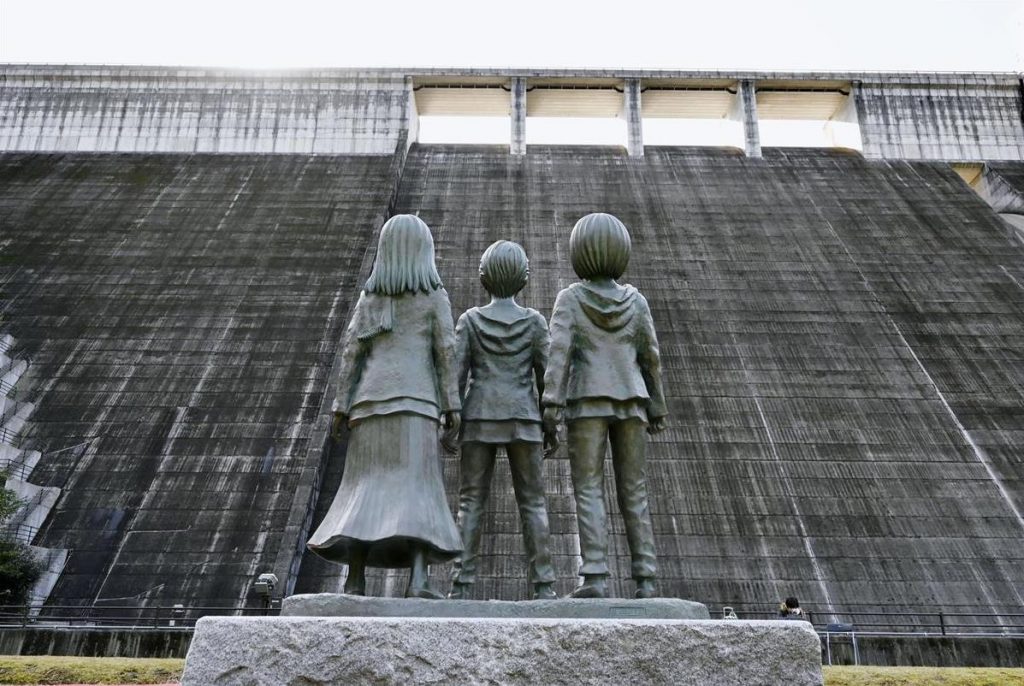
Located about a 20-minute drive from the city center in the Oyama district, this is arguably the most emotional location in the pilgrimage.
- Characters: Eren Yeager, Mikasa Ackerman, and Armin Arlert (depicted as children).
- The Setting: The statues stand at the base of the massive Oyama Dam, looking up at the dam wall in terror.
- The Scene: This installation recreates the iconic opening scene of the series—”That Day”—where the Colossal Titan peers over Wall Maria.
Why this location was chosen: The dam wall perfectly mimics the scale of the Walls in the anime. Standing here, you share the exact perspective of the characters. By downloading the local “Attack on Titan in HITA” AR app, you can even see a virtual Colossal Titan appearing over the dam’s edge on your smartphone screen.
3. Attack on Titan in HITA Museum (Roadside Station Oyama)
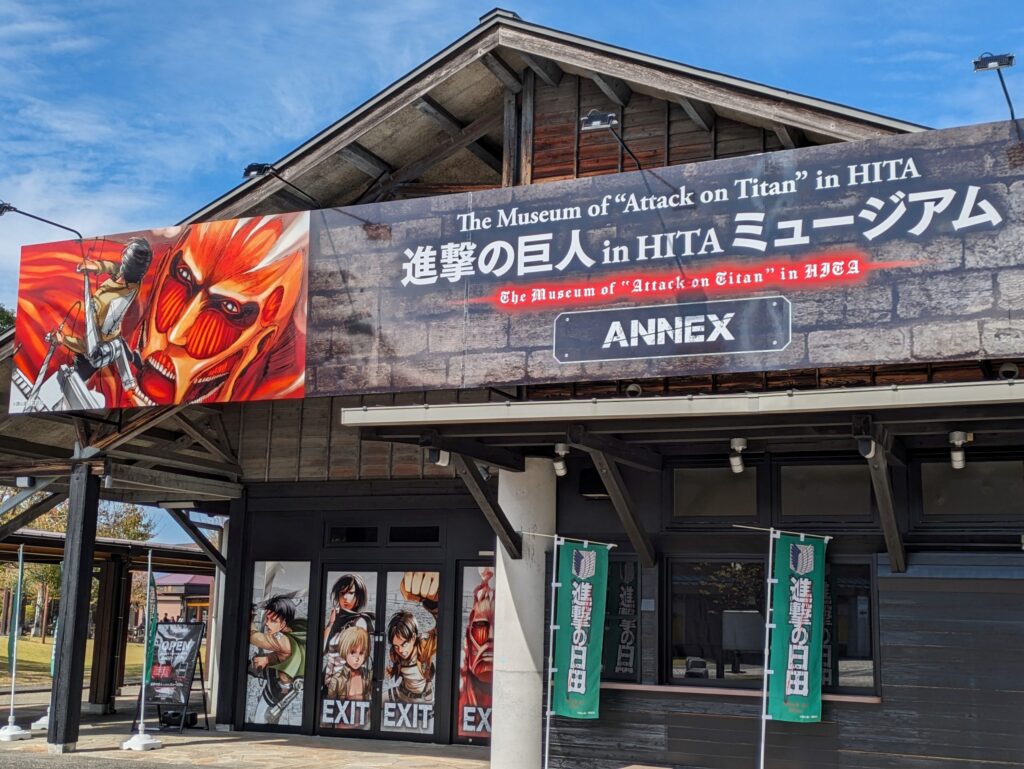
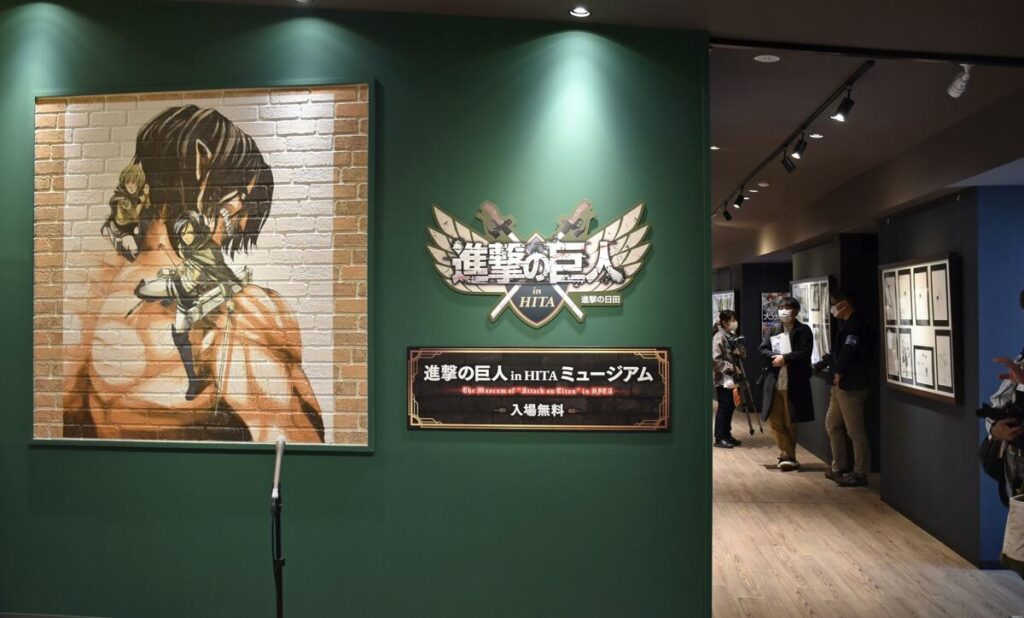
A short distance from the dam (accessible by car or taxi) is the Attack on Titan in HITA Museum, located within the “Michi-no-Eki (Roadside Station) Mizube no Sato Oyama.”
What you’ll find:
- Original Manuscripts: Actual drawings and storyboards by Hajime Isayama.
- Workspace Recreation: A reproduction of Isayama’s desk.
- Childhood Art: Drawings from his youth, showing the roots of his artistic talent.
- Exclusive Commentary: Insights into the series’ creation that you can’t find elsewhere.
This museum is the heart of the pilgrimage, focusing on the craft and growth of the creator. It connects the global hit back to the local boy who dreamed it up.
Practical Examples and Recommendations
Important Note on Transport
Unlike typical city tours, the locations are split between the City Center (Hita Station) and the Oyama District (Mountains).
- Distance: Oyama is about 10-15km from the station.
- Transport: A rental car or taxi is highly recommended. Buses exist but are infrequent.
Example 1: Half-Day Attack on Titan Pilgrimage
Morning: Arrival
- Arrive at JR Hita Station.
- Take photos with the Levi Statue outside the station.
- Stop by the Hita Tourist Information Center (next to the station) to pick up a map.
Midday: The Oyama District
- Travel to Oyama (20 mins by car/taxi).
- Visit Oyama Dam to see the Eren/Mikasa/Armin Statue.
- Visit the Attack on Titan Museum at Roadside Station Oyama.
- Lunch: Eat at the Roadside Station (local organic buffet or yakiniku).
Afternoon: Return
- Return to Hita Station area.
Example 2: Full-Day Hita Experience (Fans + Culture)
Combine the anime pilgrimage with Hita’s historical charm.
Morning
- Complete the Oyama District (Dam & Museum) first.
Afternoon
- Return to the city center.
- Visit Mameda-machi (Hita’s historical “Little Kyoto” district). It has traditional wooden buildings that resonate with the pre-industrial aesthetic of the anime’s world.
- Sunset walk along the Mikuma River.
This itinerary balances fandom with a sense of place, allowing you to enjoy the atmosphere that influenced the creator.
What Makes Hita Different From Other Anime Pilgrimages
It Honors the Creator, Not Just the Characters
Hita’s focus is Isayama’s journey: from a rural upbringing to global recognition. The museum doesn’t just display cool anime scenes; it displays the struggle and effort of the artist.
It Respects Everyday Life
There are no barricaded zones or loud theme park rides. The Levi statue stands quietly near a taxi stand; the children’s statues overlook a functioning dam. The city remains itself first.
It Encourages Reflection Over Consumption
While there is merchandise (especially at the Roadside Station), the core experience is about understanding the environment. Standing at the bottom of the dam, feeling the cool mountain air and looking up at the “Wall,” offers a visceral understanding of the story’s themes—fear, awe, and the desire for freedom.
Tips for Travelers Visiting Attack on Titan Locations in Hita
Plan Your Transport
Do not expect to walk from the Levi statue to the Eren statue. It is too far. Plan to rent a car, hire a taxi for a few hours, or carefully check the bus schedule to “Oyama.”
Use the AR App
Download the “Attack on Titan in HITA” app. It adds a layer of digital immersion to the physical statues, especially at the dam.
Be Mindful of Local Residents
These are public spaces.
- The dam is an active infrastructure facility.
- The station is used by daily commuters.
- Be respectful when taking photos.
Pair With Local Food
Hita is famous for Hita Yakisoba (crispy fried noodles). Many shops near the station serve it. It’s the perfect way to ground your visit in local culture.
Conclusion: A Pilgrimage Rooted in Place
Visiting the Attack on Titan Locations in Hita is not about chasing scenes or reliving battles. It’s about recognizing how environment shapes imagination.
Hita offers something rare in anime tourism: Authenticity.
By honoring the creator rather than exploiting the franchise, the city allows fans to engage with Attack on Titan on a deeper level—one rooted in geography, memory, and quiet reflection. If you come willing to explore the mountains that walled in a young Hajime Isayama, you will understand the origin of the “Walls” in a way no manga page or anime episode can convey.