
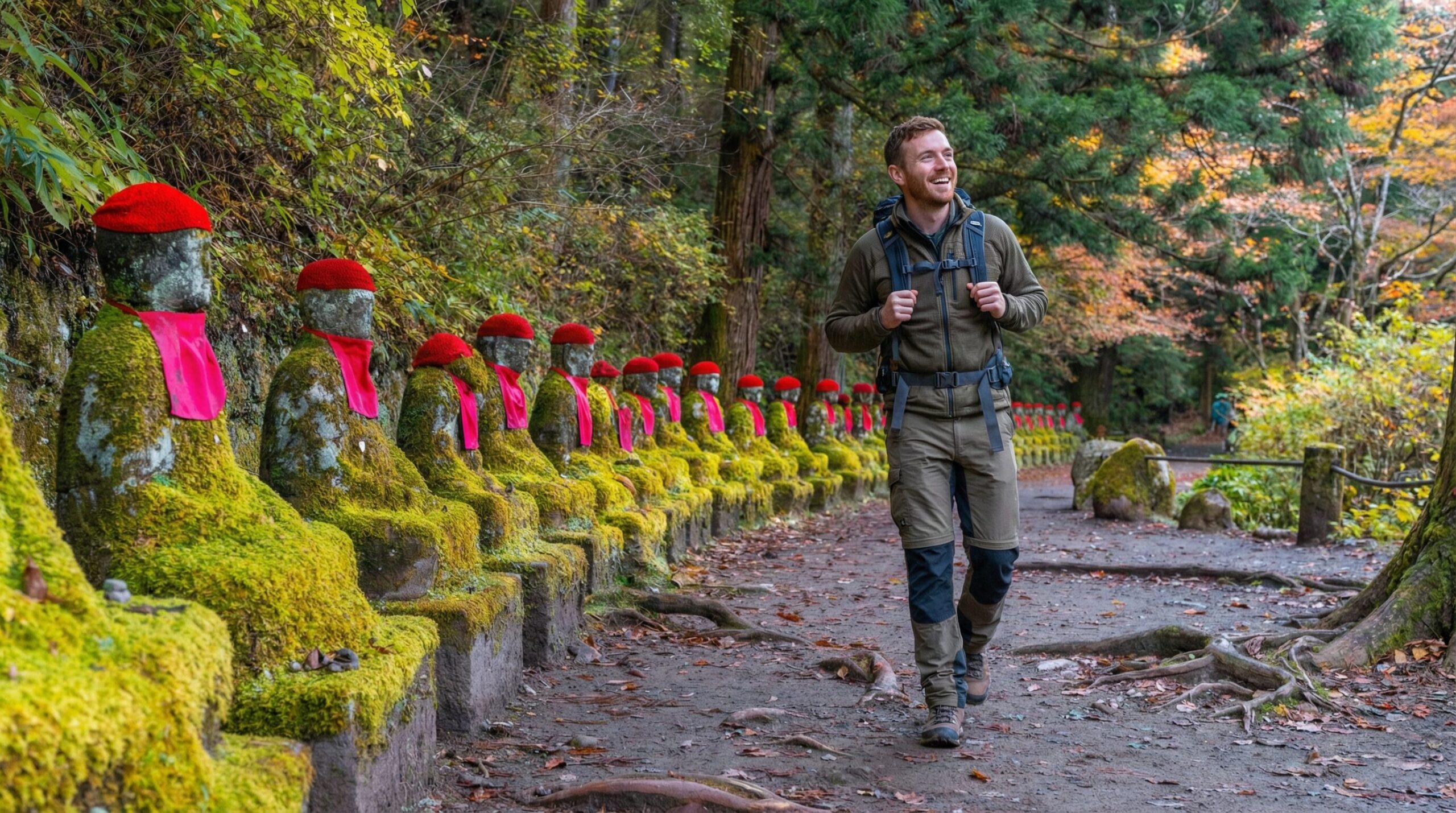
There is a moment that every backpacker in Japan eventually experiences. It might happen while you are waiting for a local train at a silent, unmanned station in the mountains of Nagano, or perhaps while you are sharing a hot pot with a grandmother in a small minshuku (family guesthouse) in Kyushu. It is the realization that the “Japan” you see on social media—the neon-soaked streets of Shinjuku and the crowded gates of Fushimi Inari—is just the surface. Beneath that surface lies a country of deep quiet, ancient rhythms, and incredible hospitality.
For the traveler willing to carry their own bag and venture off the Shinkansen line, Japan offers one of the most rewarding backpacking experiences in the world. This is not a guide to surviving on convenience store cup noodles (though they are delicious). This is a guide to traveling deeper, spending wisely, and connecting with the authentic heart of the country. Whether you are a seasoned trekker or a first-time solo traveler in your 40s, this is how you explore the real Japan.
Redefining “Backpacking” in Japan
When we talk about backpacking in Japan, we aren’t necessarily talking about sleeping in dorm rooms or hitchhiking (though you can). In the context of “Beyond Nippon,” backpacking is a mindset. It is about mobility, flexibility, and immersion.
Japan is uniquely suited for this style of travel. The train network allows you to hop from a metropolis to a rice-farming village in hours. The safety of the streets means you can wander aimlessly without fear. And the rise of “flashpacking” facilities means you can travel light without sacrificing comfort.
The Budget Reality (2026 Update)
Japan has a reputation for being expensive, but the reality is nuanced. While luxury fruit and taxi rides are pricey, the day-to-day costs for a traveler can be surprisingly reasonable if you live like a local.
Daily Budget Breakdown (Per Person)
- Budget Style:¥12,000 – ¥16,000 ($80 – $105 USD)
- Hostels, cheap eats, regional trains, free attractions.
- Comfort Style: ¥18,000 – ¥25,000 ($120 – $165 USD)
- Minshuku/Business hotels, regional rail passes, sit-down dinners, museums.
Getting Around: Beyond the JR Pass
For years, the Japan Rail (JR) Pass was the golden ticket for travelers. However, with recent price increases, it is no longer the automatic choice for everyone. To truly explore the regions, you need to look at alternatives.
Regional Rail Passes
Instead of a nationwide pass, buy passes that focus on specific areas. These offer incredible value and force you to slow down and explore one region deeply.
- JR East Tohoku Area Pass: Perfect for exploring the wild north—Aomori, Akita, and Yamagata. 5 consecutive days of unlimited travel for a fraction of the national pass cost.
- JR Kansai Wide Area Pass: Ideal for going beyond Kyoto to places like Kinosaki Onsen (hot spring town) and the Kumano Kodo trails.
Highway Buses
For the “slow travel” enthusiast, highway buses (like Willer Express) are clean, safe, and significantly cheaper than the bullet train. An overnight bus from Tokyo to Hiroshima not only saves travel costs but also saves a night’s accommodation.
Walking
Japan’s history is etched into its walking trails. You don’t need a train to see the country; sometimes, you just need good boots. The Nakasendo Trail (connecting Kyoto and Tokyo through the mountains) or the Shikoku Pilgrimage offer a view of Japan that rushes by too fast from a train window.
Where to Stay: The “Authentic” Choice
Skip the generic international hotel chains. To understand the Japanese way of life, your accommodation should be part of the experience.
Minshuku (Family Guesthouses)
This is the heart of rural tourism. A minshuku is a bed-and-breakfast run by a local family.
- The Experience: You sleep on futons in tatami rooms.
- The Food: Dinner is often included and features home-cooked local specialties you won’t find in restaurants.
- The Connection: You interact directly with the hosts, offering a glimpse into daily Japanese life.
Shukubo (Temple Lodgings)
Stay overnight in a Buddhist temple. Koyasan is the famous spot, but temples in Nagano and Kyoto also offer this. You will wake up early for morning prayers and eat shojin ryori (traditional vegetarian monk cuisine). It is a spiritual cleanse as much as a place to sleep.
Machiya (Traditional Townhouses)
In cities like Kyoto and Kanazawa, renovated wooden townhouses are available for rent. They offer the aesthetic of old Japan with modern amenities—perfect for travelers who want privacy and atmosphere.
Recommended Routes for the Explorer
If you want to escape the “Golden Route” (Tokyo-Kyoto-Osaka), consider these itineraries.
Route A: The Spiritual North (Tohoku)
- Vibe: Nature, solitude, deep snow (in winter), and warm people.
- Highlights:
- Yamadera (Yamagata): Climb 1,000 steps to a temple perched on a cliff face.
- Ginzan Onsen: A hot spring town that feels like a Taisho-era movie set. Note: Due to overtourism, day-trip access may be restricted or require advance reservations.
- Oirase Stream (Aomori): A moss-covered, river-side hiking trail that is mesmerizing in autumn.
Route B: The Ancient Roots (Kyushu)
- Vibe: Volcanic energy, mythology, and incredible food.
- Highlights:
- Takachiho Gorge: Row a boat through a canyon where Japanese gods are said to have descended to earth.
- Beppu & Yufuin: Experience the “hells” (steaming thermal vents) and upscale hot spring resorts.
- Yakushima Island: Hike through ancient cedar forests that inspired Studio Ghibli films.
Practical Tips for the Modern Backpacker
Traveling Japan requires a specific set of manners and logistics. Mastering these will smooth your path.
Use “Takkyubin” (Luggage Forwarding)
You do not need to haul your main backpack onto a crowded Tokyo rush-hour train. Japan’s delivery services (Yamato Transport, etc.) are reliable and affordable. Send your big bag from your Tokyo hotel to your Kyoto accommodation for about ¥2,500 – ¥3,000. Carry a small daypack for the overnight journey in between. This is the secret to stress-free travel in Japan.
Cash is Still King
While cities are contactless-friendly, the “Real Japan”—the mountain noodle shop, the rural bus, the temple entrance fee—often only accepts cash. Always carry at least ¥20,000 in cash when leaving major cities. 7-Eleven ATMs are your lifeline; they accept international cards 24/7.
Silence is Golden
On trains and buses, silence is a form of politeness. Avoid phone calls and keep conversations hushed. It isn’t about being strict; it’s about respecting the shared space.
Connection
Free Wi-Fi is improving but can still be spotty in rural areas. For peace of mind, purchase an eSIM (like Ubigi or Airalo) before you arrive. It is cheaper and more convenient than renting a pocket Wi-Fi device at the airport.
Conclusion
Backpacking Japan is more than just a vacation; it is an education in attention to detail. It teaches you to appreciate the changing seasons, the art of silence, and the beauty of a perfectly prepared meal.
Don’t be afraid to deviate from your itinerary. Some of the best memories are found when you get off at the wrong station and discover a hidden shrine, or when you miss the last bus and end up chatting with a local taxi driver. Japan’s true beauty often hides in plain sight. It’s time to go beyond the ordinary—and see the Japan locals know best.