
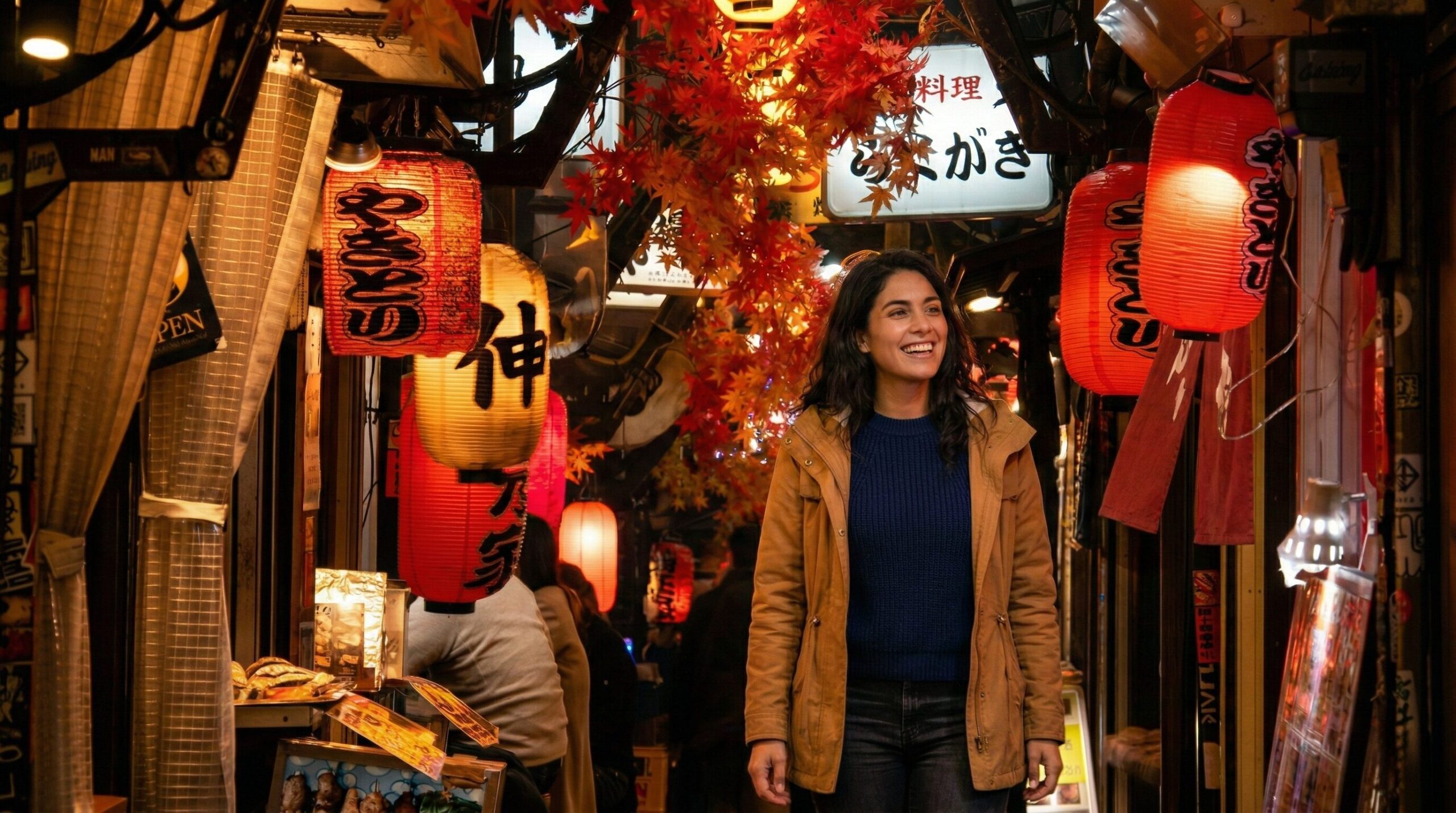
Shinjuku is a sensory overload. It is home to the busiest railway station on the planet, a sprawling labyrinth that pumps millions of people into the streets every day. When the sun goes down, the towering buildings of Kabukicho and the massive digital billboards create a blinding, kinetic energy.
It is Tokyo at its most intense, and for a first-time visitor, it can feel impenetrable. But the true culinary heartbeat of this district is not found in the towering multi-story chain restaurants overlooking the main crossings. To find the best izakayas in Shinjuku, you have to look down.
You have to look for the narrow, shadowed alleys. You have to look for the glowing red paper lanterns swaying slightly in the breeze. An izakaya is the quintessential Japanese dining experience. It is a tavern, a tapas bar, and a neighborhood living room all rolled into one.
In Shinjuku, the izakaya scene is uniquely diverse. It ranges from smoky, post-war yakitori stalls where you sit elbow-to-elbow with weary office workers, to beautifully restored traditional houses serving high-end sashimi.
This guide is designed to cut through the neon noise. It is not about finding the loudest party or the cheapest all-you-can-drink special. It is about traveling deeper. It is about finding the authentic, the historic, and the undeniably delicious. Let us navigate the maze and discover the best izakayas in Shinjuku.
Key Details and Breakdown: The Geography of Shinjuku Nightlife
Shinjuku is not a single neighborhood; it is a massive ward with distinct micro-districts. Knowing where to look is half the battle.
The Micro-Districts of Dining
- The West Exit (Nishiguchi): Historically the business district, dominated by towering skyscrapers. However, nestled right against the train tracks is an enclave of gritty, post-war nostalgia that serves some of the city’s most authentic street food.
- The East Exit (Higashiguchi) and Kabukicho: This is the neon heart. While Kabukicho is famous as Asia’s largest entertainment district, it is heavily saturated with tourist traps and aggressive street touts. Finding a good izakaya here requires extreme caution.
- Shinjuku Sanchome: Located slightly east of the main station, near the flagship Isetan department store. This area is far more relaxed, favored by local creatives and young professionals. The streets here are lined with high-quality, street-level izakayas that spill out onto the pavement during warmer months.
- The South Exit (Minamiguchi / Yoyogi border): An increasingly fascinating area where old Tokyo is being meticulously preserved and repurposed into stylish, atmospheric dining complexes.
Understanding the “Otoshi”
Before you sit down at any of the best izakayas in Shinjuku, you must understand the otoshi. As soon as you are seated, a small dish of food will be placed in front of you. This is not a free appetizer. It is a mandatory seating charge, usually ranging from 300 to 600 yen per person. It is standard practice across Japan. The otoshi is often a reflection of the chef’s skill—perhaps a delicate serving of simmered daikon or a small bowl of marinated squid. Embrace it as your first taste of the evening.
Practical Examples and Recommendations: Where the Locals Unwind
To truly experience the best izakayas in Shinjuku, you must visit the distinct alleys and districts that define its food culture. Here are three areas that offer deeply authentic, yet vastly different, experiences.
Omoide Yokocho (Memory Lane)
Located just steps from the West Exit, this narrow alleyway is a jarring, beautiful contrast to the modern glass towers that surround it. Omoide Yokocho translates to “Memory Lane,” though locals often use its older, grittier moniker, “Piss Alley.”
- The Vibe: It is a dense, smoky, and incredibly photogenic grid of tiny stalls. Most establishments here seat no more than six or eight people along a single wooden counter. The air is thick with the smell of rendered chicken fat and burning charcoal.
- What to Eat: This is the undisputed epicenter of yakitori (grilled chicken skewers) and motsuyaki (grilled offal). Order a plate of skewers—salted (shio) or slathered in a sweet soy glaze (tare)—and wash it down with an ice-cold draft beer or a sharp lemon sour.
- The Experience: It is tight, loud, and intimate. You will inevitably bump shoulders with the person sitting next to you. It is the perfect place to start your evening, grab a quick bite, and absorb the raw, unfiltered energy of working-class Tokyo.
Shinjuku Sanchome: The Vibrant Middle Ground
If the intensity of Kabukicho is too much, and the cramped quarters of Omoide Yokocho feel too tight, Shinjuku Sanchome is your sanctuary.
- The Vibe: This district perfectly balances lively energy with comfortable dining. It is highly concentrated with excellent, mid-range izakayas. Unlike the tiny stalls of the West Exit, restaurants here are larger, offering comfortable table seating and a more relaxed pace.
- What to Eat: Sanchome is excellent for regional specialties. You can find izakayas specializing in Kyushu-style cuisine (like deep-fried chicken nanban and rich pork hotpots), or high-end seafood focused on fresh catches from Hokkaido.
- The Experience: It feels effortlessly cool. It is where Shinjuku locals actually go for a proper, sit-down dinner with friends. Keep an eye out for places with open fronts; sitting near the entrance and watching the fashionable Tokyo crowd walk by is a quintessential Sanchome experience.
Hobo Shinjuku Noren Street: The Restored Heritage
For travelers seeking the absolute best izakayas in Shinjuku with a focus on atmosphere and architectural heritage, this relatively new development is a revelation. It is located near the South Exit, edging toward Yoyogi Station.
- The Vibe: “Hobo Shinjuku” loosely translates to “Almost Shinjuku.” This complex is a brilliant preservation project. Developers took a cluster of abandoned traditional Japanese houses (kominka) and transformed them into a sprawling, interconnected izakaya district.
- What to Eat: Each of the traditional houses features a completely different culinary theme. You can find everything from a dedicated beef tongue (gyutan) specialist, to a high-end sushi izakaya, to a tavern dedicated entirely to champagne and gyoza.
- The Experience: It is breathtakingly nostalgic. You are eating in structures that survived the rapid modernization of Tokyo. The wooden beams are exposed, the lighting is warm, and the atmosphere feels worlds away from the concrete jungle just a few blocks north. It is the perfect destination for a slow, atmospheric evening.
Tips for Travelers: Navigating the Shinjuku Night
Enjoying the best izakayas in Shinjuku requires a bit of street smarts. The district can be overwhelming, but following these unwritten rules will ensure a smooth, authentic experience.
Ignore the Street Touts
This cannot be overstated. If you are walking near the East Exit or Kabukicho, you will be approached by friendly, English-speaking individuals offering to take you to a “great, cheap izakaya.” Ignore them completely. Keep walking. The best izakayas in Shinjuku do not need to employ people to drag customers off the street. Following a tout is the fastest way to end up in an overpriced, low-quality tourist trap, or worse, a venue involved in credit card fraud.
Embrace the Time Limit
Shinjuku is busy. Space is at a premium. Consequently, many popular izakayas enforce a strict two-hour time limit for dining, especially on Friday and Saturday nights. This is not meant to be rude; it is simply how the city operates to accommodate the massive demand. When your server informs you of the last order for drinks and food (usually 30 minutes before your time is up), place your final requests and prepare to move on.
The Art of Bar Hopping (Hashigozake)
Because of the time limits and the sheer volume of options, locals rarely stay in one place for the entire evening. They practice hashigozake, or “ladder drinking” (bar hopping). Start with heavy skewers in Omoide Yokocho, move to Shinjuku Sanchome for sashimi and sake, and finish the night with a quiet cocktail. It is the best way to experience the full spectrum of the city.
Communication and Ordering
While English menus are becoming more common in Shinjuku, many of the most authentic, hyper-local spots will only have handwritten Japanese menus pinned to the wall.
- The Solution: Download a reliable translation app on your phone and use the camera function.
- The Fallback: If the translation fails, simply look at what the people next to you are eating, point, and smile. Alternatively, say, “Osusume wa nan desu ka?” (What do you recommend?). Trusting the chef is often the gateway to the best meal of your trip.
The Golden Gai Finale
No guide to Shinjuku nightlife is complete without mentioning Golden Gai. Located next to Kabukicho, this is a dense grid of six narrow alleys containing over 200 microscopic bars.
- The Reality: Golden Gai establishments are generally bars, not izakayas. They do not serve full meals, only drinks and perhaps a small bar snack. They are the perfect final destination after you have finished eating. Many bars here seat only five people and charge a steep cover fee, but the eccentric, cinematic atmosphere is entirely unique to Tokyo.
Conclusion: Beyond the Concrete
Shinjuku can be intimidating. Its scale is almost incomprehensible. But beneath the flashing screens and the endless flow of commuters, a deeply traditional, intensely communal food culture is thriving. Finding the best izakayas in Shinjuku is an exercise in observation. It requires stepping off the main thoroughfares, slipping past the noren curtains, and trusting the local rhythm. Whether you are wedged into a smoky corner of Omoide Yokocho or sipping cold sake beneath the exposed beams of a restored Yoyogi townhouse, you are participating in a nightly ritual that defines Tokyo. Do not let the neon lights blind you to the quiet culinary sanctuaries waiting in the alleys. It is time to go beyond the ordinary, embrace the beautiful chaos, and see the Japan that locals know best. Travel deeper. Explore the real Japan.