
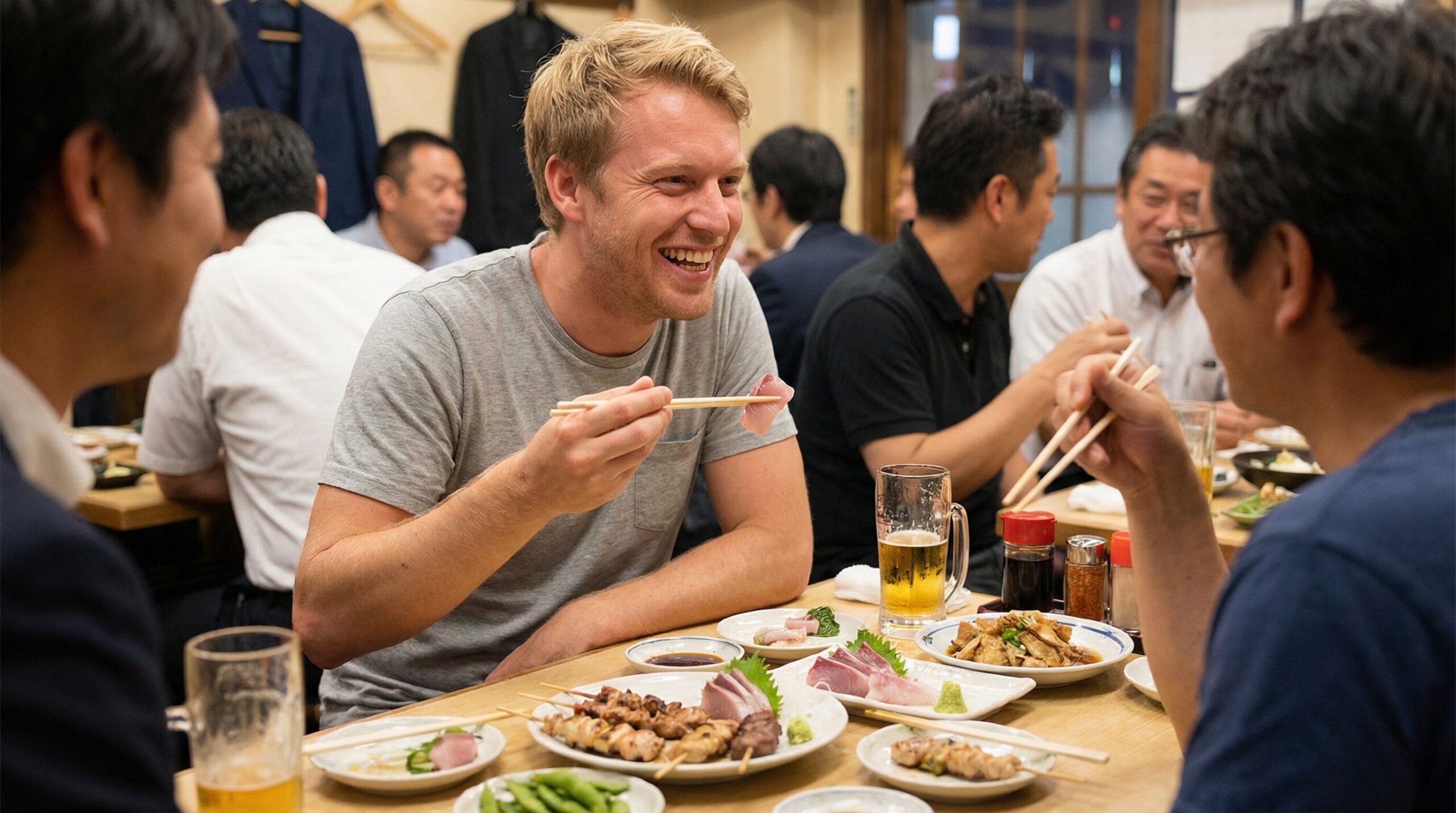
In the lexicon of Japanese dining, there is a word that reigns supreme: Cospa. Short for “Cost Performance,” it is the obsession of the modern Japanese gourmand. It doesn’t simply mean “cheap.” A 100 yen burger has low cospa if it tastes like cardboard. A 5,000 yen kaiseki meal has high cospa if the ingredients are usually worth 20,000 yen. Nowhere is the hunt for cospa more fierce than in the world of the Izakaya.
The Izakaya is the living room of Japan. It is a gastropub where the ties are loosened, the beer is cold, and the food comes in endless waves of small, shared plates. For the traveler, it is the ultimate dining experience. But with hundreds of thousands of red lanterns (akachochin) lighting up the streets, how do you distinguish the tourist traps from the local legends?
This guide to the Best Value Izakayas in Japan is your roadmap to navigating the chaotic, delicious, and surprisingly affordable world of Japanese pub culture. We aren’t just looking for the cheapest options; we are looking for the places where the quality of the food defies the price on the bill.
The “Senbero” Philosophy: 1,000 Yen Drunk
To understand value in Japan, you must understand the concept of Senbero (Sen-yen + Berobero). Literally translating to “drunk for 1,000 yen,” this is a subculture of izakaya dining dedicated to extreme value. While you don’t actually need to get drunk, seeking out “Senbero” establishments is the secret to finding the best food. Why? because these shops operate on thin margins and high volume. They rely on having the freshest sashimi or the juiciest stew (motsuni) to keep the locals coming back every single night.
What Makes a “Best Value” Izakaya?
- The Otoshi Strategy: Most izakayas charge a table fee (300–500 yen) that includes a small appetizer. A “Value” izakaya either waives this fee or provides an appetizer so good it feels like a ordered dish.
- The “Highball” Index: The price of a Highball (whiskey and soda) is the standard economic indicator. In a value izakaya, a beam highball should cost between 190 and 390 yen. Anything over 500 yen is “fancy.”
- Specialization: The best value spots specialize. A place that does only chicken (Yakitori) or only fried skewers (Kushikatsu) can buy in bulk and pass the savings to you.
3 Chains You Can Trust (The Safety Nets)
While we advocate for local mom-and-pop shops, sometimes you need consistency. In Japan, “Chain Izakaya” is not a dirty word. These three brands offer incredible cospa and are foreigner-friendly.
Torikizoku (The King of Chicken)
- The Concept: Every single item on the menu—whether it’s a massive beer or two skewers of thigh meat—costs the same low price (currently around 370 yen including tax).
- The Value: Their Momo Kizoku Yaki (Thigh skewers) are gigantic, roughly three times the size of a standard yakitori skewer. They use 100% domestic Japanese chicken, never frozen.
- Why Travelers Love It: Tablet ordering in English eliminates the language barrier. It is loud, energetic, and impossible to leave hungry.
Isomaru Suisan (The 24-Hour Port)
- The Concept: A seafood barbecue shack that looks like a fish market. Open 24 hours in most locations.
- The Value: You sit at a table with a gas grill. You order fresh scallops, clams (hamaguri), and crab miso in the shell (kani-miso), and you grill them yourself.
- Why Travelers Love It: It’s interactive. The Kani-miso (crab paste grilled in the shell) is a savory, umami bomb that usually costs a fortune in high-end sushi shops, but here it’s a few hundred yen. It is the perfect spot for a post-midnight snack or a seafood breakfast.
Hanbey (The Time Machine)
- The Concept: A “Showa Era” theme park. The interior recreates post-war Japan (1950s) with tin signs, black-and-white TVs, and retro music.
- The Value: The prices remain nostalgic, though they have risen slightly with the times. Skewers now start around 90–100 yen, which is still incredibly cheap. Cheap snacks like fried dough and grilled spam dominate the menu.
- The Atmosphere: It’s undeniably kitschy, but fun. They often give free snacks to women and children, and the bill is usually shockingly low.
The Real Deal: Local Value Districts
If you want to graduate from chains, you need to go to the “Guard-shita” (Under the train tracks) or specific districts known for fierce competition.
Ueno / Ameyoko (Tokyo)
The Vibe: Open-air chaos. The area between Ueno and Okachimachi stations is the spiritual home of day-drinking.
- Value Highlight: Daitoryo. This legendary shop has been serving horse intestine stew (motsuni) since 1950. The seating is tight (beer crates turned into chairs), but the energy is electric. You can eat and drink your fill for 2,000 yen.
Tenma (Osaka)
The Vibe: The Lantern Labyrinth. One station away from Osaka/Umeda, Tenma is an endless arcade of tiny bars.
- Value Highlight: Shichifukujin. A Kushikatsu (fried skewer) legend. The beer is cheap, and the first cabbage is free (and unlimited). In Osaka, the rule is strict: No Double Dipping the sauce. The skewers here are light, crispy, and cost pennies.
Nakasu Yatai (Fukuoka)
The Vibe: Riverside Food Stalls. While some stalls are touristy, the Yatai culture of Fukuoka is unique.
- Value Highlight: Don’t just stick to the main strip. Look for stalls slightly off the main canal for better prices. A bowl of Hakata Ramen at a yatai, shoulder-to-shoulder with a salaryman loosening his tie, is an unforgettable cultural experience. While prices at Yatai can be higher than regular izakayas due to their popularity, the atmosphere is worth the extra yen.
Practical Examples: A “Best Value” Menu Strategy
You sit down. The menu is huge. How do you maximize your cospa? Here is a strategic ordering guide.
Round 1: The Speed Menu
- Edamame: The classic. Fresh is best.
- Hiyashi Tomato (Chilled Tomato): Sounds simple, but Japanese tomatoes are shockingly sweet and flavorful. Served with salt and mayo.
- Tako Wasabi (Raw Octopus in Wasabi): A acquired taste, but the slime and spice pair perfectly with cheap beer.
Round 2: The Protein (The Value Kings)
- Hokke (Grilled Atka Mackerel): Often confused with regular mackerel (Saba), the Atka Mackerel is a different beast. It acts as the “Steak” of the Izakaya. A dried, grilled Okhotsk mackerel is massive, oily, and easy to share among 3-4 people. It is usually the best value item on the menu.
- Karaage (Fried Chicken): Every shop has their own recipe. It’s cheap, filling, and reliable.
- Dashimaki Tamago (Rolled Omelet): Look for “handmade” on the menu. A fluffy, dashi-soaked omelet is pure comfort food.
Round 3: The Closer (Shime)
- Yaki-Onigiri: A rice ball brushed with soy sauce and grilled over charcoal until crispy on the outside.
- Ochazuke: Rice with green tea poured over it. The ultimate stomach settler after a night of drinking.
Tips for Travelers
Navigating the local Izakaya scene requires knowing the unwritten rules.
The “Otoshi” (Table Charge)
When you receive your bill, you might see a charge (300–500 yen per person) you didn’t order.
- What it is: This is the seating charge. It includes the small appetizer you received at the start.
- Can I refuse it? In chains like Torikizoku? No. In some local places? Sometimes, but it’s awkward. Just accept it as part of the tipping culture (since you don’t tip in Japan).
- Exception: Some “foreigner-friendly” or super-budget places explicitly state “No Charge.”
The “Nomihodai” (All-You-Can-Drink)
If you plan to drink more than 3 drinks, look for “Nomihodai.”
- The Math: Usually costs 1,500–2,000 yen for 90 or 120 minutes.
- The Rule: You must finish your glass before ordering the next one. Last order is usually taken 30 minutes before the time ends.
Smoking
- The Law: Since April 2020, Japanese law has banned indoor smoking in most restaurants.
- Where to Smoke: While some small, owner-operated bars still allow it, most chains and larger izakayas are now Non-Smoking (or have designated smoking booths).
- Check the Sticker: Always check the sticker at the entrance. “Kin-en” (No Smoking) vs. “Kitsu-en” (Smoking Allowed).
“Sumimasen!”
There is no waiter hovering over you.
- The Action: You must yell “Sumimasen!” (Excuse me!) to get attention. Don’t be shy. If you sit silently, you will starve.
- The Button: Many tables now have a “Call Button.” Press it. It is polite, not rude.
Conclusion
The Best Value Izakayas in Japan offer something money can’t buy: atmosphere. When you are squeezed onto a beer crate next to a group of university students celebrating a test result, or watching a master chef flip yakitori over charcoal with sweat on his brow, you are participating in the heartbeat of the nation. The food is delicious, yes. The beer is cheap, absolutely. But the true value lies in the chaotic, warm, and incredibly human experience of sharing a meal in a space where everyone is welcome. So, look for the red lantern. Slide open the rattling wooden door. Shout “Sumimasen!” and order a Highball. You are home.