
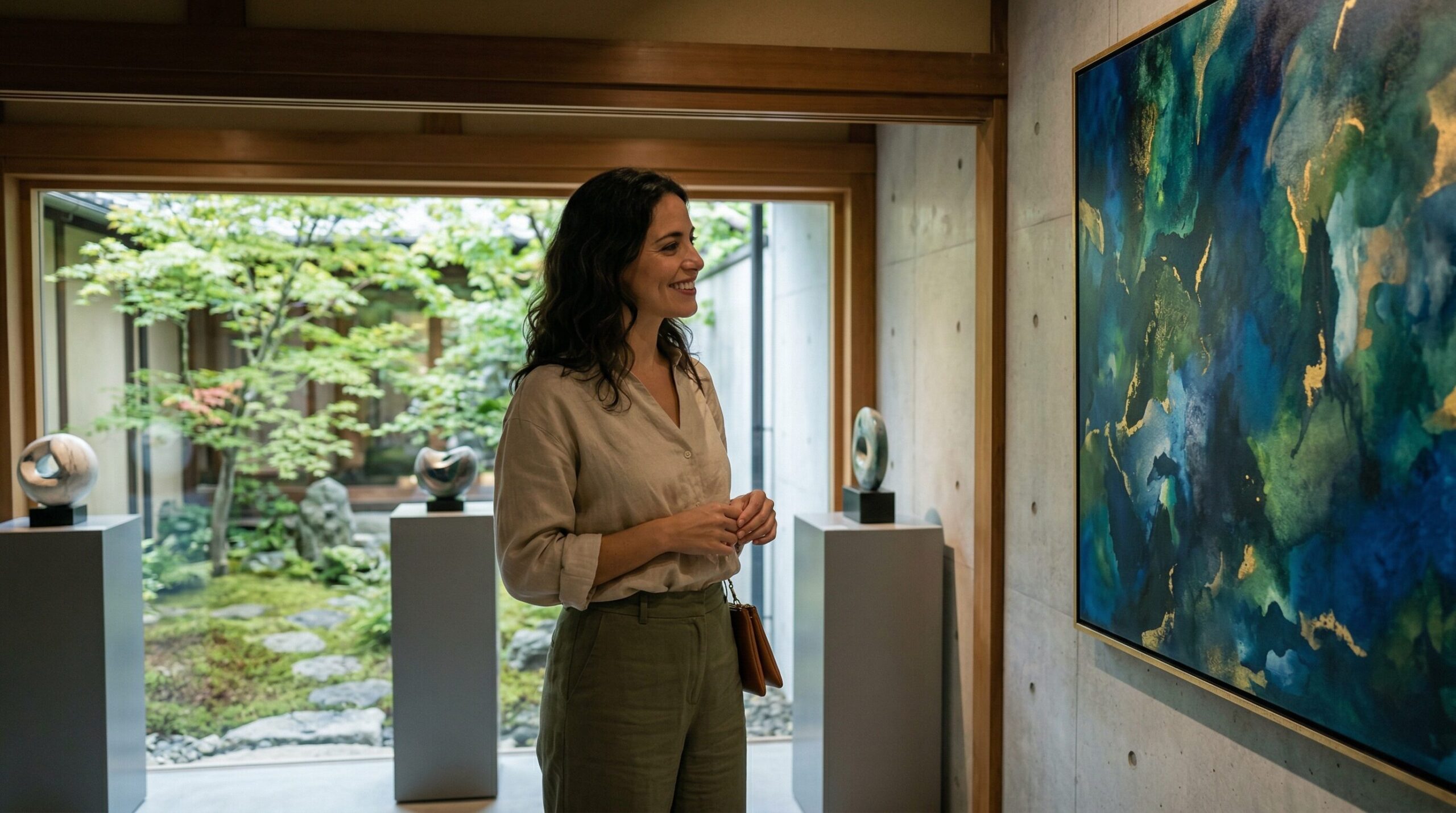
When art lovers travel to Japan, their itineraries are often anchored by the architectural giants of the capital. The Mori Art Museum in Roppongi, the sprawling complex of Ueno Park, or the digital immersion of teamLab in Tokyo offer undeniably world-class experiences. Yet, the reality of visiting these celebrated institutions often involves navigating endless ticket queues, maneuvering through dense crowds of tourists, and viewing profound works of art shoulder-to-shoulder with hundreds of other people. While these urban museums showcase the kinetic, hyper-modern energy of the country, they only tell half the story.
To truly understand the evolving cultural landscape of Japan, one must leave the major transit hubs behind. Across the archipelago, a quiet but powerful movement has taken root in shrinking farming villages, on remote islands, and deep within mountain valleys. Here, contemporary art is not housed in sterile, white-cube galleries. It is woven directly into the fabric of the natural environment and local communities. For the mindful traveler, seeking out art galleries off the beaten path is not merely a detour; it is an expedition into the heart of rural Japan. It is an opportunity to witness how modern creativity is breathing new life into forgotten spaces, offering a profound, solitary, and deeply authentic travel experience.
The Canvas of the Countryside: Key Details and Breakdown
Why are so many of Japan’s most compelling art experiences located miles away from the nearest bullet train station? Understanding the philosophy behind these art galleries off the beaten path helps the traveler appreciate the gravity of the work they are viewing. This rural art movement is driven by a unique set of geographical and social factors:
- Site-Specific Synergy: Unlike urban museums that import art to fit a room, rural galleries in Japan prioritize site-specific installations. The artwork is commissioned to engage directly with the surrounding environment—be it a terraced rice paddy, an abandoned elementary school, or a coastal cliff. The landscape itself becomes an integral part of the frame.
- The ‘Chiiki Okoshi’ Mission: Many of these projects are rooted in chiiki okoshi (regional revitalization). As young people migrate to Tokyo, rural villages face depopulation and abandoned infrastructure. Placing world-class art in these locations brings respectful, slow-moving travelers to struggling local economies, transforming neglected spaces into cultural sanctuaries.
- Architectural Harmony: The buildings housing these collections are often masterpieces themselves, designed by world-renowned Japanese architects like Tadao Ando, Ryue Nishizawa, and Kengo Kuma. Their designs emphasize natural light, local materials, and a deliberate blurring of the boundary between the interior gallery and the exterior wilderness.
Where Art Meets the Earth: Practical Examples and Recommendations
To experience this profound intersection of nature and creativity, you must be willing to navigate local bus schedules, rent a car, or board a small ferry. The journey is an essential part of the artistic experience. Here are three distinct regions where the journey deeply rewards the observant traveler.
The Echoes of Industry at Inujima (Seto Inland Sea)
While the island of Naoshima has become internationally famous (and occasionally crowded) for its art installations, the true connoisseur looks to the smaller, neighboring islands in the Seto Inland Sea. Inujima, a tiny island with a population of fewer than 50 residents, offers an atmosphere of post-industrial melancholy and brilliant rebirth.
Highlights of an Inujima Visit:
- The Seirensho Art Museum: Built within the crumbling, black-brick ruins of a century-old copper refinery, this museum is a masterclass in architectural preservation and environmental design. Architect Hiroshi Sambuichi utilized the natural airflow of the ruins and the geothermal heat of the sun to regulate the building’s temperature without modern climate control.
- The Art of Yukinori Yanagi: The permanent installation inside Seirensho utilizes mirrors, salvaged materials, and motifs of the famed Japanese author Yukio Mishima to critique Japan’s rapid modernization. Walking through the dark, naturally illuminated corridors of the refinery is an intensely visceral experience.
- The Art House Project: Wander through the quiet, narrow alleys of the island village to find the “Art House Project,” where abandoned wooden homes have been transformed into striking, transparent pavilions housing contemporary sculptures, seamlessly blending the avant-garde with everyday rural life.
The Agricultural Canvas of Echigo-Tsumari (Niigata)
To understand the sheer scale of Japan’s rural art movement, one must travel to the “Snow Country” of Niigata Prefecture. The Echigo-Tsumari Art Field is not a single building; it is a sprawling, open-air gallery spanning 760 square kilometers of mountainous terrain, dense forests, and working rice terraces. This is the ultimate destination for art galleries off the beaten path. The installations here celebrate the heavy snowfall and the resilient agrarian lifestyle of the region.
Highlights of an Echigo-Tsumari Exploration:
- The House of Light: Designed by the American artist James Turrell, this is a traditional Japanese wooden house where you can actually book an overnight stay. The roof retracts, framing the changing colors of the twilight sky through the meticulous geometry of the ceiling, creating an unparalleled meditative experience.
- Kyororo (Echigo-Matsunoyama Museum of Natural Science): A striking, rust-colored, snake-like structure rising from the heavy winter snow, this facility blends natural science with contemporary art, focusing on the deep connection between the local residents and the surrounding beech forests.
- Abandoned School Projects: Many installations are housed in schools that closed due to depopulation. Artists have transformed gymnasiums and classrooms into haunting, beautiful installations crafted from local natural materials, ensuring the buildings continue to serve as places of gathering and reflection.
Architectural Silence at COMICO Art Museum (Yufuin, Oita)
For a more curated, luxurious approach to rural art, travel to the southern island of Kyushu. The town of Yufuin in Oita Prefecture is primarily known for its steaming hot springs and traditional ryokans. However, hidden near the edge of the town is the COMICO Art Museum, a striking contemporary space that commands absolute silence.
Highlights of a Yufuin Art Walk:
- Kengo Kuma’s Woodwork: Designed by the renowned architect Kengo Kuma, the exterior of the museum is clad in charred cedar wood (yakisugi). This traditional Japanese technique makes the building incredibly durable while allowing its dark, textured facade to blend flawlessly into the silhouette of the imposing Mount Yufu in the background.
- A Concentrated Masterclass: Unlike sprawling urban museums, the curation here is highly focused. It features profound, major works from Japanese titans like Yayoi Kusama, Takashi Murakami, and Hiroshi Sugimoto. You have the rare opportunity to view these iconic pieces without the pressure of a crowd pushing you forward.
- The Open-Air Rooftop: The museum’s design forces you to step outside. A meticulously raked dry landscape garden and open-air viewing platforms allow you to pause between galleries, breathe the crisp mountain air, and observe the natural landscape as an extension of the art you just viewed.
Mindful Navigation: Tips for Travelers
Venturing out to art galleries off the beaten path requires a shift from the convenience of urban travel. The infrastructure is lighter, and the rhythm is slower. To ensure your journey is smooth and respectful, keep these practical tips in mind:
- Master the Logistics of Isolation: Public transportation in rural Japan is highly reliable but infrequent. A bus to a remote gallery might only run three times a day. You must plan your transit with absolute precision using local timetables. Alternatively, renting a car is often the most liberating way to explore regions like Echigo-Tsumari, allowing you to stop at hidden outdoor sculptures at your own pace.
- Advance Reservations are Non-Negotiable: Because these facilities are small and strictly limit capacity to preserve the quiet atmosphere, you cannot simply show up and buy a ticket. Museums like the Chichu Art Museum and specific installations on Naoshima require online reservations weeks in advance.
- Respect the Residential Boundary: It is vital to remember that these art fields are set within living, working communities. When walking between installations in a village, stay on marked paths. Do not wander into private gardens to get a better photograph, and keep your voice lowered out of respect for the residents whose neighborhoods you are traversing.
- Carry Cash: While the museums themselves accept credit cards, the surrounding infrastructure often does not. If you want to buy a coffee from a small local vendor near the gallery or pay the fare on a rural bus, you will need physical yen. Always carry a comfortable reserve of 10,000 to 20,000 yen in cash.
Conclusion
Japan’s true beauty often hides in the places that require the most effort to reach. It is found in the unexpected juxtaposition of a polished contemporary sculpture sitting in a flooded rice paddy, or in the profound silence of a charred cedar gallery set against a volcanic mountain range. By actively seeking out art galleries off the beaten path, you do more than view extraordinary works of art. You participate in the ongoing narrative of rural Japan’s resilience and rebirth. You trade the curated, crowded museum corridors for the raw, unscripted reality of the countryside. It is time to go beyond the ordinary travel guides, embrace the slower pace of the rural transit lines, and discover the profound, restorative art experiences that the locals know best.