
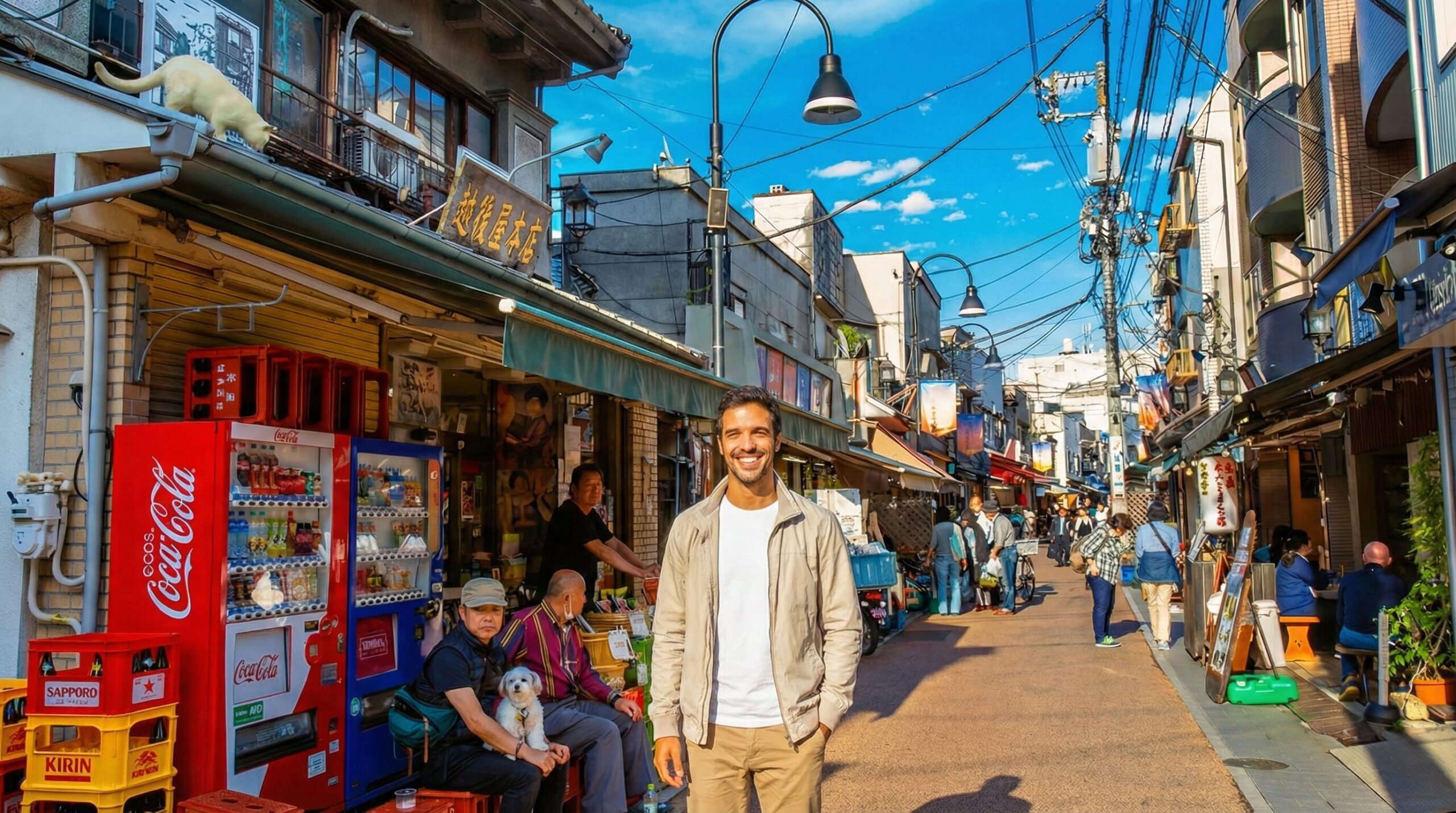
Tokyo is often portrayed as a futuristic metropolis—neon billboards, bullet trains, and skyscrapers stitched together by subways. But just a few stops away from the city’s busiest stations lies a different Tokyo—one shaped by wooden houses, family-run snack shops, and narrow streets where cats stretch in the sun. This small pocket of nostalgia is Yanaka Ginza, a charming old-town shopping street located near Nippori, Sendagi, and Ueno.
For travelers seeking traditional culture without crowds, Exploring Yanaka Ginza Old Town offers a window into the capital’s past. Unlike hyper-curated tourist zones, Yanaka Ginza is a living neighborhood—residents shop for groceries, children lick ice cream at the steps of Yuyake Dandan, and elderly shopkeepers greet customers who have been coming for decades. If you’re planning a Tokyo itinerary that balances modern life with cultural authenticity, this guide covers everything you need to know: history, architecture, food, shopping, navigation, day-trip examples, and traveler tips to make the most of Exploring Yanaka Ginza Old Town.
- Key Details and Breakdown
- When to Visit
- What to Wear
- Photography Etiquette
- Navigation Tips
- Budget & Costs
- Nearby Attractions Worth Adding
- Who Will Enjoy Exploring Yanaka Ginza Old Town
Key Details and Breakdown
What Is Yanaka Ginza?
Yanaka Ginza is a short, 175-meter traditional shopping street in Taito Ward, part of the Yanesen area—an umbrella term combining Yanaka, Nezu, and Sendagi. These three districts are among the few parts of Tokyo that survived both the 1923 Great Kanto Earthquake and the WWII air raids, preserving their pre-war street layouts and low-rise architecture. Key characteristics include:
- Family-owned shops (no chains or fashion malls)
- Traditional crafts (ceramics, fans, washi paper)
- Local snack stands (croquettes, taiyaki, yakitori)
- Vintage cafés and tea houses
- Wooden homes & storehouses
- Stray cats & cat-themed goods
Atmospherically, it feels more like a small town than a capital city.
Historical Background of Yanaka District
Understanding Yanaka Ginza’s appeal requires knowing its historical foundation.
Edo Period (1603–1868) Yanaka began as a temple town, centered around Tennoji and Kaneiji temples. Buddhist priests, craftspeople, and merchants settled here, shaping early urban life.
Meiji Period (1868–1912) Following the fall of the shogunate, Yanaka evolved into a residential district with artistic and literary communities.
Taisho–Showa Eras (1912–1989) While central Tokyo modernized, Yanaka remained largely unchanged due to geography and zoning, preserving:
- Narrow alleyways
- Wooden homes
- Temples & cemeteries
- Traditional storefronts
This explains why Exploring Yanaka Ginza Old Town feels like stepping back several decades.
Architectural & Cultural Features
When Exploring Yanaka Ginza Old Town, you’ll notice:
Shitamachi Atmosphere
Shitamachi (“downtown”) refers to working-class merchant districts from the Edo period. Hallmarks include:
- Community-centric shops
- Hospitality-driven commerce
- Modest architectural scale
Noren & Traditional Facades
Many shops retain features such as:
- Wooden sliding doors
- Hand-painted signage
- Fabric noren curtains
- Tile roofs
This aesthetic is increasingly rare outside of Kyoto.
Cat Culture
Yanaka’s alleys are known for friendly stray cats. As a result, many shops sell:
- Cat cookies
- Cat postcards
- Cat chopstick rests
- Cat figurines
- Cat-themed senbei
Cats are part of the neighborhood identity.
How to Get There
Yanaka Ginza is accessible from three stations:
- Nippori Station (JR Yamanote, Keisei Line) — closest main access
- Sendagi Station (Tokyo Metro Chiyoda Line)
- Nishi-Nippori Station (JR & Tokyo Metro)
Walking times:
- From Nippori: 5–7 minutes
- From Sendagi: 6–8 minutes
- From Nishi-Nippori: 10–12 minutes
Most visitors enter via Nippori so they can descend Yuyake Dandan (“Sunset Stairs”) for their first view.
Practical Examples and Recommendations
Must-See Spots While Exploring Yanaka Ginza Old Town
Here are the most notable places when Exploring Yanaka Ginza Old Town, each offering a different layer of local culture.
Yuyake Dandan (Sunset Stairs)
Located at the entrance from Nippori, Yuyake Dandan is a set of stone steps overlooking the entire shopping street. Why visit:
- Best viewpoint for photos
- Atmospheric during golden hour
- Popular cat-watching spot
- Cultural symbol of Yanaka
In the evening, the stairs fill with locals chatting, enjoying snacks, and taking pictures of the sunset.
Yanaka Cemetery Park
Just north of the shopping street is Yanaka Cemetery, one of Tokyo’s most historically significant burial grounds. Notable features:
- Cherry blossom-lined paths
- Resting place of Tokugawa family members
- Eiichi Shibusawa’s grave (industrialist on the new ¥10,000 bill)
- Romantic, quiet walking routes
It’s particularly beautiful in late March and early April.
Tennoji Temple & Pagoda Ruins
Located next to the cemetery, Tennoji is one of Yanaka’s oldest Buddhist temples. Highlights:
- Bronze Buddha sculpture from the Edo period
- Historic grave markers
- Calm garden space
It gives cultural context to the district’s temple-town origins.
Asakura Museum of Sculpture
This Taisho-era residence and atelier belonged to sculptor Fumio Asakura. Why it matters:
- Unique blend of Japanese and Western design
- Courtyard gardens & studios
- Insight into traditional art education
A must-see for architecture and art enthusiasts.
Traditional Snack Shops & Food Stalls
Street food is part of the experience of Exploring Yanaka Ginza Old Town. Popular items include:
- Menchi-katsu (minced meat cutlet)
- Taiyaki (fish-shaped red bean pastry)
- Yakitori (grilled chicken skewers)
- Korokke (croquettes)
- Dorayaki (bean paste pancakes)
- Soft-serve ice cream
One particularly famous stall, Niku no Sato, often has a queue for its menchi-katsu.
Cafés & Kissaten
Yanaka has a growing collection of thoughtful cafés:
Notable Spots:
- Kayaba Coffee — retro café from 1938
- Hagiso — minimalist café + art space
- CIBI — Japanese-Australian coffee spot
These cafés are ideal for slow travel days.
Shopping While Exploring Yanaka Ginza Old Town
Yanaka Ginza is a solid place to find low-key, meaningful souvenirs. Traditional items:
- Incense
- Folding fans
- Pottery
- Tea blends
- Calligraphy brushes
- Handmade chopsticks
Cat-themed items:
- Cat cookies
- Cat figurines
- Cat chopstick rests
- Postcards & stickers
Consumable gifts:
- Wagashi sweets
- Rice crackers
- Local roasted nuts
- Matcha treats
Prices are generally lower than Tokyo’s sightseeing districts.
Suggested Half-Day Itineraries
To help structure Exploring Yanaka Ginza Old Town, here are sample plans:
Itinerary A: Cultural & Historical Walk (3–4 hours)
- Start at Nippori Station
- Walk through Yanaka Cemetery
- Visit Tennoji Temple
- Descend Yuyake Dandan
- Explore Yanaka Ginza food stalls
- End with coffee at Kayaba Coffee
Itinerary B: Shopping & Café Circuit (3–5 hours)
- Enter via Sendagi Station
- Browse crafts in side streets
- Snack on menchi-katsu and taiyaki
- Buy souvenirs at pottery shops
- Relax at Hagiso Café
- Wander to Ueno Park afterward
Itinerary C: Neighborhood + Ueno Park Extension (4–6 hours)
- Explore Yanaka Ginza
- Walk toward Nezu Shrine
- Pass through Yanesen District
- End at Ueno Park museums
Educational and scenic combination.
Tips for Travelers
Here are practical tips for maximizing Exploring Yanaka Ginza Old Town:
When to Visit
Yanaka Ginza is enjoyable year-round, but the experience changes with the seasons.
Spring:
- Cherry blossoms in cemetery
- Mild weather
- Tea shops offer sakura sweets
Summer:
- Longer sunlight
- Cold snacks & shaved ice available
Autumn:
- Maple foliage
- Chestnut-flavored treats
Winter:
- Quiet streets
- Cozy coffee culture
Best time of day: 3:00–6:00 PM offers the best lighting + sunset atmosphere.
What to Wear
Yanaka involves walking through residential lanes and parks.
- Comfortable shoes recommended
- Layers for spring/autumn
- Hat & hydration in summer
Cobblestone paths and slopes are common.
Photography Etiquette
Yanaka is a residential area, so be respectful:
- Avoid photographing homes directly
- Don’t block narrow streets
- Ask permission before photographing shopkeepers
Shrines & cemeteries allow photos, but quietly.
Navigation Tips
Consider entering from one station and leaving from another.
Recommended flow: Nippori → Cemetery → Yuyake Dandan → Ginza Street → Sendagi
This avoids backtracking and feels more natural.
Budget & Costs
Expected spending for half-day:
- Snacks: ¥500–¥1,200
- Café stop: ¥600–¥1,200
- Souvenirs: ¥300–¥3,000
- Museum entry: ¥500–¥1,000
Overall budget-friendly compared to major tourist areas.
Nearby Attractions Worth Adding
Since Yanaka Ginza sits between major cultural areas, it’s easy to combine with:
- Ueno Park Museums
- Tokyo National Museum
- Ueno Zoo
- National Museum of Western Art
- Nezu Shrine
- Mini torii gate tunnel
- Famous azalea festival
- Ameyoko Shopping Street
- Market culture
- Affordable dining
Who Will Enjoy Exploring Yanaka Ginza Old Town
This neighborhood suits certain traveler types especially well:
Ideal For:
- Repeat visitors to Tokyo
- Travelers avoiding tourist crowds
- Architecture & history fans
- Slow-travel enthusiasts
- Photographers & artists
- Families seeking relaxed environments
Less Ideal If You Want:
- Nightlife
- High-end shopping
- Anime/game culture
- Fashion districts
Yanaka is calm, nostalgic, and rooted in local life.
Conclusion
For travelers eager to see a different side of Tokyo, Exploring Yanaka Ginza Old Town offers a rare kind of authenticity—quiet streets, family-run stores, temple pathways, and food stalls that feel lived-in rather than curated. It’s the kind of place where you can buy croquettes from a butcher, ceramic teacups from an artisan, and cat-shaped cookies from a snack shop, all within a few blocks. Unlike more famous districts, Yanaka Ginza is not about spectacle. It’s about atmosphere. It retains the modest scale of an older Tokyo—the kind of city built for walking, neighborly conversation, and everyday comforts. Whether you’re visiting Japan for the first time or returning to rediscover it more slowly, a half-day wandering Yanaka’s streets adds balance to urban itineraries dominated by neon and speed. By pairing cultural stops, snack stalls, and historical backstreets, Exploring Yanaka Ginza Old Town becomes an experience defined by observation rather than tourism—one that leaves you with a memory of Tokyo that is quieter, warmer, and more human. And in a city famous for the future, that small link to the past feels refreshing.