
Stepping out of the train station in Tokyo or Kyoto for the first time is an exercise in sensory overload. In Tokyo, a dizzying matrix of neon lights, multi-story electronics stores, and hurried commuters can make the city feel impenetrable. In Kyoto, the sheer volume of UNESCO World Heritage sites and the intricate, unwritten rules of the geisha districts can leave you wondering if you are only seeing the surface.
When most travelers arrive, they rely on digital maps to rush from one famous landmark to the next, often missing the quiet, profound moments happening just one street over. If you truly want to understand the fabric of these cities, you have to slow down. You have to walk. And more importantly, you have to walk with someone who calls these streets home.
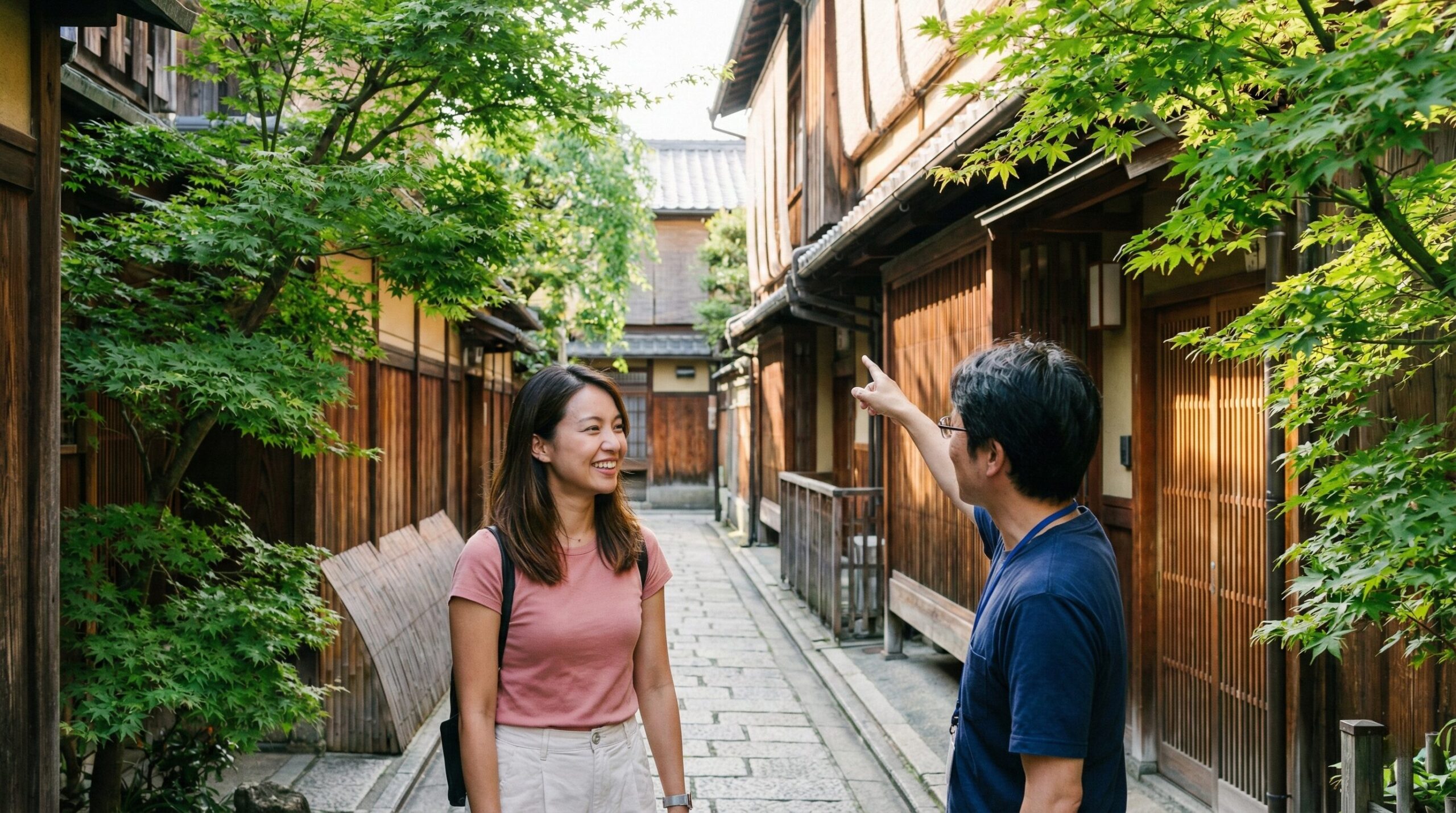
Taking free walking tours in Kyoto and Tokyo is arguably the most authentic and accessible way to bridge the gap between being a superficial sightseer and an engaged traveler. Unlike heavily commercialized group excursions, these tours are frequently led by passionate locals—ranging from university students to retired professionals—who simply want to share their heritage with the world. If you are ready to trade crowded bus tours for intimate neighborhood strolls, here is how to navigate the ancient capital and the modern metropolis on foot.
Why Free Walking Tours in Kyoto and Tokyo Are the Ultimate Cultural Hack
Before diving into specific routes, it is essential to understand how free walking tours operate in Japan, as they differ significantly from the European or American models you might be used to.
The Spirit of Omotenashi and Systematized Goodwill Guides (SGG)
In many Western cities, a “free” walking tour operates on a tip-based system where guides earn their living from gratuities at the end of the walk. In Japan, tipping is not part of the culture—in fact, attempting to tip your guide can cause awkwardness or polite refusal.
Instead, many free walking tours in Kyoto and Tokyo are operated by Systematized Goodwill Guide (SGG) clubs. These are networks of registered, English-speaking volunteers supported by the Japan National Tourism Organization (JNTO). These locals guide visitors purely out of omotenashi (Japanese hospitality) and a deep desire for cultural exchange. Their reward is the conversation they share with you and the opportunity to practice a foreign language while proudly showcasing their hometowns.
Overtourism vs. Deep Connection
Both Tokyo and Kyoto are battling the realities of overtourism. By joining a local guide, you are instantly steered away from the most congested bottlenecks. Guides know the side streets, the hidden shrine behind the modern skyscraper, and the exact time of day to visit a bamboo grove to avoid the crowds. They provide context that transforms a beautiful wooden building into a living piece of history.
Best Free Walking Tours in Tokyo: Navigating the Metropolis
Tokyo is less of a single city and more of a constellation of distinct villages, each with its own rhythm, architecture, and subculture. A volunteer guide can help you decode these intricate neighborhoods.
Asakusa and Ueno: The Shitamachi Spirit
If you want to experience shitamachi—the traditional “low city” where artisans, merchants, and the working class of the Edo period lived—Asakusa and Ueno are essential.
- What you will see: Tours here typically start around the iconic Kaminarimon (Thunder Gate) and lead you to Senso-ji, Tokyo’s oldest Buddhist temple. However, a local guide will pull you away from the tourist-heavy Nakamise shopping street and into the quiet back alleys where traditional dorayaki (sweet bean pancake) makers and kimono craftsmen have operated for generations.
- The local insight: You will learn the specific etiquette for purifying yourself at a chozuya (water pavilion) and how to properly offer a prayer at both Buddhist temples and Shinto shrines—a foundational skill for your time in Japan.
Meiji Shrine and Harajuku: Finding Stillness in the Chaos
The contrast between the serene Meiji Jingu (Meiji Shrine) and the hyper-colorful, chaotic streets of Harajuku perfectly encapsulates modern Tokyo.
- What you will see: Walking through the massive torii gates into the dense, man-made forest of Meiji Shrine feels like stepping into another world. Guides explain the history of Emperor Meiji and the staggering volunteer effort that went into planting the 100,000 trees that make up the sacred forest.
- The local insight: After the quiet of the shrine, guides navigate the frenzy of Takeshita Street and the high-end architecture of Omotesando, explaining how Japan’s youth culture and traditional Shinto values exist side-by-side without contradiction.
The East Gardens of the Imperial Palace
Located in the center of Tokyo, the Imperial Palace occupies the former site of Edo Castle, once the largest fortress in the world.
- What you will see: Volunteer guides provide architectural deep dives into the massive stone walls and moats that survived centuries of fires and earthquakes. You will walk through the beautifully manicured traditional Japanese gardens that change dynamically with the seasons.
- The local insight: Without a guide, the palace gardens are just beautiful landscapes. With a guide, you learn about the complex history of the Tokugawa shogunate and the subtle design philosophies of Japanese landscaping, such as shakkei (borrowed scenery).
Best Free Walking Tours in Kyoto: Unveiling the Ancient Capital
Kyoto is a city of secrets. Behind unremarkable wooden facades lie exquisite courtyard gardens, and centuries of tradition dictate the daily lives of its residents. Free walking tours here are crucial for decoding a city that rarely reveals itself to casual passersby.
Gion and Higashiyama: Beyond the Guidebooks
The preserved historic districts of Gion and Higashiyama are Kyoto’s most famous areas, known for traditional machiya (wooden townhouses) and the elusive geisha (known locally as geiko) community.
- What you will see: A good walking tour will take you through the stone-paved streets of Ninenzaka and Sannenzaka, past Yasaka Shrine, and deep into the geiko districts.
- The local insight: Kyoto is currently struggling with tourists harassing geiko. A local guide teaches visitors the vital etiquette of observing this fragile culture respectfully. They will explain the architecture of a machiya—pointing out the inuyarai (curved bamboo fences) and the hidden meanings behind the noren curtains hanging in doorways.
Fushimi Inari Night Tours: Avoiding the Crowds
Fushimi Inari Taisha, with its thousands of vermilion torii gates snaking up the mountain, is breathtaking, but it is notoriously crowded during the day.
- What you will see: Some independent local groups now offer late afternoon or evening free walking tours of the shrine. The atmosphere transforms completely as the sun sets and lanterns illuminate the pathways.
- The local insight: Guides often share local folklore, fox (kitsune) spirits, and urban legends that you won’t find on the official plaques. Walking the mountain at dusk with a knowledgeable storyteller is a deeply atmospheric, almost cinematic experience.
Practical Tips for Travelers Joining Japanese Volunteer Guides
Taking advantage of free walking tours in Kyoto and Tokyo comes with a specific set of cultural responsibilities. To be a respectful guest, keep these practical tips in mind.
Understand the “Free” and the “Costs”
While the guiding service itself is entirely free, you are typically expected to cover any incidental costs for your volunteer guide during the tour.
- Admission Fees: If the tour enters a temple, garden, or museum that requires a ticket, it is customary for the guest to pay for the guide’s entry.
- Transportation: If the tour requires a short subway ride between districts, offer to cover the guide’s train fare.
- Meals/Drinks: If you stop for lunch or a coffee break, treating your guide to their meal is a standard courtesy.
The No-Tipping Rule
As mentioned, tipping is not practiced in Japan. Handing cash to your guide at the end of a tour can be seen as confusing or even mildly insulting to their volunteer ethos.
- What to do instead: If you want to show profound appreciation, bring a small, inexpensive souvenir from your home country—a box of local tea, a postcard, or wrapped sweets. In Japan, the culture of omiyage (gift-giving) is highly respected, and a small token from your homeland will be deeply cherished.
Book in Advance and Be Punctual
Systematized Goodwill Guides and local walking groups are highly sought after and operate on limited volunteer availability.
- Reservations: Book your tour at least two to three weeks in advance through the organization’s official website (such as Tokyo Free Guide or Kyoto Free Guide).
- Punctuality: In Japan, being “on time” means arriving ten minutes early. Trains run to the exact second, and social schedules are no different. Do not keep your volunteer guide waiting.
Come Prepared to Engage
These tours are not passive history lectures; they are intended to be cultural exchanges. Ask questions about daily life, food, and traditions. Your guide is taking time out of their day to learn about you just as much as they want to teach you about Japan.
Conclusion
It is easy to visit Japan and remain an outsider, looking at the country through the glass of a bullet train window or the lens of a camera. But true travel requires participation. Free walking tours in Kyoto and Tokyo strip away the intimidating barriers of language and geography, allowing you to walk side-by-side with the people who make these cities pulse.
By choosing to explore with a local volunteer, you are actively supporting grassroots cultural exchange and practicing a deeply sustainable form of tourism. You are choosing to look past the neon signs and the crowded temples to find the quiet, authentic heartbeat of the neighborhood. So, lace up your most comfortable walking shoes, practice a polite “Arigatou gozaimasu,” and get ready to see the Japan that locals know best.