
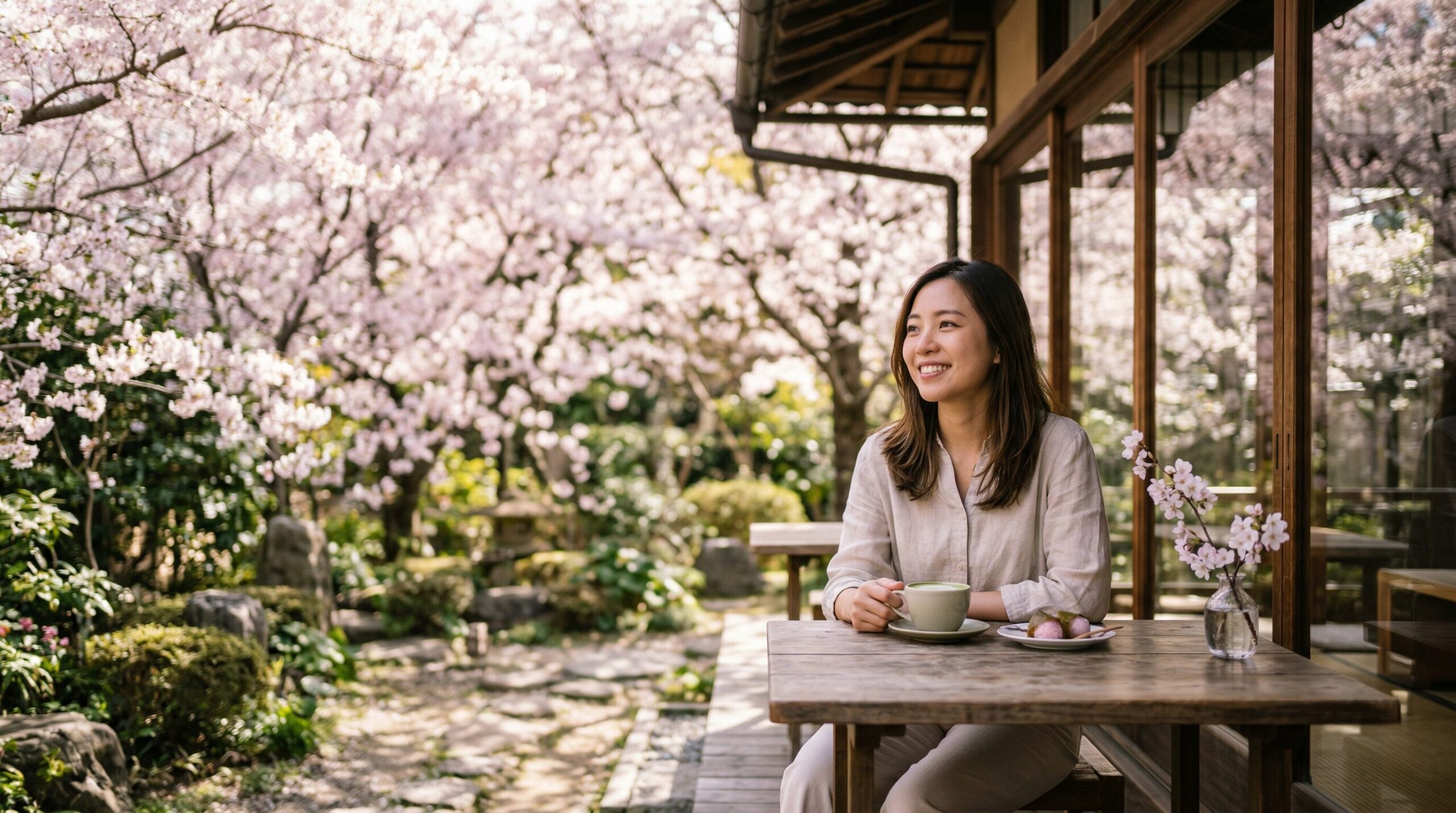
When the long, bitter chill of the Japanese winter finally breaks, the country holds its collective breath in anticipation of the sakura (cherry blossoms). It is a season of profound cultural joy, marked by the tradition of hanami—gathering beneath the blooming branches to eat, drink, and celebrate the arrival of spring. However, for the international traveler arriving in late March or early April, the reality of famous viewing spots can be overwhelming. Tokyo’s Ueno Park, Kyoto’s Maruyama Park, and the banks of the Meguro River transform into seas of shoulder-to-shoulder crowds, loud music, and endless stretches of blue plastic picnic tarps.
While this festive, chaotic energy is a unique cultural experience in itself, it often strips away the quiet, ephemeral poetry that the blossoms are meant to represent. The true essence of the Japanese spring is not found in a megaphone-directed queue. It is found in a single pale petal falling silently onto a dark wooden table.
For the mindful traveler looking to travel deeper, the solution lies just off the main avenues. Tucked away in quiet residential neighborhoods, hidden on the second floors of obscure buildings, and situated along lesser-known canals are hidden cherry blossom cafes. These sanctuaries offer a different kind of hanami—one defined by artisanal coffee, hushed conversations, and large glass windows that frame the fleeting beauty of the season like a living painting. This guide explores how to escape the crowds and find the quiet, authentic spring that the locals know best.
The Philosophy of Quiet Hanami: Key Details and Breakdown
To understand why these hidden cherry blossom cafes are so revered by locals, one must look at the underlying Japanese philosophy of nature and design. These spaces are not merely coffee shops with a fortuitous view; they are deliberately engineered environments designed to facilitate a specific emotional response. When you seek out these quiet corners, you engage with several distinct cultural concepts:
- Mono no Aware (The Pathos of Things): The Japanese appreciation for cherry blossoms is rooted in their transience. They bloom brilliantly and vanish within a week. A quiet cafe environment allows the observer to sit in stillness and actually contemplate this fleeting beauty, rather than rushing to snap a photo and move on.
- Shakkei (Borrowed Scenery): Many independent cafe owners specifically choose their real estate to utilize shakkei, an ancient architectural technique. By installing massive, unadorned glass windows or positioning their outdoor terraces perfectly, the cafe “borrows” the cherry blossoms from the outside world, incorporating the vibrant pink canopy directly into the cafe’s minimalist interior design.
- The Master’s Pace: In a traditional Japanese coffee shop (kissaten) or a modern specialty roastery, the coffee is often prepared using the slow, meticulous hand-drip or nel-drip method. The agonizingly slow pour of the hot water forces you to slow your own internal clock. You cannot rush the brew, and therefore, you are forced to sit, breathe, and simply watch the blossoms sway in the wind outside.
Sanctuaries in the City: Practical Examples and Recommendations
Finding these hidden gems requires a willingness to leave the major transit hubs and explore the capillary streets of Japan’s major cities. Here are four exceptional, off-the-beaten-path cafes where you can experience a truly quiet spring.
The Curated Calm of Little Cloud Coffee (Tokyo)
The Meguro River in Nakameguro is undeniably one of Tokyo’s most spectacular sakura destinations, but during peak bloom, the foot traffic along the riverbank moves at a suffocating crawl. Most tourists flock to the massive, multi-story Starbucks Reserve Roastery, resulting in hours-long wait times. The secret to enjoying Nakameguro is to step away from the immediate river edge and step into a boutique sanctuary.
Highlights of a Little Cloud Coffee Visit:
- The Hidden Entrance: Little Cloud Coffee is nestled inside VISVIM GENERAL STORE. Because it operates primarily as a high-end retail space, casual tourists walking the river path usually walk right past it.
- Minimalist Solitude: The interior features beautifully aged wood and offers a profound acoustic reset from the noise of the festival outside.
- A Traditional Courtyard: Instead of a sweeping river view, the cafe offers a peaceful, ground-level retreat. You can sip your expertly pulled espresso while gazing out at their meticulously curated traditional Japanese garden, a perfect quiet contrast to the bustling crowds just steps away.
The Modern Canvas of Lignum (Kyoto)
Kyoto during cherry blossom season is notoriously crowded. However, the Gosho-Minami area—located south of the Kyoto Imperial Palace—offers a highly refined, breathable atmosphere. Here lies Lignum, a fiercely stylish cafe and restaurant that relocated to this quiet neighborhood in late 2025.
Highlights of a Lignum Visit:
- A New Sanctuary: Lignum’s new space features a sleek, glass-walled facade, while an inner courtyard terrace provides a private oasis.
- Artisanal Baking & Dining: The smell of fresh, buttery croissants mixes beautifully with their elevated brunch courses.
- The Morning Light: Because it opens early (around 8:00 AM), you can enjoy a quiet breakfast before taking a short walk to the expansive grounds of the Kyoto Imperial Park to view the seasonal blossoms.
Riverside Serenity at Cafe Odashi (Kyoto)
For a truly deep, residential Kyoto experience, you must head south, away from the manicured center of Gion. Along the lesser-walked southern stretches of the Kamogawa River lies the Additive-Free Fermentation Cafe Odashi. This is the definition of a hidden gem—a space so unassuming and local that it feels like stepping into a private home.
Highlights of a Cafe Odashi Visit:
- The Homestyle Vibe: Run by two local women, the cafe specializes in odashi (traditional Japanese soup stock) and additive-free, fermented foods. It is a sharp, wonderful contrast to the slick, modern espresso bars of the city. The food is deeply comforting, nourishing, and historically authentic.
- The Kamogawa View: The cafe is situated perfectly to offer unobstructed views of the Kamogawa River. In this southern ward, the riverbanks are lined with large, wild cherry trees. Because there are no major tourist monuments nearby, the only people walking under the blossoms are local residents walking their dogs or riding bicycles.
- Falling Petals: If you visit during the late stages of the bloom (the hanafubuki, or cherry blossom blizzard), you can sit in the cozy dining room and watch thousands of petals detach from the trees and float silently down the surface of the river.
The Refined Residential Roastery of Rio Coffee (Hyogo)
To truly escape the international tourist circuit, one must look to the affluent, quiet suburbs of the Kansai region. Located between Osaka and Kobe is the city of Ashiya. Ashiya is highly residential, fiercely protective of its aesthetic, and incredibly peaceful. A short walk from JR Ashiya Station is Rio Coffee, a specialty roastery situated on a wide, impeccably clean street lined on both sides with mature cherry blossom trees.
Highlights of a Rio Coffee Visit:
- The Coffee Purists: Rio Coffee is a temple for bean enthusiasts. They roast on-site, focusing on single-origin beans and light to medium roasts that highlight the fruity, floral notes of the coffee—a perfect flavor profile for the spring season.
- The Sakura Tunnel: Because the street is lined with trees on both sides, it forms a complete canopy, or “sakura tunnel.” Sitting inside the cafe, the entire world outside the window appears to be tinted in soft, glowing pink.
- The Neighborhood Stroll: The greatest appeal of Rio Coffee is the neighborhood itself. After finishing your pour-over coffee, you can take a slow, aimless walk through the quiet streets of Ashiya, admiring the beautiful local architecture and the uncrowded, pristine blossoms that the locals fiercely protect.
Mindful Observation: Tips for Travelers
When you seek out hidden cherry blossom cafes, you are transitioning from the public, chaotic sphere of the park into the private, curated sphere of a local business. To ensure your presence remains respectful and light, keep these practical tips in mind:
- The Rule of the Window Seat: Window seats with unobstructed views of the cherry blossoms are the most coveted real estate in the city during spring. If you are lucky enough to secure one, be mindful of your time. It is considered poor etiquette to order a single cup of coffee and occupy the window seat for three hours while reading a book. Enjoy your meal, take your photographs, soak in the view, and then graciously offer the table to the next waiting customer.
- Photography with Discretion: A quiet cafe is not a photo studio. Do not stand up and walk around the small dining room to get different angles. Take photographs from your seated position, and absolutely ensure that your camera shutter sound is turned off (a voluntary industry standard on Japanese smartphones makes them difficult to mute, but it is easily done on international devices). Never point your camera at other customers without permission.
- Leave the Laptop at the Hotel: These specific cafes are designed for conversation, contemplation, and the appreciation of nature. Bringing a laptop to a hidden sakura cafe to catch up on emails completely shatters the intentional, analog atmosphere of the room. Unplug, look out the window, and be present.
- Timing is Everything: Even the most hidden cafes experience a surge in popularity during the two-week blossom window. To guarantee a quiet experience, you must arrive the moment the cafe opens its doors in the morning, or visit on a Tuesday or Wednesday. Weekends, regardless of the location, will inevitably draw local crowds.
Conclusion
Japan’s true beauty rarely reveals itself to those in a rush. It is not found by checking off a list of top ten monuments or fighting for a space on a crowded bridge just to capture a photograph that a million other people have already taken. It is found in the quiet, unscripted moments: the smell of freshly ground coffee beans mingling with the crisp spring air, the warmth of a ceramic mug in your hands, and the mesmerizing, silent dance of a pink petal falling to the earth outside a glass window.
By taking the time to seek out these hidden cherry blossom cafes, you do more than just avoid the crowds. You step away from the fleeting, disposable nature of modern mass tourism. You stop simply looking at the Japanese spring and begin to actually feel its gentle, poetic rhythm. It is time to go beyond the ordinary travel itineraries, slow your pace to match the falling blossoms, and discover the deep, resonant, and profoundly quiet Japan that the locals know best.