For the uninitiated traveler, the Japanese onsen (hot spring) is a paradox. It is described as the ultimate relaxation, yet the prospect of entering one often induces sheer panic. The rules seem endless. The nudity is absolute. The fear of committing a cultural faux pas while stark naked is a powerful deterrent.
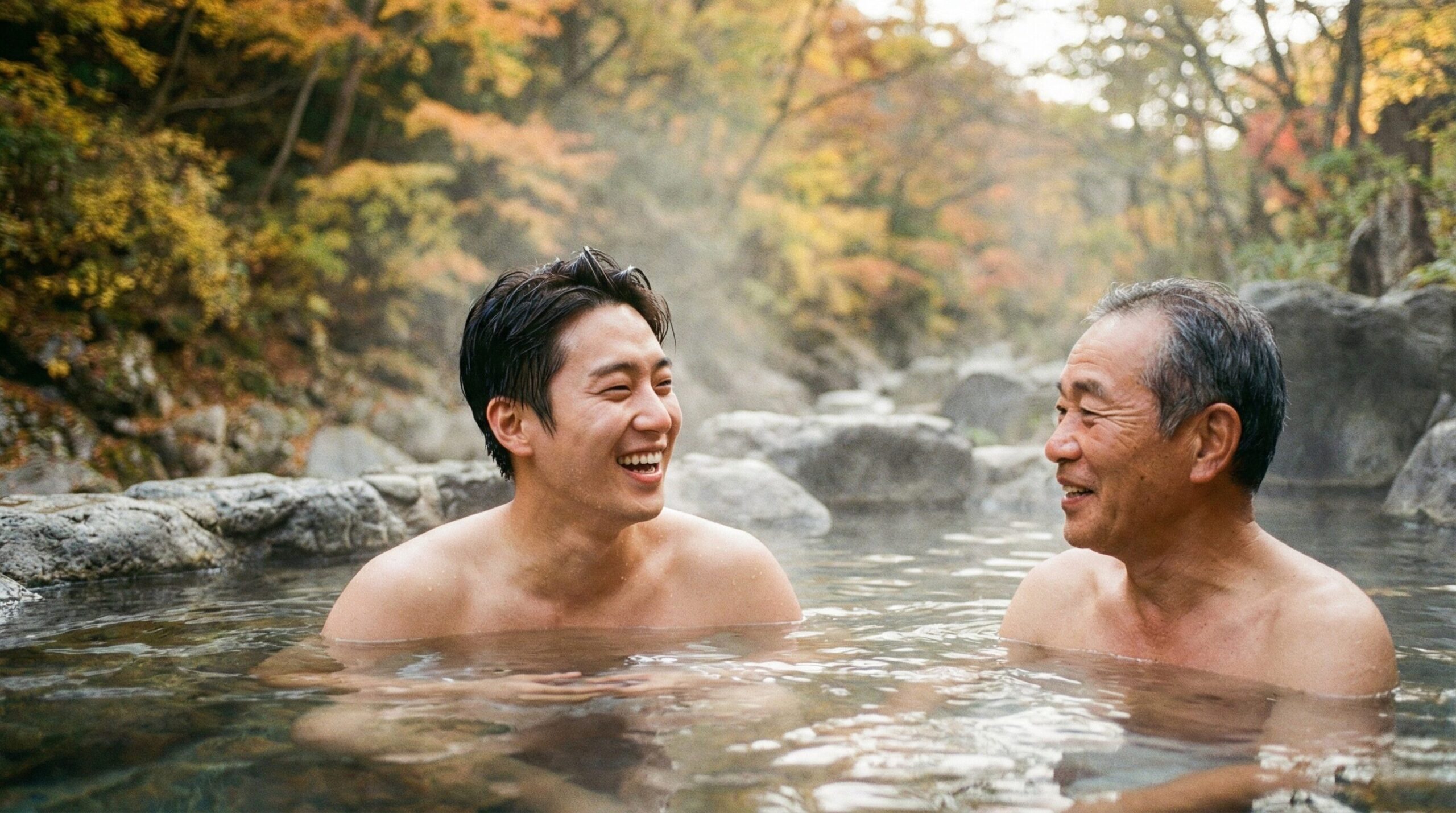
But to visit Japan and skip the onsen is to miss the beating heart of its culture. The onsen is not merely a bath; it is a sanctuary. It is where the rigid social hierarchy of Japanese society dissolves into the steam. In the water, there are no bosses, no employees, no tourists—only humans.
This concept is known as hadaka no tsukiai (naked communion), the idea that by stripping away our clothes, we strip away our defenses and connect on a primal, honest level. This guide is not just a list of “dos and don’ts.” It is a cultural roadmap. We will take you through the sliding doors, past the changing baskets, and into the water to teach you how to enjoy onsen like a local—with confidence, respect, and deep relaxation.
The Philosophy: It’s Not Just Hot Water
To act like a local, you must think like a local. The Japanese approach to bathing is fundamentally different from the Western “get clean and get out” mentality.
The Concept of “Toji” (The Cure)
Historically, onsen were medical treatments. Farmers would spend weeks at a hot spring after the harvest to heal their aching bodies. This practice, called Toji, implies that the water itself is medicine.
- The Mindset: You are not there to wash (you do that before you enter the bath). You are there to absorb. You are marinating in minerals—sulfur for the skin, iron for warmth, alum for healing.
The Sound of Silence
While an Izakaya is for noise, an Onsen is for quiet. It is a meditative space. Locals might chat quietly in the corner, but generally, the soundscape is dominated by splashing water and the clacking of wooden buckets.
- The Vibe: Think of it as a wet library. Respect the peace.
The Ritual: Step-by-Step Breakdown
The difference between a tourist and a local is the fluidity of their movements. Here is the choreography of the bath.
The Entry (The Noren)
You will see two curtains (noren).
- Blue/Navy: Typically Men (Otoko-yu), but colors can vary.
- Red/Orange: Typically Women (Onna-yu).
- Warning: In many traditional ryokan, these switch overnight to give everyone a view of both gardens. Crucially, do not rely solely on color. Always check the kanji (男 for Men, 女 for Women) before walking in!
The Undressing (The Basket)
In the changing room (datsuijo), you will find baskets or lockers.
- The Local Move: Undress completely. No swimsuits. No underwear. Place your clothes neatly in the basket.
- The One Tool: You take only one thing into the bath area: the small, white “modesty towel” (tenugui).
The Wash (The Kake-yu)
Enter the wet area. Before you even look at the tub, find the showers or the low stools.
- Sit Down: Never shower standing up if there are stools. Splashing your neighbor is a cardinal sin.
- The Scrub: Wash your body thoroughly with soap. Rinse until every bubble is gone. The bathwater is shared; your body must be pristine before you enter it.
The Soak (The Entry)
- Kake-yu: Before stepping in, scoop water from the tub and pour it over your shoulders and chest. This acclimates your body to the heat.
- Slide In: Enter slowly. Do not jump. Do not swim.
- The Towel: Do not let your towel touch the water. Locals fold it and place it on their heads. This isn’t just a funny cartoon trope; it keeps the towel dry and, if soaked in cold water, prevents you from overheating.
Practical Examples: Types of Onsen Experiences
Knowing how to enjoy onsen like a local means knowing that not all baths are created equal.
The “Rotenburo” (Open-Air Bath)
This is the pinnacle of the experience.
- The Scene: You are outside, perhaps surrounded by snow or autumn leaves, neck-deep in hot water.
- The Technique: Because the air is cold and the water is hot, you can stay here longer. Locals use this time to stare at the nature (Hanami or Yukimi bathing). It is about the contrast between the cold air on your face and the heat in your bones.
The “Sento” (Neighborhood Public Bath)
These are everyday bathhouses in cities like Tokyo or Osaka. They may not use natural spring water, but they are community hubs.
- The Vibe: You will see grandfathers chatting, neighbors scrubbing each other’s backs, and incredible murals of Mt. Fuji painted on the tiles. This is raw, unpretentious Japanese life.
The “Higaeri” (Day Trip Onsen)
You don’t need to stay at an expensive inn to soak.
- The Tip: Many luxury ryokans open their baths to the public between 11:00 AM and 2:00 PM for a fee (usually 1,000–2,500 yen, though some historic ones charge less). This is the budget traveler’s secret to experiencing luxury for a fraction of the overnight price.
Advanced Moves: The “Pro” Techniques
If you want to truly blend in, incorporate these nuances into your routine.
The Alternating Bath (Koutai-yoku)
If the facility has a cold water bath (mizuburo), use it.
- The Cycle: Soak in the hot water for 5–10 minutes until you are sweating. Then, dip into the cold bath for 1 minute. Repeat 3 times.
- The Result: This stimulates circulation and creates a euphoric, tingling sensation similar to a “runner’s high.” It is the secret to the unparalleled energy many elderly Japanese people possess.
The Post-Bath Milk
After you dress, do not leave immediately. Look for the vending machine selling glass bottles of milk.
- Coffee Milk (Koohi-gyuu-nyuu): Sweet, coffee-flavored milk is the traditional post-onsen drink.
- The Pose: Place one hand on your hip, tilt your head back, and drain the bottle in one go. It sounds cliché and is largely a nostalgic trope from manga, but trying this classic pose adds to the fun.
The Timing
Locals know that the best water is the “Ichiban-buro” (First Bath).
- Ryokan Strategy: If staying at an inn, wake up early (6:00 AM). The baths are freshly cleaned, the water is pure, and you might have the entire place to yourself as the sun rises.
Tips for Travelers: Navigating the Hurdles
The Tattoo Dilemma
Historically, tattoos are associated with the Yakuza, and many onsen ban them.
- The Workaround:
- Private Baths (Kashikiri): Rent a private family bath for 45 minutes. No one will see you.
- Cover Seals: If your tattoo is small (postcard size), ask the front desk for a skin-colored sticker to cover it.
- Tattoo-Friendly Map: Websites like “Tattoo Friendly Japan” list facilities that welcome inked guests.
The Temperature Shock
Japanese onsen are hot. Often 40°C to 42°C (104°F–108°F).
- Don’t Fight It: If you feel dizzy, get out slowly. Sit on the edge with your feet in the water.
- Don’t Add Cold Water: Unless there is a specific cold tap for this purpose, adding cold water to a shared tub is rude to the locals who love the heat.
Modesty Management
The walk from the changing room to the bath can feel like the longest walk of your life.
- The Shield: Use your small modesty towel to cover your front as you walk. It is a polite fiction—everyone knows you are naked, but the towel signals refinement.
Conclusion
Learning how to enjoy onsen like a local is a journey of surrender. You surrender your clothes, you surrender your schedule, and you surrender your self-consciousness to the steam.
There is a moment that happens in every good onsen soak. You have finished washing. You have slid into the outdoor bath. The cool wind brushes your cheek, the smell of sulfur fills your nose, and your body feels weightless. You look across the water and see a local elder, eyes closed, perfectly at peace.
In that moment, you realize that you aren’t just a tourist looking at Japan. You are feeling Japan.
So, take a deep breath. Drop the towel. And step in. The water is perfect.