
Tokyo’s public transportation has a reputation that precedes it: dense maps, endless lines, stations the size of small cities, and rush-hour crowds that look overwhelming from the outside. For first-time visitors, the idea of figuring it all out can feel daunting.
Yet the truth is simpler—and reassuring. Once you understand the logic behind it, How to Navigate Tokyo’s Metro System becomes less about memorizing lines and more about reading signs, following color codes, and trusting one of the most passenger-friendly systems in the world. Tokyo’s metro is designed to work. Trains run on time. Stations are clearly marked. English signage is widespread. And millions of people—locals and visitors alike—use it daily without issue. This guide breaks the system down into clear parts, shows how they connect, and offers practical strategies so you can move through Tokyo with confidence from day one.
- Key Details and Breakdown: Understanding Tokyo’s Rail Network
- Practical Examples and Recommendations
- Using Technology to Navigate Tokyo’s Metro
- Tips for Travelers: Mastering Tokyo’s Metro Like a Local
- Common Misconceptions About Tokyo’s Metro
- Why Tokyo’s Metro Is One of the World’s Best
- Conclusion: Confidence Is the Real Ticket
Key Details and Breakdown: Understanding Tokyo’s Rail Network
The Two Subway Operators You Need to Know
Tokyo’s subway system is run by two separate operators. Understanding this is the first major step.
Tokyo Metro
Tokyo Metro operates the majority of subway lines that pass through central Tokyo.
- 9 lines
- Covers major sightseeing and business areas
- Most commonly used by visitors
You’ll see Tokyo Metro logos and line colors throughout the city.
Toei Subway
Toei Subway is run by the Tokyo Metropolitan Government.
- 4 lines
- Often connects residential areas with central hubs
- Slightly different ticketing rules, but integrated
From a traveler’s perspective, Tokyo Metro and Toei Subway function almost seamlessly together.
Subway vs. JR Lines: What’s the Difference?
In addition to subways, Tokyo has JR (Japan Rail) lines operated by JR East.
Key differences
- Subway lines run mostly underground and serve dense city areas
- JR lines often run above ground and form loops or longer routes
For example:
- The JR Yamanote Line circles central Tokyo
- Subways cut across the circle and reach specific neighborhoods
Most trips involve a mix of subway and JR trains. This is normal.
Reading Tokyo’s Metro Maps
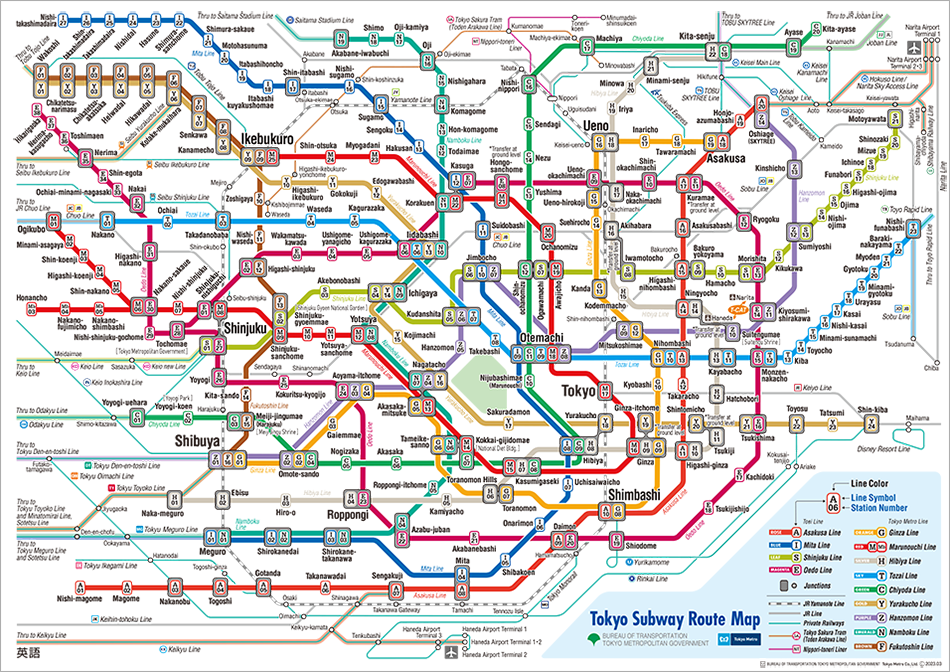
At first glance, Tokyo metro maps look chaotic. They aren’t.
What actually matters
- Line colors
- Line names
- Station numbers
Each station has:
- A line letter
- A station number
For example (at Ginza Station):
- Ginza Line: G-09
- Marunouchi Line: M-16
You don’t need to read Japanese to navigate. Follow the letters and numbers.
Station Names vs. Area Names
One common confusion point: station names don’t always match neighborhood names exactly.
Example
- “Shinjuku” implies a massive area with multiple stations: Shinjuku, Shinjuku-sanchome, and Seibu-Shinjuku.
- These are closely located (often connected underground) but act as different hubs.
When planning routes, always check the exact station name, not just the neighborhood.
Tickets, IC Cards, and Gates (Simple Version)
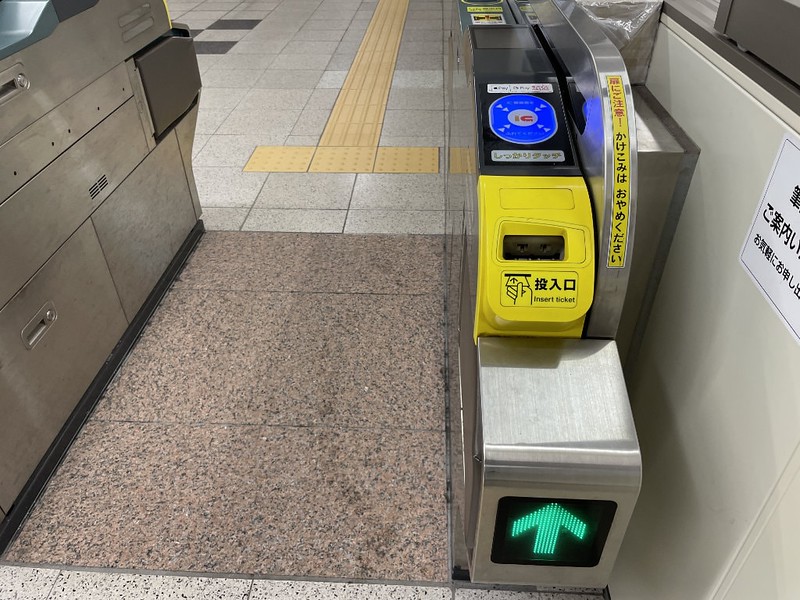
You can enter Tokyo’s metro system in two main ways:
- Single-use tickets
- Reloadable IC cards (the easiest option)
At the gates:
- For IC Cards: Tap the card reader to enter and exit.
- For Single-use Tickets: Insert the ticket into the slot to enter (remember to pick it up!). Insert it again to exit.
The system calculates the fare automatically. If your balance is low, the gate won’t open—but staff will help immediately.
Practical Examples and Recommendations
Example 1: First Metro Ride in Tokyo
Let’s say you’re going from Asakusa to Shibuya.
What you do
- Enter Asakusa Station
- Follow signs for the Ginza Line (orange)
- Board the train heading toward Shibuya
- Count stops or watch the digital display
- Exit at Shibuya
No transfers. No complicated decisions. The hardest part is trusting that it’s really that straightforward.
Example 2: Making a Transfer Without Stress
Transfers in Tokyo can involve walking—but they’re well signposted.
Tips
- Follow the colored line on walls or floors
- Look for exit numbers if your destination specifies one
- Don’t rush; transfers are designed with walking time in mind
If you miss a turn, you’ll still end up somewhere useful.
Example 3: Using Exit Numbers to Save Time
Tokyo stations often have many exits.
Why exit numbers matter
- Google Maps often suggests a specific exit
- Using the right exit can save 10–15 minutes of walking
Look for signs like:
- Exit A3
- Exit B12
These are your shortcuts.
Example 4: Avoiding Rush Hour (If You Can)
Rush hour isn’t dangerous—but it’s intense.
Peak times
- Morning: 7:30–9:30 a.m.
- Evening: 5:30–7:30 p.m.
If possible
- Travel mid-morning or early afternoon
- Sightsee nearby during peak hours
If you must ride during rush hour, stand near doors and follow staff instructions.
Using Technology to Navigate Tokyo’s Metro
Google Maps Works Extremely Well
In Tokyo, Google Maps:
- Suggests exact platforms
- Shows transfer walking times
- Updates in real time
It’s one of the most reliable transit tools in the city.
Station Signage Is Your Backup
Even if your phone dies:
- Signs are bilingual
- Line colors are consistent
- Staff booths are everywhere
You’re never truly lost.
Tips for Travelers: Mastering Tokyo’s Metro Like a Local
Follow the Floor Markings
On platforms, you’ll see:
- Where to line up
- Where doors open
- Direction arrows
This keeps boarding orderly and calm.
Stand on the Correct Side of Escalators
Rules vary by area, but in much of Tokyo:
- Stand on the left
- Walk on the right
Watch locals and follow their lead.
Keep Noise Low
Metro etiquette matters:
- No phone calls on trains
- Quiet conversations
- Phones on silent mode
This shared quiet is part of what makes the system pleasant.
Luggage Considerations
If you have large luggage:
- Avoid rush hour
- Use elevators (marked clearly)
- Consider shipping luggage ahead
Tokyo’s metro is efficient, but space is shared.
Don’t Panic If You Make a Mistake
If you:
- Board the wrong train
- Miss a stop
- Exit the wrong gate
Simply adjust. Trains are frequent, and stations are interconnected.
Mistakes rarely cost more than a few minutes.
Common Misconceptions About Tokyo’s Metro
“It’s Too Complicated for Visitors”
In reality:
- It’s complex behind the scenes
- But simple at user level
You interact with one route at a time.
“I Need to Memorize the Map”
You don’t.
- Use line names
- Use station numbers
- Use apps
Locals don’t memorize everything either.
“I’ll Get Lost Underground”
Most stations are clearly zoned. Even large stations funnel you toward exits efficiently. And if you’re unsure—ask. Station staff are famously helpful.
Why Tokyo’s Metro Is One of the World’s Best
Tokyo’s system succeeds because it prioritizes:
- Predictability
- Clarity
- Respect for passengers’ time
There’s little drama. Trains arrive, doors open, people move, and life continues.
Once you grasp How to Navigate Tokyo’s Metro System, the city opens up. Neighborhoods feel closer. Plans become flexible. And Tokyo stops feeling overwhelming—and starts feeling accessible.
Conclusion: Confidence Is the Real Ticket
Learning How to Navigate Tokyo’s Metro System isn’t about becoming an expert—it’s about building trust. Trust in the signage. Trust in the schedules. Trust that if something goes wrong, help is nearby. After a day or two, what once felt intimidating becomes routine. You stop thinking about lines and stations and start thinking about where you’re going next—cafés, museums, neighborhoods, quiet streets. And that’s the real magic of Tokyo’s metro. It disappears when it works best, leaving you free to experience the city itself.