
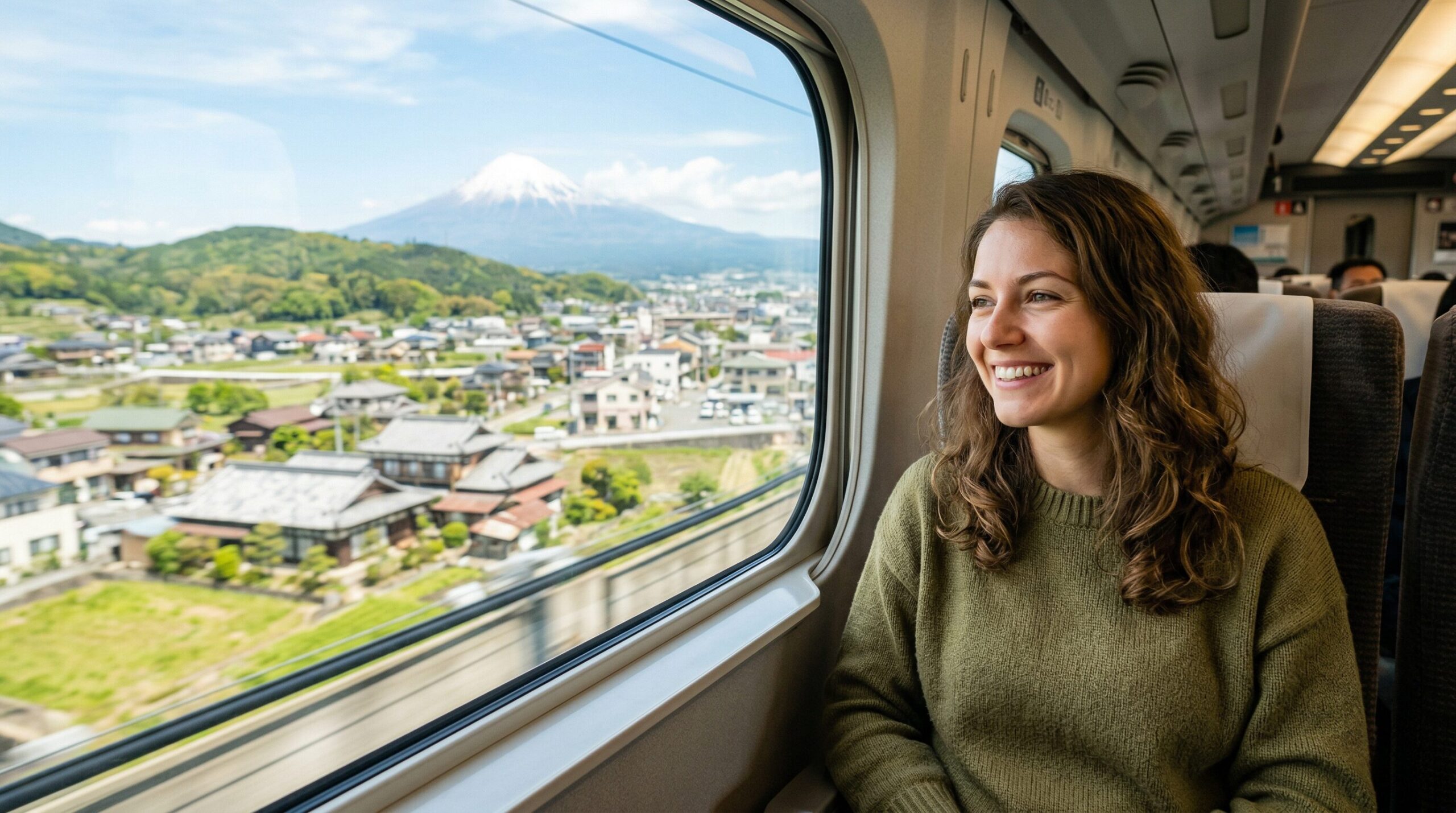
When you look at a map of the Japanese archipelago, the temptation is immediate and overwhelming. The islands stretch for over 3,000 kilometers, offering a staggering diversity of landscapes. In a single journey, you could theoretically walk beneath the neon canyons of Tokyo, sit on the tatami mats of a Kyoto temple, and soak in the geothermal steam of a Kyushu hot spring. The country’s world-renowned rail network makes this level of movement physically possible, and for many first-time visitors, this sparks a frantic desire to see it all. However, treating the country as a rapid-fire checklist often results in a profound disconnect. The traveler spends their days dragging heavy suitcases through labyrinthine train stations, viewing the landscape almost exclusively through the blurred, double-paned glass of a bullet train. They experience the logistics of Japan, but they miss its soul. To truly understand this complex nation, the mindful traveler must shift their approach from superficial sightseeing to intentional exploration. Knowing how to plan a multi-city Japan trip is not about maximizing the number of pins on a map; it is about stringing together diverse regions with a cohesive, unhurried rhythm. It requires an understanding of the invisible infrastructure that locals use to travel smoothly. This guide explores the architecture of a well-paced journey, offering strategies to connect the neon metropolis with the quiet, rural heartland, ensuring you travel deeper every time you board a train.
The Architecture of Movement: Key Details and Breakdown
Mastering a complex itinerary in a foreign country requires abandoning the habits that work at home and adopting the systems perfected by your hosts. When figuring out how to plan a multi-city Japan trip, you must build your itinerary around three foundational pillars: pacing, regional transit logic, and luggage management.
- The Geography of Pacing (The Hub-and-Spoke Model): The most common mistake international visitors make is changing hotels every single night. Packing and unpacking shatters the rhythm of your trip. Instead, adopt the hub-and-spoke model. Establish a “base camp” in a major regional city for at least three to four nights. From there, utilize the incredibly punctual regional trains to take focused day trips. You can explore the rural pottery villages or coastal shrines during the day, and return to the comfort of your established room by nightfall.
- Rethinking the Rail Pass: For decades, the national Japan Rail (JR) Pass was the unquestioned default for foreign visitors. However, following significant price increases, it is no longer the automatic, budget-saving tool it once was. The modern traveler must be more surgical. Often, purchasing individual Shinkansen (bullet train) tickets between major hubs, combined with cheaper, highly localized regional passes (like the JR Kyushu Pass or the Hokuriku Arch Pass), is far more cost-effective and encourages deeper exploration of a single area.
- The Magic of ‘Takuhaibin’: If there is a single secret to unlocking a stress-free, multi-city journey, it is Takuhaibin (luggage forwarding). Japan possesses a flawless, inexpensive national courier system (most famously Yamato Transport, recognized by its black cat logo). For roughly $15 to $20 USD, you can ship your large suitcase from your hotel in Tokyo directly to your ryokan in Kyoto. It arrives the next day. This allows you to board the bullet train carrying only a small daypack, completely eliminating the physical burden of navigating crowded stations.
Routes of Resonance: Practical Examples and Recommendations
To move away from the heavily congested “Golden Route” (Tokyo-Kyoto-Osaka-Hiroshima), you must look for the alternative arteries that connect the country. Here are three examples of how to sequence a multi-city journey that prioritizes cultural depth and varied landscapes.
The Artisan’s Corridor (Tokyo → Kanazawa → Kyoto)
Rather than taking the standard Tokaido Shinkansen straight down the eastern coastline, consider the Hokuriku Arch. This route pulls you north from Tokyo, through the dramatic Japanese Alps, and down the western coast along the Sea of Japan before arriving in Kyoto. It is a journey defined by historical preservation and traditional crafts.
Highlights of the Artisan’s Corridor:
- Kanazawa as the Anchor: After the hyper-modernity of Tokyo, Kanazawa offers a profound architectural reset. It was spared from wartime bombing, meaning its samurai districts (Nagamachi) and geisha tea house streets (Higashi Chaya) remain intact. It is a city of gold leaf artisans, masterful lacquerware, and the breathtaking Kenroku-en garden.
- The Shirakawa-go Detour: From Kanazawa, you can easily take a bus deep into the mountains to visit the UNESCO village of Shirakawa-go. The steeply pitched, thatched-roof gassho-zukuri farmhouses offer a stark, beautiful contrast to the refined aesthetics of the city.
- A Quieter Arrival: When you finally curve south into Kyoto, you arrive with an established appreciation for Japanese craftsmanship, making the ancient capital’s temples and artisan shops feel like a natural continuation of the journey rather than an abrupt historical shock.
The Volcanic South (Fukuoka → Kurokawa Onsen → Kagoshima)
For the traveler who has already experienced the Tokyo-Kyoto circuit, the southern island of Kyushu offers a radically different atmosphere. Kyushu is rugged, intensely geothermal, and defined by a warm, unpretentious, working-class hospitality. This route trades delicate refinement for raw, natural power.
Highlights of the Kyushu Transit:
- The Hakata Starting Line: Begin in Fukuoka (Hakata). The energy here is kinetic and culinary. Spend your evenings sitting shoulder-to-shoulder with locals at the open-air yatai food stalls, eating rich, cheap tonkotsu ramen by the river.
- The Deep Mountain Retreat: Use a rental car or the regional bus network to move inland to Kurokawa Onsen. Unlike the massive, concrete resort towns, Kurokawa is a fiercely protected, historic hot spring village hidden in a forested gorge. The focus here is entirely on nature, wearing a cotton yukata, and moving slowly between open-air baths (rotenburo).
- The Ash of Kagoshima: Take the Kyushu Shinkansen south to Kagoshima, a city sitting in the shadow of Sakurajima, an active volcano that regularly dusts the streets in fine ash. Here, you can experience the unique geothermal sand baths of Ibusuki, where you are buried in naturally heated, heavy black sand overlooking the ocean.
The Seto Inland Sea Slow Transit (Osaka → Naoshima → Hiroshima)
If you wish to lower the tempo of your trip entirely, direct your attention to the Seto Inland Sea. This body of water separates the main island of Honshu from the island of Shikoku. The transit here relies heavily on ferries and local trains, forcing a slower, more contemplative pace.
Highlights of the Inland Sea Route:
- The Art Island Archipelagos: From the major hub of Osaka, move west to the port of Uno, and take the ferry to Naoshima or Teshima. These fading fishing islands have been revitalized into world-class, open-air contemporary art museums. The architecture of Tadao Ando blends seamlessly with the coastal cliffs and the quiet rural villages.
- The Cycling Bridge: For the active traveler, this region offers the Shimanami Kaido—a spectacular 70-kilometer cycling route that island-hops across the Seto Inland Sea via a series of massive suspension bridges. You can rent a bicycle in Onomichi and spend a day riding above the fishing boats, arriving in Imabari.
- A Poignant Conclusion: Arriving in Hiroshima at the end of this slow, artistic transit offers a moment of deep reflection. The city’s tragic history is met with a profound dedication to global peace, and viewing the floating torii gate of nearby Miyajima Island at high tide is one of the most resonant sights in the country.
Mastering the Movement: Tips for Travelers
Understanding how to plan a multi-city Japan trip requires precise execution. The infrastructure is world-class, but it operates on strict rules. Keep these practical tips in mind to ensure your transitions are flawless:
- Book Shinkansen Tickets Digitally (SmartEX): Do not wait in the long, winding queues at the JR ticket offices (Midori no Madoguchi). Download the official SmartEX app before you arrive in Japan. It allows you to book bullet train tickets in English, select your exact seats (reserve the “Mount Fuji view” side on the Tokaido Shinkansen—Seat E), and link the ticket directly to your digital transit card on your phone. You simply tap your phone at the gate and walk through.
- The ‘Oversized Baggage’ Rule: As of recent years, if your suitcase’s total dimensions (height + width + depth) exceed 160 centimeters, you are required by JR regulations to reserve a specific “Oversized Baggage” seat at the very back of the Shinkansen car. If you board without this reservation, the conductor will charge you a penalty fee, and your luggage will be moved. This is yet another reason why utilizing Takuhaibin to forward your large bags is the superior strategy.
- Embrace the Ekiben Culture: Long-distance train travel in Japan is not a chore; it is a celebrated cultural event. A massive part of this is the ekiben (station bento). Every major transit hub sells meticulously prepared, visually stunning bento boxes featuring the culinary specialties of that specific region. Buy an ekiben and a cold green tea before boarding, wait until the train leaves the city sprawl, and enjoy a curated meal while the rice paddies blur past your window.
- Secure Ryokans Six Months Out: While western-style business hotels can often be booked a few weeks in advance, authentic, high-end ryokans (traditional inns) in popular areas like Hakone, Kyoto, or Kurokawa Onsen often open their booking windows several months in advance and sell out within days. Lock in your rural ryokan dates first, and build the rest of your city transit around those anchor points.
Conclusion
Japan’s true beauty reveals itself not in the static moments, but in the transitions. It is felt in the stark, sudden contrast of leaving a hyper-kinetic, neon-drenched Tokyo intersection and arriving three hours later in a silent, snow-covered valley in the Japanese Alps. By taking the time to understand how to plan a multi-city Japan trip thoughtfully, you elevate your journey from a stressful logistical exercise into a seamless narrative. You utilize the local infrastructure to shed your physical burdens, and you pace yourself to absorb the subtle, shifting atmospheres of the regions. It is time to go beyond the ordinary, discard the rigid checklist, and move through the country with the quiet, observant grace that the real Japan deserves.