
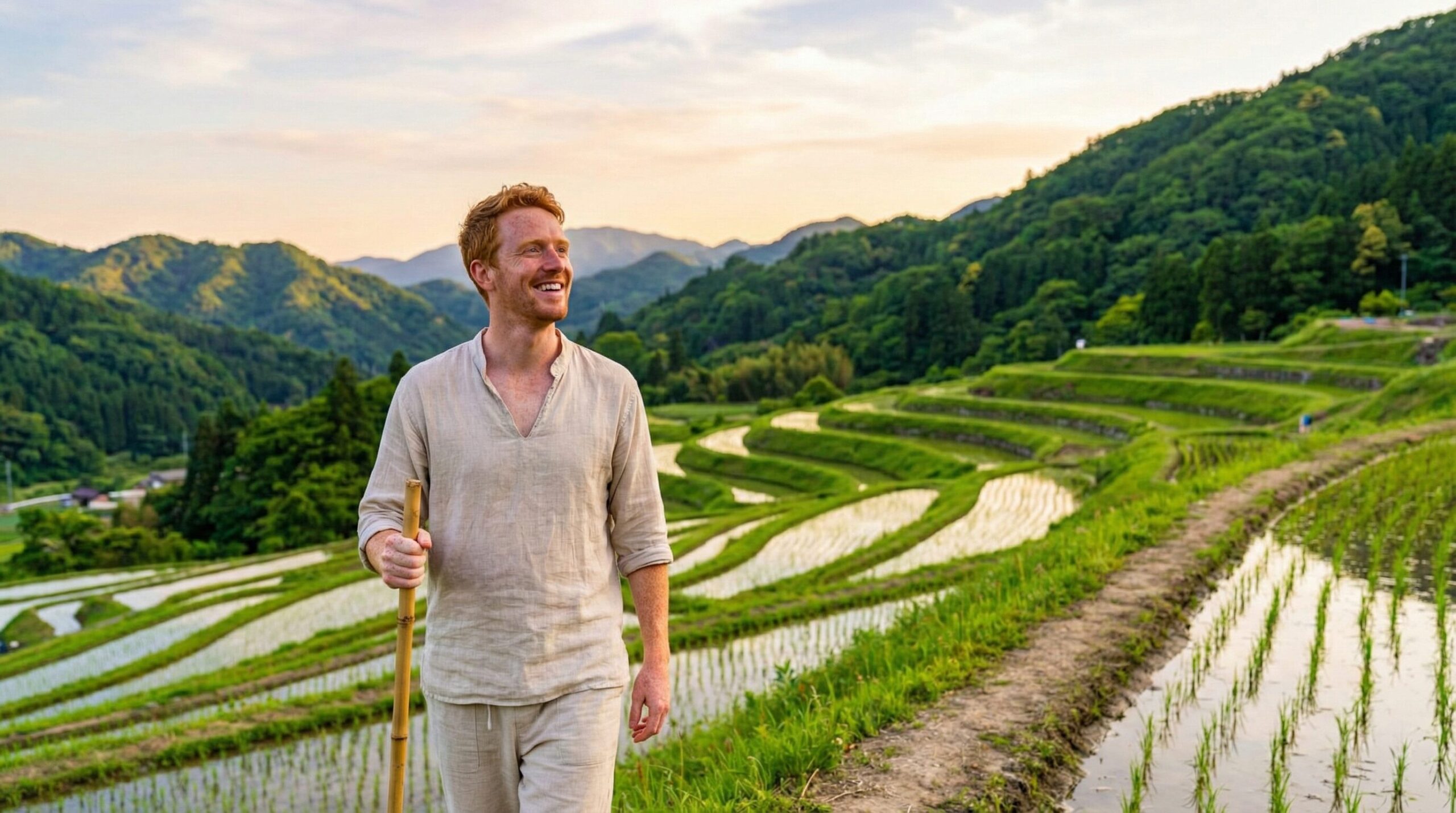
When most travelers think of Japan, Tokyo’s neon-drenched streets and Kyoto’s ancient temples immediately come to mind. But beyond the bustling crossings and crowded shrines lies a quieter, more profound Japan. Here, centuries-old traditions pulse through rural farming villages, coastal fishing towns, and hidden mountain valleys. As Japan’s popularity as a global destination soars, the impact of mass tourism has become undeniable. The question is no longer just where to go, but how to visit in a way that preserves the very magic you came to see.
Figuring out how to travel Japan sustainably is about much more than simply offsetting your carbon footprint. It is about shifting your perspective from consumption to connection. Sustainable travel in Japan means stepping away from the well-worn “Golden Route” to support regional economies facing depopulation. It means choosing authentic cultural exchanges over superficial sightseeing. It means recognizing that every yen spent is a vote for the kind of Japan you want to endure. If you are ready to travel deeper and explore the real Japan, this guide will show you how to tread lightly while experiencing the country’s most authentic self.
The Philosophy of Eco-Conscious Exploration: Key Details and Breakdown
To truly understand how to travel Japan sustainably, it helps to look at the traditional Japanese concept of Satoyama (里山). Historically, Satoyama refers to the border zone between mountain foothills and arable flat land, where human communities and nature exist in a symbiotic, mutually beneficial relationship. Forests were sustainably logged for firewood, which allowed sunlight to reach the forest floor, fostering biodiversity. Applying the spirit of Satoyama to modern travel means aiming for harmony with your destination.
The Challenge of Overtourism vs. Undertourism
Japan is currently facing a stark geographical imbalance. Cities like Kyoto and Tokyo, along with the Mount Fuji region, are grappling with severe overtourism. This strains local infrastructure, frustrates residents, and ultimately dilutes the visitor experience. Conversely, beautifully preserved regions in Tohoku, Shikoku, and Kyushu are experiencing “undertourism.” These areas boast profound cultural heritage and breathtaking landscapes but lack the visitor numbers needed to revitalize their aging, shrinking populations. By redistributing your time toward these lesser-known regions, your presence actively benefits the local economy rather than burdening it.
Cultural Sustainability
Sustainability is not solely environmental; it is deeply cultural. Japan’s intangible cultural heritage—its traditional crafts, regional dialects, and hyper-local festivals (matsuri)—relies on a fragile ecosystem of aging artisans and shrinking communities. When you purchase a mass-produced souvenir from a major airport, the money leaves the community. When you buy a hand-forged knife directly from an artisan in Niigata or hand-dyed indigo fabric in Tokushima, you are directly funding the continuation of that craft.
Practical Examples and Recommendations for Your Itinerary
If you want to put the theory of sustainable travel into practice, the choices you make regarding where you stay, what you do, and where you go make all the difference.
Explore Beyond the Golden Route
Instead of joining the crowds at the most famous spots, seek out regional alternatives that offer a quieter, more intimate look at Japanese culture.
- Trade Kyoto for Kanazawa or Takayama: If you seek preserved Edo-period streets and geisha districts without the elbow-to-elbow crowds, the Hokuriku and Hida regions offer stunning historical architecture and thriving traditional arts scenes.
- Discover Kyushu’s Geothermal Valleys: Instead of the highly commercialized hot spring resorts near Tokyo, head south. In places like Oita Prefecture, if you venture beyond the popular hubs of Beppu and Yufuin, you can find hidden onsen towns surrounded by ancient cedar forests and autumn foliage. Here, the geothermal energy isn’t just for bathing; it’s a way of life used for everything from cooking local vegetables to heating homes sustainably.
- Hike the Ancient Pilgrimage Trails: Trails like the Kumano Kodo in Wakayama or the Nakasendo through the Kiso Valley allow you to engage in “slow travel.” These routes take you step-by-step through remote villages, supporting small family-run guesthouses along the way.
Choose Authentic, Locally-Owned Accommodation
Where you rest your head is one of the most significant economic choices you make as a traveler.
- Family-Run Ryokans: Opt for independent, family-run ryokans (traditional inns) over international hotel chains. Not only will you experience genuine Japanese hospitality (omotenashi), but your money stays directly in the local community.
- Minshuku and Farm Stays: For an even deeper connection, consider a minshuku (guesthouse) or an agricultural farm stay (nouhaku). You might find yourself helping a local farmer harvest rice or picking seasonal fruits before sharing a home-cooked meal around an irori (sunken hearth).
- Temple Lodgings (Shukubo): Staying at a Buddhist temple, particularly in areas like Mount Koya or Nagano, offers a low-impact, spiritually rich experience. The vegetarian cuisine served, known as shojin ryori, is highly sustainable and plant-based by design.
Actionable Tips for Travelers
Learning how to travel Japan sustainably requires mindful daily habits. The country is remarkably clean, yet it relies heavily on single-use plastics. Navigating this, along with cultural nuances, is key to being a responsible guest.
Embrace Chisan-Chisho (Local Production for Local Consumption)
The Japanese concept of chisan-chisho is the equivalent of the farm-to-table movement.
- Eat seasonally: Japan takes immense pride in its seasons. Ordering seasonal dishes means the food hasn’t been shipped across the globe.
- Dine at independent Izakayas: Skip the fast-food chains and seek out small, family-run izakayas (Japanese pubs). Not only is the food infinitely better, but you are supporting local purveyors, fishermen, and farmers.
Master the Art of Waste Reduction
Japan is notorious for its love of individual plastic wrapping. While the country has exceptional recycling systems, avoiding the waste in the first place is the ultimate goal.
- Carry a reusable eco-bag: Since 2020, Japan has charged for plastic bags at convenience stores and supermarkets. Bringing your own is both expected and appreciated.
- Bring a reusable bottle and hand towel: Vending machines are ubiquitous, but carrying a reusable bottle cuts down on PET plastic. Similarly, carrying a small tenugui (traditional cotton towel) to dry your hands is essential, as many public restrooms in Japan do not provide paper towels at all.
- Decline unnecessary items: Learn the phrase “Irimasen” (I don’t need it) to politely refuse wet wipes, plastic cutlery, and excessive wrapping at registers.
Commit to Slow Transit
Japan’s Shinkansen (bullet train) network is world-famous, highly efficient, and significantly more carbon-friendly than domestic flights. But to truly engage with the landscape, consider slowing down even further.
- Local trains: Taking local train lines reveals a side of Japan that simply blurs past the windows of a bullet train. It forces you to stop in towns you’ve never heard of.
- Cycling: Japan is incredibly safe for cyclists. Renting a bike to explore rural towns or tackling dedicated routes like the Shimanami Kaido (which connects Japan’s main island to Shikoku across the Seto Inland Sea) is a zero-emissions way to witness the country’s coastal beauty.
Practice Cultural Respect
True sustainability means respecting the social fabric of your destination.
- Observe etiquette: Read the room. Keep your voice down on public transport, do not eat while walking down the street, and respect photography bans, especially in sacred spaces or geisha districts.
- Learn basic Japanese: You do not need to be fluent, but knowing how to say “Arigatou gozaimasu” (Thank you) and “Sumimasen” (Excuse me/Sorry) goes a tremendously long way in showing goodwill to locals.
Conclusion
Japan’s true beauty often hides in plain sight, far away from the curated Instagram spots and crowded tourist corridors. To travel sustainably here is to embrace the role of an observer rather than a consumer. It is about engaging with the culture thoughtfully, spending your money where it can foster longevity, and leaving a positive footprint behind. When you prioritize authentic experiences over superficial sightseeing, you do more than just see the country—you help sustain its soul. It’s time to go beyond the ordinary, step off the beaten path, and see the Japan that locals know best.