When travelers map out their Japanese itineraries, one mode of transit dominates the conversation: the Shinkansen. The bullet train is an undeniable marvel of modern engineering. It is sleek, punctual, and impossibly fast. It slices through the Japanese countryside, turning a grueling cross-country journey into a brief, comfortable nap. But speed comes at a premium. And more importantly, speed comes with a disconnect.
When you travel at 300 kilometers per hour, the landscape becomes a blur. You bypass the quiet farming valleys, the rugged coastal roads, and the mountain passes that define Japan’s complex geography. For the traveler looking to go beyond superficial sightseeing, there is an alternative. It is slower, it requires a bit more planning, but it is deeply rewarding.
If you want to understand how to use highway buses for cheap travel, you are not just learning a budget hack. You are unlocking a massive, intricate network of asphalt arteries that pulse across the entire archipelago. Highway buses (kosoku bus) go where the trains cannot.
They climb into remote hot spring villages. They cross sweeping suspension bridges to isolated islands. They cater to local students, visiting grandparents, and savvy domestic travelers. Learning to navigate this system allows you to stretch your travel budget significantly, freeing up funds for that extra night in a traditional ryokan or a high-end kaiseki meal.
Let us step away from the ticket gates of the major stations and explore the quiet, comfortable, and incredibly efficient world of Japan’s highway bus network.
Key Details and Breakdown: The Anatomy of the Japanese Highway Bus
To master how to use highway buses for cheap travel, you must first discard any preconceived notions you might have about bus travel in your home country. Japanese highway buses are remarkably clean, famously punctual, and thoughtfully designed for extended comfort.
The Two Domains: Day Buses vs. Night Buses
The network is generally divided into two distinct categories, each serving a very different purpose for the traveler.
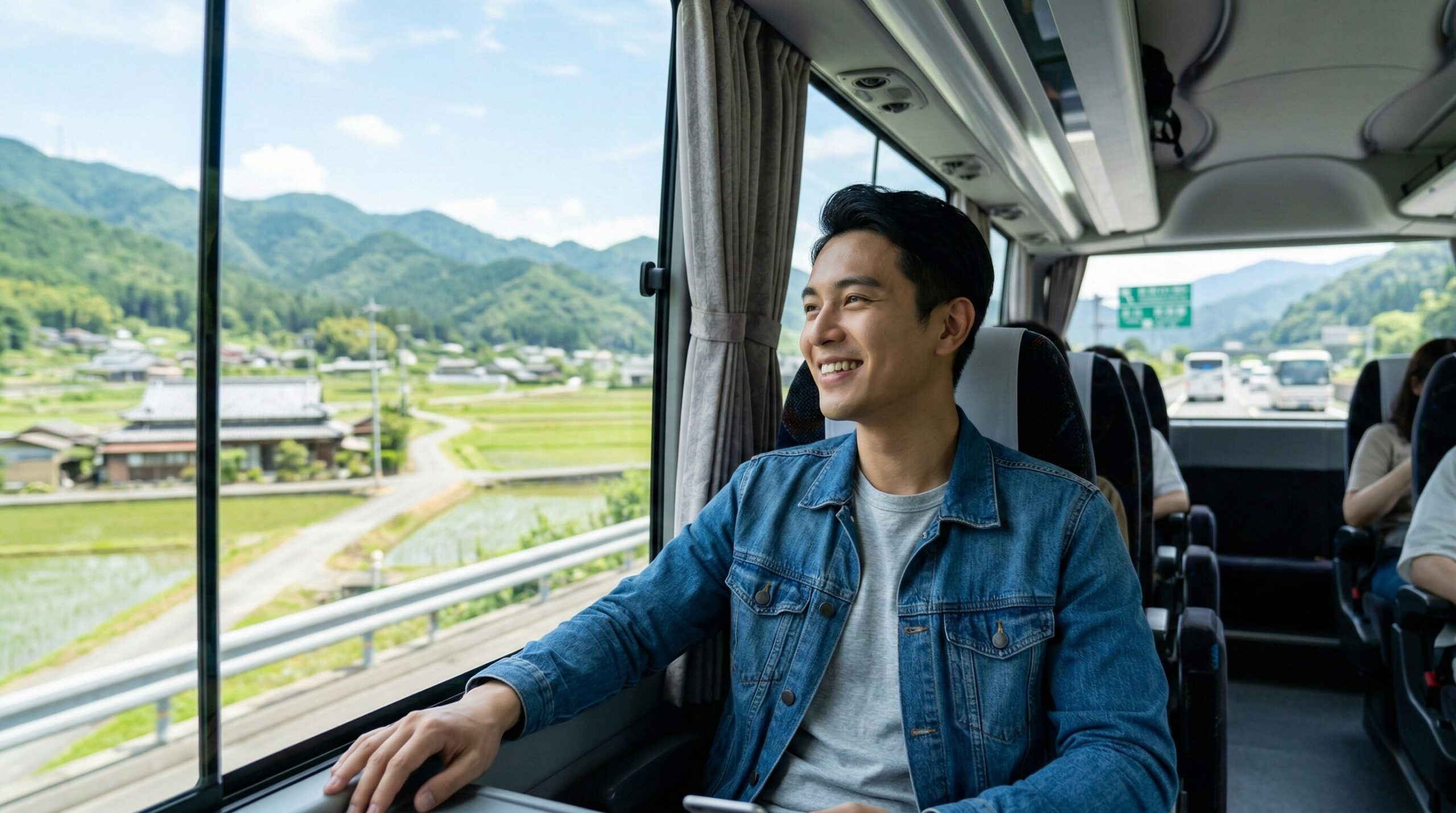
- The Day Bus (Chuko-bin): These buses operate on shorter, regional routes, typically taking between two to five hours. They are perfect for connecting major transit hubs to deeper, more isolated prefectures. You get a massive panoramic window to watch the rural landscape unfold.
- The Night Bus (Yako-bin): This is the ultimate budget traveler’s tool. Night buses cover massive distances (e.g., Tokyo to Osaka, or Kyoto to Hiroshima) while you sleep. By taking a night bus, you are simultaneously paying for your transportation and saving the cost of a night’s hotel accommodation.
The Seating Configurations
When booking a ticket, you will be presented with different seating classes. The price directly reflects the configuration.
- 4-Row Seating (Yon-retsu): The standard layout, with two seats on the left, an aisle, and two seats on the right. This is the cheapest option. It is perfectly fine for a daytime journey, but it can feel cramped for a tall adult on an overnight trip.
- 3-Row Independent Seating (San-retsu Dokuritsu): This is the sweet spot for overnight travel. There are only three seats across the width of the bus, separated by two aisles. You have no seat neighbor. The seats recline deeply, feature thick leg rests, and almost always include a privacy curtain you can pull entirely around your seat, creating a tiny, dark cocoon.
- Premium 2-Row Seating: Found on luxury routes, these resemble first-class airline pods. While not strictly “cheap travel,” they are still significantly less expensive than a bullet train ticket and offer extraordinary comfort.
Onboard Amenities
The Japanese dedication to hospitality extends to the highway bus.
- Restrooms: Almost all long-distance buses are equipped with a small, immaculate restroom located at the rear or down a small staircase in the middle of the bus.
- Connectivity: Free Wi-Fi and individual power outlets (or USB ports) at every seat are the standard, allowing you to charge your devices and finalize your itinerary on the road.
- Comfort Items: On night buses, operators often provide a freshly laundered blanket, a neck pillow, and disposable slippers so you can remove your shoes.
Practical Examples and Recommendations: Routes Worth Taking
Understanding how to use highway buses for cheap travel becomes exciting when you realize the specific routes that offer immense value and unique scenery.
The Kyushu Cross-Country: Fukuoka to Oita
If you are exploring the southern island of Kyushu, the train network can sometimes be indirect. Taking a highway bus from the urban center of Fukuoka directly into the hot spring valleys of Oita Prefecture is a prime example of transit done right.
- The Journey: The bus leaves the dense cityscape of Hakata and steadily climbs into the lush, emerald-green peaks of the Yufu mountains. It is a stunning, winding ascent.
- The Advantage: While direct limited express trains efficiently connect you to the central train stations, the highway bus can offer a more door-to-door experience. The highway bus descends from the mountains and often makes stops directly at the entrance of major onsen (hot spring) resorts or hidden, steaming cobblestone streets. It is generally cheaper than taking the train, and depending on your final destination, can be far more direct.
The Golden Route Alternative: Tokyo to Kansai (Kyoto/Osaka)
This is the most heavily trafficked corridor in Japan. A one-way Shinkansen ticket costs around 14,000 Yen and takes roughly two and a half hours.
- The Journey: A night bus leaves Shinjuku Station around 11:00 PM and arrives at Kyoto Station at 6:00 AM.
- The Advantage: If you book a standard 4-row seat in advance, this ticket can cost as little as 3,500 Yen. Even a luxurious 3-row independent seat rarely exceeds 8,000 Yen. You save a massive amount of money, save a night of hotel costs, and wake up just as the ancient capital’s temples are opening their gates.
The Alpine Gateway: Tokyo to the Japanese Alps
Reaching the deep mountainous regions of Nagano, Gifu, or Toyama by train often involves a mix of bullet trains and slow local lines.
- The Journey: Direct highway buses run from Tokyo into the heart of the Japan Alps, dropping you at trailheads or the center of historic post towns.
- The Advantage: It eliminates the stress of navigating complicated rural train transfers with heavy luggage. You simply load your bags into the trunk in Tokyo and step out into the crisp mountain air.
Tips for Travelers: Mastering the Unwritten Rules
To truly leverage how to use highway buses for cheap travel, you need to know how to book them, what to pack, and how to behave once on board. Japan operates on a strict code of public etiquette, and the confined space of a bus heightens these expectations.
Navigating the Booking Process
Gone are the days when you needed a Japanese speaker to call a local terminal.
- Willer Express: This is the most tourist-friendly bus operator in Japan. Their website is fully in English, user-friendly, and offers a “Japan Bus Pass” which allows for incredibly cheap multi-day travel if you plan to cover long distances.
- Japan Bus Online: An aggregator site that pools together dozens of local bus companies. It is an excellent tool for finding niche routes that connect smaller towns.
- The Timing: Book early. Japanese locals rely heavily on these buses. Fares operate on a dynamic pricing model; booking a month in advance guarantees the lowest rate, while booking the day before a national holiday guarantees a premium price or a sold-out bus.
The Magic of the Service Area (SA)
When you take a day bus, or before the lights go out on a night bus, the driver will make scheduled stops at highway Service Areas (abbreviated as SA or PA for Parking Area). Do not stay on the bus.
- The Culture: A Japanese Service Area is not a grim, fluorescent-lit gas station. It is a culinary and cultural destination.
- The Food: They feature massive food courts serving high-quality local specialties. If your bus is passing through Shizuoka, the SA will sell fresh green tea and seafood. If you are passing through Kobe, you might find premium beef croquettes.
- The Rule of Time: The bus driver will display a small clock on the dashboard indicating exactly what time the bus will depart. Japanese buses do not wait for stragglers. If the clock says 14:15, be in your seat at 14:13.
Luggage Logistics
Unlike trains, where you must wrestle your luggage onto overhead racks or behind seats, highway buses are remarkably simple.
- The Trunk: You are generally allowed to store one large suitcase (similar to standard airline checked baggage dimensions) in the storage bay beneath the bus. The driver or terminal staff will tag your bag and give you a claim receipt.
- The Cabin: You can bring a small daypack or purse to your seat. Keep it compact, as floor space is limited, especially in 4-row seating.
The Etiquette of Reclining
Reclining your seat on a Japanese highway bus involves a specific, polite ritual.
- The Practice: You do not simply smash the button and throw your weight backward. You must turn slightly, catch the eye of the person sitting behind you, and offer a quiet “Taoshite mo ii desu ka?” (May I recline my seat?) or simply offer a slight bow of the head as a gesture of intent. It is a small moment of mutual respect that sets the tone for a peaceful journey.
The Rule of Silence
Once a night bus departs its final pickup location, the driver makes an announcement, and the cabin lights are completely extinguished.
- The Practice: From this moment on, total silence is expected. This is not the time to have a whispered conversation with your travel partner. Keep your phone screen dimmed to the lowest setting or, better yet, put it away. The bus transforms into a rolling dormitory, and respecting the sleep of your fellow passengers is paramount.
Conclusion: The Reward of the Slower Path
The Shinkansen will always be a symbol of Japan’s incredible efficiency. But efficiency is not the only metric of a good journey. Knowing how to use highway buses for cheap travel does more than just protect your bank account. It forces you to slow down. It pulls you off the elevated tracks and puts you at eye level with the real Japan.
You see the neon glow of suburban pachinko parlors, the mist rising off rural rice paddies at dawn, and the quiet, everyday rhythm of the country in motion.
When you wake up in the morning, pull back the privacy curtain, and see the silhouette of a mountain range you never knew existed, you realize the value of the slower path. It’s time to go beyond the ordinary, skip the crowded tourist corridors, and let the quiet highways guide you.
Travel deeper. Explore the real Japan.