
For decades, Initial D has been more than just a racing manga and anime series. It became a cultural gateway into Japan’s mountain roads, drifting competitions, rural nightlife, and the world of touge driving.
At the center of this world is Gunma Prefecture, whose winding roads, misty forests, and quiet mountain towns provided the real-world inspiration for the series’ most iconic battle scenes.
As the series grew in popularity overseas, fans began traveling to Gunma to walk in the footsteps of Fujiwara Takumi, drive the slopes of Mount Akina (Haruna), eat at real-life tofu shops, and visit roadside shrines and cafés seen in the anime.
Today, an Initial D Pilgrimage in Gunma is considered a bucket-list experience not only for fans of the franchise, but also for car enthusiasts and travelers eager to explore an overlooked region of rural Japan.
This full guide breaks down the real Initial D locations, how to reach them, suggested routes, car rental tips, themed shops, nearby attractions, and practical travel advice to help you plan a seamless and meaningful Initial D Pilgrimage in Gunma.
Key Details and Breakdown
Why Gunma Matters to Initial D
Gunma Prefecture is located northwest of Tokyo. It’s a mountainous region with:
- Empty roads at night
- Sharp hairpin turns
- Elevation changes
- Thick forests
- Hot springs (onsen)
- Lake towns and ski resorts
These qualities shaped the world of Initial D, with many real towns and roads directly referenced (sometimes under fictional names):
| Fictional Name | Real Location |
| Mount Akina | Mount Haruna |
| Akagi | Mount Akagi |
| Myogi | Mount Myogi |
| Irohazaka (not Gunma but referenced) | Nikko, Tochigi |
| Fujiwara Tofu Shop | Fujinoya Tofu Shop (Original demolished / Relocated to Museum) |
Most key driving battles and character backstories trace back to these mountains and their driving culture.
Core Initial D Pilgrimage Locations
The following areas are essential stops during an Initial D Pilgrimage in Gunma.
Mount Haruna (Mount Akina)
Mount Haruna is the most iconic location in Initial D because it serves as the real-world model for Mount Akina, Takumi’s home mountain.
Notable features matching the series:
- Long downhill slopes
- Hairpin corners
- Guardrails and forested views
- Haruna Shrine and Lake Haruna at the summit
Several recognizable bends and sections exist, including the “5 consecutive hairpins” area that became legendary in the series.
Lake Haruna
Located at the top of Mount Haruna, this tranquil lake appears frequently in Initial D scenic shots.
Why it’s important:
- Fujiwara’s gas station scenes imply proximity to Lake Haruna
- Many fans photograph the lake with rental cars
- It offers cafés, boating, and resting spots
In winter, the lake freezes and becomes a popular ice fishing location.
Fujiwara Tofu Shop (The Real Model & Museum)
The real tofu shop that inspired the Fujiwara family business was called Fujinoya Tofu Shop in Shibukawa City. However, due to city planning, the original building was demolished in 2009.
Where to see it now:
- Original Location (Shibukawa City): The original shop no longer exists. Fans can visit the lot, but it is now a residential area with no traces of the shop.
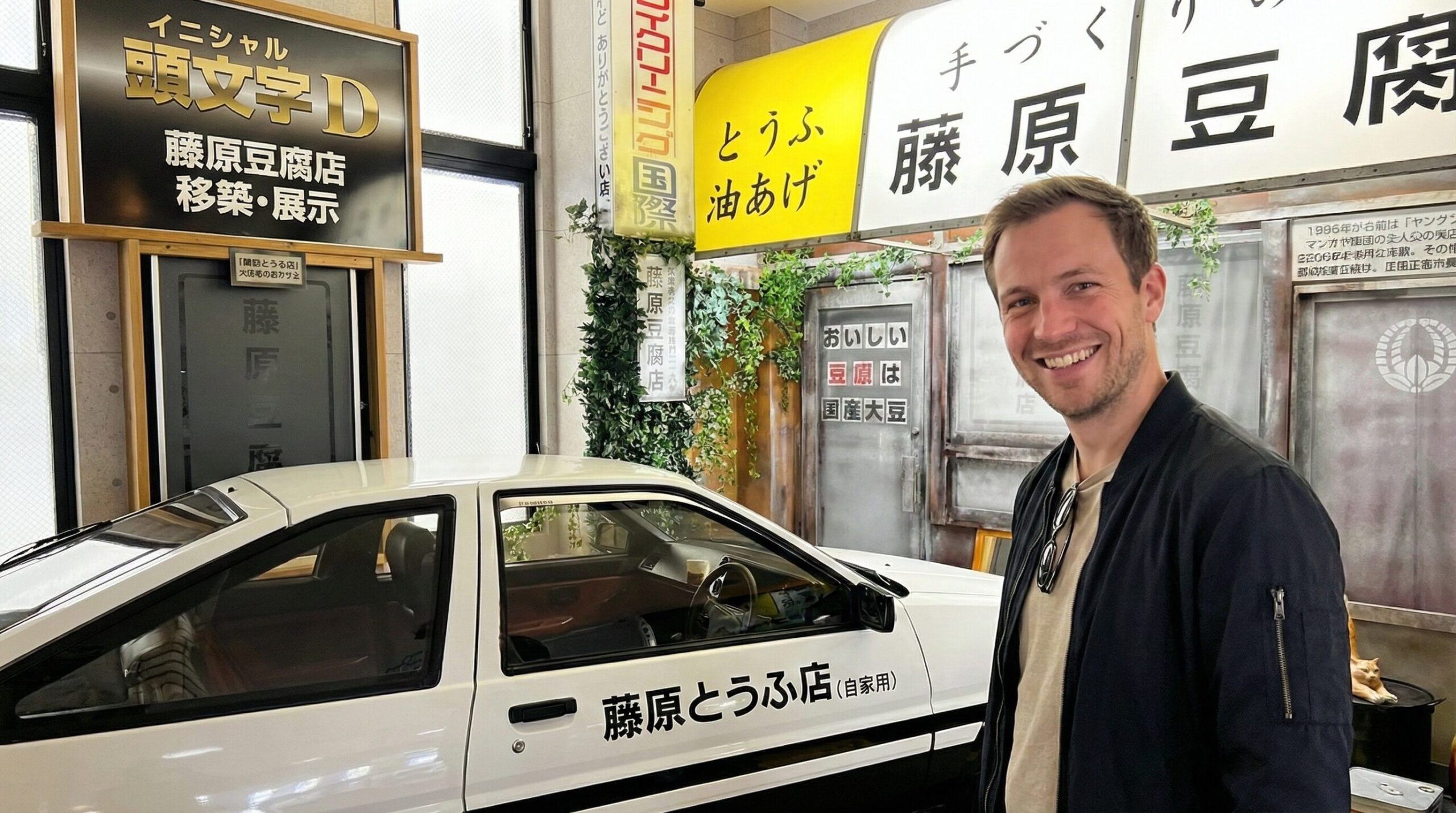
- Ikaho Toy, Doll & Car Museum (Yokota, Yoshioka Town): The original shop front, iconic sign, and equipment were preserved and relocated here.
Important notes:
- To see the actual “Fujiwara Tofu Shop” storefront and buy themed merchandise (stickers, snacks), you must visit the Ikaho Toy, Doll & Car Museum.
- The museum also displays the actual AE86 used in the live-action movie and other classic cars.
Mount Akagi
Mount Akagi serves as the home turf of the RedSuns and Takahashi Ryosuke.
Road features:
- Wide multi-lane sections
- Fast sweeping curves
- Hill climbs and descents
Fans often drive or photograph Akagi Skyline, a scenic roadway with panoramic views.
Mount Myogi
Mount Myogi is known for its jagged rock formations and serves as home course for the Myogi NightKids.
Characteristics:
- Dangerous turns and steep grades
- Spectacular rock pillars
- Sharp hairpin roads
It’s a popular hiking and photography spot in addition to its touge heritage.
Nearby “Bonus” Locations for Fans
Even though not in Gunma, these nearby spots deepen the pilgrimage:
- Irohazaka (Nikko, Tochigi) — famous hairpins, referenced in many car media
- Usui Pass (Gunma–Nagano border) — known in car culture, steep old highways
Driving Culture & Safety Context
Before diving into driving, it’s important to understand road culture around an Initial D Pilgrimage in Gunma.
Reality vs Anime
In reality, Japanese touge roads are:
- Patrolled by police
- Used by locals
- Not drifting circuits
Local governments discourage dangerous driving; drifting on public roads is illegal.
Legal Driving Expectations:
- Obey lane discipline
- Pull over for cars behind
- Avoid night racing
- Park only in designated areas
- Watch for wildlife
Most pilgrims now enjoy routes slowly, focusing on scenery, photography, and nostalgia.
Practical Examples & Recommendations
Here’s how to actually conduct an Initial D Pilgrimage in Gunma — from transportation options to sample itineraries.
Transportation: How to Reach Gunma
From Tokyo to Gunma by Train
Gunma is accessible via major JR routes.
Fastest options:
- Shinkansen (Tokyo → Takasaki)Time: 50–60 minutesCost: ~¥5,000 one way
Local trains (Budget option):
- Ueno → Takasaki via JR Takasaki LineTime: 1.5–2 hoursCost: ~¥2,300
From Takasaki or Shibukawa, buses and taxis can reach mountain routes.
Self-Driving (Recommended)
A rental car makes Initial D route exploration much easier.
Rental Options:
- Times Car Rental
- Toyota Rent-a-Car
- Nissan Rent-a-Car
- Budget Japan
- Niconico Rental (budget-friendly)
Requirements for foreigners:
- International Driving Permit (IDP) from Geneva Convention countries, OR
- Official Japanese translation of license (for some countries like Switzerland or Taiwan)
Car rental cost estimate:
- Small car: ¥6,000–¥10,000/day
- Sports models (if available): ¥15,000–¥30,000/day
Sample Initial D Pilgrimage Routes
Here are sample day plans depending on time and interest.
1-Day Route (Core Experience)
Ideal for short stays.
Route Stops:
- Takasaki Station (car rental)
- Mount Haruna road drive
- Photos at 5 hairpins
- Lake Haruna lunch stop
- Ikaho Toy, Doll & Car Museum (To see the Fujiwara Tofu Shop display)
- Return to Takasaki Station
Expected Duration: 6–8 hours
2-Day Route (Expanded Pilgrimage)
Day 1
- Mount Haruna
- Lake Haruna
- Ikaho Toy, Doll & Car Museum
- Ikaho Onsen (overnight stay)
Day 2
- Mount Akagi Skyline
- Akagi Shrine
- Mount Myogi cliffs
- Takasaki Daruma Temple
Ideal for deeper exploration and hot spring relaxation.
3-Day Route (Full Car Culture Experience)
Add:
- Nikko’s Irohazaka (Day 3)
- Usui Pass observation stops
- Tomioka Silk Mill UNESCO site
- Kusatsu Onsen (one of Japan’s best hot springs)
This connects tourism, culture, and car history for a rich experience.
Food & Themed Experiences
At Ikaho Toy, Doll & Car Museum
Since the original shop is gone, the museum shop is the place to find:
- Tofu-themed snacks (packaged in Fujiwara Tofu boxes)
- Character goods
- Stickers & keychains
- Photography spots with the real signage
Availability varies by season and events.
Local Gunma Foods to Try
Gunma’s specialties include:
- Mizusawa Udon (Ikaho area)
- Tonkatsu & Pork dishes
- Konnyaku (konjac)
- Gunma apples & pears
- Local sake (Haruna breweries)
Several roadside shops serve simple but hearty meals — very “Initial D” atmosphere.
Onsen Towns for Overnight Stays
For those extending their Initial D Pilgrimage in Gunma, nearby hot spring towns offer rest between drives:
- Ikaho Onsen (closest to Haruna)
- Shima Onsen
- Kusatsu Onsen
- Minakami Onsen
Many inns offer dinner + breakfast packages.
Photography & Scenic Spots
Recommended photo stops:
- Hairpin sections of Mount Haruna
- Lake Haruna boat dock
- Replica Tofu Shop display (at the Museum)
- Myogi rock formations
- Akagi Skyline viewpoints
Drone use may require permission in certain areas.
Tips for Travelers
To make your Initial D Pilgrimage in Gunma smoother, safer, and more enjoyable, consider these practical tips.
Best Seasons for Visiting
Spring (March–May):
- Mild weather
- Cherry blossoms around Lake Haruna
Summer (June–August):
- Lush forests
- Clear mountain roads
Autumn (September–November):
- Stunning foliage
- Peak photography season
Winter (December–February):
- WARNING: Roads will be icy and often closed.
- Lake Haruna freezes.
- Snow tires are MANDATORY. Do not attempt mountain driving with normal tires.
Best overall: Autumn, followed by Spring
Safety Tips
- Do not drift on public roads.
- Watch for cyclists & hikers.
- Avoid nighttime mountain driving if inexperienced.
- Winter Caution: If visiting in winter, ensure your rental car has snow tires (studless tires). It is dangerous and illegal to drive without them in icy conditions.
- Do not block blind curves for photography.
- Expect narrow two-way traffic.
Japanese mountain roads are scenic but not racetracks.
Car Rental Tips
- Reserve in advance during weekends.
- Request ETC card for highway toll discounts.
- Consider full insurance for stress-free travel.
- Choose compact cars for tight mountain roads.
- Sports cars are rarely available but occasionally rentable in Tokyo for single-day use.
Navigation Tools
Useful apps & tools:
- Google Maps
- Yahoo! Car Navigation (very popular locally)
- Japan Travel by NAVITIME
- Gaijin Highway Guide (web resources)
- ETC toll machine for expressways
Public Transportation Alternatives
For non-drivers:
- Buses connect Takasaki ↔ Ikaho ↔ Haruna
- Taxis available but costly
- Tours sometimes offered via travel agencies
However, driving provides the most authentic pilgrimage experience.
Etiquette & Local Culture
Gunma is not a tourist-saturated region. Respecting local communities is key:
- Keep noise low at night.
- Don’t litter in forest roads.
- Park only in designated spaces.
- Support local businesses when possible.
- Do not trespass on private property (especially around the former tofu shop location in residential areas).
This ensures the pilgrimage remains welcome for future travelers.
Conclusion
An Initial D Pilgrimage in Gunma is more than just a trip for anime fans — it’s a journey through a lesser-known slice of Japan shaped by mountain culture, road engineering, small towns, and a deep automotive heritage.
Fans come for the drifting nostalgia and street racing iconography, but they often leave with memories of misty lakes, quiet shrines, friendly locals, and steaming bowls of udon after a long day of driving.
Whether you rent a car and tackle the mountain passes, quietly photograph Lake Haruna at sunrise, or visit the preserved legacy of the tofu shop at the museum, you’ll gain a deeper understanding of the world that shaped Initial D.
Gunma rewards those who explore beyond the surface — the same way the series elevated an ordinary tofu delivery route into legend.
With proper planning, respect for local communities, and an appreciation for both anime and the real landscapes behind it, traveling this route becomes a pilgrimage worth taking — not just for fans, but for anyone seeking an authentic and memorable experience in rural Japan.