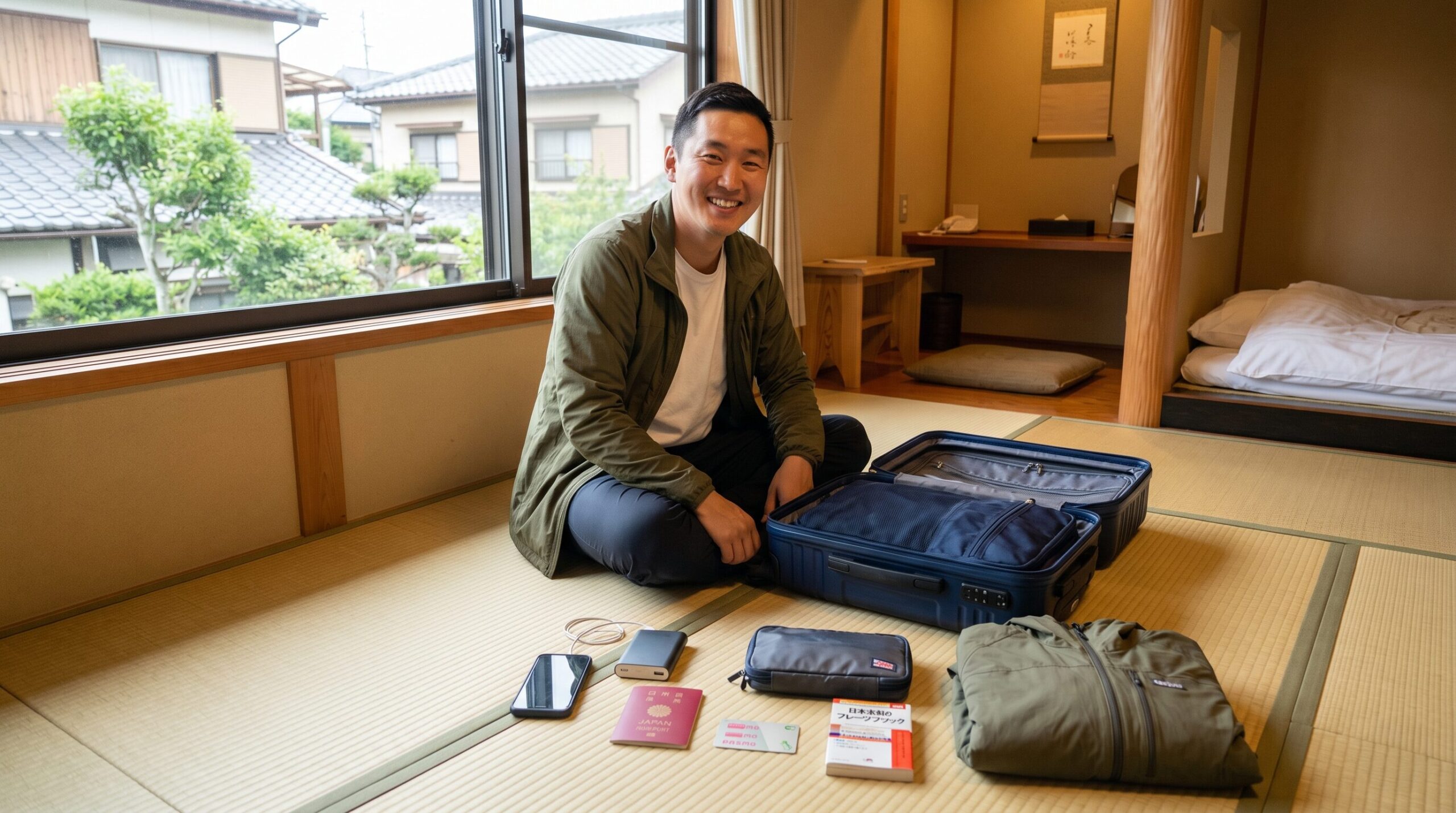
The rhythmic clatter of hard-wheeled luggage dragged across the historic cobblestones of Kanazawa or the narrow, lantern-lit alleys of Kyoto is a decidedly modern sound. For the uninitiated traveler, packing for Japan often means preparing for every possible contingency, resulting in heavy bags that become a physical and mental burden. But true travel—the kind that moves beyond superficial sightseeing and seeks out the quiet, enduring heart of a country—requires a different approach. When you leave the sprawling metropolis of Tokyo to wander the ancient cedar-lined trails of the Kumano Kodo or navigate the steep, narrow staircases of a centuries-old machiya townhouse, your luggage dictates your freedom. Creating the perfect Japan packing list: essentials for exploring the real Japan is not merely about ticking boxes on a checklist. It is an exercise in mindful preparation. It is about understanding the unique spatial constraints of Japanese infrastructure, respecting local customs regarding dress and footwear, and equipping yourself to move seamlessly between the hyper-modern and the deeply traditional. This guide is designed for the traveler who wants to step off the shinkansen and onto a local, one-car train heading into the mountains. We will break down the philosophy of packing for Japan, detail the practical items that will transform your journey, and explain the logistical secrets that allow locals to travel with effortless grace.
Key Details and Breakdown: The Philosophy of Japanese Travel
Before we discuss what to put inside your suitcase, we must understand the environment that suitcase will travel through. Packing for the real Japan is governed by three unyielding realities: space, seasons, and the threshold.
The Reality of Space
Japan is a masterclass in spatial efficiency. Hotel rooms, particularly in bustling cities, are notoriously compact. Rural trains and local buses often lack dedicated luggage racks. Even the grandest, most atmospheric traditional ryokans (inns) feature delicate tatami floors that can easily be damaged by heavy, oversized suitcases. Navigating this world requires luggage that is maneuverable, compact, and easily lifted above your head onto a train shelf.
The Reality of the Threshold (Genkan)
Perhaps the most defining architectural feature in Japan is the genkan—the sunken entryway of a home, temple, ryokan, or traditional restaurant. This is the absolute boundary between the outside world and the clean interior. You will be taking your shoes off and putting them back on multiple times a day. If your footwear requires sitting down and spending two minutes unlacing and relacing, you will quickly become frustrated, and you will inevitably block the flow of foot traffic.
The Reality of Seasons and Topography
Japan stretches over 3,000 kilometers from the sub-arctic north of Hokkaido to the subtropical islands of Okinawa. Even if you are traveling in a single region, you will experience micro-climates. You might sweat through the crushing humidity of a Kyoto afternoon, only to shiver that same evening when you retreat to a temple lodging (shukubo) high on the sacred Mount Koya. Layering is not just a recommendation; it is a survival tactic.
Practical Examples and Recommendations: The Core Packing List
With the philosophy established, let us build your definitive Japan packing list: essentials for exploring the real Japan. This list prioritizes versatility, cultural respect, and lightweight mobility.
The Right Luggage
Leave the massive expedition-sized trunks at home.
- The Medium Roller: A hard-shell, four-wheeled suitcase (around 24 inches or 60 liters) is the ideal maximum size. It fits in train overhead racks, but please note that you will need to seek out a “large” station coin locker, as it will not fit in the standard smaller ones. Four wheels are crucial for gliding silently alongside you, rather than dragging heavily behind.
- The Collapsible Daypack: You need a lightweight, unostentatious daypack. When you forward your main luggage to your next city, this backpack will carry your overnight essentials for side trips to rural hot spring towns.
Footwear: The Foundation of the Journey
You will walk more in Japan than you anticipate—often 15,000 to 20,000 steps a day.
- The Slip-On Walking Shoe: This is the single most important item you will pack. Invest in high-quality, supportive sneakers or walking shoes that can be slipped on and off without using your hands. Brands featuring elastic laces or laceless designs are invaluable at temple entrances and traditional dining rooms.
- Thick, High-Quality Socks: Because your shoes will frequently be removed, your socks will be on public display. Pack clean, high-quality socks without holes. In autumn and winter, thick wool socks are essential, as traditional wooden floors in temples and machiya offer little insulation against the cold.
Clothing: Versatility and Respect
Japanese fashion leans heavily toward the conservative, tailored, and neutral. Blending in slightly shows respect and opens doors.
- Breathable Base Layers: Regardless of the season, moisture-wicking base layers (like Merino wool or Uniqlo’s AIRism/HEATTECH lines) are vital. They keep you cool in the oppressive summer humidity and retain body heat during crisp autumn temple illuminations.
- Modest Outerwear: Avoid overly revealing clothing. When visiting rural shrines, local neighborhoods, or working artisanal villages, shoulders and knees should generally be covered. Pack lightweight, wrinkle-resistant linen trousers for summer, and dark, tailored jeans or slacks for cooler months.
- The “Nice” Outfit: Even in rural areas, a high-end kaiseki dinner demands a certain level of presentation. Pack one outfit that easily transitions to evening wear—a collared shirt or a smart, understated dress.
- What NOT to Pack (Sleepwear): If your itinerary includes ryokans or traditional hotels, do not pack bulky pajamas. These accommodations universally provide yukata (cotton robes) or samue (two-piece loungewear) for you to wear during your stay, even to dinner and the communal baths.
Tech & Tools: The Analog-Digital Bridge
You need tools to navigate the high-tech transit systems and the analog rural economies.
- The Coin Purse: While Tokyo is increasingly cashless, rural Japan still runs on physical currency. You will accumulate an astonishing number of coins from local buses, vending machines, and small udon shops. A dedicated, wide-mouthed coin purse will save you from frantically digging through your pockets at the register.
- High-Capacity Power Bank: Navigating with GPS, translating menus with your camera, and taking photos will drain your phone battery by mid-afternoon. Finding public outlets is rare and often culturally frowned upon. A reliable power bank is non-negotiable.
- A Handkerchief (Tenugui): Public restrooms in Japan, particularly in train stations and parks, are impeccably clean but rarely provide paper towels. Carrying a small cloth handkerchief or purchasing a traditional tenugui to dry your hands is the local standard.
Toiletries and Medicine
Japan has excellent pharmacies, but finding exact Western equivalents can be difficult due to language barriers and different pharmaceutical regulations.
- Personal Medications: Bring an adequate supply of your prescription medications. (Note: Always check Japan’s strict customs laws regarding medications, especially stimulants and certain painkillers, which may require prior authorization).
- Deodorant: Japanese deodorants are formulated differently and are generally much weaker than Western brands. Bring your preferred brand from home.
- What NOT to Pack (Basic Toiletries): Do not weigh down your bag with shampoo, conditioner, body wash, or toothbrushes. Japanese hospitality is legendary; even budget accommodations provide high-quality toiletries as a standard courtesy.
Tips for Travelers: The Art of Luggage Logistics
Having the right items is only half the equation. The true secret to the Japan packing list: essentials for exploring the real Japan is knowing how to manage your luggage once you arrive.
Master the Takuhaibin (Luggage Forwarding) System
This is the greatest travel hack in Japan. Companies like Yamato Transport (identifiable by their black cat logo) offer overnight luggage delivery between hotels, airports, and convenience stores across the entire country for a remarkably low fee (usually under $20 USD per bag).
- The Strategy: Instead of wrestling your suitcase onto three different trains to reach a remote mountain ryokan in Gifu, use takuhaibin. Send your large suitcase directly from your Tokyo hotel to your Kyoto hotel. Pack your daypack with one night’s clothes and your camera, and travel to the mountains completely unburdened. Your main luggage will be waiting safely in your Kyoto room the next day.
Utilize the Coin Locker Network
Every major train station, and most minor ones, feature banks of coin lockers.
- The Strategy: If you want to stop in a historic town like Kurashiki for the afternoon en route to Hiroshima, do not drag your bag through the canal district. Stash it in a station locker. Note that large lockers fill up quickly. If they are full, utilize apps like Ecbo Cloak, which allow you to reserve luggage space in local cafes or post offices.
Understand Shinkansen Luggage Rules
Japan Railways implemented strict rules regarding oversized baggage on specific bullet train lines (Tokaido, Sanyo, Kyushu, and Nishi-Kyushu Shinkansen).
- The Strategy: On these specific lines, if your suitcase’s total dimensions (height + width + depth) exceed 160cm (63 inches), you must reserve a specific “seat with an oversized baggage area” in advance. If you board without this reservation, you will be heavily fined and your bag relocated. This is yet another reason to pack a medium-sized roller and rely on forwarding services. Please note that other routes, like the Tohoku or Hokuriku Shinkansen, do not have this requirement.
The Etiquette of Space
When riding local trains or buses with your luggage, situational awareness is crucial. Never place your bag on the seat beside you. Keep it tightly secured between your legs or directly in front of you. If you are wearing a backpack on a crowded train, local etiquette dictates that you take it off and hold it down by your legs or place it on the overhead rack to avoid hitting others as the train sways.
Conclusion
To travel well is to travel with intention. The items you choose to bring with you shape the way you interact with your destination. A heavy, disorganized suitcase anchors you to the main roads and the crowded tourist corridors. It creates a physical barrier between you and the subtle, nuanced experiences that define authentic travel. Curating your Japan packing list: essentials for exploring the real Japan is the first step in practicing the art of observation. By packing lightly, choosing the right footwear, and utilizing the country’s brilliant logistical networks, you are freeing yourself from the mundane stress of transit. You are making space. Space to notice the delicate scent of incense drifting from a neighborhood shrine. Space to comfortably sit on a tatami mat and converse with a local artisan. Space to wander down an unmarked alleyway simply because the lantern light looks inviting. It is time to leave the unnecessary baggage behind, step over the threshold, and walk lightly into the Japan that locals know best.