
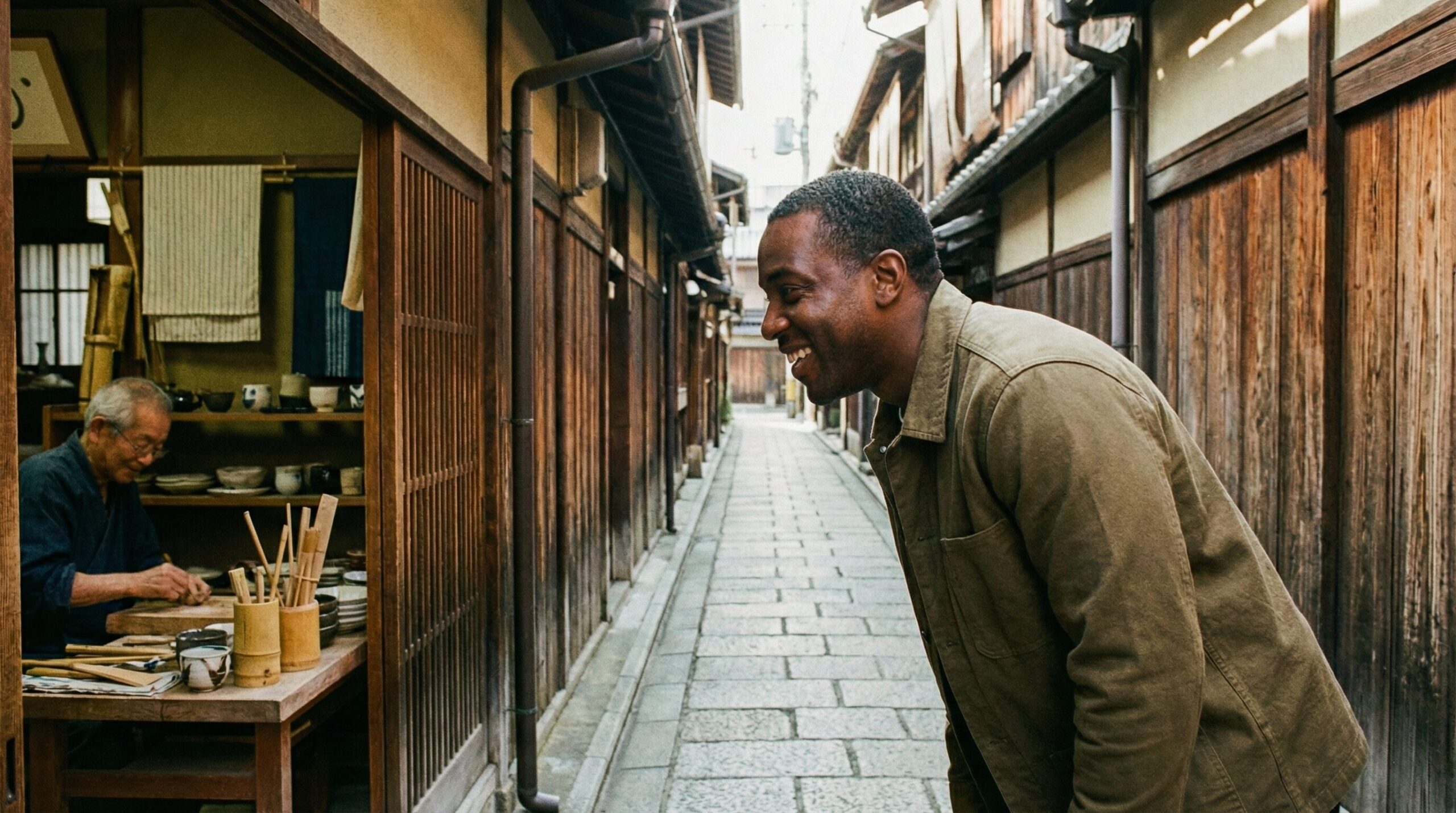
Kyoto is often described through its grand images: golden temples, vermilion torii gates, and crowds moving through famous streets like Gion or Arashiyama. But beyond these well-trodden paths lies another Kyoto—one that reveals itself slowly, through narrow lanes, wooden townhouses, and small workshops where tradition is practiced quietly, day after day.
Kyoto’s Hidden Craft Shops are not designed to impress at first glance. Many have no English signs. Some look like private homes. Others require you to slide open a wooden door. Look for a “Noren” (curtain) or a small sign indicating it is a shop, then gently announce your presence when entering to ensure you aren’t walking into a private residence.
Yet behind these doors are artisans preserving skills that have been passed down for centuries: pottery shaped by hand, paper made from mulberry fibers, textiles dyed one thread at a time. This article is an invitation to explore that quieter side of Kyoto. We’ll break down what makes these craft shops special, where to find them, and how to visit respectfully.
If you’re looking to go beyond souvenirs and connect with the living culture of Japan, Kyoto’s hidden craft shops offer exactly that.
- Key Details and Breakdown: What Makes Kyoto’s Hidden Craft Shops Unique
- Practical Examples and Recommendations
- Tips for Travelers Exploring Kyoto’s Hidden Craft Shops
- Conclusion: Why Kyoto’s Hidden Craft Shops Matter
Key Details and Breakdown: What Makes Kyoto’s Hidden Craft Shops Unique
A City Built on Craftsmanship
Kyoto was Japan’s capital for over 1,000 years, and during that time it became the cultural heart of the country. Crafts here were not decorative extras—they were essential to court life, religious practice, and everyday living. Many traditional Japanese crafts still practiced today developed specifically in Kyoto, including:
- Kiyomizu-yaki pottery
- Nishijin-ori silk weaving
- Kyo-yuzen dyeing
- Washi paper making
- Bamboo craftsmanship
- Lacquerware
What sets Kyoto apart is not just the number of crafts, but the depth of specialization. One artisan might spend a lifetime mastering a single technique.
What Are “Hidden” Craft Shops?
When we talk about Kyoto’s hidden craft shops, we’re not referring to secret locations, but to places that:
- Are located off main tourist streets
- Focus on craftsmanship rather than mass sales
- Often operate as workshops + storefronts
- Attract mostly locals, collectors, or designers
These shops rarely advertise online. Some don’t even have websites. Finding them often requires curiosity—and a willingness to wander.
Where to Find Kyoto’s Hidden Craft Shops
Nishijin District: Textiles and Tradition
Nishijin is best known for its historic silk weaving industry. While large weaving halls exist, the real treasures are the small family-run studios tucked into residential streets. What you’ll find here:
- Handwoven obi fabrics
- Small galleries attached to weaving studios
- Craftspeople working on traditional looms
These shops feel more like private ateliers than stores. Many welcome visitors quietly, without sales pressure.
Gojo and Kiyomizu Area: Pottery Beyond the Famous Streets
Gojo lies just south of Kyoto’s most famous temple area. While the main avenue (Gojo-dori) is busy with traffic, head up the sloping streets of Gojozaka and Chawanzaka. Turn a corner here, and you’ll find small pottery workshops specializing in Kiyomizu-yaki.
Characteristics of hidden pottery shops:
- Limited opening hours
- Focus on functional pieces (bowls, cups, plates)
- Subtle designs meant for daily use
These are places where artisans still fire kilns on-site, often visible from the shop itself.
Demachiyanagi and Northern Kyoto: Contemporary Meets Traditional
Near Demachiyanagi, traditional craft blends with modern aesthetics. This area attracts younger artisans who respect tradition but aren’t afraid to reinterpret it. Here you may find:
- Modern ceramics inspired by classic forms
- Indigo-dyed textiles with minimalist designs
- Small galleries run by the artists themselves
These shops often bridge the gap between old Kyoto and contemporary design culture.
What You’ll Actually Buy (and Why It Matters)
Unlike souvenir shops, Kyoto’s hidden craft shops sell items meant to be used, not just displayed. Common purchases include:
- Tea cups designed for daily rituals
- Hand-dyed cloths for wrapping gifts
- Wooden utensils shaped to fit the hand
- Stationery made from handmade washi paper
Each item carries the philosophy of “yo no bi”—beauty in everyday use.
Practical Examples and Recommendations
Example 1: A Quiet Pottery Studio in Gojo
Imagine stepping off a busy street and into a silent workshop. Shelves hold dozens of slightly imperfect bowls—no two exactly the same. The artisan may:
- Explain the clay’s origin
- Describe how the glaze changes in the kiln
- Encourage you to hold and feel the piece
You’re not just buying pottery. You’re entering a conversation between maker and user.
Example 2: A Textile Atelier in Nishijin
In a narrow machiya townhouse, you might find a loom taking up half the room. The shop owner could be both designer and weaver.
What makes these visits special:
- Seeing tools in daily use
- Understanding how long a single piece takes to make
- Learning why certain patterns are disappearing
Even if you don’t buy anything, the experience itself is valuable.
Example 3: Contemporary Craft Shop in Northern Kyoto
These shops often feel like small art galleries. Prices may be higher, but so is originality.
Recommended for:
- Design-focused travelers
- People seeking modern Japanese aesthetics
- Gifts that feel personal and meaningful
Many of these artisans also exhibit internationally, making your purchase globally relevant yet locally rooted.
Price Expectations
Craft items are not cheap, but they reflect time and skill. Typical price ranges:
- Small ceramics: ¥3,000–¥6,000
- Textile items: ¥5,000–¥15,000
- Larger handcrafted pieces: ¥20,000+
Think of these as long-term companions, not disposable souvenirs.
Tips for Travelers Exploring Kyoto’s Hidden Craft Shops
Slow Down and Wander
Hidden craft shops are rarely found by following a checklist. Walk slowly through the historic alleyways and artisan districts. While exploring, please distinguish between shops and private residences to respect the locals’ privacy. Early mornings and weekdays are best.
Be Respectful Inside Workshops
Many shops double as workspaces.
- Speak softly
- Ask before taking photos
- Avoid touching items unless invited
Respect goes a long way, even without shared language.
Don’t Expect English Explanations Everywhere
Some artisans speak limited English—but communication often happens through gestures, smiles, and shared curiosity. Learning a few phrases like:
- “Kirei desu ne” (It’s beautiful)
- “Arigatou gozaimasu” (Thank you very much)
can transform the interaction.
Cash Is Often Preferred
While many shops have adopted cashless payments regarding the recent tourism boom, cash is still the safest option for small, family-run studios. Carry:
- Cash in smaller denominations
- A coin pouch for exact payments
Some traditional artisans may still prefer cash over credit cards.
Shipping Is Sometimes Available
If you’re worried about luggage space, ask politely about shipping. Some shops:
- Ship internationally
- Partner with local shipping services
- Carefully pack fragile items
Just note that not all shops offer this service.
Buy With Intention
Instead of buying many small items, consider purchasing one meaningful piece. A single handmade bowl or textile can:
- Remind you of a specific place
- Become part of your daily life
- Carry a story worth sharing
Conclusion: Why Kyoto’s Hidden Craft Shops Matter
Kyoto’s hidden craft shops are not just places to shop—they are living archives of Japanese culture. Each workshop represents centuries of accumulated knowledge, adapted quietly to the present day. By seeking out these spaces, you:
- Support local artisans
- Help preserve endangered crafts
- Experience Kyoto beyond surface-level sightseeing
In a city often defined by what is seen, these shops remind us of the value of what is felt: texture, weight, warmth, and time. If you truly want to understand Kyoto, don’t just visit its temples. Walk its backstreets. Slide open unassuming doors.
And let Kyoto’s Hidden Craft Shops show you a side of Japan that still lives, works, and creates—quietly, beautifully, and with purpose. Travel deeper. Explore the real Kyoto.