
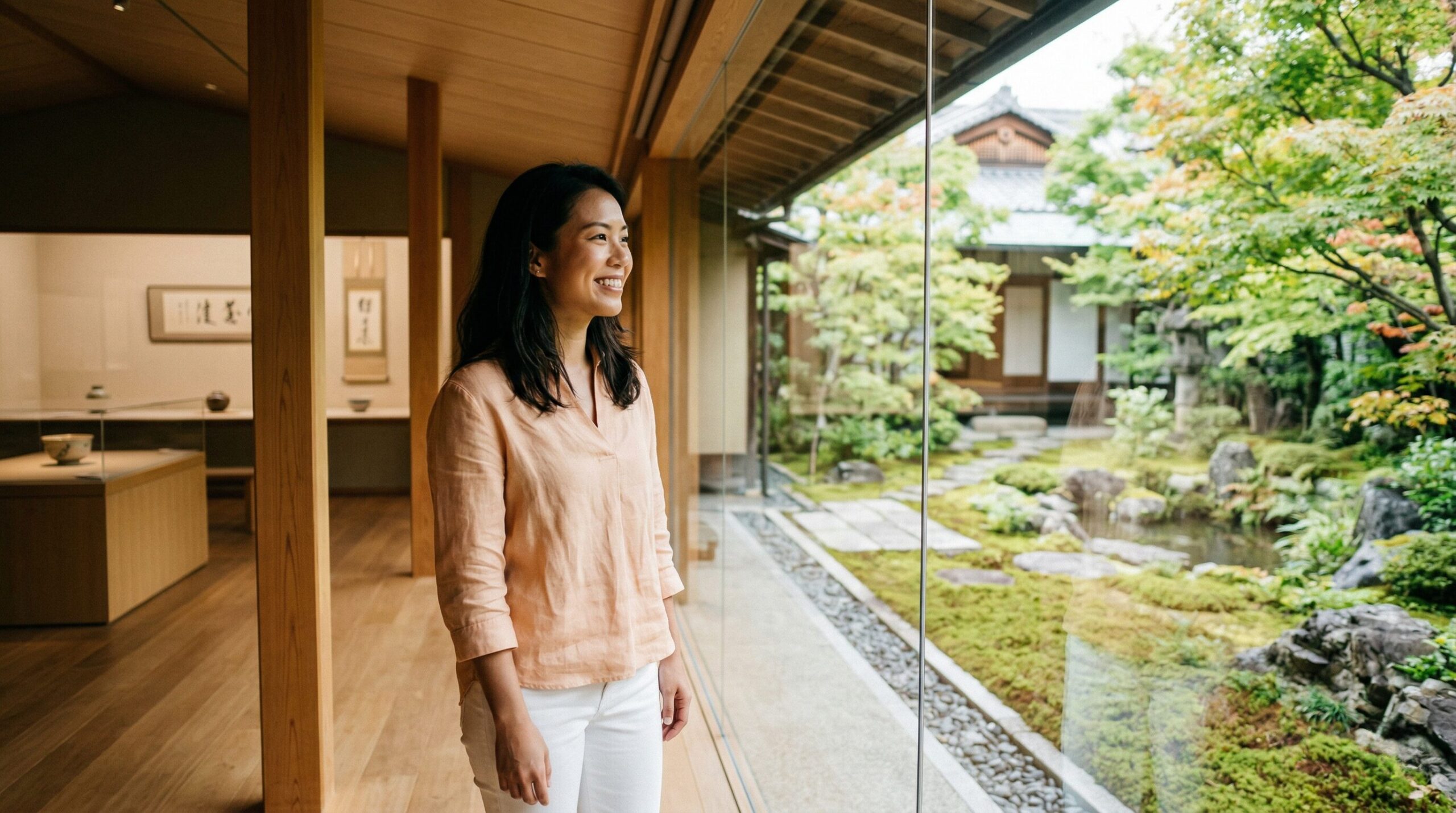
When travelers arrive in Japan’s ancient capital, their itineraries are almost entirely dictated by the monumental. The towering wooden stage of Kiyomizu-dera, the golden reflection of Kinkaku-ji, and the endless vermilion gates of Fushimi Inari command the world’s attention. Even in the realm of art, the sprawling Kyoto National Museum or the highly publicized Kyoto City KYOCERA Museum of Art draws massive, daily crowds. While these institutions are undeniably magnificent, navigating them often requires fighting through thick throngs of tour groups, making quiet contemplation nearly impossible. Yet, beyond the grand architectural achievements and the glossy pages of standard guidebooks lies a more intimate layer of the city’s cultural fabric. For centuries, Kyoto has been the undisputed heart of Japanese craftsmanship—home to generations of weavers, potters, painters, and metalworkers. The true artistic soul of the city does not solely reside in massive, climate-controlled national galleries. It lives in the meticulously preserved private studios, the converted merchant houses, and the quiet neighborhood collections that most tourists walk right past. For the returning traveler or the culturally curious, seeking out Kyoto’s lesser-known museums offers a profound shift in perspective. It is an invitation to step away from superficial, checklist sightseeing and enter the private, hushed worlds of Japanese artisans. This guide explores the hidden sanctuaries of art and history scattered across the city, allowing you to travel deeper and experience the quiet, unhurried beauty of the real Kyoto.
The Anatomy of Intimate Curation: Key Details and Breakdown
To truly appreciate Kyoto’s lesser-known museums, one must understand how they differ structurally and philosophically from their Western or national counterparts. These are not encyclopedic institutions designed to tell the entire history of the world. They are highly focused, deeply personal spaces.
When you seek out these hidden cultural pockets, you engage with several unique Japanese curatorial concepts:
- The ‘Machiya’ as a Gallery: Many of Kyoto’s most fascinating small museums are housed in traditional machiya (wooden townhouses) or historic private residences. You are not walking through a sterile white cube; you are walking across creaking wooden floors and tatami mats. The architecture provides vital, historic context to the art displayed within it.
- The Mingei Philosophy: A significant portion of Kyoto’s hidden art scene is deeply tied to the Mingei (Folk Art) movement of the 1920s and 30s. This philosophy champions the beauty of ordinary, everyday objects crafted by anonymous artisans. Small museums here often elevate simple ceramics, textiles, and woodwork to the level of high art.
- The Master’s Preservation: In Japan, when a master artisan passes away, their family or local community often preserves their studio exactly as it was. Visiting these spaces feels voyeuristic in the best possible way—you can see the dried clay on the potter’s wheel, the soot on the kiln, and the books still resting on their desk.
- The Micro-Focus: The defining characteristic of a hidden Kyoto museum is its hyper-specialization. A museum might be dedicated entirely to tin toys from the Meiji era, the complex art of cloisonné enamel, or a specific family’s lineage of Noh theater masks. This narrow focus allows for staggering depth.
Quiet Sanctuaries: Practical Examples and Recommendations
Because these institutions rarely have massive marketing budgets, they rely on word-of-mouth and the genuine curiosity of observant travelers. Here are three distinct, deeply rewarding spaces that exemplify the best of Kyoto’s lesser-known museums.
The Potter’s Life at Kawai Kanjiro’s House
Located in the historic Gojozaka pottery district, just a short walk from the crowded approach to Kiyomizu-dera, sits the former home and studio of Kawai Kanjiro (1890–1966). Kanjiro was a founding member of the Japanese Mingei movement and one of the 20th century’s most revered potters.
Highlights of a Visit:
- A Living Home: The museum is Kanjiro’s actual home, designed by the master himself in a rustic, traditional style. It has been left almost exactly as it was when he lived there. You can wander through the tatami rooms, admiring his robust, earthy ceramics casually displayed on the wooden furniture he also designed.
- The Climbing Kiln (Noborigama): The absolute highlight of the property is located in the backyard. A massive, multi-chambered climbing kiln dominates the space. Walking around this monumental brick structure, smelling the faint, lingering scent of decades of woodsmoke, connects you directly to the physical labor of his art.
- Unpretentious Peace: Kanjiro famously refused all official honors during his lifetime, including the title of “Living National Treasure,” believing his work should speak for itself. The museum reflects this humility. There are no grand velvet ropes or aggressive gift shops—just the quiet resonance of a life dedicated to creating beautiful, functional things.
The Microscopic Perfection of the Namikawa Cloisonne Museum
Tucked away in the serene Higashiyama Okazaki area, the Namikawa Cloisonne Museum of Kyoto is a testament to an art form that demands almost incomprehensible patience. It is the former residence and workshop of Namikawa Yasuyuki (1845–1927), a master of shippo (cloisonné enamel).
Highlights of a Visit:
- The Art of Shippo: Cloisonné involves soldering hair-thin silver or gold wires onto a metal base to create intricate patterns, which are then filled with colored enamel pastes and fired multiple times. The museum displays Yasuyuki’s masterpieces—vases and incense burners so detailed that they require magnifying glasses to truly appreciate the microscopic butterflies and flowers.
- The Jihei Ogawa Garden: Beyond the art, the property features a spectacular, compact stroll garden designed by the legendary landscape architect Ogawa Jihei VII. The garden seamlessly incorporates water drawn from the nearby Lake Biwa Canal.
- The Workshop View: The museum allows you to sit on the engawa (wooden veranda) where Yasuyuki’s craftsmen once worked, looking out over the garden. It is easy to imagine the absolute silence required to place silver wires a fraction of a millimeter thick onto a curved vase.
The Architectural Fusion of the Asahi Beer Oyamazaki Villa
For travelers willing to take a short, 15-minute train ride south from Kyoto Station to Yamazaki, a remarkable architectural and artistic hybrid awaits. Built in the 1920s by a wealthy businessman, the Asahi Beer Oyamazaki Villa Museum of Art sits high on a forested slope overlooking the confluence of three rivers.
Highlights of a Visit:
- Taisho-Era Romance: The main villa is a beautiful example of Taisho-era architecture, blending Western Tudor-style wood paneling with Japanese sensibilities. The upper terrace offers sweeping, panoramic views of the Kyoto basin, providing a perfect spot for quiet reflection.
- The Tadao Ando Annexes: The museum features two stunning annexes—one underground and one above ground—designed by the Pritzker Prize-winning contemporary architect Tadao Ando. Plunging into these sleek, minimalist concrete spaces creates a thrilling contrast to the historic wooden villa above.
- Monet in the Mountains: Inside Ando’s subterranean “Underground Jewelry Box” gallery, you will find a small but breathtaking permanent collection of Claude Monet’s Water Lilies. Viewing these impressionist masterpieces in a raw concrete room buried beneath a Japanese mountainside is an unforgettable, cross-cultural artistic experience.
Mindful Observation: Tips for Travelers
When exploring Kyoto’s lesser-known museums, you are often stepping into delicate, highly preserved spaces that demand a specific type of etiquette. To navigate these intimate galleries with respect and ease, keep these practical tips in mind:
- The Slip-On Shoe Strategy: Because many of these museums are historic residences, you will almost certainly be required to remove your shoes at the genkan (entryway). Do yourself a favor and wear shoes that are easy to slip on and off. Furthermore, never visit a Japanese home or traditional museum barefoot. Always wear clean, high-quality socks.
- The Strict Ban on Photography: While major Western museums often encourage photography, small Japanese museums generally strictly prohibit it to protect the art and maintain the contemplative atmosphere. Look for the “No Photography” signs. If you are unsure, default to keeping your camera in your bag. Absorb the art with your eyes, not your screen.
- Embrace the Silence: These spaces are designed for solitary reflection. If you are traveling with a partner, keep your conversations to an absolute whisper. The sound of footsteps on old wooden floorboards should be the loudest noise in the building.
- Check the Irregular Calendar: Unlike massive national institutions that are open nearly every day, small, privately run museums have idiosyncratic schedules. Many are closed on Mondays, but if Monday is a national holiday, they will close on Tuesday instead. Some close entirely during the intense heat of August or the New Year holiday. Always verify the opening hours on their official Japanese website (using your browser’s translate function) before making the journey.
- Carry Cash: While credit cards are becoming more common in Japan, many small, independent neighborhood museums still rely entirely on physical yen for their modest entry fees (usually between 500 and 1,000 yen).
Conclusion
Japan’s true artistic brilliance is rarely found by following the largest crowds. It does not always require a massive, climate-controlled atrium or a heavily marketed international exhibition. More often than not, it is found in the quiet, dusty corner of a potter’s historic workshop, in the microscopic silver wire of an enamel vase, and in the careful placement of a stone in a private courtyard garden. By dedicating time to explore Kyoto’s lesser-known museums, you move beyond the curated, superficial layer of the city’s tourism. You choose to engage with the deep, enduring dedication of the Japanese artisan. You step out of the rush of the modern world and into the meticulous, unhurried rhythm of history. It is time to go beyond the ordinary, seek out the hidden doorways in the ancient capital, and discover the profound, quiet art that the locals know best.