
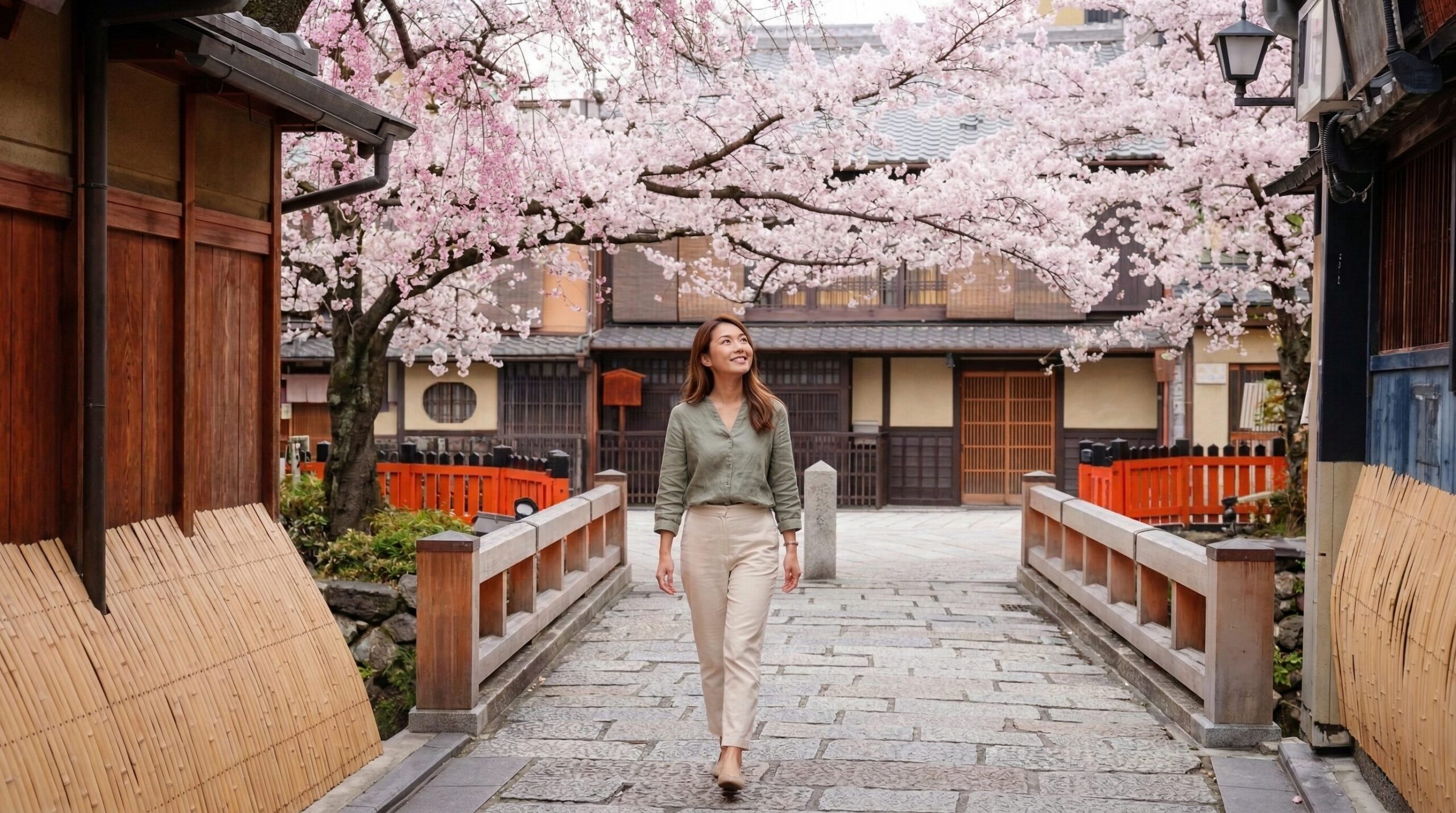
When most travelers think of Kyoto, images of the golden reflection of Kinkaku-ji or the towering green stalks of the Arashiyama bamboo grove immediately come to mind. But beyond the neon lights of the modern downtown and the dense crowds of the major heritage sites lies a quieter, more intimate city. The true essence of Japan’s ancient capital isn’t always found on a tour bus itinerary. It is found in the rhythmic sound of a local resident sweeping the street in front of their wooden home at dawn. It lives in the smell of roasted green tea drifting from a centuries-old shop, and in the small, neighborhood shrines where locals pause for a fleeting moment of prayer before starting their day. For those willing to step away from the superficial sightseeing, Kyoto’s quiet neighborhood walks offer a gateway into the everyday rhythm of local life. These are the spaces where the past and present coexist naturally, offering a deeper, more authentic experience for the mindful traveler.
The Rhythm of Local Life: The Anatomy of a Perfect Kyoto Walk
Kyoto is a city designed for walking, built on a grid system patterned after ancient Chinese capitals. Yet, the appeal of Kyoto’s quiet neighborhood walks lies not in the main thoroughfares, but in the narrow alleys known as roji. These capillary-like streets are lined with traditional machiya (wooden townhouses), characterized by their slatted wooden facades and hidden inner gardens. Walking these streets provides a sensory breakdown of Japanese culture:
- Architecture: Observing the subtle differences in machiya design, from the curved bamboo “dog fences” (inuyarai) to the small clay deity statues perched on rooftops.
- Commerce: Discovering multi-generational family businesses—tofu makers, tatami mat weavers, and traditional sweet (wagashi) artisans—operating out of small, unassuming storefronts.
- Spirituality: Encountering countless unmarked Jizo statues draped in red bibs, tucked into street corners to protect travelers and children.
To truly experience this, you must set aside the map and allow yourself to wander. Here are three practical recommendations for neighborhoods that reward slow, observant exploration.
Route 1: The Weavers’ Echoes in Nishijin
Located in the northwestern part of central Kyoto, Nishijin is the historic heart of the city’s textile industry. While tourists flock to the nearby Gion district in hopes of spotting a geisha, Nishijin remains a working, breathing neighborhood. This is one of the most rewarding areas for Kyoto’s quiet neighborhood walks. As you stroll through the labyrinth of narrow streets, the mechanical clack-clack-clack of traditional looms echoes from behind the wooden sliding doors of the machiya.
Highlights of a Nishijin Walk:
- Funaoka Onsen: Not a neighborhood walk in the strictest sense, but this century-old public bathhouse is a masterpiece of retro architecture. The surrounding streets are filled with classic, Showa-era charm.
- Cafe Sarasa Nishijin: Housed in a beautifully preserved former bathhouse covered in majestic majolica tiles, it is a perfect spot to observe local creatives and students over hand-drip coffee.
- Small Shrines: Seek out Kenkun Shrine on Mt. Funaoka for a sweeping, peaceful view of the city, completely free from the crowds of Kiyomizu-dera.
Route 2: Sakyo Ward’s Academic Quietude
If Nishijin is the hands of Kyoto, Sakyo Ward is its mind. Home to Kyoto University, this eastern area stretches from the end of the famous Philosopher’s Path up into the residential foothills of the eastern mountains. It possesses a distinct, bohemian atmosphere that feels entirely different from the rest of the city. The wide, tree-lined streets eventually narrow into residential lanes overflowing with potted plants. It is a neighborhood that invites lingering.
Highlights of a Sakyo Ward Walk:
- Independent Bookstores and Cafes: The area around Ichijoji is famous not just for its intense “ramen street,” but for independent bookstores like Keibunsha, often cited as one of the most beautiful bookshops in the world.
- Yoshida Shrine: Nestled in a lush, forested hill, this shrine offers a serene escape. The walk up the stone steps is shaded by ancient trees, and you are more likely to encounter university ছুটি students studying on a bench than a tour group.
- Shirakawa Canal: Further south, tracking the smaller, less-manicured sections of the Shirakawa canal reveals quiet bridges, drooping willow trees, and herons hunting for fish in the shallow waters.
Route 3: The Waterways of Fushimi
When travelers head south to Fushimi, 99% of them are going to Fushimi Inari Taisha to photograph the thousands of vermilion torii gates. Once they capture the image, they return to the train. However, heading further south from the shrine takes you into Fushimi’s historic sake-brewing district. Built along a network of canals that once transported goods to Osaka, Fushimi is defined by the juxtaposition of dark, wooden brewery buildings and white plaster walls, set against the green willow trees lining the water.
Highlights of a Fushimi Walk:
- Gekkeikan Okura Sake Museum Area: While the museum itself draws visitors, the streets surrounding it are remarkably quiet. The scent of fermenting rice often hangs in the crisp morning air.
- Chushojima: The area around this station retains the atmosphere of an old post town. Small, standing-only izakayas dot the streets, serving the local brew to residents.
- The Horikawa River Walk: A paved path alongside the river provides a flat, picturesque route where local flat-bottomed boats (jikkokubune) occasionally glide past.
Practical Tips for Mindful Exploration
Taking Kyoto’s quiet neighborhood walks requires a different mindset than visiting a designated tourist attraction. You are stepping into people’s daily lives and backyards. To travel deeper respectfully, keep these tips in mind:
- Embrace the Early Morning: The absolute best time for neighborhood walks is between 6:00 AM and 8:00 AM. The light is soft, the streets are empty of outsiders, and you can witness the city slowly waking up.
- Mind Your Volume: Traditional wooden machiya offer little to no soundproofing. Voices carry easily down the narrow roji. Speak softly and tread lightly.
- Respect Privacy: A beautiful doorway or a slightly open window revealing an inner garden is a wonderful sight, but remember these are private homes. Do not trespass, and avoid photographing local residents without permission.
- Support the Micro-Economy: If you pass a small, family-run bakery, a tiny pottery shop, or a neighborhood tea merchant, step inside. Purchasing a small item not only enriches your experience but directly supports the community you are exploring.
Conclusion
Japan’s true beauty often hides in plain sight. It is found in the meticulous care a shop owner takes in sweeping the pavement, in the subtle change of seasonal sweets in a neighborhood bakery, and in the quiet reverence of a local shrine. By prioritizing Kyoto’s quiet neighborhood walks over a checklist of famous monuments, you open yourself up to the city’s genuine pulse. You stop merely looking at Japan and begin to actually see it. It’s time to go beyond the ordinary, slow your pace, and discover the authentic Japan that the locals know best.