
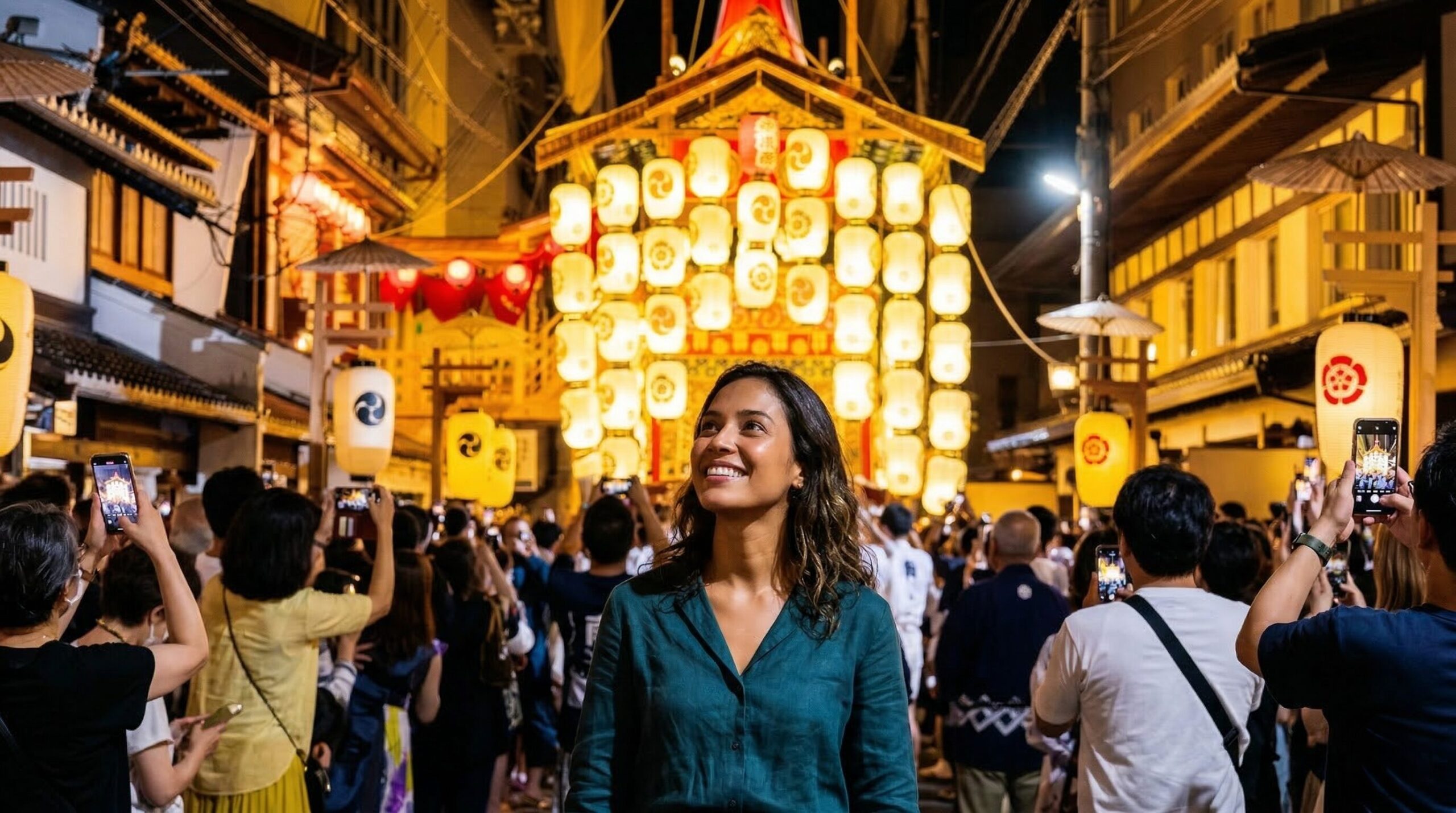
When travelers plan a trip to Japan’s ancient capital, they often align their itineraries with the city’s massive, globally recognized events. The towering floats of the Gion Matsuri in July or the elaborate historical procession of the Jidai Matsuri in October draw hundreds of thousands of spectators from across the globe. While these grand spectacles are undeniably impressive, they represent only the surface layer of Kyoto’s profound spiritual life.
Beyond the heavily managed parade routes and the dense crowds of international onlookers lies a different kind of celebration. Scattered across the city’s quiet residential wards and neighboring mountain valleys are hundreds of localized, deeply intimate rites. These are the neighborhood matsuri—events organized by local parishioners not for the benefit of tourism, but for the spiritual protection and cohesion of their own communities.
For the mindful traveler willing to look past the major guidebooks, seeking out Kyoto’s secret festivals is not about finding an exclusive party. It is an opportunity to witness the living, breathing soul of the city. It is a chance to see how ancient fears of seasonal disease, darkness, and misfortune are still managed through communal rhythm, fire, and water.
By stepping away from the superficial sightseeing, you can travel deeper and experience the raw, authentic pulse of the Japan that locals know best.
The Anatomy of a Local Matsuri: Key Details and Breakdown
To truly appreciate the gravity of Kyoto’s secret festivals, one must first understand how they differ from the highly commercialized events in the city center. A neighborhood matsuri is an intricate ecosystem of belief, duty, and generational transfer. Understanding the anatomy of these events allows you to observe them with a more respectful and educated eye:
- The Function of Fear: Many of Kyoto’s most unique, lesser-known festivals were not born out of celebration, but out of terror. Historically, the transition between seasons brought devastating plagues to the dense ancient capital. Many localized festivals feature aggressive dancing, loud music, or fire specifically designed to frighten away the vengeful spirits (onryo) believed to carry sickness.
- Ujiko (The Parishioners): The lifeblood of a secret festival is the ujiko—the local residents who belong to a specific shrine’s parish. Unlike massive city-sponsored events, these rituals are funded, organized, and performed entirely by the neighborhood. You will see grandfathers guiding their young grandsons on how to properly beat a taiko drum or carry a ceremonial lantern.
- The “Kisai” (Eccentric Festivals): Kyoto is famous for its kisai, or “eccentric/strange festivals.” These events often defy standard Shinto elegance. They are visceral, chaotic, and sometimes unnerving, featuring people dressed as demons, plunging into cold water, or navigating complete darkness. They are raw expressions of folklore surviving in the modern age.
Hidden Rites: Practical Examples and Recommendations
If you wish to synchronize your journey with the authentic rhythms of the city, timing is everything. These events happen on very specific days and are rarely advertised in English. Here are three highly localized, fascinating festivals that reward the observant traveler.
Route 1: The Dancing Demons of Yasurai Matsuri (April)
While April in Kyoto is dominated by the gentle, poetic appreciation of cherry blossoms, the residents of the northern Kita Ward engage in something much more intense. Held on the second Sunday of April at the historic Imamiya Shrine, the Yasurai Matsuri is officially classified as one of Kyoto’s three great “eccentric festivals.” In the year 1001, a deadly epidemic swept through the capital just as the cherry blossoms were falling. The locals believed that the scattered petals were spreading the disease. To combat this, they developed a visceral ritual to lure the plague spirits away.
Highlights of the Yasurai Matsuri:
- The Hanagasa (Flower Umbrella): The focal point of the festival is a massive, two-meter-wide red umbrella decorated with fresh spring flowers. The ritual is designed to attract the invisible plague deities to the flowers, trapping them within the umbrella so they can be escorted to the shrine and subdued.
- The Oni Dance: The procession is led by young local men dressed as oni (demons) with wild red and black hair. They dance erratically through the neighborhood streets, leaping and violently beating gongs and taiko drums to drive the negative energy toward the umbrella.
- A Local Blessing: The most touching aspect of the festival is the local participation. It is believed that ducking under the grand red hanagasa will protect you from illness for the entire year. You will see local mothers gently pushing their toddlers under the canopy to receive the blessing.
Route 2: The Eccentric Darkness of Agata Matsuri (June)
For a truly nocturnal and mysterious experience, one must travel just south of Kyoto city to the tea-producing town of Uji. Held annually from the late night of June 5th into the early hours of June 6th, the Agata Matsuri is known locally as the “eccentric festival in the dark” (kurayami matsuri). This is not a festival of bright lanterns and cheerful music. It is a solemn, intense, and deeply atmospheric rite that completely transforms the historic streets leading to the famous Byodo-in Temple.
Highlights of the Agata Matsuri:
- The Blackout: Shortly before midnight, the atmosphere shifts dramatically. The hundreds of lively street food stalls that operated during the day shut down. The streetlights along Agata-dori are completely extinguished. The town plunges into total darkness.
- The Bonten: In the pitch black, an elite group of local men emerge carrying the bonten—a large, sacred wooden ornament adorned with hundreds of white rectangular papers protruding outward in a sphere. It houses the spirit of the deity.
- The Bunmawashi: The climax of the night is the bunmawashi. In the darkness, the men aggressively spin, shake, and hoist the heavy bonten into the air. The sound of the rustling paper, the heavy breathing of the bearers, and the sheer physical exertion in the dark creates an unforgettable, primal atmosphere.
Route 3: The Cooling Waters of the Mitarashi Festival (July)
Summer in the Kyoto basin is notoriously oppressive, with thick humidity settling over the mountains. To combat the heat and pray for health during the dog days of summer, locals flock to Shimogamo Shrine—one of the oldest Shinto shrines in Japan, surrounded by a primeval forest. The Mitarashi Festival (also known as the Ashitsuke-shinji, or foot-bathing ritual) is held over a ten-day period in late July. It is a stunning, participatory festival that offers deep physical and spiritual relief.
Highlights of the Mitarashi Festival:
- The Subterranean Spring: The ritual centers around the Mitarashi pond, which is fed by an underground spring. Even in the dead of the blazing summer, the water remains incredibly cold—usually below 20 degrees Celsius.
- The Candlelit Wading: To participate, you remove your shoes and socks, purchase a small candle for a nominal fee, and wade knee-deep into the freezing water. You slowly walk through the pond toward a small sub-shrine, carefully shielding your candle flame from the evening breeze.
- Drinking the Divine Water: After placing your candle at the altar to pray for longevity and safe childbirth, you exit the water and are offered a cup of the sacred spring water to drink, purifying your body from the inside out. The visual of hundreds of glowing candles reflecting on the dark, rippling water of the shrine is mesmerizing.
Mindful Exploration: Tips for Travelers
Attending Kyoto’s secret festivals requires a different approach than visiting a museum or a curated tourist district. You are stepping into active, sacred spaces during moments of high community emotion. Keep these principles in mind to ensure your presence is respectful:
- Embrace the Shadows: During night festivals like the Agata Matsuri or the evening hours of the Yasurai Matsuri, the darkness is intentional. Do not use flash photography. A sudden burst of white light from a smartphone not only ruins the atmosphere but is considered highly disrespectful to the deities and the participants.
- Yield to the Procession: In the narrow neighborhood streets, space is incredibly tight. If a portable shrine (mikoshi) or a group of dancing oni is approaching, immediately step back against the walls of the houses. The procession always has the right of way.
- Support the Shrine Economy: These hyper-local festivals are incredibly expensive for small neighborhood associations to produce. If you attend, do not just take photographs and leave. Buy a small wooden ema (wishing plaque), purchase a protective amulet (omamori), or partake in the local food stalls. At the Imamiya Shrine, be sure to buy a plate of aburimochi (roasted, miso-glazed rice cakes) from the millennium-old shops just outside the gate.
- Dress Conservatively and Comfortably: You will be standing for hours, often on uneven gravel or stone, and sometimes wading in water. Wear shoes that are easy to slip on and off. Maintain a modest dress code, keeping shoulders and knees covered, as you are on holy ground.
Conclusion
Japan’s true beauty often hides in the quiet, unscripted moments that occur off the edges of the tourist maps. It is found in the rhythmic chanting of local men carrying a heavy shrine in the pitch black, in the shock of freezing spring water on a humid summer night, and in the protective sweep of a flower-covered umbrella over a child’s head. By prioritizing Kyoto’s secret festivals over the standard checklist of famous monuments, you open yourself up to the city’s genuine pulse. You move past the role of a passive observer and begin to engage with the deep, enduring folklore of the Japanese people. It’s time to go beyond the ordinary, respect the ancient rhythms of the community, and witness the profound, living history that the locals know best.