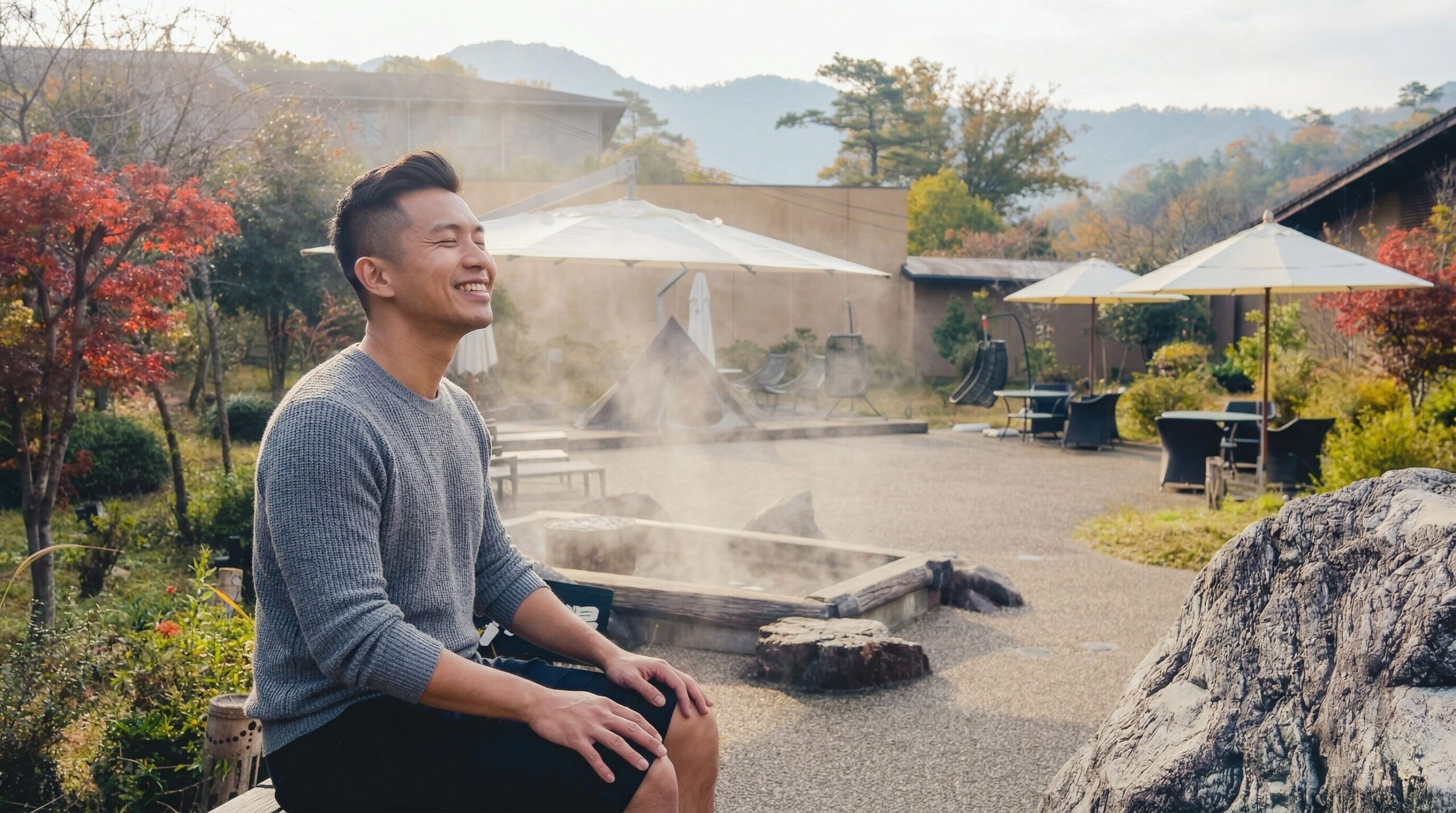
When travelers map out an itinerary for Kyoto, their plans are almost exclusively dominated by ancient architecture and manicured nature. They envision walking through the towering golden pavilion of Kinkaku-ji, hiking the thousands of vermilion gates at Fushimi Inari, or wandering the atmospheric, cobblestone streets of the Gion geisha district. Because the city was the imperial capital for over a millennium, it is universally recognized as the cultural and historical epicenter of Japan.
However, this massive global reputation creates a significant blind spot. Most visitors associate hot springs (onsen) with mountainous regions like Hakone, Hokkaido, or Kyushu, assuming that Kyoto is simply a place for temples. They spend days exhausting themselves on foot, battling immense crowds, completely unaware that restorative, geothermal waters are bubbling just beneath the surface of the city’s forested peripheries.
For the mindful traveler who is curating a journey focused on authentic regional retreats and traditional Japanese wellness, discovering Kyoto’s secret onsen experiences is the ultimate reward. Because the central Kyoto basin is relatively devoid of major volcanic activity, finding a true hot spring requires venturing slightly off the beaten path into the quiet, ancient valleys that ring the city. This deliberate physical separation from the urban center transforms a simple bath into a profound pilgrimage.
This guide will help you navigate the geography of the ancient capital, uncovering the hidden geothermal sanctuaries where samurai once healed their wounds and ascetic monks sought spiritual purification.
The Geography of Healing: Key Details and Breakdown
To successfully uncover Kyoto’s secret onsen experiences, one must first understand the geological and historical layout of the region. A hot spring retreat in Kyoto feels fundamentally different from a massive resort town like Beppu or Noboribetsu. It is quieter, deeply integrated with local culinary traditions, and architecturally understated.
When you seek out these hidden waters, you engage with several unique regional dynamics:
- The Sento vs. Onsen Distinction: In the grid-like city center of Kyoto, you will find hundreds of traditional public bathhouses (sento), such as the historically magnificent Funaoka Onsen. While visually stunning and rich in Showa-era charm, most sento use heated municipal tap water or groundwater. To find a true onsen—water naturally heated by geothermal activity and rich in specific minerals—you must head to the mountains in the north (Ohara, Kurama) or the west (Kameoka, Arashiyama).
- The Radon Spring Advantage: Many of the natural hot springs surrounding Kyoto are classified as weak radioactive springs (radon). While the name sounds intimidating to foreigners, radon springs are highly revered in Japanese balneotherapy. The trace amounts of radon gas inhaled during the bath are believed to dramatically boost the immune system, relieve joint pain, and promote deep cellular rejuvenation.
- The Culinary Synergy: Kyoto’s hidden hot springs are intrinsically linked to the region’s elite culinary traditions. A retreat to the northern mountains usually involves soaking in an outdoor bath followed by a traditional kaiseki meal that highlights hyper-local ingredients: wild mountain vegetables (sansai), Kyoto heirloom radishes, and wild boar or free-range chicken sourced directly from the surrounding valleys.
- The Concept of ‘Okuzashiki’: These hot spring villages function as Kyoto’s okuzashiki—the “inner parlor” or hidden guest room. They were historically the secret weekend retreats for Kyoto’s nobility and wealthy merchants who needed to escape the oppressive summer heat and political pressures of the city center.
Sanctuaries in the Valleys: Practical Examples and Recommendations
To experience the true geothermal soul of the Kansai region, you must board a local train or bus and head toward the mountain passes. Here are three distinct, breathtaking locations that offer the absolute best of Kyoto’s secret onsen experiences.
The Warlord’s Retreat at Yunohana Onsen (Kameoka)
Located just over the western mountains from Arashiyama, in the rural city of Kameoka, lies Yunohana Onsen. Translating to “Village of Hot Spring Flowers,” this quiet enclave was discovered centuries ago and served as the secret healing sanctuary for warring samurai during the Sengoku (Warring States) period.
Highlights of a Yunohana Experience:
- The Historic Isolation: Unlike massive tourist hubs, Yunohana is essentially a quiet farming valley dotted with a handful of elite luxury ryokans (traditional inns). Establishments like Shoen-so Hozugawakantei or Syoenso Hozugawatei offer massive, sprawling properties featuring manicured rock gardens and deep, silent forests.
- The Healing Waters: The natural springs here are clear, tasteless, and odorless, but they are incredibly rich in minerals that leave the skin feeling like silk. The quiet outdoor baths (rotenburo) often feature natural boulders and overlook misty mountain ravines.
- The Hozugawa River Connection: Yunohana pairs perfectly with a broader regional exploration. After spending the night in the hot springs, travelers can take a short bus ride to the Hozu River and ride the traditional, flat-bottomed wooden boats (Hozugawa Kudari) through a dramatic, forested gorge all the way back into the heart of Arashiyama.
The Rural Warmth of Ohara
To travel deeper into Kyoto’s agricultural roots, you must head an hour north of the city center into the farming valley of Ohara. Famous for its striking Sanzen-in Temple and its historic female vendors (Ohara-me) who carried firewood to the capital on their heads, the valley is also home to a spectacular, rustic hot spring scene.
Highlights of the Ohara Experience:
- The Iron and Wood Baths: At traditional, family-run inns like Ohara no Sato, the luxury is found in rusticity. The outdoor baths here feature traditional designs such as Goemon-buro (large, cast-iron cauldrons) or Taru-buro (converted wooden miso-fermentation barrels) that fit only one or two people. Soaking in a giant wooden barrel while looking out over active rice paddies is an unforgettable, deeply grounded experience.
- The Farm-to-Table Kaiseki: Because Ohara is an active farming community, the culinary aspect of the onsen stay is extraordinary. Dinners feature organic vegetables pulled from the earth that very morning, house-made miso paste, and rich local chicken cooked in traditional hot pots (nabe).
- The Twilight Silence: The true magic of Ohara reveals itself after 5:00 PM. Once the day-tripping temple tourists board the final bus back to central Kyoto, the valley empties completely. The silence is profound, allowing you to walk the quiet rural roads in your cotton yukata before slipping into the hot spring under a canopy of stars.
The Deep River Sanctuary of Arashiyama (Upstream)
While the main bridge and bamboo grove of Arashiyama are famously crowded, few people realize that genuine hot spring water was recently excavated in the area. To find the most exclusive, hidden baths, you must look past the main street and follow the Katsura River upstream, deep into the gorge.
Highlights of the Arashiyama Onsen Experience:
- The Boat-Access Ryokans: The ultimate secret onsen experience in Arashiyama involves booking a stay at an elite property like Suiran, or opting for secluded luxury by taking a boat up the river. If you seek genuine restorative waters, look for dedicated hot spring ryokans nestled near the gorge. The physical act of leaving the crowded tourist docks behind and sailing into a silent, private gorge sets the tone for a profound retreat.
- The River-View Baths: The luxury accommodations hidden in the Arashiyama area often feature private or semi-private indoor cypress baths with large windows overlooking the gorge. Soaking in the warm water while watching the autumn leaves drift toward the emerald green river below is the epitome of Kyoto luxury.
- The Modern Kyoto Aesthetic: Arashiyama’s high-end onsen properties masterfully blend ancient tradition with sleek, contemporary minimalism. You will find traditional tatami mats and cypress wood baths paired with modern architectural lighting and world-class, avant-garde Japanese gastronomy.
Mindful Soaking: Tips for Travelers
Navigating Kyoto’s secret onsen experiences requires a fundamental understanding of Japanese bathing etiquette. Because these locations are often historic, highly traditional, and deeply respected by the local community, maintaining proper decorum ensures a seamless and relaxing experience for everyone.
- The Protocol of Kashikiri-buro (Private Baths): If you are uncomfortable bathing nude with strangers, or if you are traveling with a partner and wish to soak together, you must seek out kashikiri-buro. These are private, reservable hot spring baths. When booking your ryokan in Kameoka or Ohara, specifically look for properties that advertise “private open-air baths” (often reserved for 45-minute intervals for a small fee at the front desk).
- The Tattoo Reality: Traditional public onsens in Japan still strictly prohibit tattoos due to historical associations with organized crime. While urban sento (bathhouses) are increasingly tolerant, the upscale, rural ryokans around Kyoto often maintain strict bans. If you have visible tattoos, your best option is to either cover them with skin-colored waterproof bandages (if they are small) or exclusively book a room with a private outdoor bath (rotenburo-tsuki kyakushitsu) to avoid any friction.
- The Pre-Wash Ritual: Before you ever step foot into the hot spring water, you must meticulously wash your entire body at the sit-down shower stations provided in the changing room. Entering an onsen with traces of soap, sweat, or dirt on your skin is considered a massive breach of etiquette. The onsen is for soaking and relaxing, not for cleaning.
- Keep the Towel Out of the Water: You will be provided with a small modesty towel. You may use this to cover yourself while walking between the showers and the bath, but the towel must never touch the hot spring water. Most locals will fold the small towel and balance it on top of their heads while they soak, or rest it on a dry rock next to the bath.
- The Post-Soak Hydration: The mineral-rich heat of a true Kyoto onsen will drain your body’s hydration levels quickly. The traditional local ritual is to drink a cold glass of locally sourced milk, coffee milk, or chilled green tea immediately after exiting the bath.
Conclusion
The true essence of Japan’s ancient capital is not entirely captured by viewing its monumental temples from the outside. To understand the deep, restorative philosophy that fueled the monks, warriors, and artisans of Kyoto for over a thousand years, you must engage with the landscape physically. You must allow the heat of the earth to quiet your mind.
By dedicating a portion of your itinerary to exploring Kyoto’s secret onsen experiences, you elevate your journey from a standard sightseeing tour into a deeply personal, regional retreat. You trade the exhausting crowds of the city center for the sweeping, silent beauty of the northern valleys and western gorges. It is time to step away from the crowded shrines, shed the physical fatigue of travel, and discover the profound, steaming tranquility that the real Kyoto so fiercely protects.