
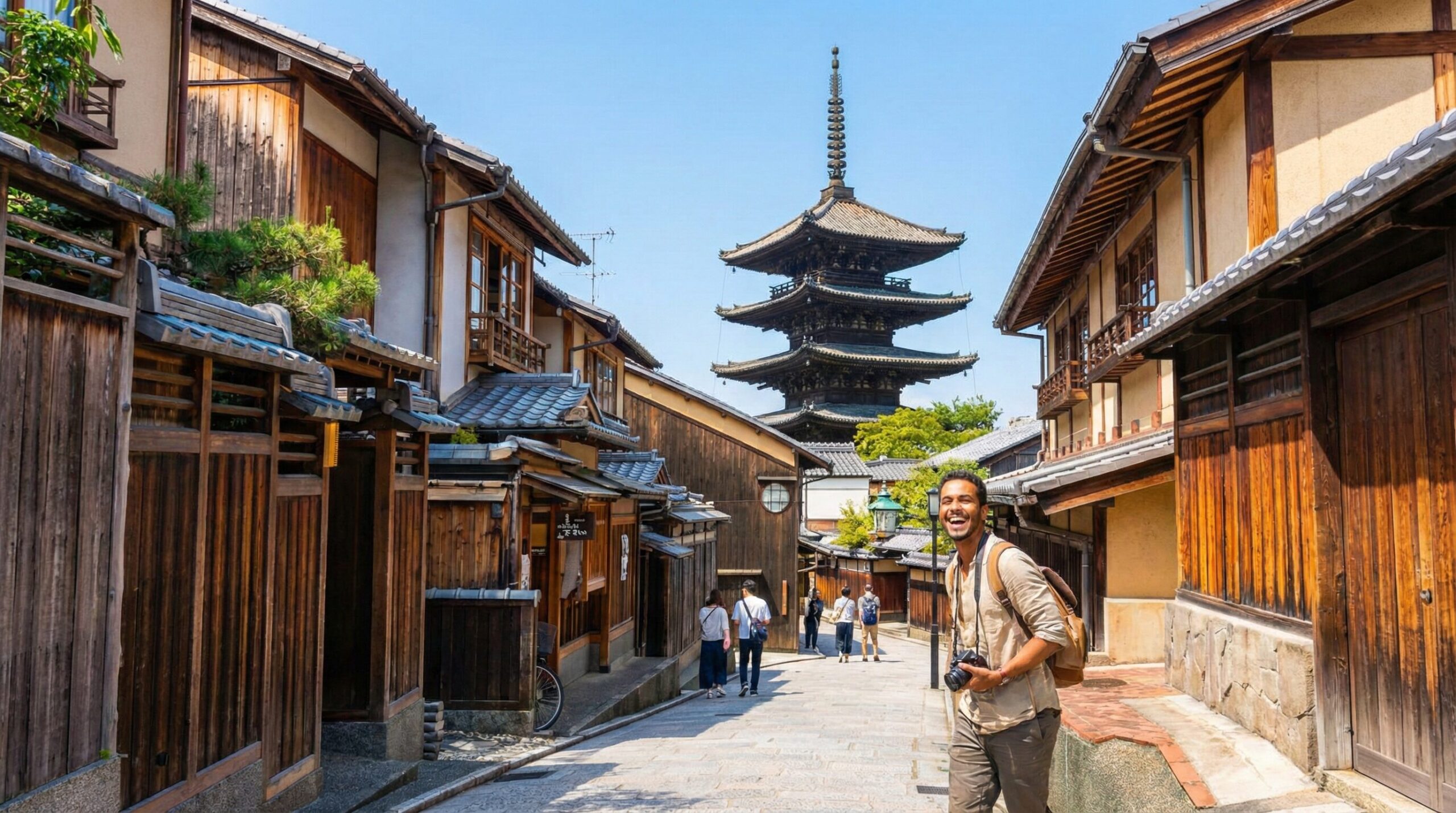
Japan’s historic towns are not loud about their past. They don’t need plaques or QR codes to announce their history. Instead, they let you feel it. You walk down streets lined with earthen walls and black tiled roofs. You hear nothing but the shuffle of your own shoes. Sometimes a bicycle wheel humming. Sometimes wind pushing leaves into the drainage channels.
It’s in this quiet that you begin to understand why staying in a Luxury Ryokan in these historic districts is a different kind of travel. There’s no rush. No neon. No screens flickering behind glass. Instead, the day moves according to small rituals: sliding open shoji screens, soaking in a hot bath before dinner, listening to the kettle warming in the next room.
In these towns—whether along the coast of the Japan Sea, tucked into mountain valleys, or built around castles—luxury doesn’t mean extravagance. It means attention. To seasons. To materials. To food. To silence. Many travelers come to Japan for temples or for Tokyo’s pace. But if you stay a few nights in these preserved districts, you begin to understand Japan’s continuity—the way the past folds itself into the present quietly, without performance.
Key Details and Breakdown
The Townscapes: Built for Order, Defense, and Commerce
Before talking about ryokan, we need to understand the towns themselves. Most were shaped during the Edo period by the logic of clans, castles, and commerce. You notice the design immediately:
- A central stronghold (the castle or government outpost)
- Samurai districts shielding the center
- Merchant streets distinct from warrior areas
- Moats, canals, and stone bridges
- Earthen walls and heavy gates still intact in places
Walking through these areas today, the logic of the past is still visible. Samurai districts remain wide and quiet, with large walls shielding former family estates. Merchant streets are narrower, with old sake breweries, miso shops, and wooden storefronts still showing their age. What survives isn’t the drama of battle—it’s the architecture of everyday order.
Bukeyashiki and Machiya: Residences of the Past
These towns preserve two distinct types of history. The bukeyashiki (samurai residences) feature thick plaster walls and gates meant for defense and discipline. Meanwhile, the machiya (merchant houses) in the commercial quarters feature dark wood lattices and deep, narrow layouts.
Even if you never enter one, you feel the restraint in the design. It’s not ostentatious. It’s measured. The architecture communicates a mindset. Between these houses, time slows. Not in a nostalgic, theme-park way, but in a way that suggests the past never fully left.
Luxury Ryokan: Where Architecture Meets Hospitality
Now add ryokan into the picture. A Luxury Ryokan in these historic areas isn’t simply a place to sleep. Whether housed in a restored merchant building or a modern structure designed to blend into the samurai district, it is a shelter for rituals that have survived modernization.
Luxury here means:
- Rooms shaped by tatami and natural wood
- Private onsen baths under open sky
- Multi-course kaiseki dinners that trace the seasons
- Hallways filled with the smell of cedar or cypress
- Soft lighting instead of overhead glare
- Spaces meant to be listened to, not looked at
A good ryokan doesn’t try to impress you quickly. It grows on you over hours—sometimes days. The service is attentive but quiet. Someone appears with tea before you realize you’re thirsty. Someone lays out futons while you’re in the bath. Someone notices the chill in the air and adjusts the room before you return from dinner. This is luxury as observation, not display.
Practical Examples and Recommendations
Below are a few towns where the pairing of place and ryokan creates something rare: depth without performance.
Kanazawa: A Castle City That Feels Whole
Kanazawa survived war and earthquakes better than most Japanese cities. As a result, its Nagamachi Samurai District remains strangely intact. Earthen walls curve around narrow water channels. Trees lean over the paths softly, as if they’ve rehearsed their positions for decades.
Kanazawa’s ryokan understand this mood. While the samurai houses themselves remain museums or private homes, the best ryokan sit just steps away or in the nearby historic tea districts. Here, kaiseki dinners include mountain vegetables and seafood from the nearby Noto Peninsula—textures that shift with tide and season. Ceramic dishes might come from local kilns. The bath might open onto a small garden. Kanazawa’s luxury isn’t loud. It’s absorbed.
Hagi: A Samurai Town Facing the Sea
Hagi sits on the Sea of Japan, quiet and resilient. Samurai once walked between residences here, plotting the modernization of Japan during the Meiji Restoration. Their houses still stand—low, wooden, unhurried.
There is a kind of stillness that only seaside castle towns have. You smell salt in the air. Workshops sell Hagi-yaki pottery: pale, soft, subtly cracked after years of tea. Ryokan here are often tucked into the quiet grid of the castle town or situated near the water—either the sea or the river delta. Dinner leans heavily toward seafood—flounder, mackerel, squid—served in courses that feel like tide sketches. Hagi teaches you something simple: luxury can be quiet and briny.
Kakunodate: Cherry Trees and Black-Walled Streets
Northern Japan has its own samurai towns—cold winters, heavy snow, dramatic springs. Kakunodate in Akita is one of them. Samurai houses line wide streets, their black wooden fences stark against snow or cherry blossoms. Travelers often arrive during sakura season, when petals collect in gutters.
But winter may be Kakunodate’s truest season: slow, muted, meditative. Staying in a ryokan here means warmth layered on cold: hot baths, heavy quilts, thick donabe dishes served at dinner. Staff shovel snow around the entrance before dawn. The steam from the onsen condenses on glass. Luxury in Kakunodate is heat against winter. Comfort as architecture.
Takayama: Mountain Merchants and Cedar Streets
Takayama sits high in the Hida mountains. Unlike the fortress-like layout of castle towns, Takayama is famous for its merchant districts (Sanmachi-suji). While it was governed by samurai officials from the historic Takayama Jinya, the streets you walk today were built by wealthy merchants.
Here, the atmosphere is defined by commerce and craft: lattice-lined sake breweries, miso shops, and cedar woodwork. Staying in a ryokan here connects you to this merchant heritage. Rooms smell faintly of Hida cedar. Kaiseki dinners include Hida beef and mountain vegetables that taste like the forest floor after rain. In Takayama, hospitality feels like a soft blanket thrown over the whole valley. Travelers rarely rush. They read, they soak, they wander. They breathe differently.
Matsue: Castles, Lakes, and Old Houses
Matsue in Shimane is overlooked by many travelers, which makes it ideal for those who prefer slow discovery. The samurai district lies near one of the few original castles left in Japan. Streets curve along Lake Shinji and through neighborhoods that seem built for walking.
Ryokan here often use views as architecture. Room layouts are designed around lake reflections, garden geometry, or castle silhouettes. Food takes cues from the sea and from Izumo traditions. The pace feels literary—appropriate for the town Lafcadio Hearn once called home. Luxury here isn’t about indulgence. It’s about orientation: where the light falls, where the wind comes from, how the seasons move across the lake.
Tips for Travelers
A Luxury Ryokan in these historic towns does require a different mindset than a hotel stay. A few thoughts, learned through slow trips and quiet evenings:
Learn the Rhythm of Ryokan
Time is part of the experience. Bath before dinner. Dinner in courses. Tea after. Futons while you soak. If you rush, you miss half of what you came for.
Food Is Geography
Kaiseki isn’t about expensive ingredients. It’s about place.
- Sea towns = sashimi, grilled fish, shellfish
- Mountain towns = beef, river fish, wild greens
- Castle towns = refined sauces, lacquerware serving vessels
Everything tells you where you are.
Walk the Town at Dusk
Historic streets make sense in the evening. Walls soften. Lamps come on. You hear water rushing through channels. You understand how darkness changes architecture.
Bring Smaller Luggage
Ryokan hallways are narrow. Rooms are tatami. Large suitcases break the mood before you even check in.
Don’t Treat Staff Like Hotel Staff
Ryokan hospitality is reciprocal. They notice everything. Treat them as hosts, not service providers.
Season Matters
These towns change dramatically with seasons:
- Spring = blossoms and crowds
- Summer = cicadas and humidity
- Autumn = maples and clear skies
- Winter = silence and hot baths
Luxury lands differently in each season.
Conclusion
Modern travel often turns places into products. These historic towns resist that. They don’t advertise loudly. They exist on their own terms—architecturally coherent, historically layered, not built for spectacle.
A stay at a Luxury Ryokan in these towns isn’t about pampering. It’s about alignment: with season, with place, with materials, with a pace of living that survived industrialization. You wake up to light through rice paper. You hear the clack of wooden sandals in the street outside. You soak in a tub made of cedar, then eat breakfast that tells you the month without anyone saying it.
You walk past walls that once protected warriors or sheltered merchants, and now protect nothing except peace. Luxury, in this context, is not about excess. It’s about the absence of noise. And long after you leave, you remember not the details of the itinerary, but the sound of water in a stone basin, and the way the past sat just under the surface of the present, quietly, without needing to prove anything.