
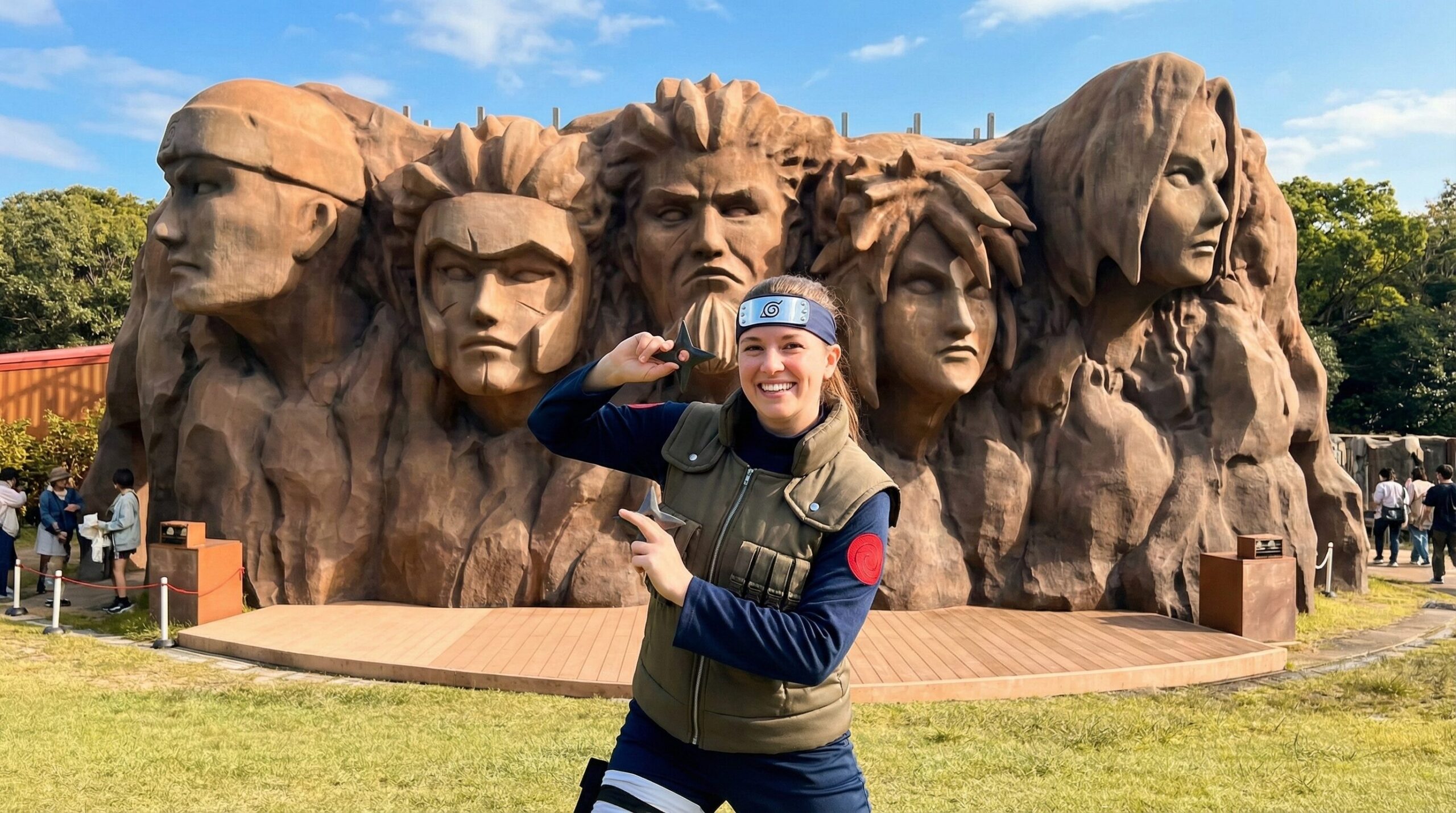
Few anime series have had the global impact of Naruto. For more than two decades, Naruto’s story of perseverance, friendship, and self-discovery has resonated far beyond Japan, shaping an entire generation of fans.
So when Japan created a full-scale, permanent Naruto attraction, it didn’t follow the expected formula of roller coasters or indoor rides. Instead, the result was something uniquely Japanese: a walkable, story-driven, outdoor experience embedded in nature.
The Naruto Theme Park in Awaji Island is officially part of Nijigen no Mori, a large anime-focused park that blends digital storytelling with forests, hills, and open space. Within it lies Naruto & Boruto Shinobi-zato, a zone dedicated entirely to the shinobi world.
This guide explains what the park actually offers, how to experience it well, and whether it’s worth the trip—especially for international travelers.
- Key Details and Breakdown: What Is the Naruto Theme Park in Awaji Island?
- Inside Naruto & Boruto Shinobi-zato
- Practical Examples and Recommendations
- Who Will Enjoy This Park Most?
- Tips for Travelers Visiting Naruto Theme Park in Awaji Island
- Why Naruto Works So Well as a Theme Park Here
- How It Compares to Other Anime Attractions in Japan
- Conclusion: Is Naruto Theme Park in Awaji Island Worth It?
Key Details and Breakdown: What Is the Naruto Theme Park in Awaji Island?
Location and Concept
The Naruto attraction is located on Awaji Island, situated between mainland Honshu and Shikoku, and easily accessible from Kobe via the Akashi Kaikyō Bridge. Rather than building a dense amusement park, Nijigen no Mori uses:
- Forest trails
- Open lawns
- Sculptural installations
The Naruto area is designed as Shinobi-zato (忍里)—a fictional ninja village you physically explore.
What Makes This Theme Park Different
Unlike traditional theme parks, the Naruto Theme Park focuses on:
- Exploration over rides
- Physical movement instead of queues
- Story participation rather than passive viewing
You are not just a visitor—you’re a shinobi trainee.
Inside Naruto & Boruto Shinobi-zato
Hokage Rock: The Visual Centerpiece
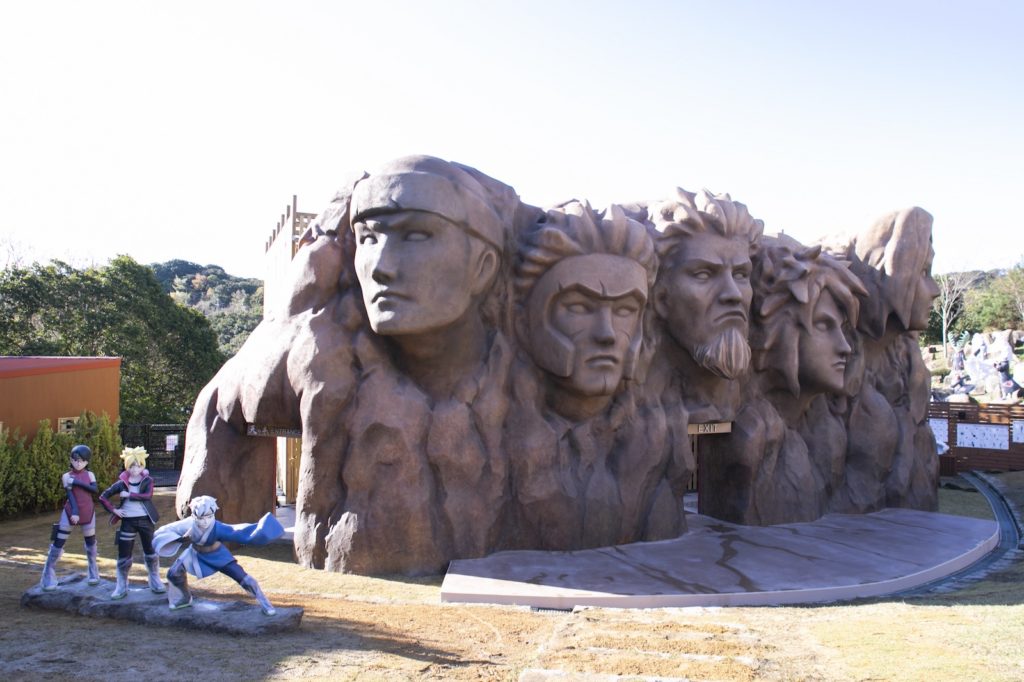
The first thing most visitors notice is the massive Hokage Rock, modeled after the iconic monument from Konohagakure.
Why it matters
- Immediately grounds the experience in Naruto’s world
- Scaled for real-life presence and photography
- Serves as a navigation landmark
Standing beneath the Hokage faces is a powerful moment for longtime fans—it’s familiar, yet surprisingly imposing in person.
Ninja Missions and Scroll Challenges
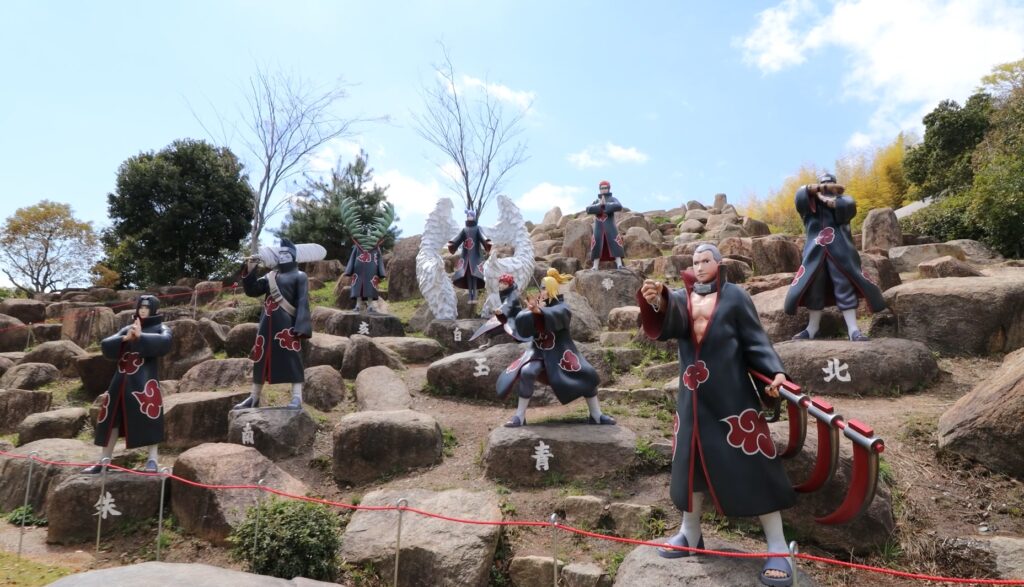
At the heart of Shinobi-zato are interactive missions.
How it works
- You receive a scroll (mission guide)
- You move through different zones
- You solve puzzles using observation and logic
Missions are themed around:
- Ninjutsu
- Genjutsu
- Teamwork challenges
This design keeps the experience active and immersive, rather than static.
The Giant 3D Maze: Physical Ninja Training
One of the most popular attractions is a large multi-level maze inspired by ninja training environments.
What to expect
- Stairs, ramps, and dead ends
- Time-based challenges
- Observation-based navigation
It’s physically engaging without being extreme, making it accessible to a wide age range.
Boruto Integration: Old and New Generations
The park doesn’t focus solely on Naruto. Boruto content is integrated throughout:
- Characters
- Missions
- Visual storytelling
This makes the park relevant for both longtime fans and newer audiences.
Shops and Themed Dining

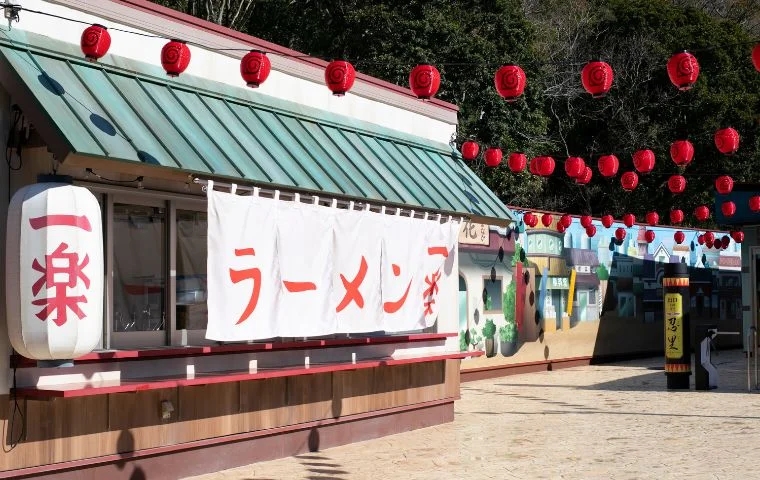
The Naruto area includes:
- The real-life “Ramen Ichiraku” restaurant (serving tonkotsu ramen)
- Exclusive merchandise
- Character goods unavailable elsewhere
While dining is casual, it adds flavor to the experience—especially for fans who appreciate visual references.
Practical Examples and Recommendations
Example 1: Half-Day Naruto Theme Park Visit
Morning
- Arrive at Nijigen no Mori
- Enter Naruto & Boruto Shinobi-zato
Midday
- Complete one major mission
- Explore Hokage Rock and maze
Afternoon
- Lunch at Ramen Ichiraku and shopping
This is the most common itinerary and works well for travelers with limited time.
Example 2: Full-Day Anime + Nature Experience
Combine:
- Naruto Theme Park
- Other Nijigen no Mori attractions
- Forest walks and open lawns
Awaji Island’s slower pace balances the intensity of anime immersion.
Example 3: Osaka or Kobe Day Trip
The Naruto Theme Park in Awaji Island is easily accessible from:
- Osaka
- Kobe
Travel time is usually under two hours, making it a realistic day trip.
Who Will Enjoy This Park Most?
Ideal For:
- Naruto and Boruto fans
- Travelers who enjoy interactive experiences
- Families and groups
- Visitors who prefer outdoor attractions
Less Ideal For:
- Thrill-ride seekers
- Visitors expecting roller coasters
- Those wanting purely passive exhibits
Understanding this prevents disappointment.
Tips for Travelers Visiting Naruto Theme Park in Awaji Island
Book Tickets in Advance
- Advance tickets allow for smoother entry
- Weekends and holidays sell out
- Online booking is highly recommended
Wear Comfortable Shoes
This is an outdoor, walking-heavy park.
- Expect uneven paths
- Stairs and open terrain
- Minimal shade in some areas
Comfort matters.
Check Language Support
- Basic English signage is available
- Missions rely on symbols and logic
- Staff assistance is helpful but limited
Non-Japanese speakers can enjoy the park with patience.
Weather Awareness Is Crucial
Because it’s outdoors:
- Rain affects enjoyment
- Summer heat can be intense
- Spring and autumn are ideal
Check forecasts before committing.
Combine With Local Awaji Island Food
Awaji Island is known for:
- Onions
- Seafood
- Casual coastal dining
Pairing anime with local cuisine rounds out the trip.
Why Naruto Works So Well as a Theme Park Here
Naruto’s story is about:
- Training
- Growth through effort
- Connection to land and community
By placing the attraction in forests rather than buildings, the park reflects those themes naturally. You’re not just observing Naruto’s world—you’re moving through something that feels earned.
That alignment is why the Naruto Theme Park in Awaji Island feels authentic rather than commercial.
How It Compares to Other Anime Attractions in Japan
Compared to:
- Indoor anime museums
- Urban pop-up cafes
- Temporary exhibitions
Shinobi-zato stands out as:
- Permanent
- Physically engaging
- Environmentally integrated
It’s closer to an experience park than an amusement park.
Conclusion: Is Naruto Theme Park in Awaji Island Worth It?
If you approach it expecting roller coasters, you’ll miss the point.
But if you come ready to walk, explore, solve, and play—this park delivers something rare: a chance to live briefly inside an anime world without screens or spectacle.
The Naruto Theme Park in Awaji Island succeeds because it trusts the audience. It doesn’t shout. It invites.
And in doing so, it captures the heart of Naruto’s message better than any ride ever could.
For fans, it’s deeply satisfying. For travelers, it’s refreshingly different. For Japan, it’s a glimpse into how pop culture and place can coexist with care.
Come prepared. Move slowly. And let your inner shinobi do the rest.