
For fans of anime and manga, Rurouni Kenshin (Samurai X) is the definitive story of the Meiji Restoration. But while the series begins in Tokyo, its heart beats in Kyoto.
The “Kyoto Arc” is widely considered the masterpiece of the saga. It is here that Himura Kenshin confronts the ghosts of his past as the Hitokiri Battosai (Battosai the Manslayer).
It is here that he faces Shishio Makoto in a battle for the soul of the new era. And it is here, in the narrow alleys and ancient temples of the old capital, that the line between history and fiction blurs.
Unlike many anime set in fantasy worlds, Rurouni Kenshin is deeply grounded in real geography. You can actually stand where the Shinsengumi trained.
You can walk the bridge where Kenshin met Kaoru in the live-action film.
This guide is not just a list of sightseeing spots. It is a pilgrimage.
We have curated the Rurouni Kenshin Locations in Kyoto that blend the actual history of the Bakumatsu era, the atmospheric settings of the anime, and the filming locations of the blockbuster live-action movies. Grab your Sakabato (reverse-blade sword)—metaphorically, of course—and let’s head to Kyoto.
Toei Kyoto Studio Park (Eigamura)
The Living Set of the Meiji Era
If you only visit one location, make it this one. Toei Kyoto Studio Park (Eigamura) is an active film set where the live-action Rurouni Kenshin movies were partially shot. It is also the only place where the “atmosphere” of the anime exists in 360 degrees.
- The Bridge: The studio features a replica of the Nihonbashi bridge. Standing on it, looking down at the recreated Edo streets, feels exactly like the opening scenes of the anime.
- The Roofs: Remember the high-speed chases across the tiled roofs? Eigamura has ground-level roof sets specifically designed for photos, allowing you to look like a ninja or a swordsman watching over the city.
- The Shinsengumi HQs: The park has a dedicated Shinsengumi 屯所 (Tonsho/Headquarters) set. Since the Shinsengumi are the primary antagonists-turned-rivals of Kenshin’s past (Saito Hajime!), this is essential for understanding the fear they commanded.
Konkai-Komyoji Temple (Kurodani)
The Headquarters of the Shinsengumi’s Lords
While fans love Kenshin, we also respect the Wolf of Mibu, Saito Hajime. To understand the power behind him, you must go to Konkai-Komyoji.
- The History: In the chaotic final years of the Edo period, this temple served as the headquarters for the Aizu Domain (Kyoto Shugoshoku). The Shinsengumi were not based here (they were in Mibu), but they served under the Aizu Lord, Katamori Matsudaira, who resided in this fortress.
- The Vibe: The temple is massive and fortress-like. Walking through the heavy wooden gates, you can imagine Kondo Isami and Hijikata Toshizo marching through to receive orders that would send them hunting down imperialists.
- The Connection: The graveyard here houses the tombs of Aizu warriors who died protecting the shogunate. It is less touristy than Kiyomizu-dera, meaning the silence here is heavy—perfect for contemplating the side of history that Kenshin defeated.
Miidera Temple (Otsu)
The Site of the Deadly Duel
Note: Technically in Shiga Prefecture, but only 20 minutes from Kyoto Station.
For fans of Takeru Satoh’s live-action portrayal, Miidera Temple is holy ground.
- The Correction: Many fans mistake this location for the “meeting bridge” scene from the first movie (which was actually filmed at Hachiman-bori). However, Miidera is the setting for an even more intense scene.
- The Scene: This temple was the primary location for the climactic battle against Udo Jin-e in the first film. The distinct architecture of the halls creates the eerie backdrop where Kenshin almost broke his vow not to kill.
- The “The Final” Connection: This temple was also used in Rurouni Kenshin: The Final for the opening confrontation between Kenshin and Enishi Yukishiro. The distinct stone steps and the atmosphere of the temple grounds are instantly recognizable.
Shoren-in Monzeki
The Aura of Hiko Seijuro
While not explicitly named in the series, Shoren-in Monzeki is frequently cited by fans as capturing the exact aesthetic of Hiko Seijuro’s secluded pottery/training grounds in the mountains near Kyoto.
- The Camphor Trees: The entrance is guarded by massive, 800-year-old camphor trees with mossy roots. It evokes the deep, ancient forests where Kenshin learned the Hiten Mitsurugi style.
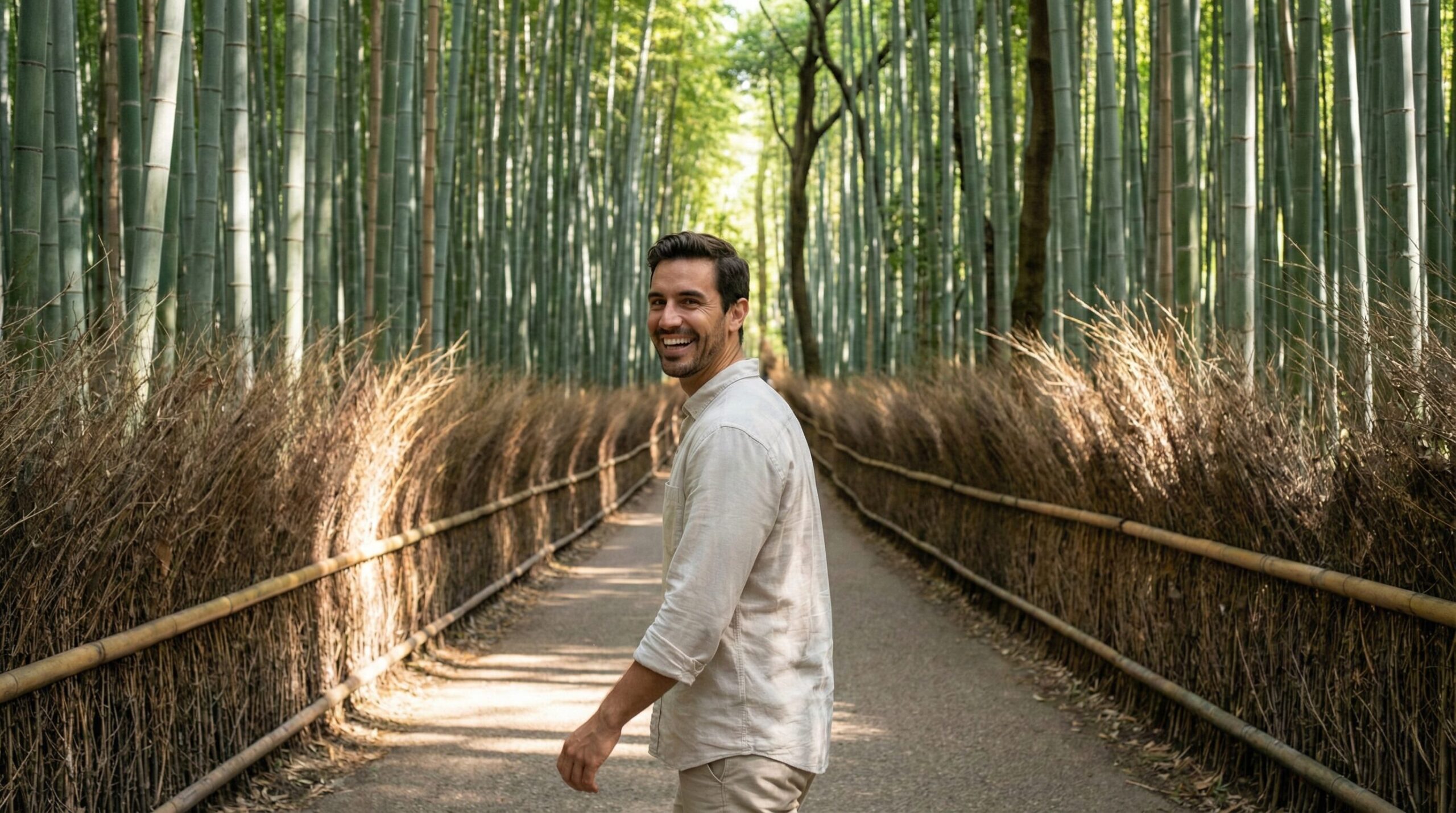
- The Bamboo Grove: Unlike the crowded Arashiyama, the bamboo grove here is quiet and dark, fitting the mood of the master’s intense training sequences.
The Site of Ikedaya (Sanjo)
Where History Changed
The Ikedaya Incident is the turning point of the Bakumatsu era and a key flashback event in the Trust & Betrayal (Tsuioku-hen) OVA. It is where the Shinsengumi raided a gathering of imperialists, preventing the burning of Kyoto.
- The Reality Today: The original inn is gone. In its place stands a commercial building, but it houses an Izakaya named “Hana no Mai” which is themed after the incident.
- The Experience: It’s a bit kitschy, but fun. The stairs are designed to look like the famous staircase where the battle raged. The staff wear Shinsengumi haori. You can drink a cocktail named after Sojiro Okita while looking at murals of the battle. For a history buff, it’s a must-visit spot to pour one out for the fallen swordsmen.
Pontocho and Kiyamachi
The Assassination Alleys
Kenshin’s past as the Hitokiri Battosai involved stalking the streets of Kyoto at night, assassinating shogunate officials.
- The Walk: Walk along the narrow Pontocho alley or the Takase River (Kiyamachi) at night. The willow trees dipping into the dark water, the dimly lit lanterns, and the shadows of the old buildings create the exact atmosphere of the assassination scenes.
- History: Historically, many assassinations actually took place on these streets. The stone markers along Kiyamachi Dori mark the spots where famous samurai (like Sakamoto Ryoma) were killed or hid. It is the bloodiest street in Kyoto, masked by beautiful nightlife.
Practical Examples: The “Kyoto Inferno” Itinerary
To cover these Rurouni Kenshin Locations in Kyoto effectively, you need a plan. Here is a one-day route that takes you from the cinematic fantasy to the gritty history.
09:00 – Start at Toei Kyoto Studio Park (Uzumasa)
- Action: Rent a kimono or a samurai outfit here. It’s the only place where you can walk around dressed as a ronin without people staring.
- Photo Op: Take a photo on the Nihonbashi bridge replica.
- Lunch: Eat at the park’s restaurant. Try the “Shinsengumi Udon.”
13:00 – The Historical Turn (Konkai-Komyoji)
- Transport: Take the bus or taxi to the Okazaki area.
- Action: Walk the grounds of the Aizu Domain HQ. Visit the graveyard at the top of the hill to see the tombs of the real warriors who commanded the Shinsengumi.
15:30 – The Live Action Spot (Miidera)
- Transport: Take the Tozai Subway Line from Keage to Miidera Station (approx. 20 mins).
- Action: Visit the Main Hall and the Kannon-do. Revisit the tension of the battle against Jin-e. The temple closes at 16:30 or 17:00, so go before sunset.
18:30 – The Night Walk (Kiyamachi)
- Action: Return to Sanjo. Walk down Kiyamachi street along the canal.
- Dinner: Stop at the Ikedaya (Hana no Mai) for dinner. Even if it’s a chain izakaya, being on the site of the Ikedaya Incident is a thrill for any fan.
Tips for Travelers
- Watch the OVA Before You Go: The TV series is great, but the Trust & Betrayal (Tsuioku-hen) OVA captures the look of Kyoto perfectly—the blue nights, the white snow, the blood on the snow. Watch it on the flight over to set the mood.
- Respect the Temples: Places like Konkai-Komyoji and Miidera are active religious sites. While it’s exciting to be in a filming location, do not pose with fake swords or make loud noises in the main halls.
- The “Sakamoto Ryoma” Connection: Kenshin is fictional, but he interacts with real figures. Visit Teradaya in Fushimi (south Kyoto). It is the site where Sakamoto Ryoma was attacked (and saved by his wife Oryo). Note: The current building is widely considered a reconstruction from the Meiji era, as the original was lost in battle. However, it faithfully recreates the structure, complete with sword cuts and bullet holes, making it feel like stepping into a Kenshin episode.
- Summer vs. Winter:
- Winter (Jan/Feb): Best for the Trust & Betrayal vibe. Kyoto in the snow is hauntingly beautiful and tragic.
- Summer (July): The Gion Matsuri happens. This festival appears in the series and is the peak of Kyoto’s energy, though the heat is brutal.
Conclusion
Kyoto is a city that remembers.
It remembers the fire of the Hamaguri Gate Rebellion. It remembers the clash of steel at Ikedaya. And because of this, it is the only place in the world where Rurouni Kenshin feels real. When you walk along the Takase River at night, listening to the water flow, you can almost hear the footsteps of the Shinsengumi patrol. You can almost see the flash of a reverse-blade sword in the moonlight.
The era of the samurai is over. But in the shadows of Kyoto, the legend of the Battosai lives on.