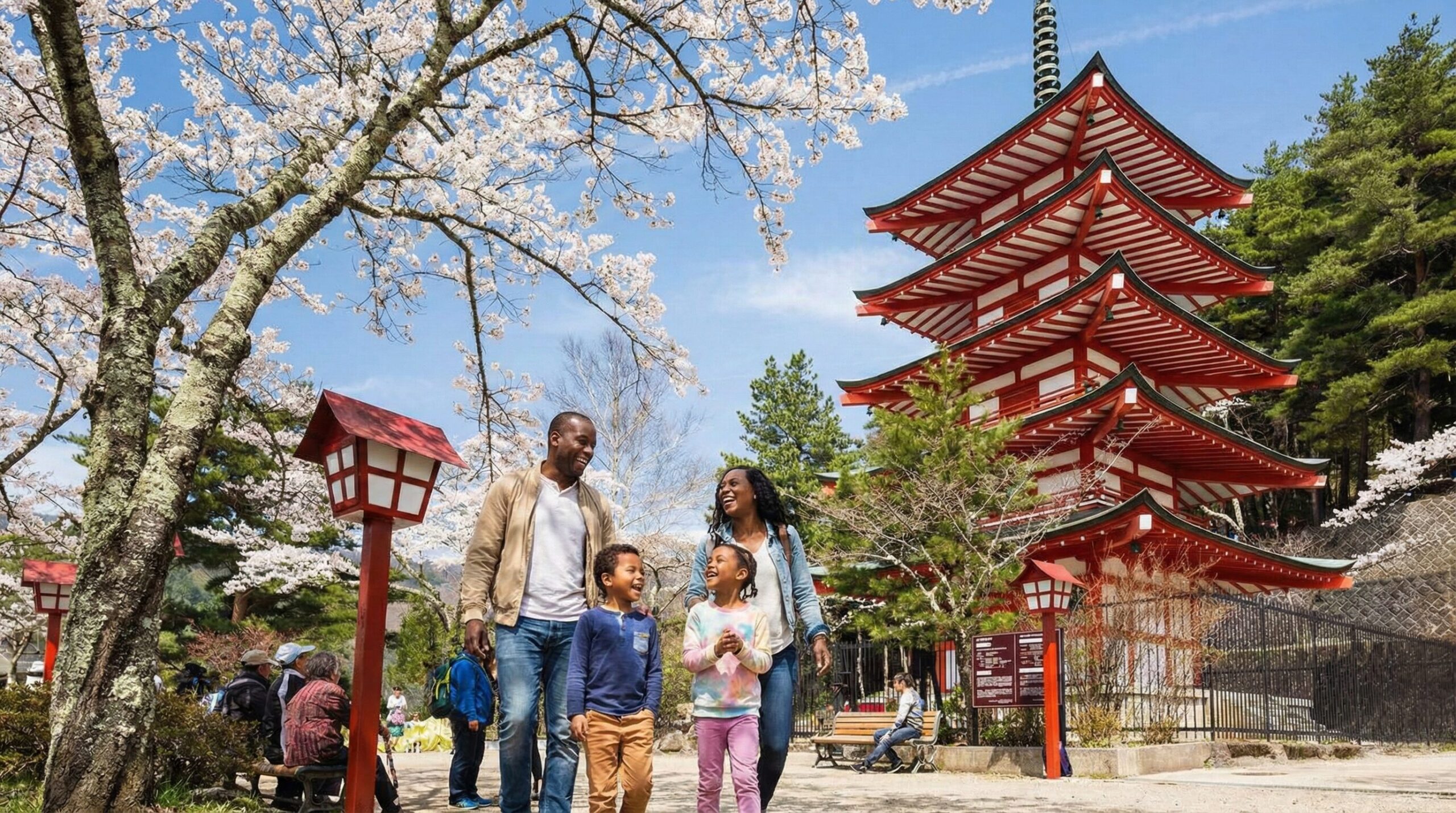
There is a myth that Japan is a difficult destination for families. The image of silent rush-hour trains, strict etiquette rules, and crowded temples can be intimidating. Parents often worry: Will my child be too loud? Will we be able to navigate the subway with a stroller? Is there anything for them to eat besides raw fish?
Let’s dismantle that myth right now. Japan is arguably the safest, cleanest, and most convenient country in the world for family travel. It is a society built on consideration for others, but it is also a society that deeply cherishes children (kodomo).
From the moment you arrive at the airport, where staff will likely rush to help you with your bags, you will find a level of hospitality that makes parenting on the road surprisingly manageable. But beyond the logistics, traveling Japan with children offers a unique lens on the culture.
You stop rushing from shrine to shrine. You start noticing the details—the robotic toilets that play music, the koi fish in the canals, the playground slides that look like rollers. You engage with locals who might ignore a solo backpacker but will stop to wave at a toddler.
This isn’t just a guide to surviving the trip; it’s a guide on How to Travel Japan with Children in a way that unlocks “authentic experiences” for the whole family. It’s about moving beyond the theme parks and finding the magic in the everyday.
The Logistics: Trains, Strollers, and Convenience Stores
Before we get to the fun stuff, let’s handle the anxiety-inducing logistics. Japan’s infrastructure is world-class, but it has its quirks.
Mastering the Trains with Kids
The Shinkansen (Bullet Train) is a dream for families. It’s clean, spacious, and has toilets.
- Booking Seats: Always reserve seats (shitei-seki). If you have a stroller, look for the “Seats with Oversized Baggage Area” at the back of the car. You can fold the stroller and stow it behind your seat.
- The “Shinkansen” Magic: For kids, the train is the destination. Buy a “Dr. Yellow” (the test train) lunchbox (ekiben) at the station. It’s shaped like a bullet train and filled with kid-friendly food.
- Rush Hour Rule: Avoid commuter trains in Tokyo/Osaka between 7:30–9:00 AM and 5:00–7:00 PM. With a stroller, it is physically impossible to board.
The Stroller vs. Carrier Debate
Japan is paved, but it is also vertical.
- The Verdict: Bring a lightweight, foldable stroller. You will walk 15,000 steps a day. However, many temples have gravel paths or stairs.
- The Hack: Use a baby carrier (dakko-himo) for shrine days (Kyoto, Nikko). Use the stroller for city days (Tokyo, Osaka).
- Elevators: Train stations do have elevators, but they are often at the far end of the platform. Look for the yellow signs. Be patient; you might have to wait for a few rounds if it’s busy.
The Conbini (Convenience Store) Lifeline
7-Eleven, Lawson, and FamilyMart are your best friends.
- Food: They sell Onigiri (rice balls) which are perfect, non-messy snacks. The “Tuna Mayo” or “Salmon” are kid favorites. They also sell bananas, yogurt, milk, and fried chicken (Karaage).
- Facilities: Most have clean toilets.
- Emergency Gear: Forgot diapers? Need a sudden umbrella? They have it all, 24/7.
Luggage Forwarding (Takkyubin)
This is the single best service in Japan. Do not drag massive suitcases and a stroller and a screaming toddler onto a train.
- How it Works: Go to the counter at your hotel or a convenience store (look for the Black Cat logo – Yamato Transport). Send your big bags to your next hotel. It costs about 2,000 yen per bag and arrives the next day.
- Travel Light: Carry only a backpack with essentials for the train ride.
Beyond Disneyland: Authentic Experiences for Families
You don’t need to go to Tokyo Disneyland to entertain kids (though it is excellent). Japan’s culture is inherently fascinating to young minds.
The Interactive Museums
Japan excels at “edutainment.”
- TeamLab Planets (Tokyo): It’s not a museum; it’s a sensory bath. Kids wade through water, roll in giant beanbags, and touch light projections. It’s intuitive art.
- Ghibli Museum (Mitaka): For fans of Totoro. It feels like stepping inside a storybook. (Note: Tickets must be booked 1 month in advance).
- The Railway Museum (Saitama/Kyoto): Kids can drive train simulators and touch real steam engines. It’s huge, loud, and incredibly fun.
Nature and “Power Spots”
Kids often appreciate the spiritual side of Japan more than adults realize.
- Nara Park (Nara): Yes, the deer are famous. But buy the crackers (shika-senbei) and teach your child to bow. The deer will bow back. It’s a lesson in interspecies etiquette.
- Fushimi Inari (Kyoto): The thousands of orange gates (torii) are like a tunnel. You don’t need to climb to the top. Just let them run through the endless orange corridors. It feels like a video game level.
- Monkey Park Iwatayama (Kyoto): You hike up a mountain to see wild macaques. The twist? The humans are in the cage (the hut), and the monkeys are free outside.
“Hands-On” Craft Culture
Don’t just buy souvenirs; make them. Kids love tactile experiences.
- Plastic Food Samples (Kappabashi, Tokyo): You know those realistic wax foods outside restaurants? You can make them. Kids can make a wax lettuce head or a parfait. It’s messy and hilarious.
- Washi Paper Making (Gokayama/Echizen): Sloshing the pulp in the water is great sensory play.
- Taiko Drumming: Book a short lesson. Hitting a giant drum with big sticks is the ultimate stress relief for a child tired of being quiet on trains.
Eating Out: The “Okosama Lunch” Strategy
Japanese food is surprisingly kid-friendly if you know what to look for.
Kaitenzushi (Sushi Train)
We covered this in another guide, but for families, it’s unbeatable.
- Why: There’s no waiting for food. It’s immediate gratification.
- Menu: They serve fries, corn mayo sushi, udon, and cake. Even picky eaters find something.
- Entertainment: Chains like Kura Sushi have a game where every 5 plates you insert into a slot gives you a chance to win a toy (Gachapon).
Family Restaurants (“Famiresu”)
Chains like Denny’s Japan, Royal Host, or Saizeriya.
- The Vibe: Noisy, comfortable booths, drink bars with unlimited melon soda.
- The Menu: They all have an “Okosama Lunch” (Kid’s Plate). It usually involves a hamburger steak, a flag, rice, jelly, and a toy. It’s an institution.
Department Store Basements (Depachika)
If everyone wants something different, go to the basement of a major department store (Takashimaya, Isetan, Daimaru).
- The Strategy: It’s a high-end food court. Mom can get sushi, Dad can get yakitori, and the kids can get croquettes or fruit sandwiches. Take it up to the roof garden (most department stores have one) for a picnic.
Avoiding the “High-End” Trap
Traditional Kaiseki meals take 2 hours. This is torture for a 5-year-old.
- Alternative: Stay at a Ryokan that offers “in-room dining.” The staff brings the feast to your room. The kids can run around on the tatami mats or watch TV while you enjoy the multi-course meal in peace.
Accommodation: Tatami is the Best Bed
Choosing where to stay is crucial on How to Travel Japan with Children.
Ryokan (Traditional Inns)
- Why it works: You sleep on futons on the floor. No worries about the baby rolling off a high hotel bed. The rooms are open and spacious.
- The Bath: Many ryokans have “Family Baths” (Kashikiri-buro) that you can rent privately for an hour. You can all bathe together without separating by gender.
Apartment Hotels (Mimaru / Monday Apart)
Chains like Mimaru Suites are designed specifically for families.
- Features: They have bunk beds, kitchenettes, and often Pokémon-themed rooms. Having a washing machine in the room changes your life.
The “Business Hotel” Warning
Standard business hotels (APA, Toyoko Inn) have tiny rooms. Often, there isn’t enough floor space to open two suitcases. Avoid these unless you book two connecting rooms.
Practical Tips for the Parent-in-Charge
To ensure your trip is smooth, keep these specific Japanese nuances in mind.
The “Shoes Off” Rule
You will take your shoes off a lot.
- Tip: Do not bring lace-up boots for the kids. Velcro or slip-ons are mandatory.
- Socks: Make sure everyone has nice, hole-free socks.
Public Toilets
- The Good: Almost all female restrooms (and many male ones) have a “Baby Keep” chair in the stall. You strap the baby in while you do your business.
- The Bad: Soap is sometimes missing in parks. Carry a small bottle of hand sanitizer and a handkerchief (to dry hands, as paper towels are rare).
Breastfeeding and Changing
- Nursing Rooms: Look for the sign “Baby Room” (Akachan Honpo or inside department stores). They are luxurious—hot water for formula, private curtained booths, and changing tables.
- Public: Breastfeeding in public (without a cover) is legal but rare. A nursing cover is recommended for comfort on trains/benches.
Noise Etiquette
This is the biggest stressor. Japan is quiet.
- On the Train: If your child has a meltdown, it is polite to move to the deck (the area between the cars). Locals will sympathize with a crying baby, but they will judge a parent who ignores the noise.
- Restaurants: If the child is screaming, take them outside for a moment. It shows you are trying, which is all that matters.
Conclusion: The Memories That Stick
Traveling Japan with children is an exercise in slowing down. You might miss the 5:00 AM tuna auction. You might not see every temple in Kyoto. But you will see Japan through fresh eyes.
You will see it in the way your child gasps at the giant Gundam statue in Odaiba, Tokyo. You will see it in the kindness of an old lady giving your toddler an origami crane on the bus. You will see it in the shared laughter as you all try to figure out the buttons on a high-tech toilet. Japan teaches children valuable lessons: respect for things, appreciation of nature, and the joy of new tastes. It is a safe, welcoming, and endlessly fascinating classroom.
So pack the slip-on shoes, download the translation app, and book the tickets. The Land of the Rising Sun is waiting for your little ones.