As you approach Beppu, the first thing you notice is the steam. It rises in thick, white plumes from iron grates in the streets, from the chimneys of bathhouses, and from the craggy earth itself.
This is Japan’s “onsen capital,” a place where the earth breathes. For many travelers, Beppu is synonymous with the “Hells” (Jigoku)—colorful, boiling ponds viewed by thousands of tourists daily. But beyond the selfie sticks and the bustling tour buses, there lies a different Beppu.
It is a world of quietude, hidden behind bamboo fences and sliding cedar doors. This is the world of the luxury onsen ryokan in Beppu, where the act of bathing is elevated to an art form.
Finding true luxury here isn’t just about high thread counts or gold-leaf decor; it is about Ma (space), silence, and the profound intimacy of connecting with the volcanic earth. Whether you are a seasoned Japan traveler or planning your first deep dive into the culture, staying in a high-end ryokan here offers a window into the soul of Kyushu.
What Defines a “Luxury” Ryokan in Beppu?
Before diving into specific recommendations, it is vital to understand what sets a luxury onsen ryokan in Beppu apart from a standard hotel or a casual minshuku. In the West, luxury often implies standardization and grandeur. In Japan, and specifically in historic onsen towns, luxury is defined by Omotenashi—anticipatory hospitality—and exclusivity.
The Private Onsen (Kashikiri/Rotenburo)
In standard hotels, you share the water. In a luxury ryokan, the water belongs to you. The defining feature of Beppu’s high-end accommodations is the private open-air bath (rotenburo) attached directly to your guest room. There is a profound luxury in slipping into mineral-rich waters at 2:00 AM, under the stars, with nothing but the sound of steam hissing in the distance.
Kaiseki Dining with Local Terroir
Dinner is not merely a meal; it is a two-hour ceremony. Luxury ryokans serve Kaiseki—a multi-course traditional dinner. In Oita Prefecture, this means:
- Bungo Beef: One of Japan’s finest wagyus, known for its melt-in-the-mouth texture.
- Seki Aji and Seki Saba: Horse mackerel and mackerel caught in the swift currents of the Bungo Channel, served incredibly fresh.
- Kabosu Citrus: The signature lime-like citrus of Oita that accompanies almost every dish.
Architecture and Atmosphere
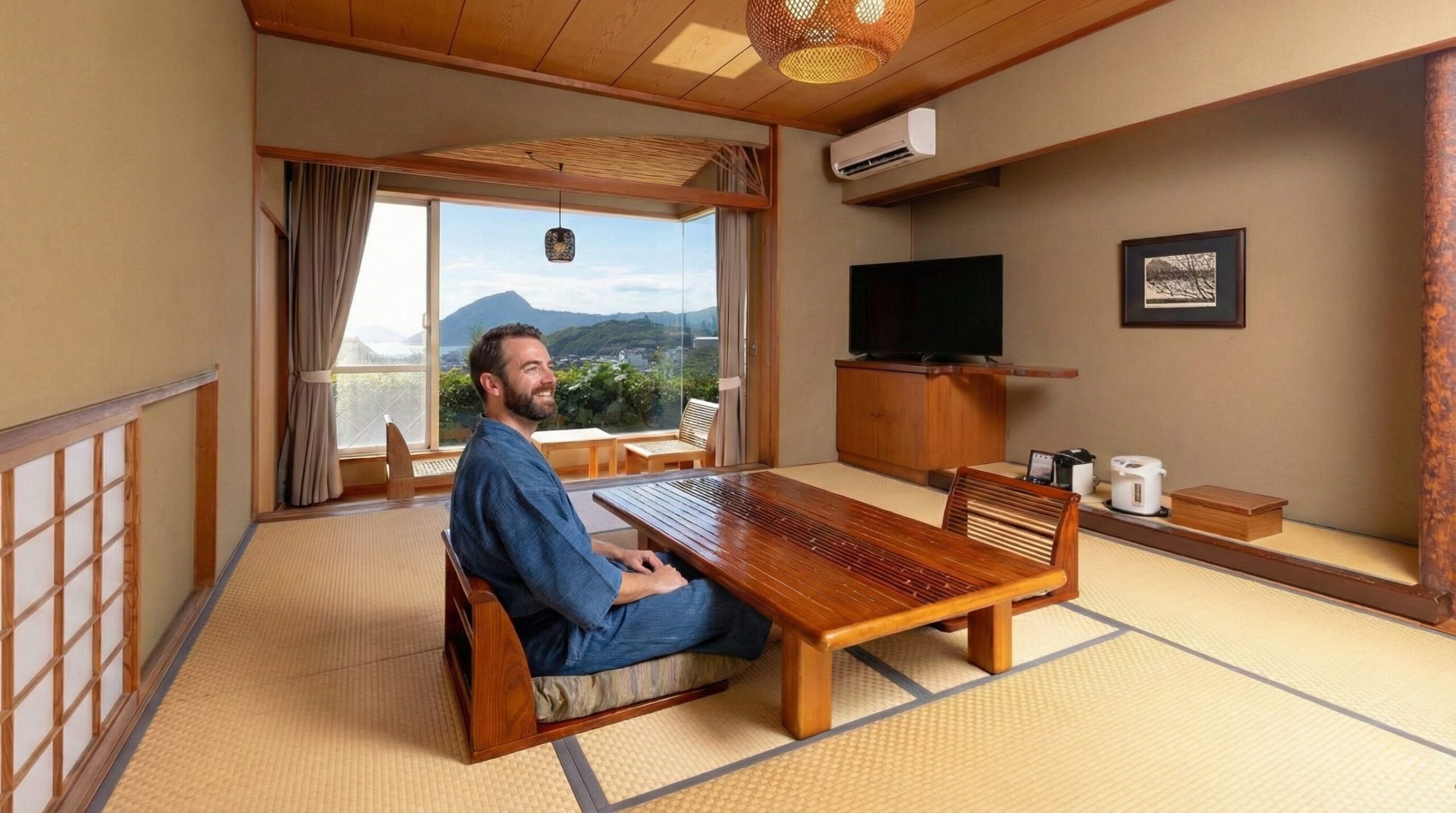
The best ryokans blend seamlessly with their environment. They often feature traditional tatami rooms updated with modern comforts (like raised beds for Westerners), expansive Japanese gardens that change with the seasons, and architecture that frames the rising steam of the city against the backdrop of Tsurumi-dake mountain.
Top Recommendations: The Best Luxury Onsen Ryokan in Beppu
Beppu is divided into eight major hot spring areas (Beppu Hatto). For a luxury experience, you generally want to look in the Kannawa (historic steam district), Myoban (mountain views), or Shoningahama (oceanfront) areas.
Kannawaen (Kannawa District)
The Historic Sanctuary
If you wish to travel back in time without sacrificing modern comfort, Kannawaen is the pinnacle. Located in the heart of the Kannawa steam district, this ryokan feels like a secluded village.
- The Vibe: Traditional aesthetics meet absolute privacy. The property features a stunning Japanese Noh theater stage and a vast garden that feels miles away from the city.
- The Rooms: Choose a villa with a private hot spring. The resort features its own mineral-rich hot spring sources, including the rare “blue water” renowned for its skin-beautifying properties.
- Why it stands out: It embodies the “Hidden Gem” philosophy. You are in the middle of the tourist district, yet completely isolated in silence.
AMANE RESORT SEIKAI (Shoningahama)
The Oceanfront Modernist
For those who prefer the horizon over the mountains, AMANE RESORT SEIKAI offers a different kind of luxury onsen ryokan in Beppu experience. Every single room faces the ocean and includes an open-air bath on the balcony.
- The Vibe: Sleek, modern, and spacious. It lacks the “old Japan” creakiness but makes up for it with flawless service and panoramic views of Beppu Bay.
- The Dining: Offers excellent flexibility with options for Japanese seafood Kaiseki or high-end French cuisine, catering to diverse palates.
- Why it stands out: Waking up to the sunrise over the ocean while soaking in your private tub is an experience that stays with you forever.
ANA InterContinental Beppu Resort & Spa (Myoban District)
The Fusion of East and West
While technically an international brand, this resort has masterfully integrated local culture. Situated high in the mountains near the Myoban district (famous for “yunohana” sulfur crystals), it offers the most commanding views in the city.
- The Vibe: Ultra-luxury contemporary. The design utilizes local bamboo craftsmanship and stone, paying homage to Oita’s heritage.
- The Onsen: Their infinity pool overlooks the steam rising from the city below—a visual representation of Beppu’s energy. The private family baths are sleek and minimalist.
- Why it stands out: It is approachable for Western travelers who might be intimidated by strict ryokan etiquette, yet it delivers an authentic connection to the local hot spring culture.
Gahama Terrace (Shoningahama)
The Private Villa Retreat
Gahama Terrace focuses on the concept of a “vacation home” rather than a hotel room. It is comprised of private villas, many of which are renovated historical buildings from the Showa era.
- The Vibe: Nostalgic yet sophisticated. It feels like staying at the estate of a wealthy literary figure from the 1920s.
- The Experience: The property is expansive, allowing for long walks within the grounds. The focus here is on “doing nothing”—the ultimate luxury in our busy lives.
Practical Examples: A Night at a Luxury Ryokan
To help you visualize the experience, here is a typical itinerary for a one-night stay at a luxury onsen ryokan in Beppu.
15:00 – Check-in and Matcha
You arrive and are ushered to a lounge overlooking a moss garden. You are served frothy matcha tea and a wagashi (seasonal sweet). The staff takes your shoes; you won’t need them again until you leave.
16:00 – The First Soak
In your room, you change into a yukata (cotton kimono). You step out onto your private terrace. The air is crisp. You sink into your private rotenburo. The water is rich in minerals—perhaps milky white (sulfur) or clear and slick (alkaline). The travel fatigue melts away.
18:30 – Kaiseki Dinner
Dinner is served either in your room or a private dining booth. It begins with Sakizuke (an appetizer) that reflects the season—perhaps a persimmon dressed in tofu sauce for autumn.
- Highlight: A ceramic plate arrives with sizzling Bungo beef. You grill it yourself for just seconds. It pairs perfectly with a glass of local Oita sake.
21:00 – The Silence
Beppu quiets down early. This is the time to visit the ryokan’s public bath if you wish, which is often empty at this hour, or simply sit on your veranda listening to the steam vents hissing in the distance.
08:00 – Japanese Breakfast
Forget cereal and toast. You are served grilled fish, miso soup with local clams, pickled vegetables, and steaming white rice grown in the fertile lands of Oita Prefecture. It is a meal designed to fuel a day of exploration.
Tips for Travelers: Booking and Etiquette
Securing a room at a luxury onsen ryokan in Beppu requires planning, and enjoying it requires a bit of cultural know-how.
Book Well in Advance
The top ryokans (like Kannawaen) have limited rooms. For cherry blossom season (April) or autumn foliage (November), book at least 5 to 6 months in advance.
Communicate Dietary Needs Early
Kaiseki cuisine relies heavily on dashi (fish stock) and soy sauce.
- Vegetarians/Vegans: Beppu has become more accommodating, but you must inform the ryokan at the time of booking. Ask for “Shojin-ryori” style if available.
- Gluten-Free: Traditional soy sauce contains wheat. Request “Tamari” or salt-based seasoning.
Tattoos and Onsen
Historically, tattoos have been taboo in public baths in Japan.
- Good News: At a luxury ryokan with a private bath in your room, tattoos are never an issue.
- Public Areas: If you wish to use the large communal bath, check the policy. Some luxury spots in Beppu are “tattoo-friendly” or offer stickers to cover small tattoos, but the private in-room bath is the safest and most relaxing bet.
The “Omakase” Mindset
The best way to enjoy a ryokan is to surrender control. Let the staff guide you. Eat the course meal as it is presented. Bathe when you feel like it. The rigid schedules of Western travel do not apply here.
Conclusion
Beppu is often called “Hell” because of its boiling ponds, but a stay at a luxury onsen ryokan in Beppu is the closest you might get to heaven on earth. It is easy to visit Japan and see only the neon lights of Shinjuku or the temples of Kyoto. But to travel deeper is to strip away the noise and immerse yourself in the volcanic roots of the country. Here, in the steam-filled alleys of Kyushu, luxury is not about what you buy—it is about how you feel. Whether you choose the historic elegance of Kannawaen or the oceanfront modernity of AMANE, the experience remains the same: a profound reconnection with nature, warmth, and the timeless rhythm of Japanese hospitality.