
When the international traveler envisions Tokyo, the mind is instantly flooded with images of unrelenting modernity. It is a metropolis defined by its staggering verticality, the kinetic energy of its massive pedestrian scrambles, and the endless glow of neon illuminating the night sky. The city is a masterpiece of concrete, steel, and ultra-efficient infrastructure. Because of this reputation, visitors looking for restorative, geothermal hot springs (onsen) almost instinctively assume they must board a bullet train and flee the capital for mountainous regions like Hakone, Tohoku, or Kyushu. However, this assumption overlooks one of the most remarkable geographical secrets of the Kanto region. Beneath the labyrinthine subway lines and towering office buildings, the earth is actively bubbling. For the mindful traveler dedicated to urban exploration and authentic, high-end cultural immersion, discovering Tokyo hidden onsen experiences completely redefines what a trip to the capital can be. Finding these geothermal sanctuaries requires stepping off the heavily paved tourist corridors and wandering into quiet residential neighborhoods or venturing to the city’s lush, mountainous western fringes. In these secluded pockets, you will find a flawless intersection of ancient bathing traditions, high-end traditional accommodations, and exquisite regional cuisine. You do not need to leave the city limits to soak in mineral-rich waters under a canopy of stars. This guide will dismantle the misconception that Tokyo is purely a concrete jungle, leading you to the most spectacular, secret hot spring retreats the metropolis fiercely protects.
The Geology of the Capital: Key Details and Breakdown
To successfully navigate the landscape of Tokyo hidden onsen experiences, one must first understand the unique geological composition of the city and the strict criteria that define a genuine Japanese hot spring. When you seek out these urban sanctuaries, you are engaging with these core concepts:
- The Phenomenon of ‘Kuroyu’ (Black Water): This is the defining characteristic of Tokyo’s natural hot springs. The southern and eastern wards of the city, particularly Ota and Shinagawa, sit atop an ancient, fossilized sea layer rich in organic plant matter (humic acid) from the Pleistocene era. When the hot spring water is pumped to the surface, it is a deep, translucent black or dark amber. Kuroyu is highly alkaline, known locally as “beauty water” because it dissolves dead skin cells, leaving the body incredibly smooth and retaining heat long after you exit the bath.
- Onsen vs. Sento: In Tokyo, you will see thousands of public bathhouses (sento). While historically vital and visually beautiful, traditional sento use heated municipal tap water. A true onsen must source its water from a naturally occurring geothermal spring containing specific mineral profiles. The hidden gems of Tokyo are the rare facilities that manage to pump genuine geothermal water directly into the urban grid.
- The Rise of the Urban Ryokan: In recent years, a new wave of high-end traditional accommodations has emerged within Tokyo. These elite properties offer the profound isolation, immaculate tatami mat rooms, and private hot spring baths of a rural retreat, entirely insulated from the surrounding city noise. They cater perfectly to travelers who desire traditional luxury without the grueling transit times.
- Culinary Integration: A premium onsen experience is never just about the water; it is inextricably linked to gastronomy. The finest hidden hot springs in Tokyo honor this tradition by offering exceptional, multi-course kaiseki meals. They seamlessly weave traditional Japanese regional cuisine into the urban fabric, allowing you to taste mountain-foraged vegetables or deep-sea catches after a restorative soak.
Sanctuaries in the City: Practical Examples and Recommendations
Uncovering these secret geothermal waters requires exploring neighborhoods that rarely feature in standard English-language guidebooks. Here are four exceptional routes to the best Tokyo hidden onsen experiences, ranging from deep urban exploration to high-end traditional luxury.
The Modern Ryokan Retreat at Yuen Bettei Daita (Setagaya)
Located in the impossibly quiet, sophisticated residential neighborhood of Daita (just a short walk from the bohemian cafes of Shimokitazawa), Yuen Bettei Daita is a masterclass in urban sanctuary design. It is the ultimate destination for those seeking high-end traditional accommodations right in the heart of the city.
Highlights of the Yuen Bettei Daita Experience:
- Hakone in Tokyo: While the facility itself is in Setagaya, the water in its spectacular open-air baths (rotenburo) is authentic geothermal water transported directly from the legendary hot springs of Hakone. You experience the healing properties of a volcanic mountain spring while listening to the distant, muted hum of the Odakyu train line.
- Architectural Serenity: The property is a stunning example of modern Japanese minimalism infused with traditional ryokan aesthetics. It features dark wood, pristine tatami flooring, sliding shoji screens, and meticulously raked stone gardens that transport you hundreds of miles away from the city’s concrete core.
- Exceptional Kaiseki Dining: To complete the traditional retreat, the property features a world-class restaurant serving intricate kaiseki dinners. The chefs focus intensely on seasonality, offering traditional regional cuisine that highlights hyper-local Kanto ingredients, perfectly pairing your hot spring soak with a flawless culinary journey.
The Black Water Backstreets of Ota Ward (Kamata Onsen)
For the dedicated urban explorer who wants to experience the raw, authentic, working-class history of Tokyo, you must travel south to Ota Ward. This area is the undisputed epicenter of Tokyo’s Kuroyu (black water) culture.
Highlights of the Ota Ward Kuroyu Experience:
- The Showa-Era Atmosphere: Facilities like Kamata Onsen are deeply embedded in quiet residential streets. Approaching these baths feels like stepping back into the 1960s. You will walk past tiny neighborhood butcher shops, glowing red paper lanterns of local pubs, and rows of parked bicycles before spotting the traditional noren (fabric dividers) hanging in the doorway.
- The ‘Kuroyu’ Soak: Stepping into the black water is a surreal experience. The water is so dark that you cannot see your own hands once submerged. It is rich, slightly thick, and intensely warming. These facilities are incredibly egalitarian; you will soak shoulder-to-shoulder with local elders who have been coming to the same bath every day for fifty years.
- The Post-Bath Soba: Deeply integrated into the culture of these neighborhood baths is the post-soak meal. After drying off, locals often wander into the adjacent streets to find a humble, historic shop serving cold buckwheat noodles (zaru soba) and a crisp, chilled beer to bring down their core temperature.
The Forested Enclave of Sayano Yudokoro (Itabashi)
Located in the northern ward of Itabashi, Sayano Yudokoro is widely considered one of the greatest Tokyo hidden onsen experiences. Tucked away in a completely unremarkable residential district, it hides a sprawling, deeply traditional sanctuary behind its high walls.
Highlights of Sayano Yudokoro:
- The Genuine Spring: Unlike many urban facilities that import their water, Sayano Yudokoro successfully drilled deep into the Tokyo earth to find its own natural, greenish-brown hot spring water. The outdoor rock baths are surrounded by dense foliage, making you completely forget you are still within the 23 special wards.
- The Preserved Heritage Garden: The facility was built around an abandoned, historic Japanese estate. The owners painstakingly restored the traditional Showa-era wooden house and its spectacular moss and stone garden. After your bath, you can sit on the wooden veranda (engawa) of this historic home, looking out over the manicured landscape.
- Regional Culinary Focus: The dining area inside the restored heritage building serves exceptional traditional Japanese regional cuisine, focusing heavily on seasonal tempura and incredibly high-quality, house-made soba noodles, allowing you to dine in an atmosphere of profound historical elegance.
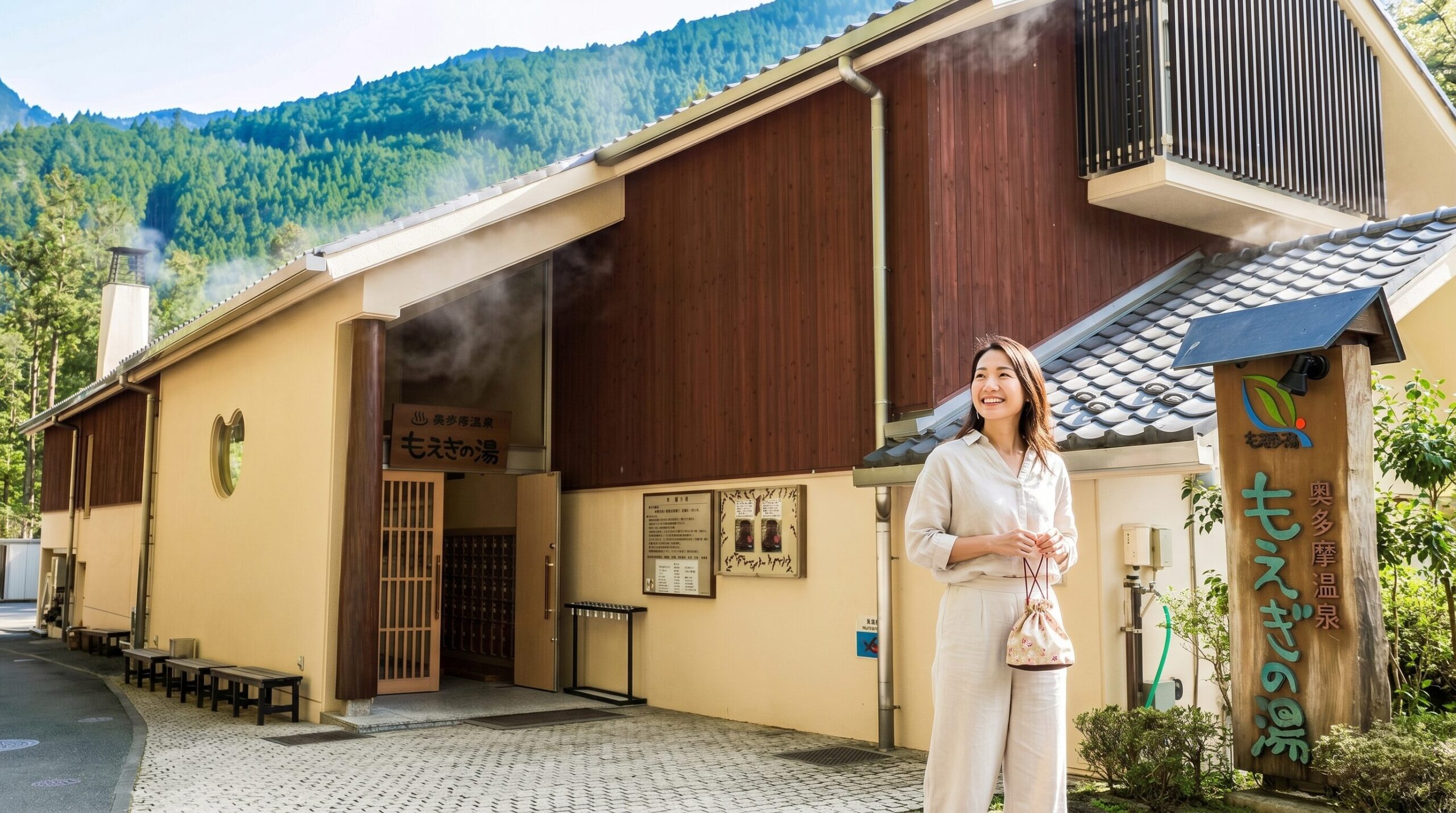
Deep Mountain Serenity at Moegi-no-Yu (Okutama)
To truly push the boundaries of what constitutes Tokyo, you must board the Chuo Line and ride it to the very end, deep into the Chichibu-Tama-Kai National Park. The town of Okutama is technically within the Tokyo metropolis, but it is a world of towering cedar forests, deep river gorges, and limestone caves.
Highlights of the Okutama Onsen Experience:
- The River Gorge Rotenburo: Moegi-no-Yu is a natural hot spring facility perched right on the edge of the Tama River. The outdoor baths offer breathtaking, uninterrupted views of the rushing emerald water and the steep, forested mountainsides. It is the ultimate reward after a day of hiking the local trails.
- The Pure Source: The water here is a 100% natural, unadulterated hot spring, famous for its incredibly high quality and soothing properties. It lacks the dark color of the Ota ward springs, offering instead a clear, crisp, mineral-rich soak that physically erases the fatigue of city life.
- Mountain Gastronomy (Sansai and Ayu): Because Okutama is a deep mountain environment, the local food reflects the rugged terrain. The perfect complement to this hidden onsen is seeking out a local traditional inn to eat sansai (foraged wild mountain vegetables) and Ayu (sweetfish) that has been salted and slow-grilled over an open charcoal hearth (irori).
Mindful Soaking: Tips for Travelers
Engaging with Tokyo hidden onsen experiences requires a firm understanding of Japanese bathing etiquette. Because many of these hidden locations cater primarily to local residents rather than international tourists, maintaining proper decorum is absolutely essential to ensure a respectful and seamless visit.
- The Strict Reality of Tattoos: While some modern, tourist-facing facilities in Japan are relaxing their rules, the vast majority of traditional hot springs in Tokyo still strictly prohibit guests with tattoos. If you have small tattoos, you can often purchase flesh-colored, waterproof cover-up stickers at a local pharmacy. If you have large, visible tattoos, your best and most respectful option is to book a high-end traditional accommodation (like Yuen Bettei Daita) that offers a private, in-room open-air bath (rotenburo-tsuki kyakushitsu).
- The Pre-Wash Mandate: The single most important rule of the onsen is that the bath is for soaking, not for cleaning. Before you even touch the hot spring water, you must sit at the provided shower stations and meticulously scrub your entire body with soap and water. Ensure all soap is completely rinsed off before entering the communal bath.
- Towel Etiquette: You will be provided with (or you must bring) a small modesty towel. You may use this to cover yourself while walking around the bathing area, but this towel must never touch the hot spring water. Locals will typically fold it and balance it on top of their heads while soaking, or leave it on a dry rock next to the bath. Wringing a towel out into the water is considered highly unsanitary.
- Hydration and the ‘Coffee Milk’ Ritual: The intense, mineral-rich heat of a genuine geothermal spring will cause you to sweat profusely. Hydration is critical. Following a long soak, participate in the beloved local tradition: locate the vending machine in the changing room and purchase a glass bottle of ice-cold fruit milk or coffee milk (kohi gyunyu), drinking it with one hand on your hip.
Conclusion
The true magic of Japan’s capital lies in its staggering, almost unfathomable layers. For those willing to look past the overwhelming digital billboards and the polished, high-speed rail lines, the city reveals a much older, deeper, and profoundly grounded soul. The heat of the earth is still very much alive beneath the asphalt. By taking the time to seek out Tokyo hidden onsen experiences, you elevate your journey from standard urban sightseeing to an authentic, restorative cultural immersion. You actively choose to travel deeper. You trade the exhaustion of the concrete grid for the deep, healing warmth of black mineral water, the quiet elegance of high-end traditional accommodations, and the spectacular flavors of regional Japanese cuisine. It is time to step off the crowded streets, embrace the steam, and discover the magnificent, hidden geothermal sanctuaries that the real Tokyo has to offer.