If you are looking for a walled garden with a ticket gate that says “Welcome to Evangelion World,” you won’t find it. Unlike Disney or Universal Studios, the world of Neon Genesis Evangelion is not contained within a single theme park. True to the anime’s complex and fragmented nature, its presence in Japan is scattered, hidden, and deeply integrated into the landscape itself.
For the dedicated fan, this is better than a theme park. It is a pilgrimage. To experience Evangelion in 2026 is to travel the length of the country. It means standing in the palm of a giant robot in a samurai town, watching a miniature Tokyo-3 launch into the ceiling in a Tokyo warehouse, and walking the actual shores of the lake where Shinji Ikari first fought for humanity.
This guide is your flight plan. We will break down the permanent attractions, the hidden spots, and the projects that define the “Evangelion Theme Park” experience today.
Toei Kyoto Studio Park: The Kyoto Base
Location: Uzumasa, Kyoto
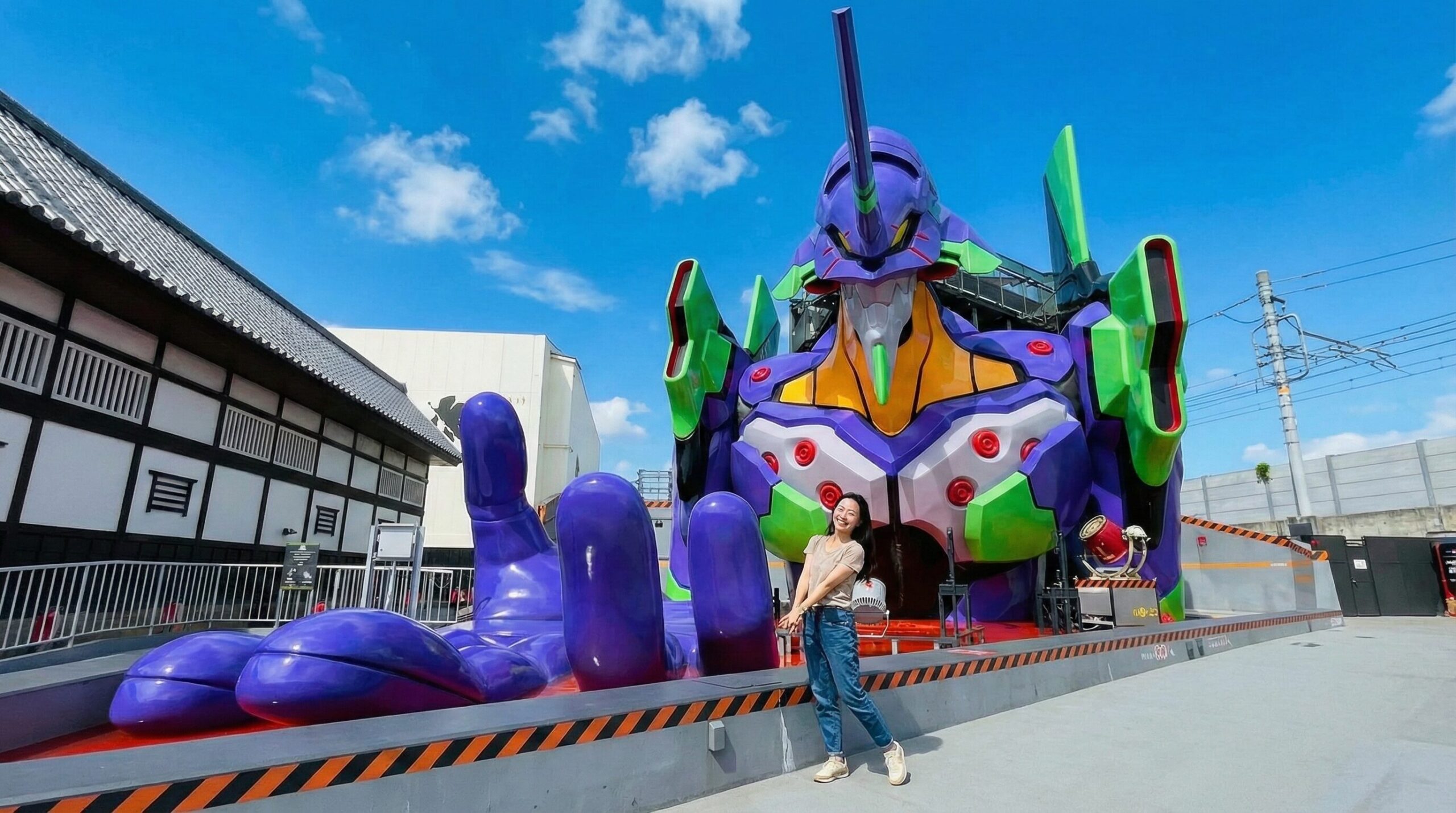
While Akihabara is the spiritual home of anime, Kyoto is the home of the boldest Evangelion attraction in existence: the Evangelion Kyoto Base. Located within the Toei Kyoto Studio Park (Eigamura)—a theme park famously dedicated to samurai movies and Edo-period sets—this attraction creates a surreal visual contrast. You walk past traditional wooden row houses and ninjas, turn a corner, and suddenly face the 15-meter-tall torso of Evangelion Unit-01 rising from a pool of red LCL fluid.
The Experience
- Ride the Robot: This is the world’s first rideable Eva. You don’t just look at it; you climb onto the palm of its hand for a photo op that captures the sheer scale of the mecha.
- Entry Plug Synchronization: The attraction allows you to sit in a replica Entry Plug (cockpit) and undergo a “synchronization rate” test. It’s a tactile experience—the hum of the machine, the flashing warnings, the voice of Misato Katsuragi barking orders.
- The “Edo-Eva” Aesthetic: The gift shop here is unique. Because it’s in Kyoto, the merchandise blends NERV technology with traditional Japanese crafts. Look for teぬgui (hand towels) and amulets that look like they belong in a Shinto shrine but bear the NERV logo.
Note for Spring 2026 Travelers: Toei Kyoto Studio Park is undergoing a phased renewal in early 2026. Check the official schedule, as access to certain zones may fluctuate before the grand “Phase 1 Renewal” opens in late March.
Small Worlds Tokyo: The God’s Eye View
Location: Ariake, Tokyo
If Kyoto offers scale, Small Worlds offers detail. Located in the bay area of Ariake, this is the world’s largest indoor miniature theme park. Their dedicated Evangelion Sector is not just a display; it is a living, breathing ecosystem built at 1:80 scale.
The Two Zones
- Tokyo-3 Area: This recreates the city Shinji lives in. The magic happens every 15 minutes when the “Angel Attack” sequence begins. The entire city transforms—skyscrapers retract into the ground, defensive plating rises, and the city goes into lockdown mode.
- The Cage (Hangar): This zone depicts the NERV headquarters. You watch tiny mechanical crews prepping Unit-01, Unit-00, and Unit-02 for launch. The level of detail is obsessive; you can see individual mechanics holding clipboards and coffee cups.
Why it’s Authentic: It captures the mechanical reality of the show. You see the logistics, the cables, and the infrastructure that supports the robots. For a fee, you can even 3D scan yourself and have a miniature “you” placed as a resident in the city for a year—living in the shadow of the Evas.
Hakone: The Real Tokyo-3
Location: Kanagawa Prefecture
This is the holy land. In the anime, Tokyo-3 is built on the site of Hakone. This isn’t a theme park attraction with rides; the entire town is the attraction. The local tourism board has fully embraced this identity. As you explore the Onsen town, the line between fiction and reality blurs.
- The Vending Machines: Throughout the town, vending machines are painted in the colors of Unit-01, Unit-02, and Unit-00.
- Sengokuhara: Stand in the fields of pampas grass at Sengokuhara. This is the exact landscape depicted in the anime’s opening shots. It is quiet, eerie, and beautiful.
- Lake Ashi: Taking the boat across Lake Ashi puts you in the center of the battlefield where Ramiel (the floating diamond Angel) attacked.
- Eva-ya: Located at Hakone-Yumoto Station, this dedicated shop sells goods you can only buy here, such as “LCL Bath Salts” and Hakone-specific snacks.
The Thrill Ride: Seibuen Amusement Park
Location: Tokorozawa, Saitama (Near Tokyo)
- Godzilla vs. Evangelion: The Ultimate Battle: Located at Seibuen Amusement Park, this is a large-scale theater ride attraction.
- The Experience: Originally launched as a major collaboration, this ride throws you into a chaotic battle between Godzilla and the Evangelion units. It is a visceral experience of being caught in the crossfire of giant monsters.
- Note: The theater schedule may rotate between “Godzilla the Ride” and “Godzilla vs. Evangelion.” Please check the official Seibuen website for the daily screening schedule before visiting.
Important: What is GONE (Do Not Go Here)
Guidebooks that haven’t been updated since 2021 might send you to the wrong place.
- Fuji-Q Highland: The “Evangelion: World” attraction at Fuji-Q Highland is PERMANENTLY CLOSED. It shut down in 2021 to make way for a new rollercoaster. Do not plan a trip to Mt. Fuji expecting to see the life-size Eva head that used to be there. It is gone.
Practical Examples: A sample “Eva” Itinerary
To cover these diverse locations, you need to integrate them into a broader Japan trip.
The “NERV Route” (Tokyo -> Hakone -> Kyoto)
- Day 1: Tokyo (Ariake)
- Morning: Visit Small Worlds Tokyo. Spend 2 hours watching the day/night cycle of Tokyo-3.
- Afternoon: Shop at the Evangelion Store Tokyo-01 in Ikebukuro for fashion and goods.
- Day 2: Hakone (The Pilgrimage)
- Take the “Romancecar” train (often featured in the anime) to Hakone.
- Download the “Hakone Evangelion Map” (available at the station).
- Visit the shores of Lake Ashi and the Eva-ya shop. Stay in a ryokan.
- Day 3: Kyoto (The Base)
- Take the Shinkansen to Kyoto.
- Head to Toei Kyoto Studio Park. Ride the giant hand of Unit-01.
- Eat at the NERV cafe (try the curry with the A.T. Field cheese topping).
Tips for Travelers
Check the Collab Cafe Schedule: “Evangelion Bar” or pop-up cafes appear frequently in Tokyo and Osaka for limited runs (often just 3-4 weeks). Before you fly, search “Evangelion collaboration cafe [Current Month] 2026”.
The “Shinkansen” Connection: While the famous “500 Type Eva” Shinkansen (the bullet train painted like Unit-01) retired years ago, keep an eye out for regional train collaborations. The Tenryu Hamanako Railway in Shizuoka often runs wrapped trains.
Language Barrier: The “Mission” instructions at Kyoto Base are often in Japanese, but the staff are used to foreign tourists. Basic English guidance is usually available, but learning the Japanese words for “Launch” (Hasshin) and “Emergency” (Kinkyu) adds to the fun.
Booking: Small Worlds Tokyo and Toei Kyoto Studio Park can be booked online in advance via platforms like Klook or their official sites. This is highly recommended to skip queues.
Conclusion
The “Evangelion Theme Park” is not a place; it is a state of mind spread across the Japanese archipelago. It requires travel. It requires a sense of adventure. But perhaps that is fitting. Evangelion was never about staying in one place comfortably. It is about moving forward, getting on the robot, and facing the unknown.
Whether you are gazing at the meticulous miniatures in Tokyo or standing under the towering purple hand in Kyoto, you are connecting with a cultural phenomenon that has defined modern Japan. So, grab your map, check your synchronization rate, and go explore the real world of Evangelion.