
Osaka is often called the “Kitchen of Japan,” a reference to its incredible food culture. But for the savvy traveler, Osaka serves another, equally important purpose: it is the perfect strategic basecamp.
Located squarely in the center of the Kansai region, Osaka is a transportation hub connected to ancient capitals, port cities, and sacred mountains by a web of surprisingly affordable private railways. While Tokyo accommodation prices skyrocket, Osaka remains reasonably priced, and its “working-class” roots mean that cheap, delicious food is a birthright, not a luxury.
But the real magic happens when you leave the city limits. Within a 60-minute radius, you can trade the neon grit of Dotonbori for the silence of a Zen garden or the roar of a mountain waterfall—often for less than the price of a bowl of ramen.
Many travelers assume that exploring Japan requires an expensive JR Pass or costly Shinkansen tickets. This is a myth. In Kansai, the private train lines (Hankyu, Keihan, Kintetsu, Hanshin) engage in fierce competition, resulting in low fares and high efficiency.
This guide to Budget-Friendly Day Trips from Osaka is your blueprint for exploring the “Real Japan” on a shoestring. We are trading expensive tour buses for scenic local trains and pricey entrance fees for priceless natural views.
Pack your walking shoes. Let’s explore Kansai the smart way.
Nara: The Ancient Capital (Without the Tourist Tax)
Nara is the first permanent capital of Japan, older even than Kyoto. While it is famous for its giant Buddha, it is also arguably the most budget-friendly major destination in Japan because its best attraction is completely free.
The Free Attraction: Nara Park
Nara Park is a vast area of greenery at the foot of Mt. Wakakusa. It is home to over 1,200 wild sika deer, which are considered messengers of the gods.
- The Experience: You do not need to pay to enter. You can spend hours wandering the park, watching the deer bow for crackers (shika-senbei), and admiring the pagodas that rise above the trees.
- Budget Tip: A pack of deer crackers costs ¥200. If you want to save even that, simply walking among them and petting them (gently) is free.
The “Look from Outside” Strategy
While entering the Great Buddha Hall (Todai-ji) costs ¥600 (approx. $4), many other temples in the area allow you to wander their grounds for free.
- Kofuku-ji: You can walk around the magnificent five-story pagoda and the temple grounds without a ticket. The National Treasure Museum requires a fee, but the architecture itself is free to admire.
- Nigatsu-do: Located on the hill above Todai-ji, this sub-temple offers one of the best views of Nara city. It is free to climb up to the balcony. It is remarkably quiet and offers a stunning sunset.
Cheap Eats in Nara
Skip the restaurants right next to the station. Walk towards the Naramachi district (the old merchant quarter).
- Nakatanidou: Famous for its high-speed mochi pounding. You can watch the show for free, and a fresh, warm mugwort mochi is only ¥180 ($1.20). It’s a perfect snack.
The Logistics:
- Transport: Take the Kintetsu-Nara Line from Osaka-Namba Station.
- Cost: Approx. ¥680 one way.
- Time: 40 minutes. (Kintetsu is faster and cheaper than JR for this route).
Minoh Park: The Waterfall in the Woods
If you are craving nature but want to spend almost zero money, Minoh (or Minoo) is the answer. It is located just north of Osaka City, but feels like a different world.
The Hiking Trail
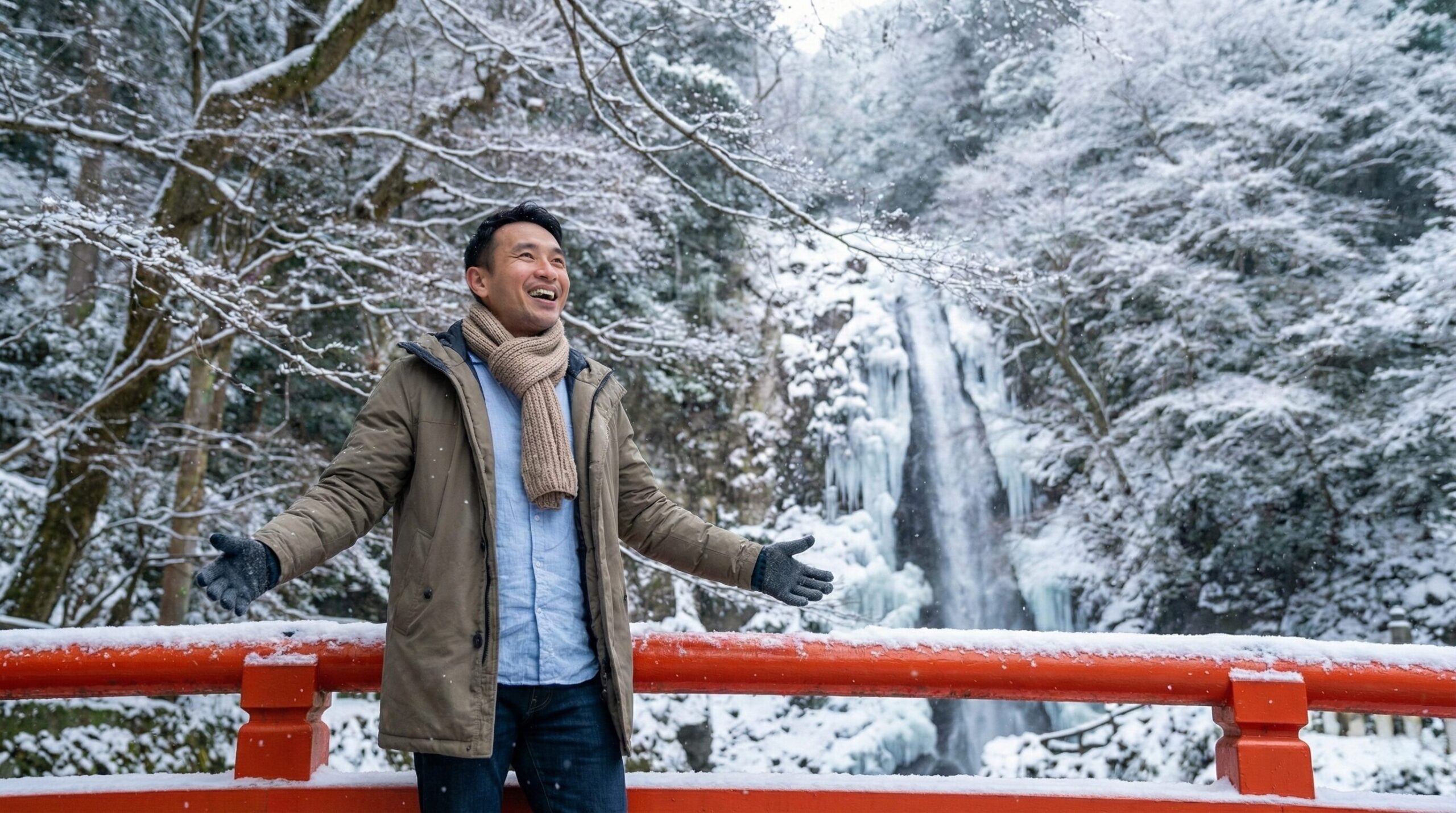
The main attraction is Minoh Falls, a 33-meter waterfall that is undeniably impressive, especially in autumn.
- The Walk: From Minoh Station, it is a paved, gentle 3-kilometer hike (about 45 minutes) up the valley to the falls. The path follows a rushing river and is lined with traditional shops and temples.
- Ryuan-ji Temple: Halfway up the trail, you pass this colorful temple. Crossing its bright red bridge is free and offers a classic Japanese photo op.
The Local Delicacy: Fried Maple Leaves
This sounds like a joke, but it isn’t. Momiji Tempura is the local specialty. Maple leaves are salted, preserved for a year, battered in sweet sesame dough, and deep-fried.
- The Taste: It tastes like a hard, crunchy karinto cracker with a hint of earthy leaf.
- The Cost: A small bag costs about ¥400–¥500. It is the perfect hiking snack.
The Insect Museum
If you are traveling with kids or are a science geek, the Minoh Insect Museum is near the trailhead. It’s cheap (¥280) and surprisingly high quality, famous for its butterfly greenhouse.
The Logistics:
- Transport: Take the Hankyu-Takarazuka Line from Osaka-Umeda to Ishibashi handai-mae, then transfer to the Minoh Line.
- Cost: ¥280 one way ($1.90). This is incredibly cheap.
- Time: 30 minutes from Umeda.
Kobe: Port Views and Street Food
Kobe is often associated with expensive beef, but the city itself is surprisingly affordable to explore if you stick to the streets and the sea.
Nankin-machi (Chinatown)
Instead of a sit-down lunch, head to Nankin-machi, one of Japan’s three major Chinatowns.
- Street Food Strategy: The central square is packed with stalls selling Butaman (steamed pork buns) for ¥200 and Peking Duck wraps for ¥500. You can have a full feast for under ¥1,000 while soaking in the vibrant atmosphere.
- Roshoki: The most famous pork bun shop. There is always a line. The buns are small, greasy, and delicious.
The View from Above: Nunobiki Herb Gardens (Hiking Option)
Kobe is sandwiched between mountains and sea. The view is its best asset.
- The Budget Hike: While you can take a ropeway up to the Herb Gardens, you can also hike up to the Nunobiki Waterfalls (located behind Shin-Kobe station) for free. It’s a short but steep hike that rewards you with views of a stunning tiered waterfall and the city skyline.
The Port Area (Meriken Park)
Walk down to the harbor.
- BE KOBE: The famous monument is here.
- Earthquake Memorial Park: A section of the port has been preserved exactly as it was destroyed in the 1995 Great Hanshin Earthquake. It is a sobering, free open-air exhibit that offers deep insight into the city’s resilience.
The Logistics:
- Transport: Take the Hanshin Main Line or Hankyu Kobe Line from Umeda/Namba to Kobe-Sannomiya.
- Cost: Approx. ¥330 one way.
- Time: 30 minutes.
Uji: The Green Tea Capital
Kyoto city can be overwhelming and expensive. Uji, its southern neighbor, offers a more relaxed, authentic experience centered around Japan’s most famous export: Matcha.
Byodoin Temple (The 10-Yen Coin View)
You have seen this temple before—it is on the back of the ¥10 coin.
- The Cost: Entrance is ¥600. It is worth it to see the Phoenix Hall reflecting in the pond.
- Budget Alternative: Walking along the Uji River is free. The red bridges and the stone pagodas on the islands in the river create a scene straight out of The Tale of Genji.
The Approach (Omotesando)
The street leading to the temple is lined with tea shops that have been roasting tea for centuries. The smell of roasting tea (Hojicha) fills the air.
- Free Samples: Many shops offer free cups of tea to lure you in.
- Matcha Soft Serve: This is the best place in the world to eat matcha ice cream. It costs ¥350–¥400. Look for shops that sprinkle extra matcha powder on top (like Masuda Chaho). The bitterness cuts the sweetness perfectly.
The Logistics:
- Transport: Take the Keihan Main Line from Yodoyabashi (Osaka) to Chushojima, then transfer to the Uji Line.
- Cost: Approx. ¥430 one way.
- Time: 55 minutes.
Himeji: The White Heron
Himeji Castle is Japan’s finest surviving castle. It is a UNESCO World Heritage site and a National Treasure. Unlike Osaka Castle (which is concrete inside), Himeji is original wood.
The Castle Strategy
- Entrance Fee: It costs ¥1,000 ($7). This is “pricey” for a budget trip, but it is the one entrance fee you should pay in Kansai.
- Value: The ticket usually includes entry to the Koko-en Garden next door (if you buy the combo ticket for ¥1,050—only ¥50 more!). Koko-en consists of nine different Edo-style walled gardens. It is stunning and far less crowded than the castle keep.
Mt. Shosha (Engyo-ji)
If you want to skip the castle cost or have extra time, head to Mt. Shosha.
- The Vibe: This mountaintop temple complex was a filming location for The Last Samurai. It is ancient, wooden, and atmospheric.
- Budget Tip: You can hike up the mountain (approx. 1 hour) instead of taking the ropeway to save money and enjoy the forest.
The Logistics:
- Transport: This is the farthest trip. Take the JR Special Rapid Service from Osaka Station.
- Cost: ¥1,520 one way.
- Hack: If you are a foreign tourist, buy the JR Kansai Area Pass (1-day for ¥2,800). A round trip to Himeji (¥3,040) already pays for the pass, and you get unlimited travel on other JR lines for the rest of the day.
Practical Tips for the Budget Traveler
To truly master Budget-Friendly Day Trips from Osaka, you need to understand the local systems.
The Pass Game
Japan loves transport passes. For Osaka-based day trips, these are your best friends:
- Hankyu Tourist Pass (1 Day / ¥700): Unlimited rides on Hankyu lines. This gets you to Kyoto (Arashiyama/Kawaramachi), Kobe, and Minoh. A round trip to Kyoto alone costs about ¥800, so this pass saves money instantly.
- Hanshin Tourist Pass (1 Day / ¥500): Unlimited rides on the Hanshin line. Perfect for a day trip to Kobe or the Koshien Stadium area.
- Kansai Thru Pass: Offers unlimited rides on almost all private trains (subways, Keihan, Hankyu, Kintetsu, Nankai) but NOT JR. It is great if you plan to hop between multiple cities in one day, but usually overkill for a single day trip.
The “Depachika” Lunch
Restaurants in tourist areas (like near Himeji Castle or Nara Park) charge a “tourist tax” in their menu prices.
- The Hack: Before you leave Osaka, go to the basement of a department store (Hanshin or Daimaru in Umeda/Namba). This is the Depachika (food hall).
- What to buy: You can get a high-quality, chef-prepared Bento box for ¥800–¥1,000. Take it with you. Eat it on a bench in Nara Park or by the river in Uji. You get a gourmet meal with a view for half the restaurant price.
Kinken Shops (Ticket Resellers)
Around Osaka Station (specifically in the Osaka Ekimae Buildings), look for shops lined with yellow signs and tiny ticket windows. These are Kinken Shops.
- What they sell: Discounted train tickets. Shareholders often sell their perks here.
- The Savings: You can buy a ticket to Kyoto or Kobe for ¥50–¥100 less than the station price. It’s a small saving, but it adds up, and it’s a very local way to shop.
Water and Drinks
Vending machines are everywhere, but they cost ¥160–¥180 per bottle.
- The Hack: Go to a drugstore (like Daikoku or Matsumoto Kiyoshi) or a 100-yen shop. You can buy 2-liter bottles of water or tea for ¥100. Fill up a reusable bottle.
Sample Budget Itinerary: The “Hankyu” Day
Here is how you can see two cities and a waterfall for under $15 USD in transport.
- Pass: Buy the Hankyu Tourist Pass (1 Day) for ¥700.
- 09:00 AM: Depart Osaka-Umeda for Minoh. Hike to the waterfall. Eat a fried maple leaf (¥400).
- 12:00 PM: Take the train to Arashiyama, Kyoto (transfer at Juso and Katsura). Walk the bamboo grove (Free). Visit Tenryu-ji gardens (¥500).
- 04:00 PM: Take the train to Kyoto-Kawaramachi. Walk across the bridge to Gion. Spot a geisha (Free, but please note that photography is banned on private streets).
- 07:00 PM: Return to Osaka on the “Kyo-Train Garaku” (a special train running only on weekends and holidays with Japanese garden interiors—no extra fee, just standard fare/pass included).
- Total Transport Cost: ¥700.
Conclusion
The beauty of the Kansai region is its density. In Tokyo, a “day trip” often means a two-hour expedition. In Osaka, it means a 30-minute train ride that costs less than a cup of coffee.
Budget-Friendly Day Trips from Osaka are not about compromising. In fact, by skipping the expensive tour buses and taking the local trains, you are forced to engage with the system. You rub shoulders with local students in Uji, hike alongside grandmothers in Minoh, and share the silence of a temple in Nara.
You don’t need a limitless budget to find the “Real Japan.” You just need a train map, a good pair of shoes, and the curiosity to see what lies at the end of the line.