
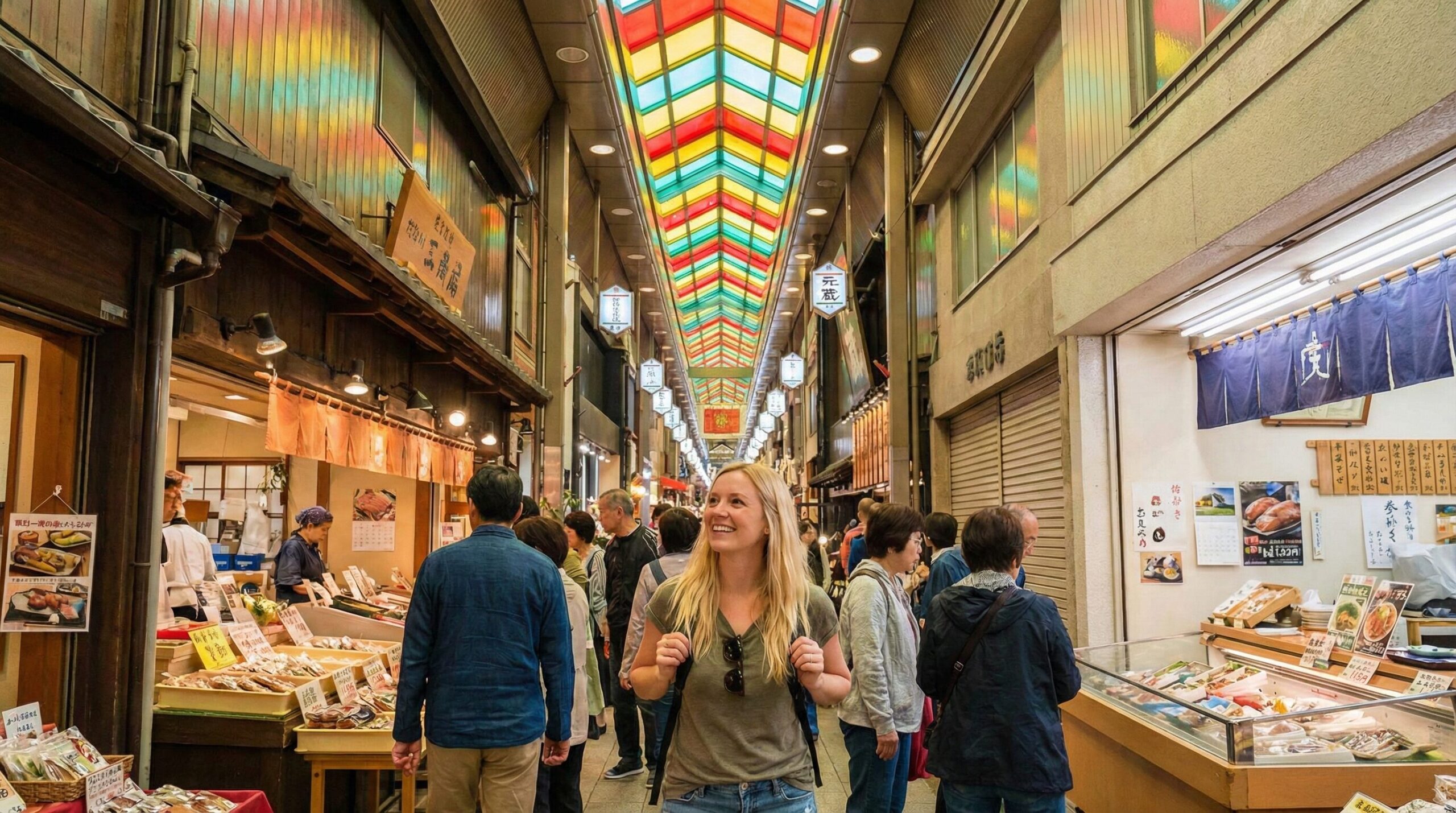
Kyoto is often described in terms of silence. We think of the silent Zen rock gardens, the hushed prayer halls of wooden temples, and the quiet shuffle of a geisha’s sandals on paved stone. It is a city of refined, preserved stillness.
But there is a noise to Kyoto, too. It is the sound of a fishmonger shouting the day’s catch price. It is the sizzle of an egg omelet hitting a hot square pan. It is the clatter of porcelain dishes in a cramped stall and the haggling over a vintage kimono. To understand Kyoto, you cannot just look at its temples; you must taste its ingredients. You must visit the markets.
For centuries, Kyoto was the seat of the Imperial Court. This created a demand for the absolute highest quality ingredients—the freshest river fish, the most delicate tofu, and the most perfectly shaped vegetables. This legacy lives on in the city’s markets. They are not just places of commerce; they are the guardians of a culinary heritage known as Kyo-ryori (Kyoto cuisine).
This Kyoto’s Local Market Guide is your invitation to step behind the curtain of the tourist city. From the narrow, crowded alley of “Kyoto’s Kitchen” to the monthly antique festivals that turn temple grounds into treasure hunts, here is how to shop, eat, and explore like a local.
- Nishiki Market: Navigating “Kyoto’s Kitchen”
- Toji Temple Market (Kobo-san): The Treasure Hunt
- Kitano Tenmangu Market (Tenjin-san): The Foodie’s Festival
- Demachi Masugata Shotengai: The Local’s Living Room
- Chion-ji Tezukuri-ichi: The Handmade Market
- Kyoto Wholesale Market: The Serious Foodie Destination
- Understanding “Kyo-Yasai” (Kyoto Vegetables)
- Practical Tips for the Market Traveler
- Conclusion
Nishiki Market: Navigating “Kyoto’s Kitchen”
No guide would be complete without Nishiki Market. It is the most famous market in the city, a narrow, covered shopping arcade running five blocks (about 400 meters) from Takakura to Teramachi streets (located between Karasuma and Kawaramachi). However, in recent years, Nishiki has become overwhelmed by tourism. To experience it properly, you need a strategy. You need to know what to ignore and where to stop.
The History
Nishiki has been a market for 400 years. It started as a fish market because the underground water here was cold enough to keep seafood fresh before refrigeration. Today, it is a sensory overload of over 100 shops.
The “Real” Nishiki Experience
Many tourists grab the first skewer of wagyu beef they see. Ignore those. They are overpriced and often not local. Instead, look for these authentic Kyoto staples:
- Tsukemono (Pickles): Kyoto is famous for its pickles. Look for heavy wooden barrels filled with Senmai-zuke (thinly sliced turnips) or Shibazuke (eggplant and cucumber pickled in purple shiso). Most shops offer samples. The flavor is sour, salty, and incredibly complex.
- Dashimaki Tamago: There are shops here dedicated solely to Japanese rolled omelets. They are made with dashi (bonito stock), making them savory and juicy rather than sweet. Watch the masters flip the eggs in copper pans with chopsticks.
- Yuba (Tofu Skin): A byproduct of making tofu, yuba is a silky, delicate delicacy. You can eat it raw with soy sauce (sashimi yuba) or fried. It tastes like the essence of soybeans—creamy and subtle.
The Golden Rule of Nishiki: Do not walk and eat. It is considered rude in Japan to walk while chewing (aruki-gui). Buy your snack, stand to the side of the shop, eat it, throw the trash in the shop’s bin, and then keep moving.
- Best Time: Go early. Shops open around 9:30 AM or 10:00 AM. If you arrive at 10:00 AM on a weekday, you can breathe. By noon, it is a crush of bodies.
Toji Temple Market (Kobo-san): The Treasure Hunt
If Nishiki is for food, Toji is for history. On the 21st of every month, the grounds of Toji Temple (home to Japan’s tallest wooden pagoda) transform into a sprawling flea market known affectionately as Kobo-san. It honors Kobo Daishi, the founder of Shingon Buddhism.
The Atmosphere
This is not a polished tourist market. It is dusty, chaotic, and wonderful. Over 1,000 stalls pop up, selling everything from dried persimmons to rusty samurai helmet parts. It feels less like a shop and more like an excavation of Japan’s attic.
What to Hunt For
- Vintage Kimono: This is the best place in Japan to buy a kimono. You can find bundles of silk kimono for as little as ¥1,000 ($7). They might have small stains or be old, but the fabric is exquisite. Many locals buy them to repurpose the fabric for bags or shirts.
- Ceramics: Dig through crates of teacups and plates. You can find Showa-era (1926–1989) dishware with beautiful blue-and-white patterns for a fraction of the price of an antique store.
- Bonsai and Plants: The scent of soil and greenery fills the air in the gardening section. You can’t take plants home internationally, but walking through the miniature forests is a joy.
Pro Tip: Haggling is acceptable here, unlike in department stores. If you buy three items, a simple “Makete kudasai?” (Can you give me a discount?) might save you a few hundred yen.
Kitano Tenmangu Market (Tenjin-san): The Foodie’s Festival
On the 25th of every month, a similar market takes place at Kitano Tenmangu Shrine in the north of Kyoto. This is Tenjin-san, honoring the god of learning.
The Vibe
While Toji is famous for antiques, Tenjin-san has a fantastic “festival food” atmosphere. The approach to the shrine is lined with Yatai (food stalls). This is your chance to try classic Japanese street food in a sacred setting.
Must-Eat Stalls
- Yakisoba: Fried noodles piled high on iron griddles, topped with pickled ginger.
- Taiyaki: Fish-shaped cakes filled with hot red bean paste or custard. Eating a hot taiyaki while walking under the shrine’s 2,000 plum trees in February is a peak Kyoto experience.
- Hiroshimayaki: A variation of okonomiyaki (savory pancake) that includes noodles layered inside.
Tenjin-san also has a robust “Used Kimono” section, often slightly less crowded than Toji. The backdrop of the shrine, with its stone lanterns and plum blossoms (in late winter), makes it the most photogenic market in the city.
Demachi Masugata Shotengai: The Local’s Living Room
To truly go “Beyond Nippon,” you must visit a Shotengai (shopping arcade). These are the covered streets where locals actually do their daily shopping. They are the antithesis of the department store. Demachi Masugata Shotengai is located near the Kamogawa River delta (where the “turtle stepping stones” are). It gained fame for being featured in the anime Tamako Market, but it remains fiercely local.
Why Visit?
It captures the Showa-era nostalgia of Japan. The shop owners yell greetings to passersby. The prices are for locals, not tourists.
- The Mackerel Sushi (Sabazushi): Kyoto is far from the sea, so historically, mackerel was cured with salt and vinegar to survive the journey. Masugata-ya is a famous shop here. Their Sabazushi is legendary—thick, fatty cured mackerel pressed onto vinegared rice. It is a premium dish, often costing ¥2,000–¥4,000 per roll, but the flavor is unforgettable.
- The Fruit Shop: Look for high-end seasonal fruits. In summer, you might see a single peach selling for ¥500. Buy one. It will be the juiciest peach of your life.
- The Vibe: Grab some fried croquettes (korokke) from a butcher, buy a drink, and walk two minutes to the riverbank. Sit on the grass and watch the university students practice instruments or play sports. This is the Kyoto of the residents.
Chion-ji Tezukuri-ichi: The Handmade Market
On the 15th of every month, Chion-ji Temple (near Kyoto University) hosts the “Handmade Market” (Tezukuri-ichi). This is strictly for artisans. No mass-produced goods. No antiques. Everything sold here must be made by the person selling it.
The Crowd
The atmosphere is hipster, artistic, and gentle. You will see young potters selling their first kiln batches, bakers selling homemade sourdough, and textile artists selling hand-dyed indigo scarves.
The Unique Finds
- Coffee: Kyoto loves coffee. At this market, you will find mobile coffee stalls where bearded baristas hand-drip Ethiopian beans into paper cups.
- Woodwork: Look for hand-carved chopsticks or bento boxes made from local cedar (Kitayama Sugi).
- Baked Goods: This market is famous for its bread and cookies. Locals line up early for the popular bakeries that set up pop-up stalls here.
It is the perfect place to find a souvenir that tells a story—something modern but rooted in Kyoto’s tradition of craftsmanship.
Kyoto Wholesale Market: The Serious Foodie Destination
For those who want to see where the chefs shop, there is the Kyoto Central Wholesale Market in Tambaguchi. Unlike Tokyo’s old Tsukiji, this is a working industrial market and is not fully open to tourists roaming freely. However, just outside the market is a collection of shops and restaurants that serve the freshest seafood in the city.
- Sushi for Breakfast: Visit the restaurants in the adjacent buildings. They serve Kaisendon (seafood bowls) at 7:00 AM that rival anything in Tokyo. The fish was likely auctioned just hours before.
- The Knife Shops: Around the market, you will find professional knife sharpeners. If you want to buy a Japanese knife (Hocho), buying it here ensures you are getting a tool designed for a chef, not a souvenir for a tourist.
Understanding “Kyo-Yasai” (Kyoto Vegetables)
As you walk through these markets, you will notice vegetables that look different. These are Kyo-yasai, traditional heirloom vegetables of Kyoto.
Because Kyoto is in a basin with hot summers and freezing winters, and possesses distinct groundwater, unique vegetable varieties developed here over 1,000 years. Keep an eye out for:
- Kamo Nasu: A giant, round eggplant. It is dense and meaty, perfect for grilling with miso (Nasu Dengaku).
- Manganji Togarashi: Large, green peppers. They look spicy but are actually sweet and mild.
- Shogoin Daikon: A massive, round radish (not long like normal daikon). It is sweeter and softer, used in winter stews.
- Kujo Negi: Kyoto green onions. They are sweeter and more slimy (in a good way) than regular scallions.
Seeing these vegetables piled high in baskets at Nishiki or a local shotengai is seeing the history of Kyoto’s agriculture.
Practical Tips for the Market Traveler
Cash is King
While department stores accept cards, markets are cash-based.
- At flea markets (Toji/Tenjin), cash is the only option.
- Bring small bills (1,000 yen notes) and coins (100 yen). Trying to pay for a 300 yen skewer with a 10,000 yen note is frowned upon.
The Early Bird Wins
- Flea Markets: The good stuff (antiques) is gone by 10:00 AM. Pros arrive at 7:00 AM.
- Food Markets: Lunch rush is 12:00–1:00 PM. Go at 11:00 AM or 2:00 PM to eat without waiting.
Photography Etiquette
- Always ask before taking a photo of a stall owner or their goods, especially at flea markets where designs might be unique. A simple smile and pointing to your camera is usually enough.
- Do not block the narrow aisles of Nishiki Market to take a selfie. It stops the flow of traffic and angers locals.
Bringing it Home
- Pickles: Vacuum-packed pickles are fine to take home (check your country’s customs). They keep for weeks.
- Dried Goods: Dried shiitake mushrooms, kombu (kelp), and loose-leaf tea are lightweight, unbreakable, and authentic gifts.
Conclusion
Kyoto is a city that can feel distant. The temples are behind gates; the geisha are behind glass; the history is behind velvet ropes.
But the markets are open. When you buy a bag of roasted chestnuts from an old woman at Toji Temple, or watch a fishmonger slice a mackerel with surgical precision in a shotengai, you are participating in the living, breathing city. You are stepping into the rhythm of daily life that has continued here for a millennium.
So, set your alarm early. Put on comfortable shoes. Bring your coin purse. Dive into the noise and the smells. In the chaos of the market, you will find the flavor of the Real Japan.
Travel Deeper. Explore the Real Japan.